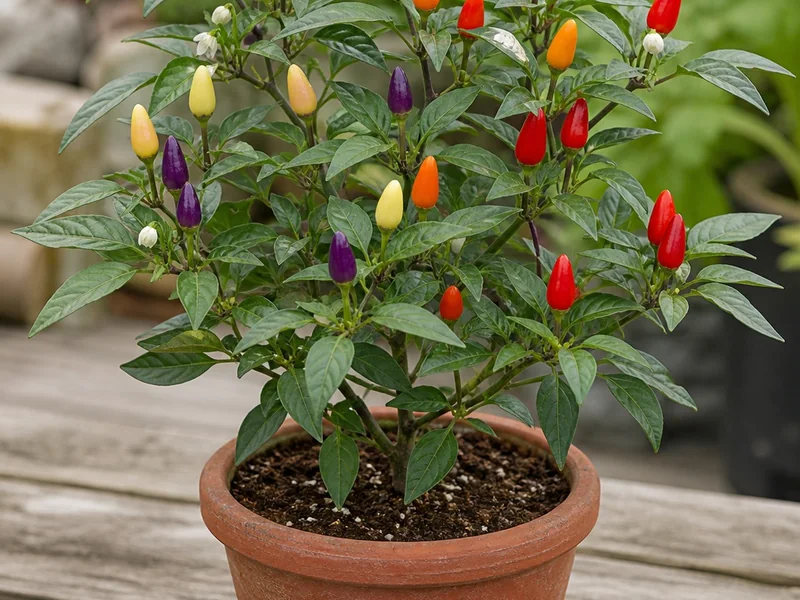
Container-grown ornamental pepper plants with purple, yellow, orange, and red upright fruits
26 varieties

Ornamental Peppers

Ornamental peppers are grown for their looks — vivid purples, reds, yellows, and oranges. Most are edible but secondary to their visual impact in containers and gardens.

26 varieties 6 comparisons 4 heat levels

Ornamental peppers blur the line between garden art and kitchen ingredient, producing pods in vivid reds, purples, yellows, and near-blacks that rival any flowering annual. This category spans a wide heat spectrum - from the near-sweet Cajun Belle's mild compact pods to the fiery upright clusters of the Cabe Rawit's tiny incendiary fruits at 50,000-100,000 SHU. Most are fully edible, making them genuinely dual-purpose plants for containers, borders, and kitchen gardens alike.

Ornamental peppers occupy a fascinating space in the Capsicum world - plants bred as much for visual impact as culinary value, yet rarely limited to one or the other.

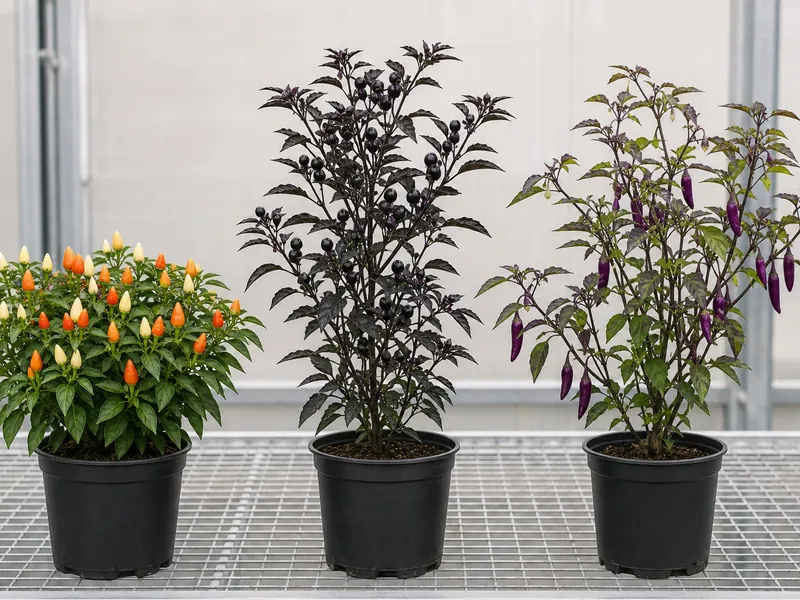
The defining characteristic of this category is simultaneous pod display: multiple colors ripening at different rates on the same plant, so a single specimen might carry cream, purple, orange, and red fruits all at once. That trait, more than any heat level or flavor profile, is what unites this group.

Heat range spans the entire Scoville scale. The Kashmiri Chili's deep crimson pods clock in at just 1,000-2,000 SHU - mild enough for everyday cooking - while the compact Santaka's upright scarlet clusters reach 40,000-50,000 SHU, roughly three to four times hotter than a typical chipotle. That breadth means there's an ornamental variety suitable whether you're planting a child-friendly garden or want genuine heat alongside the color show.

Several varieties in this category carry significant cultural weight. The Byadgi Chili's wrinkled brick-red pods are central to Karnataka cuisine in southern India, prized for color yield in masalas over raw heat. The Jwala Pepper's slim finger-like pods have been cultivated across Gujarat and Maharashtra for generations, appearing in temple offerings and festival foods long before Western growers noticed the plant's ornamental qualities.

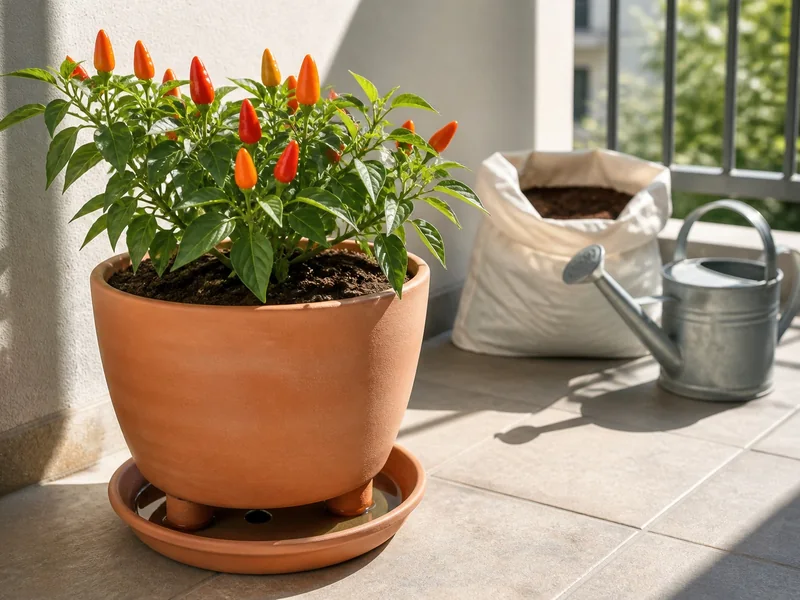
From a growing standpoint, ornamental types tend toward compact, bushy habits - most stay under 24 inches, making them well-suited to containers and window boxes. The Aji Pineapple's golden dangling fruits are an exception, growing on slightly taller plants with a more sprawling form, but still manageable in large pots. Most ornamentals prefer the same conditions as any Capsicum: full sun, well-draining soil, and consistent moisture during pod set.

The pod shape diversity here is remarkable. The Cowhorn Pepper's long curved red fruits can reach 6-8 inches, creating dramatic arching displays, while Santaka and Cabe Rawit produce dense upright clusters of small pods that look almost like candles on the plant. That architectural range makes ornamental peppers genuinely useful for garden design - not just as novelties, but as structural plants.

Edibility is rarely discussed honestly in ornamental pepper marketing. The honest answer: almost all are edible, but heat levels vary dramatically, and some varieties bred primarily for visual traits develop thinner flesh that's less useful in cooking. The Kashmiri and Byadgi varieties are exceptions - they're commercially grown food crops that happen to be beautiful. For the others, treat the culinary use as a bonus rather than the primary purpose.

About Ornamental Peppers

Ornamental peppers are grown for their looks — vivid purples, reds, yellows, and oranges. Most are edible but secondary to their visual impact in containers and gardens. We've selected 26 varieties based on their suitability for ornamental growing. Heat levels range across the full Scoville scale, so there's an option for every tolerance level.

Options range from Wiri Wiri (350K SHU) on the mild end to Aji Colorado (30K SHU) for serious heat. Check our heat level guide to understand what each tier feels like.

Can't find the exact pepper you need? Our pepper substitutes finder suggests swaps based on heat and flavor. You can also compare any two peppers head-to-head.

How to Use This Collection

Notable Varieties

All Ornamental Peppers

26 varieties

Every variety in this collection, sorted by maximum Scoville heat rating. Click any card for the full profile with flavor notes, anatomy details, growing tips, and substitutes.

Heat Level Distribution

How ornamental peppers distribute across the Scoville scale. Click any tier to browse all peppers at that heat level.

Hot 16 varieties Mild 2 varieties Medium 5 varieties Extra-Hot 3 varieties

Heat Range Comparison

Visual breakdown of where each variety falls on the Scoville scale. The bar width shows the documented SHU spread — wider bars mean more variable heat between individual pods. Learn why heat varies in our guide to pepper heat variation.

Aji Colorado 20K–30K
Aji Omnicolor 15K–30K
Aji Pineapple 20K–30K
Aurora Pepper 30K–50K
Black Hungarian Pepper 3K–10K
Black Pearl Pepper 10K–30K
Bolivian Rainbow Pepper 10K–30K
Bulgarian Carrot Pepper 5K–30K

Related Comparisons

All comparisons →

Side-by-side breakdowns of heat, flavor, and culinary uses. Each comparison covers Scoville ratings, pod anatomy, and substitution options.

Browse all comparisons in our comparison hub, or use the pepper tools for calculators and finders.

Related Guides

All guides →

Deep-dive articles covering the cooking techniques, growing methods, and science behind ornamental peppers.

Frequently Asked Questions

Top picks include Aji Colorado, Aji Omnicolor, Aji Pineapple, Aurora Pepper, Black Hungarian Pepper. We cover 26 varieties total.
Yes — mixing varieties adds complexity. Combine a mild base pepper with a hotter accent pepper for layered heat and flavor.
Sources & References

Explore More

Browse our full pepper database, compare varieties head-to-head, or find peppers by heat level. For cooking inspiration, check our guides and recipes.

All Peppers
Full database →
Comparisons
Head-to-head →
Heat Levels
Browse by tier →
Substitutes
Find swaps →