How Can You Identify Pepper Plants Before They Fruit?
To identify pepper plants, start with the seed tag, then compare plant habit, leaves, flowers, pod direction, and mature fruit shape. Leaves alone can narrow a plant to a broad type, but flowers and pods do the real work. Pubescens, baccatum, and frutescens show the clearest tells. Annuum and chinense often need fruit.
Seed tag first, plant traits second
A pepper plant can usually be narrowed to a type, but not always to an exact cultivar before fruit. Use the seed packet first, then verify it with plant habit, leaves, flowers, pod direction, and mature fruit.
Leaves alone are weak evidence. A jalapeno, poblano, bell pepper, and many ornamentals all sit inside Capsicum annuum, so their young plants can look frustratingly alike in the tray.
In our spring trays, we treat every mystery plant as a case file. We keep the tag, take one photo at seedling stage, one at first flower, and one after the first pod sets, because the answer gets stronger as the plant gives you more traits.
The fastest path is still patience. Oregon State Extension notes that peppers can need 45 to 55 days after pollination to produce harvestable fruit in good conditions, and cool weather can stretch that window further.
If your plant has only leaves, your ID is still provisional.
ID by growth stage
The best clue changes as the plant grows. A seedling gives you almost no cultivar proof, while a ripe pod can confirm shape, color, wall thickness, aroma, and seed color in one check.
| Stage | What you can trust | What not to decide yet |
|---|---|---|
| Seedling | Tray label, germination timing, first true leaf shape | Exact cultivar, heat level, final pod shape |
| Vegetative plant | Plant height, branching habit, leaf size, fuzz, stem color | Whether an annuum plant is jalapeno, poblano, bell, or ornamental |
| First flowers | Species clues such as flower spots, purple flowers, or clustered blooms | Final pod use, ripe color, and flavor |
| Green pods | Pod direction, shoulder shape, length, wall thickness, and whether fruit hangs or points up | Ripe color and true sweetness |
| Ripe pods | Color, aroma, seed color, wall texture, and kitchen use | Whether the seed will grow true without isolation notes |
That stage split prevents the common mistake of renaming a plant too early. If a seedling tag says poblano and the young leaves look a little narrow, keep the label until the first hanging, wide-shouldered pod proves or disproves it.
Use a trait stack
Trait stack: Identify the plant by stacking clues instead of trusting one dramatic feature. One leaf shape can mislead you, but a label, growth habit, flower, pod shape, and seed color together usually point in the right direction.
- Label and seed source: start with the packet, nursery tag, or tray map from your pepper seed-starting setup.
- Plant frame: note whether the plant stays compact, grows tall and open, or branches heavily.
- Leaves and stems: look for gloss, size, purple nodes, heavy fuzz, or unusually narrow leaves.
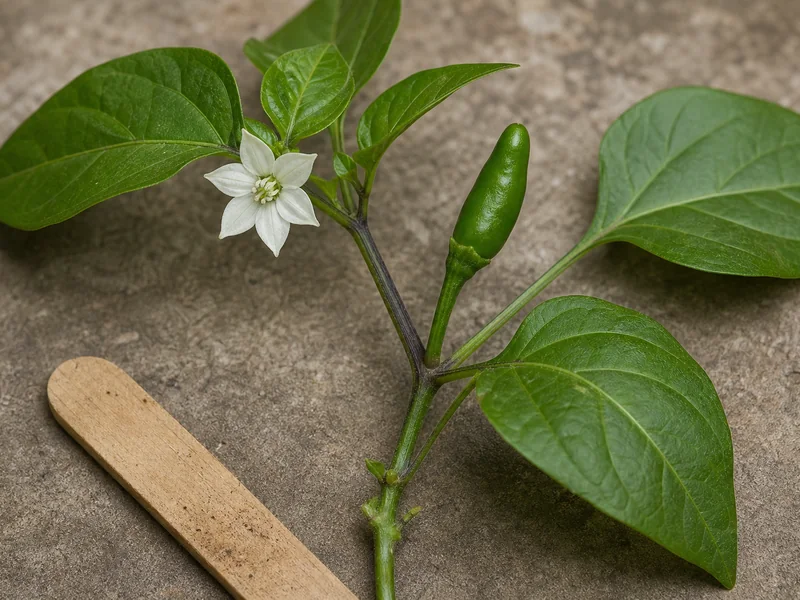
- Flowers: record color, spots near the throat, and whether flowers appear alone or in clusters.
- Pods: compare direction, wall thickness, length, shoulder shape, and ripening color.
- Seeds: check seed color only after fruit matures, because black or brown seed is a strong pubescens clue.
Stop when two clues disagree. A compact plant with upright fruit may be an ornamental annuum, while a tall plant with similar white flowers may still be a cooking pepper grown in a cramped pot.
When you have more than one mystery plant, compare them side by side on the same day. Leaf size, flower timing, and pod direction are easier to judge against another plant under the same light, pot size, and watering schedule.
Can you identify a pepper plant by its leaves?
NC State Extension describes peppers across the genus as alternate-leaved plants with simple, often ovate to lanceolate leaves, smooth margins, and a somewhat glossy surface. Their general leaf range is about 3 to 6 inches long and 1 to 3 inches wide, so those traits confirm pepper family more than pepper type.
Seedlings are the weakest stage for identification. Cotyledons look plain, and the first true leaves mostly tell you that the plant is a pepper, not whether it will make a bell, jalapeno, aji, or bonnet-shaped fruit.
Plant size can still help. UF/IFAS lists ornamental Capsicum annuum at about 1 to 1.5 feet tall with 2 to 4 inch ovate leaves, which fits many patio and bedding peppers better than a large bell or poblano plant.
A few leaves carry stronger clues. Heavy fuzz on stems and leaves points toward Capsicum pubescens types, while narrow leaves on a rangy plant can fit cayenne-style annuum plants or baccatum ajis.
Do not call a plant from leaf curl, color, or size alone. Heat, low light, tight roots, mites, and watering swings can all change leaf shape before the plant shows its real identity.
Leaf position also matters. New leaves at the growing tip can look smaller, lighter, or more pointed than older leaves lower on the plant.
Compare mature leaves from the middle of the plant before you decide the shape is a variety trait.
How do pepper flowers separate the species?
Flowers are the first high-confidence stage. Oregon State Extension notes that peppers belong to five domesticated Capsicum species, and flower traits are one of the fastest ways to separate them in a mixed tray.
Count the flower arrangement, but do not treat it as a lab result. A single white flower at a node leans annuum, while clustered flowers can show up in chinense and some other groups.
Weather, pruning, and plant vigor can still change how many flowers open at once.
| Species clue | What to look for | What it usually means |
|---|---|---|
| Capsicum annuum Varieties | Small white flowers, often one at a node | Bell, jalapeno, poblano, cayenne, shishito, many ornamentals |
| Capsicum chinense Varieties | Pale flowers, often with a fuller plant and later fruit set | Habanero, Scotch bonnet, ghost, many superhot types |
| Capsicum baccatum Varieties | Cream or yellowish flowers with green or gold marks near the center | Aji types such as Lemon Drop, Bishop's Crown, and Sugar Rush |
| Capsicum frutescens Varieties | Small white flowers and slim upright fruit later | Tabasco-style plants and bird peppers |
| C. pubescens source notes | Purple flowers, hairy growth, and later dark seeds | Rocoto or manzano types |
The table gives you a species group, not a variety name. A white annuum flower can still belong to a bell, jalapeno, cayenne, or an ornamental pepper, so keep watching the fruit.
Take the flower photo straight on and from the side. The front view records spots and color, while the side view shows whether the flower hangs down, faces out, or sits near a cluster of buds.
Those two angles are more useful than five close-ups of the same petal.
What do pod direction and shape tell you?
Once fruit sets, direction matters. Oregon State shows that some cultivars hold fruit upright while others hang down, and that single habit can separate tabasco-style or ornamental plants from many bell, habanero, and aji types.
Shape then does the heavier work. A blocky pod points toward a bell type, a broad triangular shoulder points toward poblano, a blunt green torpedo points toward jalapeno, and a long thin pod points toward a cayenne-style drying pepper or a mild Japanese type such as Fushimi sweet pepper.
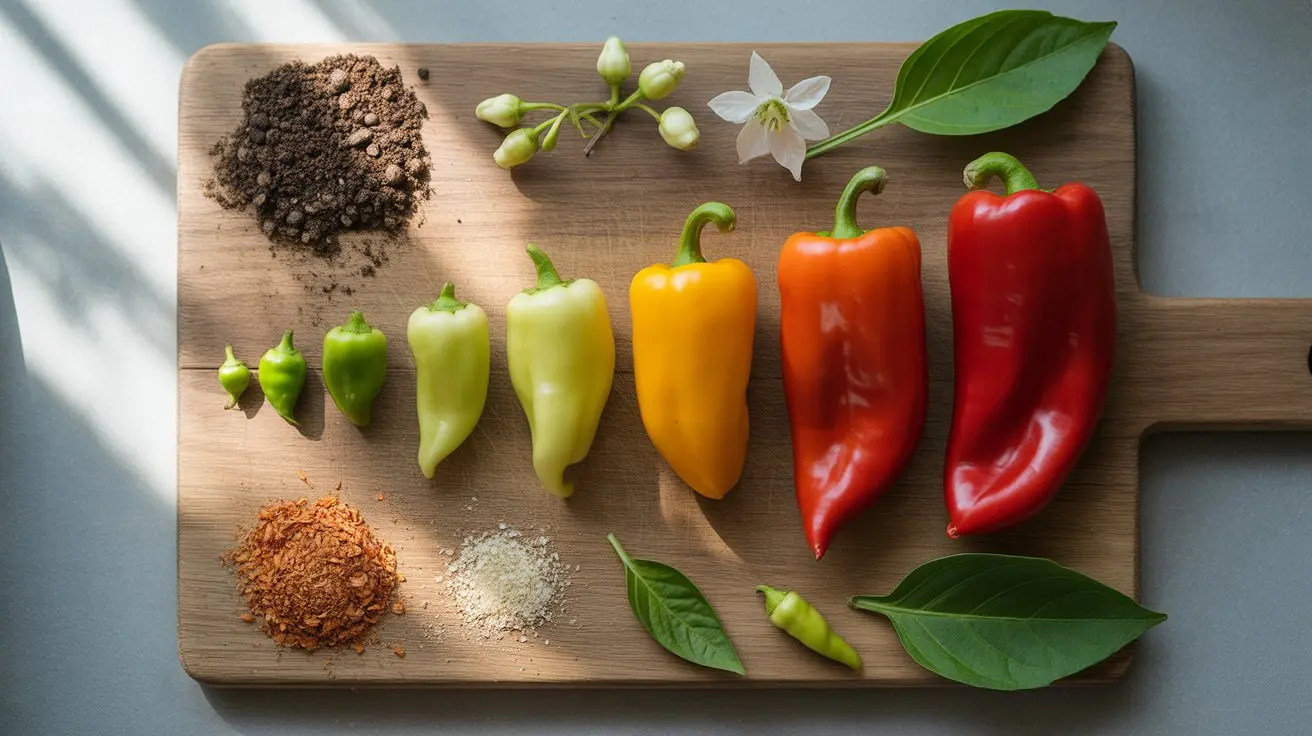
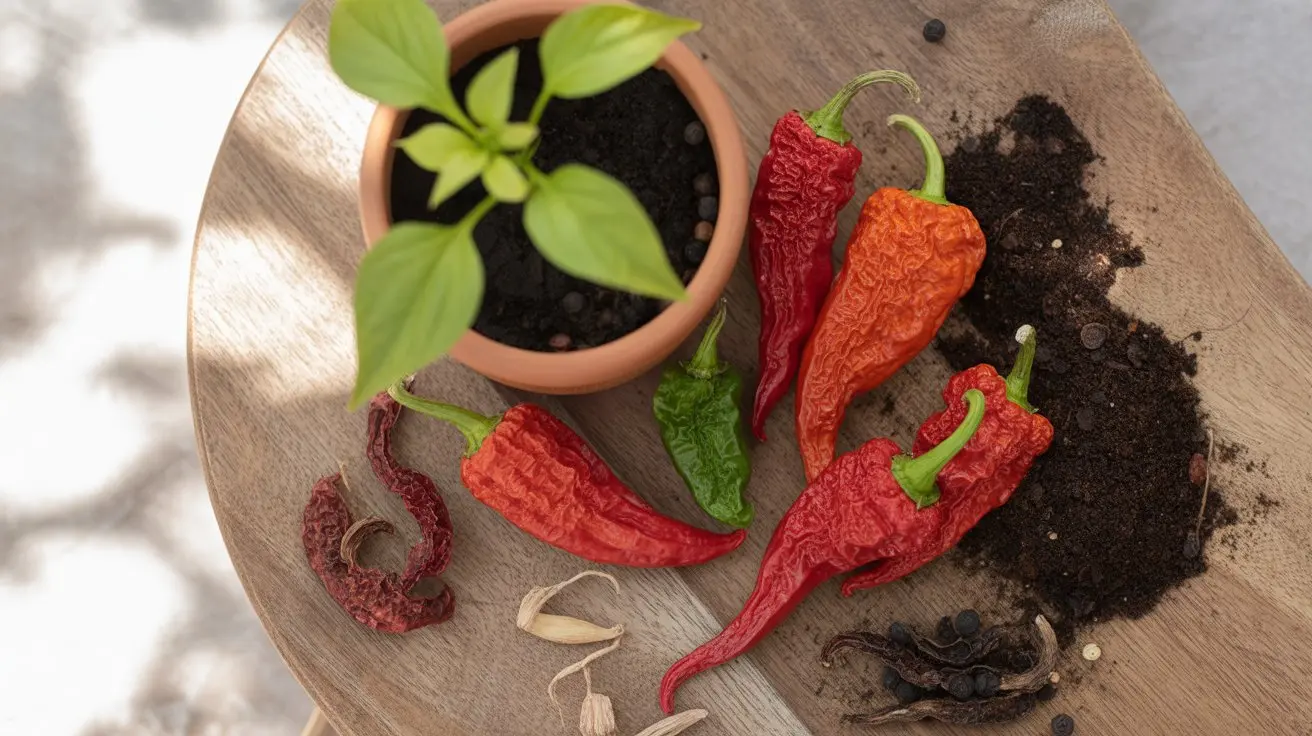
Color helps only late. Many green pods ripen red, but ornamentals may move through cream, yellow, orange, purple, or red on the same plant, and ripe color alone rarely gives you the cultivar.
Seed color is a late but strong clue. Cream-colored seeds fit most domesticated peppers, while dark brown or black seeds point hard toward pubescens types such as rocoto or manzano.
Cut one mature pod lengthwise and compare it with pepper anatomy clues. Thick flesh, a broad placenta, a narrow seed cavity, or a thin drying wall can explain why two plants looked similar outside but behave differently in the kitchen.
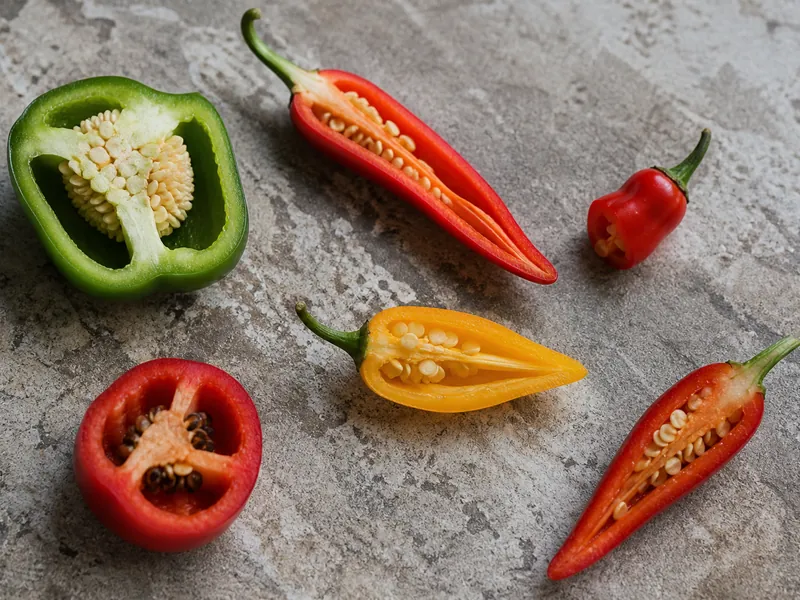
Wall thickness gives another clue once you cut the first pod. Bells, poblanos, and rocotos feel thick and juicy, while cayenne and many bird peppers have thinner walls that dry faster.
Aroma can help too, but use it carefully. Chinense pods often smell fruity or tropical before the heat lands, while many annuum pods smell grassy or fresh-cut.
Sniffing is safer than tasting when the plant may be a superhot.
Match common garden types
Most home-garden mystery plants fall into a small set of practical buckets. Use the early clue to choose a role, then wait for the fruit clue before changing labels in your garden map.
| Likely type | Early clues | Fruit confirmation |
|---|---|---|
| Bell or poblano | Broad annuum leaves, sturdy frame, white flowers | Blocky bell fruit or wide poblano shoulders that hang down |
| Jalapeno or serrano | Medium annuum plant, clean white flowers, upright young growth | Green torpedo pods for jalapeno, slimmer pointed pods for serrano |
| Cayenne or long frying pepper | Narrower leaves, lankier branches, white flowers | Long thin pods, usually red when ripe. Frying types may stay mild |
| Compact ornamental | Short dense plant, small glossy leaves, many flowers | Clusters of small upright pods like Tangerine Dream orange pods or heatless Chilly Chili fruit |
| Chinense hot pepper | Fuller plant, often slower, leaves can look broader or puckered | Wrinkled lantern pods or squat bonnets with fruity aroma when cut |
| Baccatum aji | Marked flowers and open branching | Hanging ajis such as bright Lemon Drop pods or the winged Bishop's Crown shape |
| Pubescens rocoto | Hairy leaves, purple flowers, cooler-weather vigor | Round thick-walled pods with dark seeds inside |
This is a field key, not a lab key. If two buckets fit, keep both names on the tag until the first ripe fruit gives you color, wall thickness, aroma, and seed clues.
For mixed nursery starts, make the label practical instead of pretending you know the cultivar. Tags like "annuum frying type," "upright ornamental," or "possible baccatum" are honest enough to guide spacing, staking, harvest timing, and kitchen tests.
Read the table from left to right. If the early clues match one bucket but the fruit confirmation points somewhere else, keep the fruit evidence and demote the early guess.
Can growing stress make a pepper look like another type?
Stress changes shape. A plant in a small pot can stay short, branch less, and carry smaller leaves than the same cultivar in a warm bed.
That does not make it a different pepper.
Use size clues only after you check the growing conditions. Compare the plant against your expected pepper plant height, root space, and pepper plant spacing before you decide it is a compact variety.
Water and temperature can also fake an ID clue. Overwatered plants may look pale and soft, thirsty plants may curl, and cold nights can tint stems or leaves purple without proving the plant is pubescens.
When a trait appears suddenly after a heat wave, transplant move, or wet week, treat it as a care clue first. A true type trait stays consistent as new growth forms.
Purple is especially easy to overread. Purple nodes, purplish stems, or cold-tinted leaves can appear on ordinary annuum plants, so save the pubescens label for the full set of hairy leaves, purple flowers, and dark seeds.
Check moisture before you label a plant by leaf posture. The same drooping leaves can point to thirst or soggy roots, which is why a quick soil check from a pepper watering routine matters more than the leaf angle by itself.
Tag plants for next season
The cleanest fix is boring recordkeeping. A mystery pepper is fun once.
The second year, a tray map saves weeks of guessing.
- Write the variety name on both a pot tag and the tray map.
- Take a seedling photo when the first true leaves open.
- Take a flower photo before the first fruit hides the bloom.
- Take a ripe pod photo beside the plant, not on the kitchen counter.
- Note whether the first pods point up, hang down, or change direction as they gain weight.
If you save seed, label the mother plant only after you know the ripe fruit. Then keep seed from the plant whose flower, pod, and flavor matched the label, not just the one that looked right as a seedling.
For open-pollinated garden plants, add one more note: whether other peppers bloomed nearby at the same time. That does not change the mother plant's identity, but it tells you whether saved seed is likely to repeat the same plant next season.
How Can You Identify Pepper Plants Before They Fruit? FAQ
- North Carolina Extension Gardener Plant Toolbox - Capsicum
- New Mexico State University Chile Pepper Institute - The Story of Chile Peppers
- Oregon State University Extension - Grow Your Own Peppers
- University of Florida IFAS - Capsicum annuum Ornamental Pepper