How Tall Do Pepper Plants Grow? Height by Type and Setup
Most pepper plants grow 18 to 48 inches tall from the soil line. Compact patio peppers stay shorter, while large containers, long warm seasons, and overwintered plants can push some varieties past 3 feet.
Most pepper plants grow 18 to 48 inches tall from the soil line to the top of the canopy. Compact patio and ornamental peppers may stay near 12 to 20 inches, while strong bell, poblano, habanero, and baccatum-type plants can push past 3 feet in a long warm season.
Use height as a planning number, not a contest. A short plant in a pot can still produce well, and a tall leafy plant can still disappoint if it has too much nitrogen, not enough sun, or fruit too heavy for the stems.
How tall do most pepper plants grow in one season?
University of Maryland Extension describes peppers as bushy plants that can reach 3 to 4 feet. That gives you a safe vertical ceiling for many common sweet and hot types, even though most finish shorter in one outdoor season.
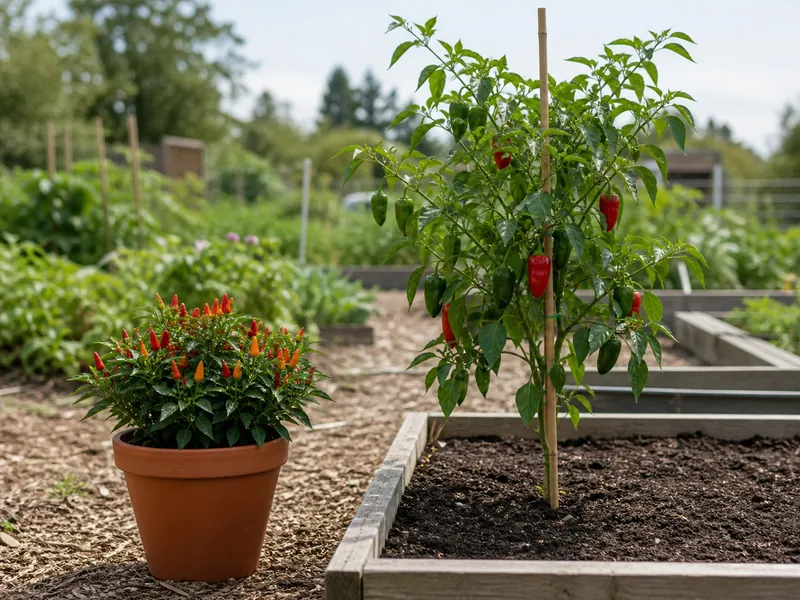
Use the table as a set of planning bands, not botanical limits. Fruit size, branch habit, cultivar genetics, and season length determine whether a plant stays near the lower or upper end.
Other height guides publish one number per named cultivar. We do not, because no extension service measures peppers that way, and a figure with no measurement behind it will fail you in the season it matters.
A band you can plan around beats a decimal you cannot check.
| Pepper type | Plan for this height | What changes the number |
|---|---|---|
| Compact patio or ornamental peppers | 12 to 20 inches | Short internodes, small pods, small containers |
| Jalapeno, shishito, banana, and frying peppers | 24 to 36 inches | Repeated green harvest keeps plants branching |
| Bell peppers and poblanos | 24 to 48 inches | Large fruit makes stems lean before plants look tall |
| Habanero and Scotch bonnet types | 30 to 48 inches | Long warm seasons and big containers can add height |
| Very small-podded hot peppers | 24 to 48 inches | Upright branches and many light pods fill the canopy |
| Overwintered or greenhouse plants | 4 feet or more | Second-year stems and protected roots extend growth |
For a normal outdoor season, plan for 3 feet of plant plus room to reach around it. If you grow in a greenhouse, a large fabric bag, or a frost-free climate, leave extra space above the plant.
Measure from the soil line
Measure pepper height from the soil surface, not from the bottom of the pot or the top of a raised bed. A 30-inch plant in a 14-inch container can put the top leaves near waist height even though the plant itself is still average.
This matters on balconies and under low lights. If a shelf gives you only 24 inches of clearance above the pot, a standard bell or habanero is the wrong plant for that spot.
Choose a compact patio cultivar or move the plant before branches press into the light.
For planning, leave 36 inches of vertical room above the soil for most garden peppers.
Allow 48 inches where the plant sits in a large container, belongs to a chinense type, or has been overwintered.
Does variety decide how tall a pepper plant grows?
Genetics gives each plant its likely frame. A compact ornamental pepper bred for a patio does not become a 4-foot shrub just because it gets good soil, and a vigorous Capsicum chinense pepper will usually want more root room than a small ornamental.
The species label is useful without being sufficient.
Many everyday garden peppers belong to Capsicum annuum, and that one group holds short ornamentals, sturdy jalapeno plants, sweet bells, poblanos, cayennes, and long New Mexico types.
Read the seed packet or transplant tag before you decide spacing. If the tag says compact, patio, dwarf, or ornamental, expect a shorter plant.
If it says large-fruited, vigorous, greenhouse, long-season, or heavy yield, plan support before the first fruit sizes up.
How deep should you plant pepper transplants?
Most height advice starts after the plant is in the ground. One decision made during those thirty seconds of transplanting is measurable at the end of the season.
Utah State Extension is specific about it. Transplants should be set so the soil level reaches the cotyledon leaves or the first true leaf, and plants placed at those depths grow larger and produce more leaves.
The size difference carries through to harvest.
Utah State cites research finding total fruit weight 26 percent higher on plants set deep enough to cover the cotyledons.
The comparison is against plants set to cover just the top of the root ball, which is how most people transplant a pepper.
The cotyledons are the first pair of rounded seed leaves, sitting below the pointed true leaves. On a transplant that size the difference between the two planting depths is often only an inch or two of stem.
This surprises people who have been told peppers are not tomatoes.
That warning is about a different mechanism. A tomato grows new roots directly from buried stem, which Utah State notes in the same guidance, and a pepper does not.
Burying a pepper deeper still helps, just not for that reason. It puts the root ball into steadier soil temperature and moisture, and it braces a stem that has to hold fruit later.
Do not bury a pepper up to its first true leaves and then expect roots along the stem. Set it to the cotyledons, firm the soil, and let the height come from a root system that is not drying out every afternoon.
Why do plants from the same packet reach different heights?
Two plants from the same packet can end the season at different heights because their roots and weather history were different. Height is a record of the season, not only the variety name.
| What changed | Height effect | How to read it |
|---|---|---|
| Root volume | Small pots usually make shorter plants | Check whether roots circle the pot or dry out daily |
| Light | Weak light makes thin, stretched growth | Long gaps between leaves mean the plant is reaching |
| Temperature | Cold nights slow new stems | Utah State puts the best range at 75 to 85 °F by day with nights above 60 to 65 °F |
| Nitrogen | Too much can make leafy height before fruit | Look for lush leaves, few flowers, and soft stems |
| Early fruit load | Fruit on a tiny transplant can stall size | OSU advises removing flowers and fruit from small transplants |
| Water swings | Dry roots pause growth and flower set | Container plants may need daily water in warm weather |
That is why we do not judge a pepper plant by height alone. A 26-inch plant with firm stems, dark leaves, and steady fruit is doing its job.
A 42-inch plant with pale leaves and no peppers needs a different diagnosis.
Do containers keep pepper plants shorter?
Root space often decides the final height in pots. Oregon State Extension says peppers grow best in containers large enough to support a large root system, with a 5-gallon bucket or similar container working well for one plant.
A small pot makes a genetically tall pepper behave like a compact one.
The plant flowers, sets a few pods, and stops adding height because the root ball dries out too fast or runs out of room.
Use pot size to control the tradeoff on purpose. A 3-gallon pot is fine for a small patio pepper, but a container pepper plant grown for a full-season harvest needs more root room if you want height, leaf cover, and enough fruiting branches.
- Use 5 gallons as the practical minimum for most standard peppers.
- Move large-fruited or long-season plants into 7 to 10 gallons when you can.
- Water from the soil surface until the pot drains, then let the top layer begin to dry.
- Expect balcony plants to stay shorter than the same cultivar in a warm raised bed.
When do pepper plants need staking?
A pepper plant does not need support because it is tall. It needs support when the fruit load can twist brittle stems.
Maryland's pepper guide notes that mature stems can become brittle and should be supported with cages or short trellises. That is especially true for bells, poblanos, heavy New Mexico types, and any plant exposed to wind.
Add the support while the plant is still easy to handle.
A bamboo stake, short tomato cage, or small trellis all work, and all of them work better before the branches lean, because you can still guide a stem without snapping it.
- Stake at transplanting if your site gets wind.
- Add a cage when large peppers start hanging outside the leaf canopy.
- Tie loosely with soft plant tape, not wire or tight string.
- Support the branch, not the fruit stem.
- Harvest with scissors when branches feel brittle.
Is a short pepper plant a problem?
A short pepper plant is normal when the cultivar is compact, the season is cool, or the plant is carrying fruit early. Height becomes a problem when the plant also has pale leaves, weak stems, no new growth, or flowers that keep dropping.
Start with the plant's stage. Utah State Extension describes good transplants as stocky, dark green plants with 6 to 9 mature leaves and 5 to 8 inches of height.
A young plant that size should not look tall yet.
| What you see | Most likely meaning | First fix |
|---|---|---|
| Short, dark green, branching plant | Normal compact growth | Do nothing except keep care steady |
| Short plant with roots circling the pot | Root restriction | Move up one pot size or plant outside |
| Short plant with yellow lower leaves | Cold soil, low nutrients, or wet roots | Check drainage, warmth, and feeding |
| Thin plant leaning toward light | Not enough direct light | Give stronger sun or lower the grow light |
| Flowering at 6 to 8 inches tall | Fruit too early for the frame | Pinch early flowers until roots settle |
| Stopped growth after transplant | Transplant shock or cool nights | Wait for warm nights and steady moisture |
If the plant is short but healthy, do not force nitrogen. Extra nitrogen can make more leaves without solving root restriction, cold soil, or weak light.
Why is a tall pepper plant setting few peppers?
A tall plant with few peppers usually has a fruit-set problem, not a height problem. Too much nitrogen, hot days, cold nights, dry soil, or heavy shade can all push leaves while flowers fail.
University of Maryland Extension says very hot weather, especially evenings above 75°F, can slow or stop pod production. The same guidance sets a ceiling at the other end, where temperatures above 95°F may result in flower bud drop and pollen death.
Illinois Extension adds moisture stress during harvest as a cause of poor fruit set or aborted young fruit.
Three different failure points, and a tall fruitless plant can be sitting on any of them.
Do not prune a pepper because it got tall. Check light, fertilizer, water, and temperature first.
Pruning a stressed plant strips leaf cover and leaves the pods more exposed to sunscald.
If the plant is tall and fruitless, compare it with the separate pepper plant not producing fruit diagnosis. If the plant is tall but breaking under pods, solve support and harvest timing first.
Do taller pepper plants produce more peppers?
A taller pepper plant does not automatically produce a better harvest. Height gives the plant more branch space, but fruit count still depends on flower set, root health, harvest timing, and whether the plant can keep enough leaves to feed the pods.
This is where height and yield split. A short shishito plant with many small pods can out-count a taller bell pepper plant, while the bell plant may still give more food by weight.
Use the separate pepper yield by plant type when you need harvest numbers instead of vertical space.
For planning, pair the two numbers. Height tells you whether the plant fits the pot, cage, bed edge, shelf, or grow tent.
Yield tells you how many plants to grow for salsa, roasting, drying, or fresh eating.
How much vertical space do indoor peppers need?
Indoor lights, low tunnels, and small greenhouses make height limits stricter than outdoor beds. A pepper that fits outside can still hit a shelf, lamp, or row-cover fabric before it is done growing.
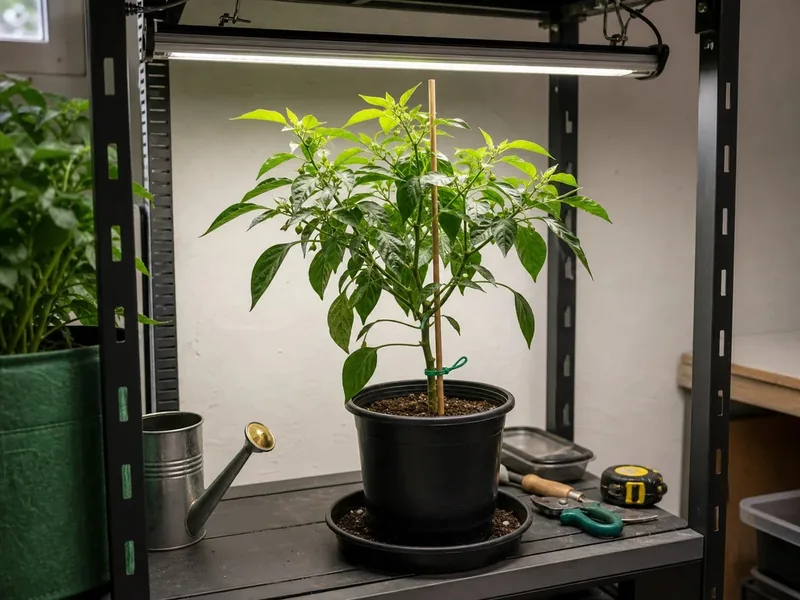
Leave air above the canopy, not just enough room for the top leaves to touch. In a grow tent, a 30-inch plant in a 12-inch pot can already need 4 feet of vertical space once you include the container, saucer, light gap, and support stake.
For low tunnels, choose compact plants or remove the cover once weather is stable. Pressing fabric against new pepper growth can bend branch tips, trap moisture on leaves, and make the plant grow sideways before fruit sets.
How far apart should you plant peppers?
Pepper height gets the search, but width causes most garden problems. A 30-inch plant can spread 18 to 24 inches once side branches fill with fruit.
UMN recommends spacing pepper plants 18 inches apart in rows 30 to 36 inches apart, while Illinois gives 18 to 24 inches in rows or 14 to 18 inches in beds.
Utah State goes tighter still, at 12 to 18 inches in the row with about 15 inches between rows and two rows to a 30-inch bed.
The three do not agree, and the spread is the useful part. Anything from 12 to 24 inches is defensible, so the number you pick should follow how wide your plants actually get and how you intend to reach them.
There is one more reason to keep paired rows close, which is that they shade each other and reduce sunscald.
Those numbers are not only about roots.
They leave room for air movement, picking, tying, and seeing pests before they spread.
For a bed plan, give most peppers 18 inches of plant-to-plant spacing and a support path you can reach. For pots, give each standard pepper its own container and enough room that the canopy does not press hard against a wall.
Height is the first estimate. The better garden decision is the whole footprint, roughly 3 feet up and 2 feet wide, with enough space left to water, stake, and harvest without breaking branches.
How Tall Do Pepper Plants Grow? Height by Type and Setup FAQ
- University of Maryland Extension - Growing Peppers in a Home Garden
- University of Minnesota Extension - Growing Peppers
- Oregon State University Extension - Grow Your Own Peppers
- Utah State University Extension - How to Grow Peppers in Your Garden
- Utah State University Extension - Planting and Spacing, Tomato, Pepper, Eggplant
- University of Illinois Extension - Peppers
- Oregon State University Extension - Container Gardening