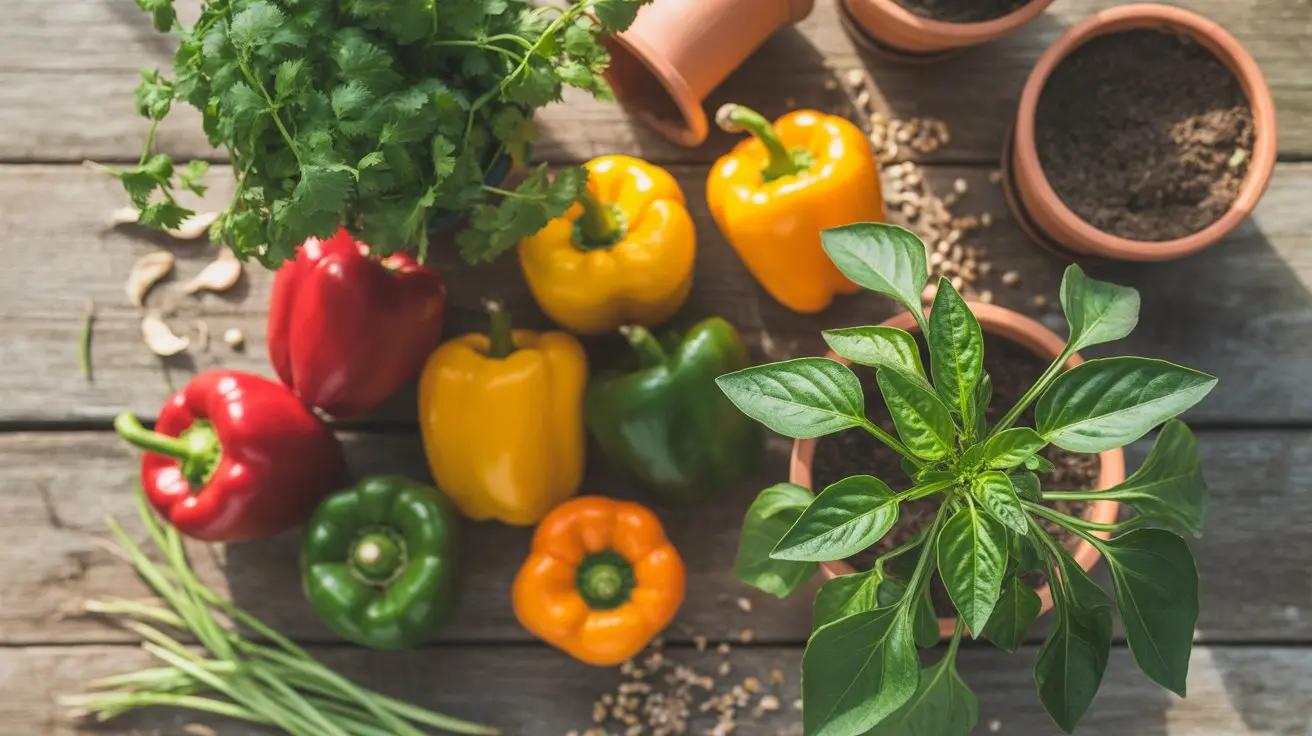
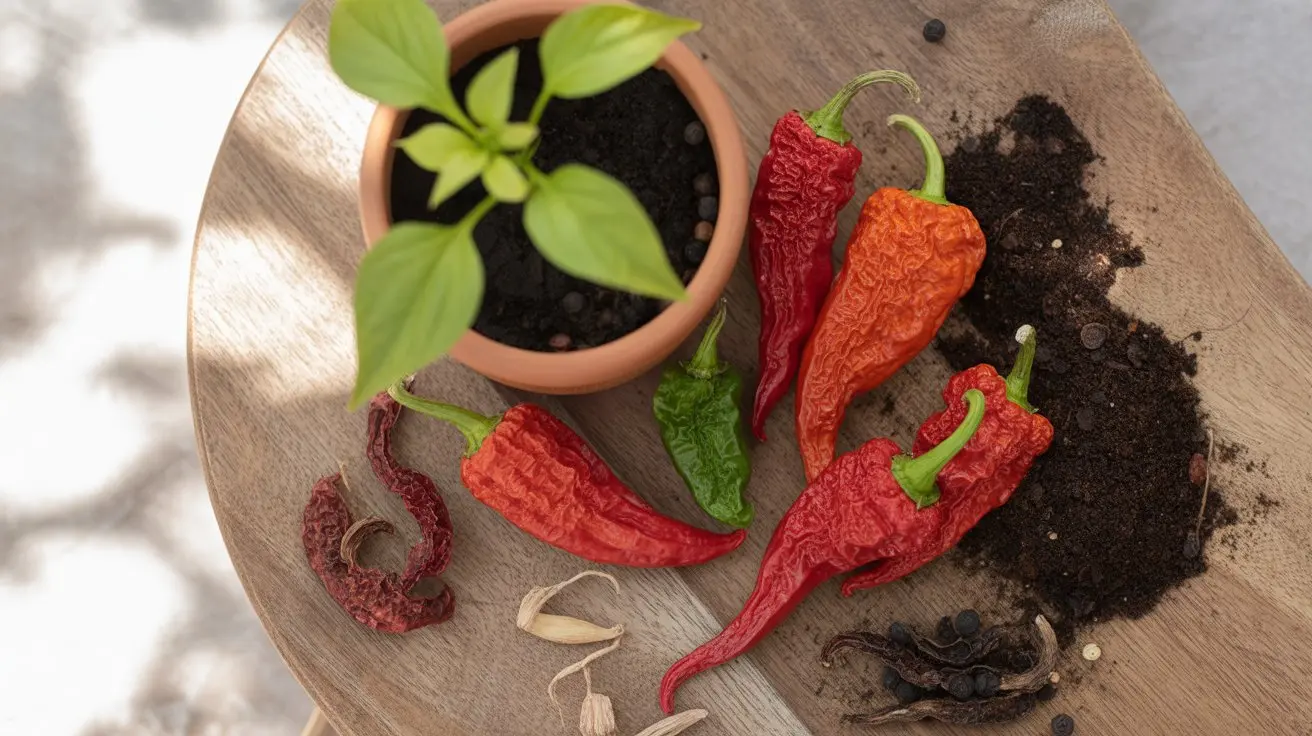
How Do You Grow Peppers From Seed to Harvest While Keeping Roots Warm?
Grow peppers by protecting warm roots and steady growth. Start seed early, transplant after mild nights, give full sun, water evenly, feed from evidence, support heavy branches, and harvest for the use you want.
Peppers need warm roots, full sun, even moisture, and enough season to move from active transplants to the harvest color you want. Start with a sturdy transplant or begin seed indoors early enough that cool spring soil does not steal the first weeks of growth.
A pepper seedling can remain alive in cold soil or a cramped cell while losing two or three weeks of useful growth. Preventing that stall matters more than pushing weak roots with extra fertilizer.
How long does it take to grow peppers?
Peppers follow a warm-season crop clock. University extension guides usually treat them as transplants rather than direct-sown vegetables because roots and flowers both slow when nights stay cool.
For most home gardens, start seed indoors, harden sturdy seedlings, and transplant only after frost risk has passed and nights stay mild. Many Capsicum annuum peppers produce usable green pods sooner, while thick-walled sweet types and Capsicum chinense cultivars usually need more time to reach full color.
| Stage | Usual timing | What matters most |
|---|---|---|
| Seed start | 8 to 10 weeks before transplant | Warm mix and strong light |
| Hardening off | 7 to 10 days | Wind, sun, and night exposure in steps |
| First green fruit | About 60 to 90 days after transplant for many types | Steady water during flowering |
| Full ripe color | Often 2 to 4 weeks after usable green size | Patience and healthy leaves |
Use the seed packet as a starting estimate, not a promise. The real clock begins after the plant has warm roots and active leaf growth in weather that supports steady growth.
A pod can be usable green and still need several warm weeks to turn red, orange, or yellow.
If your season is short, grow at least one fast variety along with slower peppers so the bed is not waiting on one late crop.
That mix also protects the kitchen plan. Early green pods cover fresh salsa and weeknight cooking, while slower ripe pods can stay on the plant for sauce, drying, or seed saving.
Which pepper type fits your space and season?
Plant habit and fruit weight decide how much room and support each pepper needs.
A compact jalapeño can live closer than a broad bell, while a tall baccatum or a heavy poblano needs more air and branch support.
Do not choose spacing from the word pepper alone. Check expected height, pod weight, and harvest goal.
A plant grown for many small hot pods can tolerate a little crowding. A plant grown for thick walls needs leaf cover and airflow so fruit can fill without sunscald.
- Use tighter spacing only when plants stay compact and the bed has strong airflow.
- Give large-fruited bells and poblanos wider spacing so branches can carry fruit cleanly.
- Use containers when soil warms slowly, but choose a pot large enough that roots do not dry out every afternoon.
Starting seed solves only the first stage. Type and spacing decide whether that seedling can turn into a useful harvest.
Use mature size to avoid a hidden yield problem. Crowded plants may look full from above, but lower leaves stay damp, flowers are harder to inspect, and large pods rub against branches.
When are pepper seedlings ready to transplant?
A good transplant is short, green, and rooted through the plug without being root-bound. If the stem is thin, the leaves are pale, or roots circle hard at the bottom, the plant needs correction before it goes into the garden.
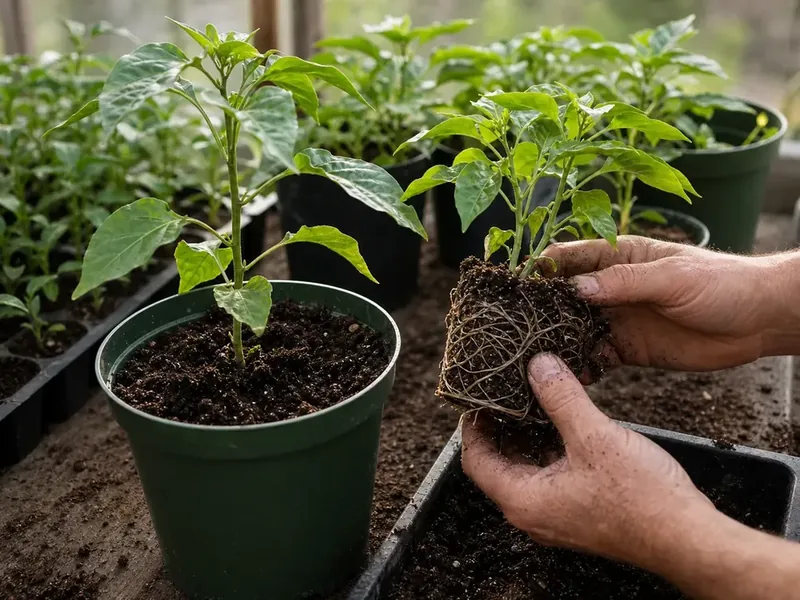
Three signs matter more than a calendar date because a weak transplant spends its first outdoor weeks repairing itself.
- Stable stem: the plant stands without flopping.
- Active growth: new leaves are forming.
- Held root ball: roots keep the soil together when the plant is lifted.
Hardening off is the bridge between indoor growth and garden weather. Change exposure gradually over about a week.
- Give seedlings a few hours outside at first.
- Keep them out of strong wind while increasing sun exposure.
- Extend outdoor time until they can handle a normal mild day.
If nights drop back into the 40s Fahrenheit, wait. The plant may survive, but cold roots can stall new growth, and that delay is hard to win back later.
Transplant shock is easiest to prevent before the plant leaves the tray. Water the seedling before planting, keep the root ball intact, and plant on a mild day when possible.
A calm transplant gives the plant a faster first month.
Should you grow peppers in a bed or container?
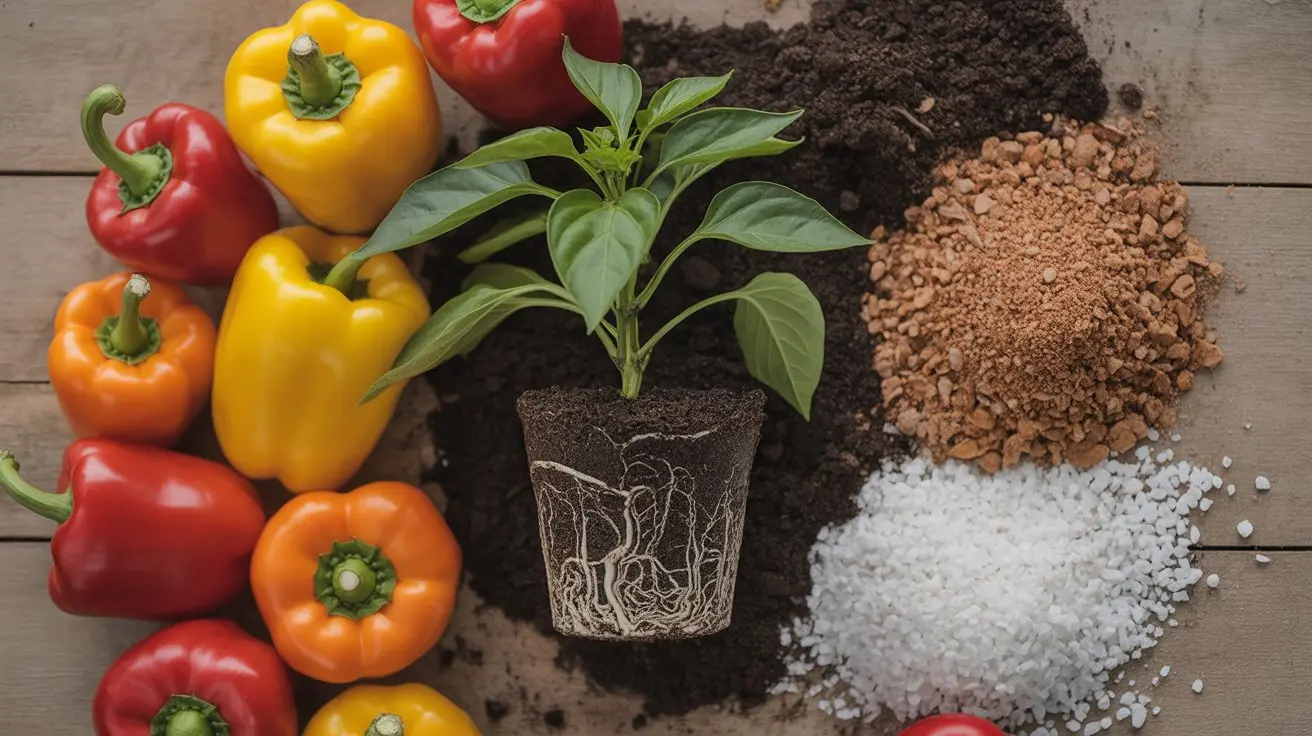
Drainage decides whether roots can breathe. University of Maryland and Minnesota both emphasize full sun and well-drained soil because saturated roots grow slowly even when leaves remain green.
In a bed, work compost into the top layer and avoid burying the stem deeply like a tomato. In a pot, choose a loose mix with drainage holes and enough volume for the plant's final size.
A 5-gallon pot is a practical floor for many compact peppers, while large bells or long-season hot peppers often do better with more room.
Warmth also belongs in the setup. Black plastic, dark containers, raised beds, and row cover can help early soil warmth, but they can overheat roots later.
Remove or shade heat traps once summer weather turns hot.
Bed soil and container mix solve different problems. A garden bed needs structure, organic matter, and drainage.
A potting mix needs air space even after repeated watering. If both feel heavy and slick when wet, roots will be slow no matter how strong the seedling looked indoors.
How should you water and mulch pepper plants?
Pepper roots need moisture and oxygen at the same time, especially once flowers and fruit are forming.
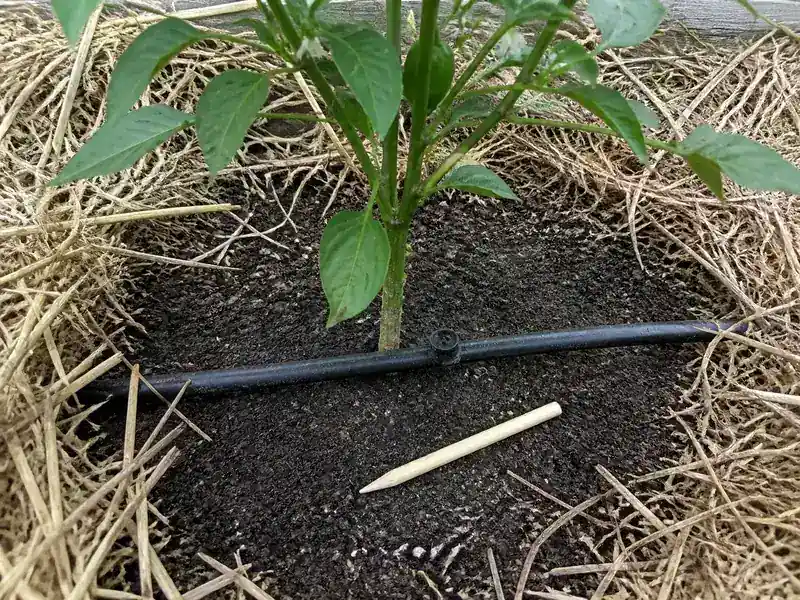
Dry swings cause stress during flowering and fruit sizing. Soggy soil causes a different stress: roots cannot breathe well, leaves may yellow, and growth slows even if the plant looks watered.
Use your finger or a moisture probe before watering. If the top inch is dry and the pot feels lighter, water deeply.
If the surface is wet and the container still feels heavy, wait and let air return to the root zone.
Mulch after the soil has warmed. A thin layer of straw, shredded leaves, or compost reduces swings and keeps splash off lower leaves, but early heavy mulch can keep spring soil cooler than peppers like.
Water timing changes once fruit starts sizing. A small seedling in spring may need patience between waterings, while a fruiting container plant in July may need a deep soak every day.
No single watering schedule fits every root zone. Check whether the plant has both moisture and air.
When should you fertilize pepper plants?
Wait for active roots before feeding, because excess nitrogen pushes leaves at the expense of flowers in rich beds or oversized containers.
A balanced starter at transplant can help poor soil, but constant heavy feeding is not a shortcut. Watch the plant: dark green leaves with few flowers often mean the plant has enough nitrogen and needs time, light, or warmer nights more than another dose.
At flowering, the plant needs steady water and moderate nutrition more than another large flush of leafy growth.
If leaves are pale and new growth is small, feed gently and then wait. If leaves are large and flowers keep dropping, check heat, water swings, and nitrogen before blaming the variety.
Use the product label and a soil-test recommendation for rates rather than turning leaf color into a dosing chart.
Compost can help, but it is not a license to keep adding fertilizer. A rich bed may need less feeding than a container that flushes nutrients out with frequent watering.
Watch the growth response for a week before changing course again.
Do pepper plants need support or pruning?
Support earns its place when fruit weight can split branches or bend stems into wet soil.
Stake tall plants early, before the first heavy pods pull the branches down. A single bamboo stake can hold a compact hot pepper, while bells, poblanos, and heavy container plants may need a cage or several soft ties.
Pruning should solve a problem. Remove broken stems, crowded lower shoots that touch soil, or small interior growth that blocks airflow.
Do not strip healthy leaves from fruiting plants, because leaves shade pods and feed the harvest.
For plants that are already too leafy, pepper pruning can help open the canopy. For healthy compact plants, leaving them alone often gives a better harvest.
Support also protects the roots. A branch that tips a container or leans the stem after rain can tear fine feeder roots.
Tie stems loosely and check the ties as the trunk thickens.
Why are pepper flowers dropping or fruit not setting?
Flower drop after transplant often traces to cool nights, hot afternoons, water swings, or excess nitrogen. A few early losses are common, but repeated drop deserves a check of the newest growth and recent weather.
Use fresh damage rather than old scars to judge current risk. Holes, stippling, or ragged leaves from weeks ago do not prove the current crop is threatened.
Inspect new injury on growing tips for moving insects, frass, webbing, or a spreading disease pattern before choosing a treatment.
If the plant flowers but sets no fruit, check recent night heat, soil moisture, and nitrogen before changing products. Healthy leaves, active roots, and mild nights must align before a heavy crop can form.
Plant height can fool new growers. A tall plant is not always ahead, and a compact plant is not always behind.
Use flower set, leaf color, and fruit load together when judging whether the plant is progressing.
When should you harvest peppers?
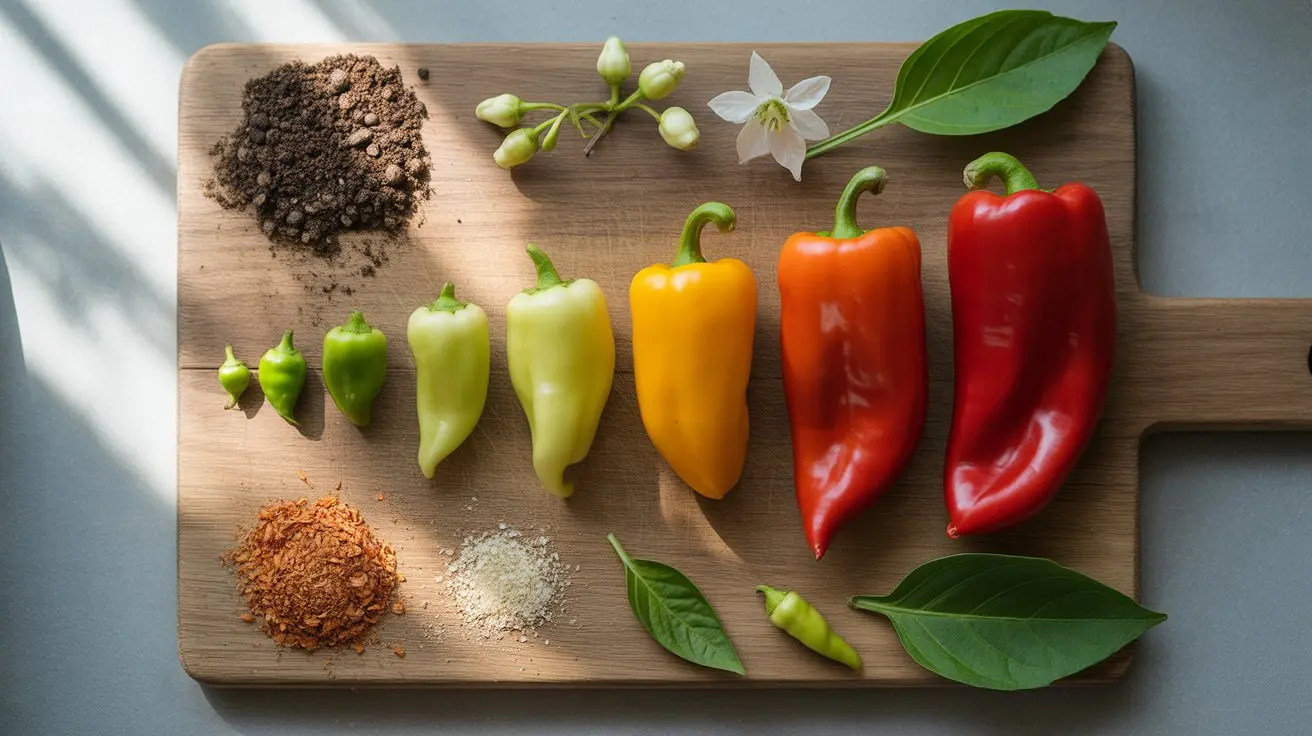
Green jalapeños, yellow banana peppers, red cayennes, and ripe Scotch bonnets show why harvest color should follow the intended kitchen use.
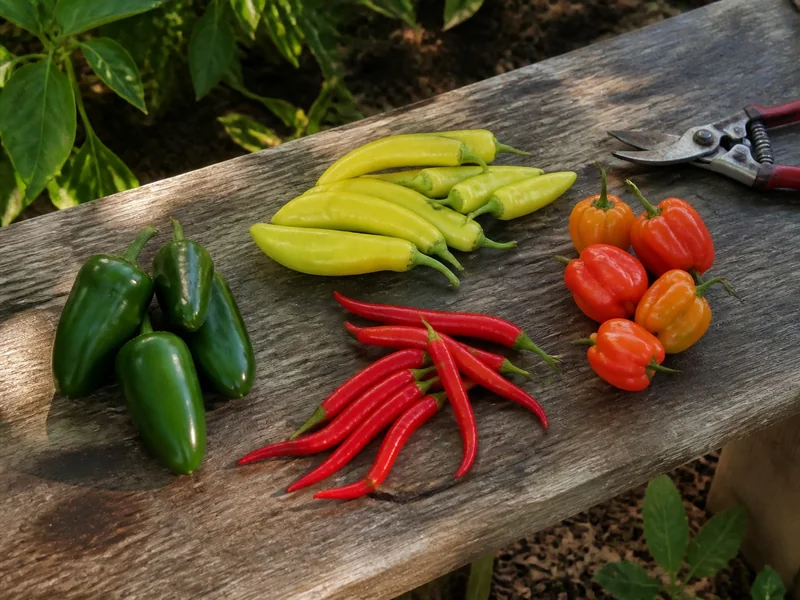
Pick early when you want crunch, lower sweetness, and more total harvest over time. Wait for full color when you want sweeter flesh, stronger aroma, or mature seed, but expect the plant to spend more energy on each pod.
Use clean scissors or pruners on thick stems. Pulling ripe fruit by hand can tear branches, especially on small container plants or heavy-fruited bells.
The best harvest plan leaves enough leaf cover to keep sizing the next pods. Once nights cool hard in fall, pick full-size green peppers before cold damage and let the last ripe pods finish indoors only if they have already started turning color.
Harvest frequency changes yield. Picking usable pods keeps many plants setting new flowers, while leaving every pod to full color slows the next flush.
If you want total volume, mix green and ripe harvests instead of waiting for every fruit to finish.
Judge yield by fruit size, harvest stage, and season length. A small hot pepper, a bell pepper, and a long-season chinense plant should not be judged by the same pod count.