How Do You Grow Scotch Bonnet Peppers to Full Ripeness?
Finishing fully colored pods before cold weather is the hard part. Start seeds warm, use at least a five-gallon container, transplant after nights hold above 50°F, and protect full-size pods through their final color change.
Grow Scotch bonnet peppers by planning for a fully colored harvest, not merely a plant that survives summer. The crop needs a warm seed start, an undisturbed root system, and enough mild days after fruit set for each bonnet-shaped pod to finish.
UF/IFAS Extension identifies Scotch bonnet as a Capsicum chinense pepper closely related to habanero, with thin waxy flesh and pods that usually mature red or yellow. Your seed packet still owns the exact ripe color and days to maturity.
Red, yellow, orange, and low-heat bonnet strains do not share one finish line.
How long do Scotch bonnet peppers take to grow?
Budget eight to ten weeks indoors plus the cultivar's listed days from transplant. Penn State Extension recommends starting long-season peppers indoors eight to ten weeks before permanent outdoor planting, while Maryland Extension lists closely related habanero types at 90 to 120 days from transplant.
Those two clocks overlap only after the seedling is outdoors and growing steadily.
A packet marked 90 days does not promise ripe pods 90 days after sowing.
Cool roots or flower drop can pause the transplant clock.
UF/IFAS describes Scotch bonnet as a Caribbean Capsicum chinense type that normally finishes red or yellow. That mature color matters because a full-size green pod has completed its size stage but has not necessarily completed the aroma and color stage the strain promises.
| Stage | Evidence to watch | Decision |
|---|---|---|
| Seed start | Warm media and emergence | Count back 8 to 10 weeks |
| Transplant | Nights above 50°F | Move out after hardening |
| Fruit set | Pods hold and enlarge | Keep water steady |
| Ripening | Color break matches the strain | Protect leaves and warm days |
Record the sowing date, transplant date, first flower, first full-size pod, and first ripe pod. That short record tells you whether next season needs an earlier start, a warmer site, or simply a faster Scotch bonnet strain.
A healthy plant that sets its first crop near the end of summer may run out of weather even when care is good.
Choose a movable container or a shorter listed maturity when your frost-free window cannot cover the indoor start and the outdoor ripening period.
What temperature helps Scotch bonnet seeds germinate?
Keep the seed media at 80 to 90°F until emergence, then give the seedlings strong overhead light.
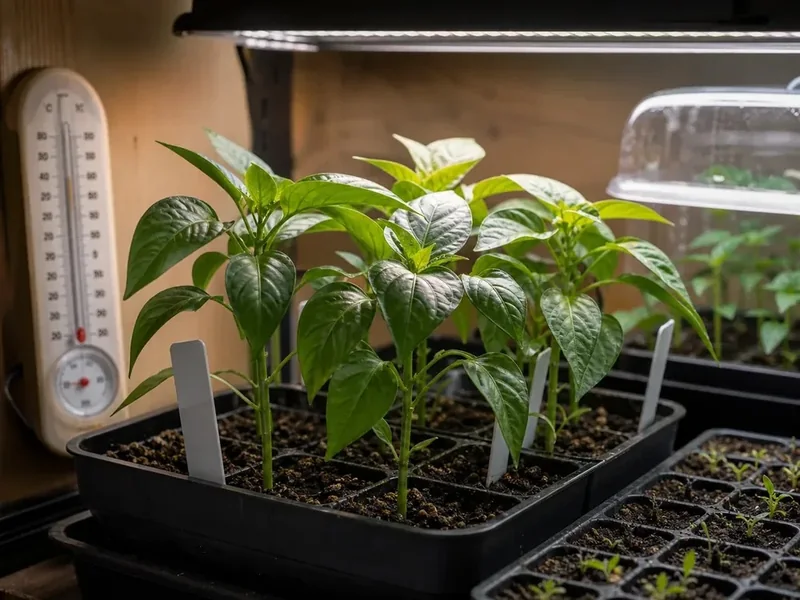
University of Minnesota Extension assigns warmth to germination and bright light to the growth that follows.
Heat and light solve different problems. Warm media speeds activity inside the seed, while close overhead light stops the new stem from stretching before its first true leaves expand.
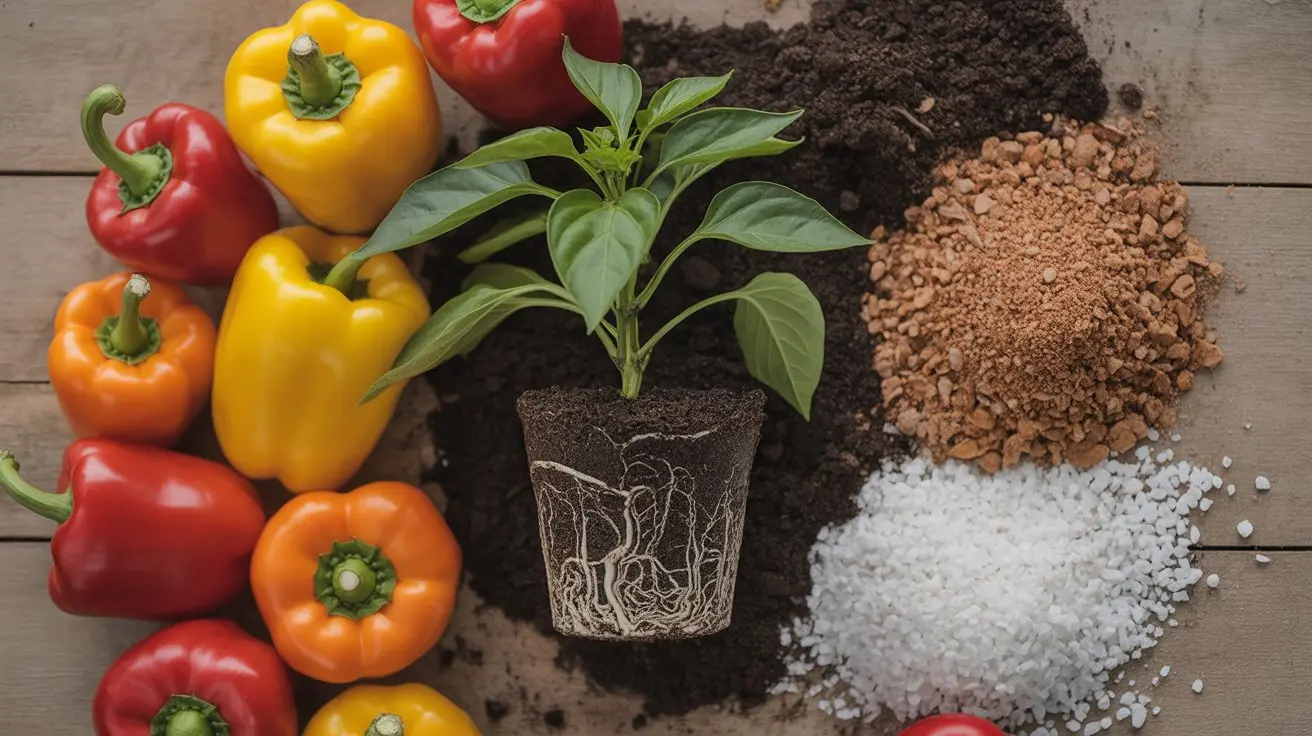
- Sow one-quarter inch deep. Use sterile seed-starting mix so the small root receives both moisture and air.
- Warm the media, not the whole room. Check cell edges daily because a heat mat dries a small tray faster than an unheated one.
- Move the tray under light at emergence. Keep the fixture close enough for stocky growth without heating or touching the leaves.
- Pot up when roots hold the plug together. Fresh media gives the seedling more root room before cold outdoor nights delay planting.
A transplant is ready when it has a stocky stem, several true leaves, and active new growth rather than height alone. Penn State Extension pairs individual containers with abundant light to produce that compact form.
Do not discard a warm, moist tray only because a faster pepper emerged first. Wait through the seed supplier's full germination window, then investigate old seed, saturated mix, or a cold root zone.
What size pot does a Scotch bonnet plant need?
Use a five-gallon container as the minimum for one mature plant.
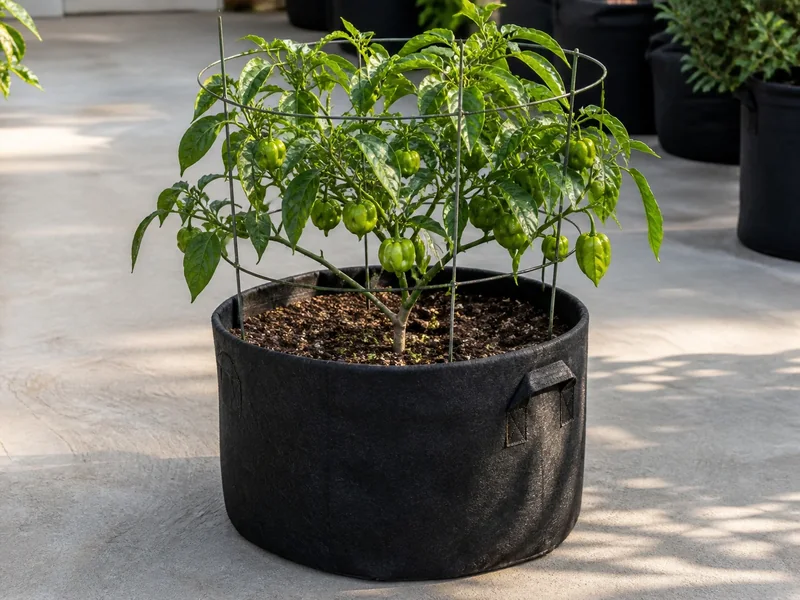
University of Maryland Extension lists five gallons as the minimum container volume for peppers and shows one pepper plant per bucket.
A wider container of the same volume is more stable in wind, according to Maryland Extension. Extra volume also gives a broad Scotch bonnet canopy more water reserve when leaves and pods draw from the root zone together.
Use fresh, well-drained potting mix and an open drainage path. Maryland Extension warns that ordinary garden soil alone lacks the aeration and drainage container roots need.
Pot up before roots form a tight circling mat or the plant begins flowering heavily. Loosening a badly root-bound plant is useful, but doing that work earlier protects the first flower set from a second transplant pause.
A small plant in a roomy pot is not wasted space. Scotch bonnet often builds roots and woody branch structure before the canopy and fruit load make that investment visible.
Support the container before branches become heavy. Maryland Extension recommends stakes or cages for tall fruiting plants because loaded stems can arch, break, or put pods against the ground.
When can Scotch bonnet seedlings go outside?
A frost-free date alone is too early while nights fall below 50°F.
University of Minnesota Extension recommends transplanting peppers after nighttime lows stay above that threshold.
University of Maryland Extension also advises bringing warm-season transplants indoors when forecasts fall below 50°F. A Scotch bonnet loses useful calendar time when cold soil slows roots.
The leaves may escape visible frost damage while the root system still stalls.
Harden plants over one to two weeks by starting in shade and wind protection, then increasing sun exposure. Both Maryland and Minnesota Extension describe hardening off pepper plants as gradual exposure rather than one immediate day in full sun.
- Night forecasts remain above 50°F.
- The root ball is moist before planting.
- The stem stays at the same depth it occupied in the pot.
- Plants have about 18 inches of spacing unless the cultivar label calls for more.
- Row cover can be vented before warm air builds around flowers.
University of Minnesota Extension owns each of the first three transplant decisions, including its standard 18-inch pepper spacing. Wider spacing is sensible where a selected Scotch bonnet strain makes a broad canopy or humid weather keeps inner leaves wet.
Wait for new leaves before applying a strong soluble feed.
New growth shows that the transplanted roots are functioning, while immediate heavy fertilizer can add salt stress to a root ball already adjusting to new soil.
How much sun do Scotch bonnet plants need?
Give the plant direct sun for most of the day and enough room for air to cross the inner branches. Scotch bonnet needs a productive leaf canopy because one plant may carry flowers, green pods, and ripening pods at the same time.
University of Minnesota Extension warns that peppers can develop white sunburn patches when too little leaf surface covers the fruit. Remove diseased or soil-touching leaves, but keep healthy foliage that shades pods during hot, dry weather.
Dense growth still needs inspection access, so tie major forks loosely to a stake or cage. The support lets you lift branches, check leaf undersides, and harvest without snapping woody joints.
Very hot afternoon conditions can interrupt fruit set even in a heat-loving pepper. Penn State Extension reports blossom abortion above 95°F, so temporary afternoon shade and steady root moisture are better responses than stripping leaves.
A dim site produces the opposite problem. The plant can remain green while making few pods because leaves receive too little light to support a large reproductive load.
How often should you water Scotch bonnet peppers?
Water the whole root zone before leaves wilt, then allow air to return to the mix. University of Minnesota Extension says consistent soil moisture produces the best pepper fruit quality and that repeated surface sprinkling encourages shallow roots.
For in-ground peppers, Minnesota Extension uses one inch of weekly rain as a practical trigger for a thorough soak, with more frequent watering in sandy soil. Containers cannot follow that calendar because wind, pot size, and canopy area change their water use each day.
Lift or tilt a container at the same time each morning until its weight becomes familiar. Water when the root zone has clearly lightened, not when only the top half inch looks pale.
University of Minnesota's irrigation guidance identifies flowering, fruit set, and maturation as critical moisture periods for peppers. A dry-wet swing during those stages can weaken flowers, small fruit, and calcium movement even when fertilizer is adequate.
Apply water to the mix rather than the leaves when possible. Minnesota Extension notes that wet foliage is more disease-prone, while soil splash can carry spores onto lower leaves.
Mulch slows evaporation, but leave a small open ring around the stem. That placement keeps the crown visible, prevents wet material from resting against it, and lets each watering reach the root zone instead of running across dry mulch.
Why do Scotch bonnet flowers fall off?
Read temperature and moisture before adding fertilizer for flower drop. Penn State Extension links poor pepper fruit set with nights below 60°F and very hot days, while Minnesota Extension also names dry soil as a growth stress.
Diagnostic order: check night temperature, daytime heat, and root moisture before changing fertilizer. A nutrient adjustment cannot repair heat-stressed pollen or a dry root ball.
A dark green plant with long soft shoots and few flowers does not need more nitrogen. Excess nitrogen keeps resources in leaf and stem growth when the grower needs the plant to hold flowers and size pods.
Begin with a balanced potting mix or a soil-test recommendation, then feed at the label rate after roots are active. UF/IFAS Extension says pepper fertilizer rates should follow soil fertility and crop requirement rather than one formula for every garden.
Container nutrients leave with drainage water, so small regular applications are easier to control than occasional heavy doses. Follow the product label and let the mix and new growth determine whether feeding begins two weeks after planting or several weeks later.
University of Maryland Extension warns that excess fertilizer can build salts and injure container roots. Flush the pot thoroughly and pause feeding when leaf edges burn soon after fertilizing or a white crust collects on the mix.
Blossom-end rot is also a moisture diagnosis before it is a shopping decision. Minnesota Extension connects inconsistent moisture with the disorder, so stabilize watering before adding calcium to soil that has not been tested.
How can you tell when a Scotch bonnet is ripe?
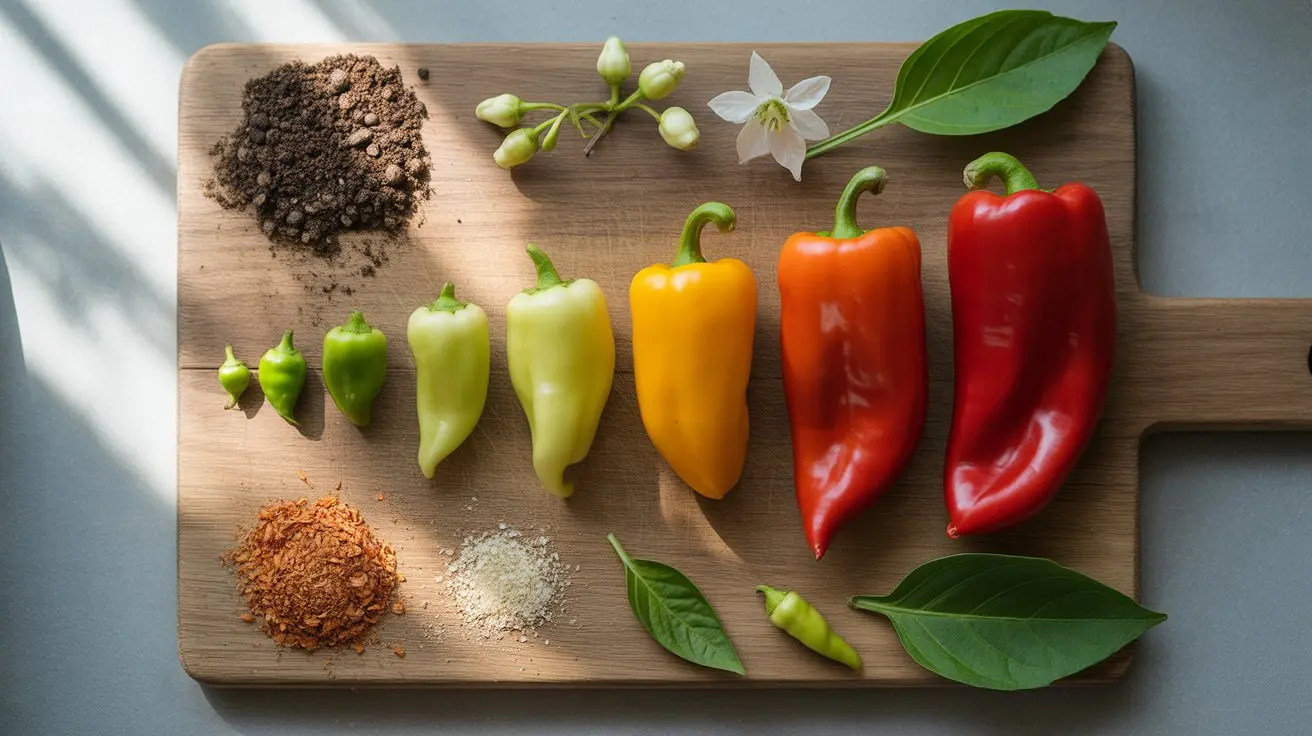
Harvest for full flavor when the pod reaches its listed mature color. UF/IFAS describes classic Scotch bonnets as bonnet-shaped Capsicum chinense fruit that usually mature red or yellow, with thin bright waxy flesh.
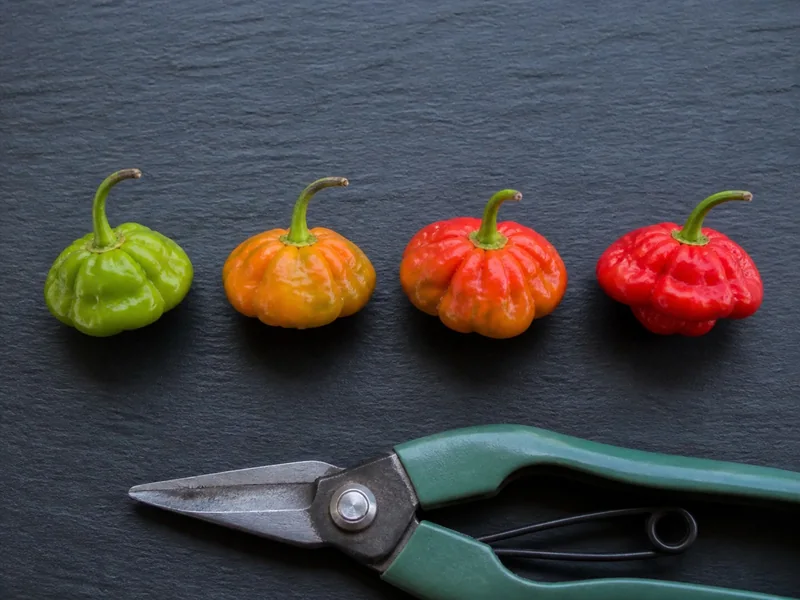
A full-size green Scotch bonnet is mature in size, but it is not necessarily ripe in color or aroma.
Orange strains should finish orange, red strains should finish red, and the seed supplier's description remains the reliable check for your strain.
Watch for the first patch of final color at the shoulder or lower lobes, then allow it to spread while weather remains mild. Keep the leaf canopy healthy and the root zone steady because the pod still depends on the plant during that color change.
Shape matters because mislabeled hot pepper seedlings can confuse a harvest. UF/IFAS distinguishes Scotch bonnet by the flattened tam o' shanter form, while a long lantern-shaped pod may point to a different Capsicum chinense type such as habanero.
Clip ripe pods with pruners instead of pulling them through a dense canopy. University of Minnesota Extension recommends clipping pepper stems, which avoids tearing a branch that still carries green fruit.
Wear gloves when cutting or seeding hot pods and keep hands away from eyes. UF/IFAS places hot Scotch bonnet in the 100,000 to 350,000 Scoville range, although it also notes that sweet bonnet varieties exist.
Can Scotch bonnet peppers finish ripening before frost?
Protect the crop that already has a realistic path to ripeness. Full-size pods showing color break deserve warm days more than new flowers that appear when cool nights are close.
Move a container beside a bright, heat-holding wall when nights cool, but keep direct light on the canopy. A garage or indoor corner may block frost, yet it cannot finish a crop well if light drops sharply.
Cover an in-ground plant for a brief early cold snap, then uncover it after temperatures recover. University of Minnesota Extension classifies peppers as frost-tender long-season crops, so a cover buys time but does not replace a warm site.
Remove late flowers and marble-size fruit only when the remaining season is too short for them. That targeted cleanup leaves the healthy canopy in place and directs the final harvest effort toward pods already near full size.
Pick color-break pods first when a damaging cold event cannot be avoided. They may continue changing indoors, but pods that finish on a healthy plant generally provide the clearest mature color and aroma target for the strain.
Use this season's first-ripe date to make next year's decision.
Start earlier, choose a faster labeled strain, or use a movable five-gallon container when the same healthy plant repeatedly reaches fall with mostly green pods.