
Move the tray off cold stone or glass, provide steady light, and let saturated mix lose moisture. Feed only when the medium lacks a nutrient charge and growth remains stalled after roots warm.

Science Guide
Why Are Pepper Leaves Turning Purple, and Should You Worry?
Pepper leaves turning purple usually mean cold roots, temporary phosphorus uptake trouble, or normal pigment in some varieties. Check night temperature, soil moisture, and new growth before adding fertilizer because warming and drying the root zone often helps seedlings faster than a heavy feed.
Science Guide
Why Are Pepper Leaves Turning Purple, and Should You Worry?
8 min
9 sections
Pepper leaves turning purple are not automatically a phosphorus emergency. Vigorous plants can make purple anthocyanin pigment, while chilled roots can temporarily limit nutrient uptake even when the growing mix contains phosphorus.
Start with three observations: whether growth has slowed, whether the root zone was recently cold or wet, and whether the newest leaves are normally shaped. Purple color becomes more concerning when it arrives with severe stunting, yellowing, upward curl, shortened spaces between leaves, or a bunched growing tip.
The safest first rule is to check roots and new growth before adding phosphorus.
That order prevents fertilizer from becoming one more stress in a cold, saturated pot.
Should You Worry When Pepper Leaves Turn Purple?
Worry depends on what changed besides color. An evenly pigmented plant that is still expanding leaves needs observation, while a plant that has stopped growing needs a root-zone and symptom check.
Cold conditions deserve the first review because pepper roots and soil biology both slow as temperatures fall. A true phosphorus shortage is possible, but the color alone cannot tell you whether phosphorus is absent or merely less available.
Escalate the diagnosis when plant shape changes.
Upward-rolled yellow leaves, short internodes, a rosette-like top, or small upright fruit do not fit a simple pigment response.
When Is Purple Color Normal on a Pepper Plant?
Purple color can be normal when anthocyanin accumulates in otherwise healthy foliage. A 2024 BMC Plant Biology study found that continuous blue light, or white light containing a blue component, increased anthocyanin and produced blue-purple leaves in Capsicum annuum.
Study boundary
The experiment explains a pigment mechanism under controlled light treatments. It does not prove that every purple leaf under a grow light is healthy.
Plant momentum supplies the missing context. Normal pigment is more plausible when new leaves keep unfolding, stems remain firm, roots continue filling the container, and the color appears evenly on stems, veins, or exposed leaf surfaces.
Genetics can strengthen that pattern. Purple-fruited and ornamental peppers often display dark stems or leaf shading before their pods reveal the same pigment trait.
Stress usually breaks the visual rhythm. The oldest leaves may darken first, growth may pause, or one wet cell in a tray may fall behind its neighbors.
Why Do Cold Roots Make Pepper Leaves Look Deficient?
Cold roots can create a functional shortage without removing phosphorus from the soil. University of Maryland Extension explains that cool soil reduces microbial processes that release nutrients, while immature seedling roots are already limited in what they can absorb.
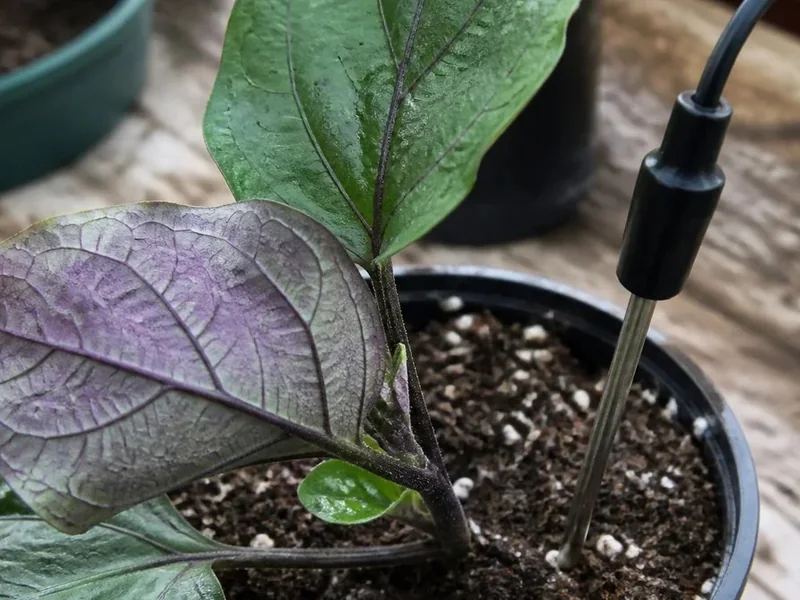
Oregon State Extension gives 70°F to 80°F days and 60°F to 70°F nights as ideal growing temperatures for peppers. Those are whole-plant growing ranges, not a rigid soil-temperature prescription.
A warm room at midday therefore does not clear cold stress.
A plug tray on stone, a nursery pot beside cold glass, or a transplant root ball in spring soil can remain chilled long after the surrounding air warms.
Measure inside the root ball rather than touching the dry surface. The probe should reach the moist zone where active roots are working, and the reading is most useful when taken near the coldest part of the daily cycle.
Moisture changes the result because saturated mix warms slowly and contains less air. If a small pot remains heavy for several days, correct the drainage or watering pattern before interpreting purple foliage as a fertilizer request.
How Can You Tell Cold Stress from Phosphorus Deficiency?
The decisive evidence is the combination of plant momentum, recent root conditions, and nutrient history. No shade of purple can replace those three observations.
Read the whole plant
Vigorous and evenly purpleKeep normal care and watch the next leaf. Pigment is the leading explanation.
Recently cold, wet, and slowWarm the roots, improve drainage, and delay feeding until growth resumes.
Warm but persistently stuntedReview the mix and fertilizer record, then use soil or tissue evidence before correcting phosphorus.
Curled, yellow, and bunchedLeave the nutrient branch and investigate disease or another dominant leaf problem.
Utah State University lists stunted growth, purple foliage, delayed maturity, and poor fruit or seed development among phosphorus-deficiency symptoms. That cluster is stronger evidence than purple color on its own.
| Evidence pattern | What supports it | First useful action |
|---|---|---|
| Normal pigment | Even color with firm stems and continued leaf expansion | Keep normal care and compare the next leaf |
| Cold-related uptake problem | Recent cold or wet roots followed by slower growth | Warm the root zone and let excess moisture leave |
| Possible phosphorus shortage | Persistent stunting in warm conditions plus low-fertility history or test evidence | Use a labelled balanced feed or evidence-based amendment |
| Disease or another leaf problem | Distortion, yellowing, short internodes, dead tissue, pests, or uneven decline | Diagnose the dominant symptom before changing nutrition |
Phosphorus fertilizer is justified by evidence, not by the desire to make old leaves green. When soil tests show adequate or high phosphorus, Utah State notes that crop response is less predictable and placement in cold soil becomes part of the question.
What Should You Check Before Adding Fertilizer?
Use one inspection pass that can disprove a nutrient diagnosis.
Changing temperature, water, and fertilizer at the same time hides which factor mattered.
- Measure the root zone. Put the probe into the center of the moist root ball and compare morning and afternoon conditions.
- Check retained moisture. Lift a container, inspect drainage holes, and note whether the mix begins drying between waterings.
- Compare nearby plants. A whole tray changing after cold nights suggests environment, while one affected cell suggests roots, genetics, or local damage.
- Read the mix and feeding record. Fresh charged potting mix, inert seed mix, composted soil, and repeatedly leached containers have different nutrient histories.
- Inspect the newest growth. Leaf size, shape, and continued expansion provide better evidence than the oldest purple tissue.
Soil pH belongs in this review when a bed has a known history or several nutrients appear unavailable.
University of Maryland gives pH 6.0 to 7.0 as a productive range for vegetables and recommends periodic soil testing rather than visual guessing.
Only combine the evidence after the inspection. Cold wet roots point toward environmental correction, while persistent stunting in warm conditions and a depleted medium justify a measured feeding decision.
How Should You Treat Purple Seedlings and Transplants?
Seedlings and outdoor transplants share one rule: restore root function before increasing nutrition. Their immediate constraints differ, so the same watering or warming move does not fit both settings.
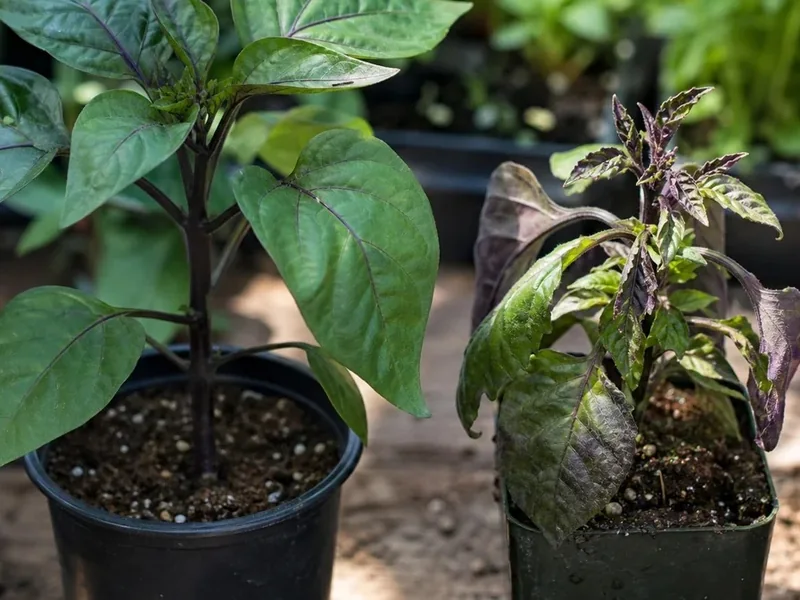
Protect plants through cold nights, keep the new root ball evenly moist rather than soaked, and wait for resumed growth before adding another fertilizer application.
A heat mat can help a cold indoor tray, but it also increases evaporation and needs monitoring.
Move seedlings under strong light after emergence so warmer roots do not produce stretched, weak tops.
For an outdoor plant, extra water does not compensate for cold soil. Water to settle a new transplant, then use the actual root-zone moisture to decide when it needs more.
If a pot remains saturated or smells sour, oxygen loss around the roots becomes the immediate problem. Correcting overwatering and drainage takes priority over phosphorus.
A balanced soluble fertilizer can make sense when a seed-starting mix contains no lasting charge and the seedling has begun active growth.
Follow the product label at a seedling-appropriate rate rather than using bone meal or a bloom booster as a blind rescue.
Can Purple Pepper Leaves Turn Green Again?
Old purple leaves may lighten, remain marked, or eventually drop. Recovery is better measured by what the growing tip produces next than by whether existing pigment disappears.
- Recovery signs: new leaves expand normally, internodes lengthen, roots begin using water on a regular cycle, and the plant holds its posture.
- Unresolved stress: new leaves stay small, growth pauses, and the root ball remains cold or wet despite warmer air.
- Escalation signs: the top bunches, leaves roll upward, yellow areas spread, or one plant declines while its neighbors recover.
A fixed seven-day or ten-day promise is not useful because light, temperature, plant size, and root damage change the recovery rate. Look for the next complete leaf and a renewed pattern of growth.
Do not remove a firm purple leaf simply because its color remains.
It still contributes to the plant until tissue turns dry, diseased, or badly damaged.
Once healthy growth resumes, return to the normal watering and feeding schedule. Repeating corrective fertilizer after every purple leaf can create salt stress long after the original cold spell has passed.
When Do Purple Leaves Point to Curly Top or Another Problem?
Purple veins become a disease clue only when they appear inside a larger symptom pattern. Utah State describes curly top in pepper and tomato as stunting with upward-curled yellow leaves, while UC IPM adds shortened internodes, a rosette-like upper plant, and small fruit that remain upright.
| Dominant change | Evidence to inspect | Better diagnostic direction |
|---|---|---|
| Purple plus upward roll and yellowing | Short internodes, bunched top, small upright fruit, scattered affected plants | Curly top or another virus pattern |
| Purple plus sticky or stippled leaves | Aphids, mites, cast skins, webbing, or distorted tender growth | Pest and leaf-curl diagnosis |
| Purple plus dry brown tissue | Crisp margins, spots, sun exposure, frost, or fertilizer salts | Brown-leaf damage diagnosis |
| Purple plus broad lower-leaf yellowing | Root condition, drainage, leaf age, and nutrient pattern | Yellow-leaf diagnosis |
UC IPM notes that curly top often appears on scattered plants rather than moving evenly across a pepper field. One distorted plant among normal neighbors therefore deserves more scrutiny than a whole tray that purpled after the same cold night.
Diagnostic limit
Purple veins alone do not identify curly top. Whole-plant form and symptom progression carry the diagnosis.
Fertilizer cannot reverse a virus pattern. Isolate a strongly distorted plant while you identify the cause, clean tools after contact, and avoid treating surrounding plants for phosphorus unless their own evidence supports it.
How Can You Prevent Purple Stress During Hardening Off?
Prevention means changing light, wind, temperature, and water demand in stages. A warm indoor seedling moved directly into cold wind can stop growing even when its nutrition was adequate the day before.
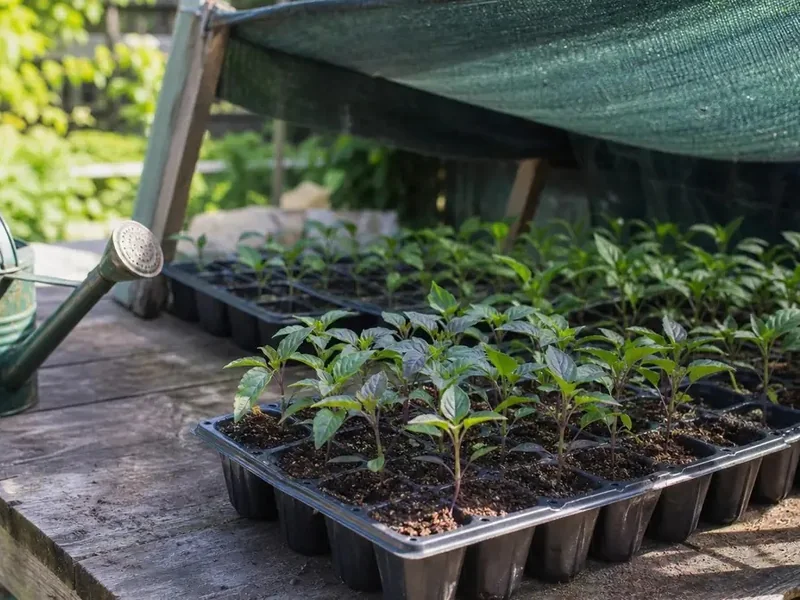
- Begin in bright shade. Use a sheltered outdoor location for a short first exposure rather than full midday sun.
- Extend exposure gradually. Add time and brighter light only while leaves remain firm and new growth stays normal.
- Protect cold nights. Bring trays inside or use appropriate cover when conditions fall outside active pepper-growing weather.
- Adjust water to demand. Outdoor wind can dry cells quickly, but cool cloudy days can leave the same tray wet for much longer.
- Transplant into prepared drainage. Set the root ball into loose soil after frost risk and persistent cold have passed.
Steady indoor light before hardening also matters.
Weak light and cool media both slow leaf production, leaving the plant with little new tissue to demonstrate recovery.
Use a draining pepper soil or container mix and keep pots off surfaces that stay cold overnight. These changes address the root environment without turning preventive phosphorus into a routine.
The final check is simple: the plant should keep making normally shaped leaves as exposure increases. If growth pauses, return to the last setting it tolerated and change one factor at a time.
Editorial Review
Editorial Standards: Instructions and factual claims are checked against available source material and editorial notes before publication.
Review Process:
Prepared by
Know The Pepper Editorial Team
(Editorial review desk)
. Last updated September 3, 2026.
Sources & References
- University of Maryland Extension - Nutrient Deficiency of Vegetable Plants
- Utah State University Extension - Nutrient Management
- Utah State University Extension - Starting Vegetable Seeds Indoors
- Oregon State University Extension - Grow Your Own Peppers
- Utah State University Extension - Beet Curly Top Virus
- UC IPM - Beet Curly Top in Peppers
- BMC Plant Biology - Anthocyanin Biosynthesis in Pepper Leaves Under Blue Light
Sources Listed