Is My Pepper Plant Overwatered? How to Tell and What to Do
An overwatered pepper usually wilts in soil that remains damp, with yellow lower leaves, slow growth, and a pot that stays heavy. Check moisture two inches down, drainage, crown firmness, and root smell before choosing between drying the root zone, repotting, or discarding a plant with dark crown rot.
Overwatering pepper plants means the roots stay wet long enough to lose oxygen. The leaves may wilt like a thirsty plant, but the first response is to stop adding water and check the root zone.
Droop alone cannot diagnose the problem because drought, heat, transplant shock, damaged roots, and saturated soil can all lower the leaves. Soil condition, pot weight, crown firmness, and the plant's response over time decide the next step.
Why wet roots make pepper leaves wilt
A pepper can wilt in wet soil because roots need air as well as water. Virginia Cooperative Extension explains that water occupying pore spaces for too long reduces oxygen, stops root growth, and eventually damages the root system.
Leaves still lose water in sun and moving air while impaired roots struggle to replace it. More irrigation deepens that mismatch instead of correcting it.
A saucer can cause the problem even when the potting mix looks normal at the surface.
Push a finger about two inches into the mix, then lift the container. Cool soil clinging to your finger and a pot that feels heavy both support a wet-root diagnosis.
Check again the next day before making another change if the root zone remains damp. This article starts after water is already excessive, while a normal pepper watering routine covers healthy plants and dry-weather irrigation.
What does an overwatered pepper plant look like?
An overwatered pepper usually combines limp foliage with soil that refuses to dry. Soft yellow lower leaves, slow new growth, and a sour smell near the bottom of the pot make the diagnosis stronger.
- Leaves droop while the soil below the surface remains damp.
- Lower leaves soften or yellow before the top changes.
- New leaves stay small, pale, or stalled.
- Potting mix smells sour rather than earthy.
- Water remains in a saucer after rain or irrigation.
- The plant does not firm quickly after more water.
Severity comes from tissue condition, not the number of yellow leaves.
A firm green crown, pale firm roots, and healthy new tips support drying the mix and restoring drainage.
A dark soft crown, mushy roots, sour odor, or advancing collapse calls for isolation and a root-disease check.
Look at the newest growth before judging the outcome. A plant may shed damaged lower leaves and still recover if the growing tip stays firm.
If the soil is not wet, compare the color pattern with other causes of yellow pepper leaves before blaming irrigation.
How do you tell overwatering from underwatering?
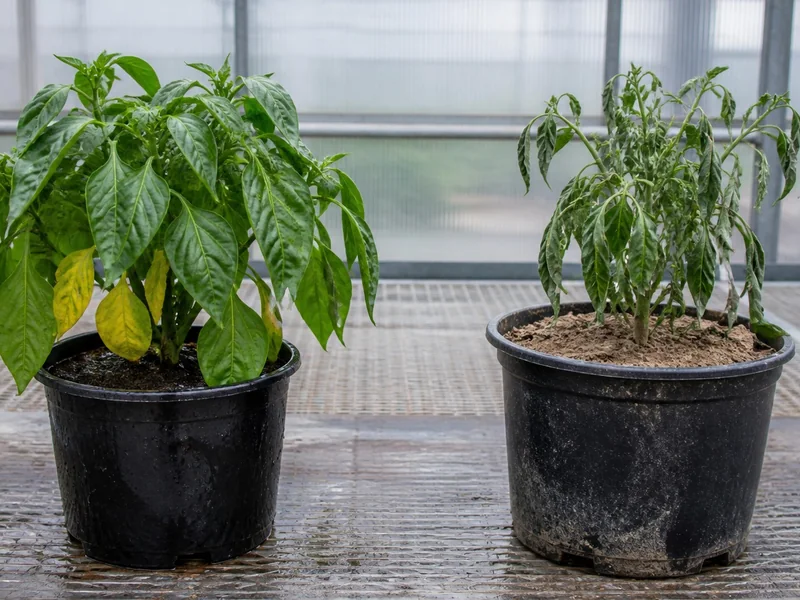
Overwatering and underwatering can both make leaves sag, so the useful difference is how the root zone behaves. A photograph can show the contrast, but soil and tissue checks confirm it.
| Check | Overwatering points to | Underwatering points to |
|---|---|---|
| Soil feel | Damp, cool, or sticky below the surface | Dry two inches down or pulling from pot edges |
| Pot weight | Heavy for its size | Light and easy to lift |
| Leaf feel | Soft, limp, and sometimes yellow | Thin, curled, or crisp at the edges |
| Response | Stays limp after more water | Firms after a slow, complete soak |
| Root clue | Brown mushy tissue or a sour smell | Pale firm roots in a dry root ball |
Heat stress often peaks in the afternoon and eases after the temperature falls. Wet-root stress commonly looks worse after irrigation or rain because less air remains around the roots.
A dry pepper may firm within hours after the entire root ball is watered. An overwatered plant often stays limp until drainage and root function improve.
Persistent wilt after the mix has dried needs a broader pepper plant wilting diagnosis because vascular disease, nematodes, cold, and physical root damage can create the same posture.
Should you repot an overwatered pepper?
Do not repot by default. Correct standing water and blocked drainage first because pulling apart an oxygen-stressed root ball can remove healthy roots the plant still needs.
For a container, work from the outside inward.
- Empty the saucer and remove any decorative sleeve that traps water.
- Raise the pot and confirm that every drain hole is open.
- Wait until the surface is less wet so the root ball can hold together.
- Slide out a manageable plant only if the mix remains saturated or smells sour.
- Check root firmness, crown color, and moisture near the bottom of the pot.
Repot when the mix stays saturated despite open drainage, the lower root ball smells sour, or a limited area of roots has softened while the crown remains firm. Fresh mix cannot save a crown that is already dark and collapsing.
In a bed, compare the sick plant with one near an edge or on higher ground before digging. A clay pocket, low spot, or leaking drip line can keep one root zone wet while nearby peppers remain healthy.
Healthy roots feel firm and usually smell earthy. Black mush, sour odor, or a soft stem base moves the case from a drainage correction toward disease management.
How to help a mildly overwatered pepper recover
One heavy watering is less concerning than a root ball that remains saturated for days. A firm crown and roots that still hold their shape support a restrained recovery attempt.
Stop watering, empty the saucer, and move a container out of continuing rain when possible. Give the plant bright light with some relief from punishing afternoon sun if the foliage is badly wilted.
Do not fertilize wet mix or prune every limp leaf. Fertilizer does not restore oxygen, and healthy foliage still supplies energy while new roots form.
Give the corrected root zone several days before judging it, although cool weather and a large container can extend that wait. Changing drainage, fertilizer, pruning, and pot size at once hides which action helped.
Fresh firm growth at the tip is the useful recovery signal. Old yellow leaves may fall or stay discolored even after the roots improve.
How can you tell if a pepper has root rot?
Root rot is not another name for one wet watering. Persistent saturation can injure roots and favor pathogens, while a firm crown and pale roots may still indicate reversible oxygen stress.
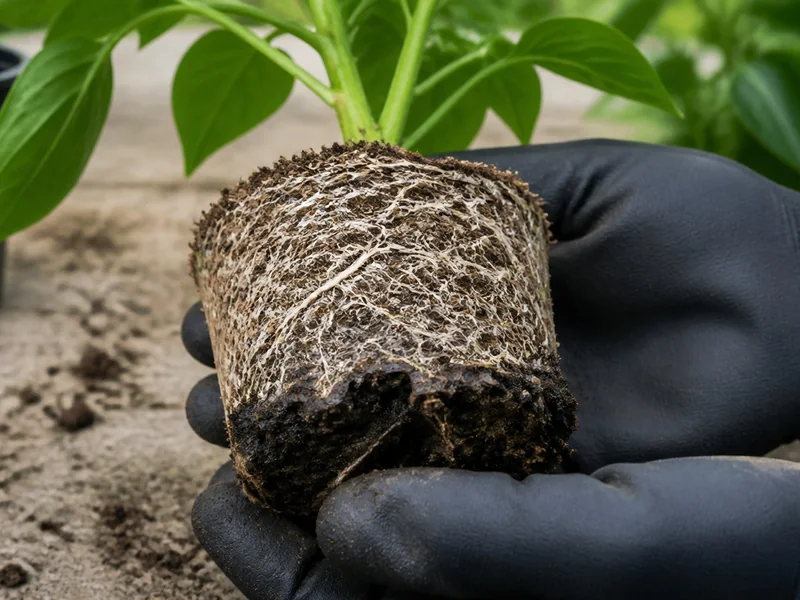
NC State Extension describes Phytophthora blight as a soilborne disease that commonly begins around pepper roots and crowns. Saturated soil, persistent wilt, and dark crown lesions raise concern, especially in the reported favorable range of 75 to 90 F.
Isolate a plant with a dark soft crown and keep its drainage water away from healthy peppers. Bag badly diseased material, clean tools, and do not move suspect mix into another container or bed.
A small potted pepper may be salvageable when only a limited patch of roots is mushy and the crown remains firm. Remove only dead soft tissue, transfer the intact root system into fresh draining mix, and water once to settle it.
Do not assume tomatoes or eggplants break a Phytophthora cycle because NC State lists both as hosts. In a bed with confirmed disease, local extension guidance should determine rotation and site management.
Why pepper pots swing from dry to saturated
Containers change quickly because they hold a small artificial root zone. A plastic pot can bake at the surface, then stay wet at the bottom after one heavy watering.
University of Maryland Extension recommends watering until excess leaves through the drain holes, followed by emptying the saucer. The second action prevents the pot from drawing standing water back into the mix.
Plant size also changes the result. A compact jalapeno plant in a pot may recover after drainage improves, while a large bell pepper plant in the same volume can exhaust the available air and moisture buffer faster.
Old peat-heavy mix can shrink from the pot wall and accept water unevenly. One pocket may remain soaked while water bypasses a dry center.
Move up in size when roots have filled the container, but do not jump to the largest pot available. Virginia Cooperative Extension notes that large containers retain more water and that an oversized pot can leave a small root system in a root zone that stays too wet.
A container size for pepper plants should relieve crowding while preserving a mix that drains and can be checked below the surface.
When to water again after overwatering
The next watering should be earned by root-zone evidence.
University of Minnesota Extension advises watering a vegetable garden when soil is dry two inches below the surface. For a recovering container pepper, combine that check with pot weight and the direction of new growth.
In a bed, open a narrow slit with a trowel two to four inches from the stem. Inspect the deeper soil without damaging the main root crown.
Early-day watering is easier to observe and leaves more time for drainage before night. A badly drought-stressed plant should still receive water when it needs it rather than waiting for a preferred hour.
- Wait until the top two inches are dry or nearly dry.
- Water at soil level instead of wetting the foliage.
- Moisten the full root zone in one slow pass.
- Empty saucers after drainage stops.
- Delay fertilizer until healthy new growth appears.
Pepper leaf curl can persist after moisture has normalized. If only new leaves continue to curl, widen the diagnosis instead of extending the dry period indefinitely.
How do you prevent overwatering pepper plants?
Prevention begins with physical drainage, not a stricter reminder on a watering app.
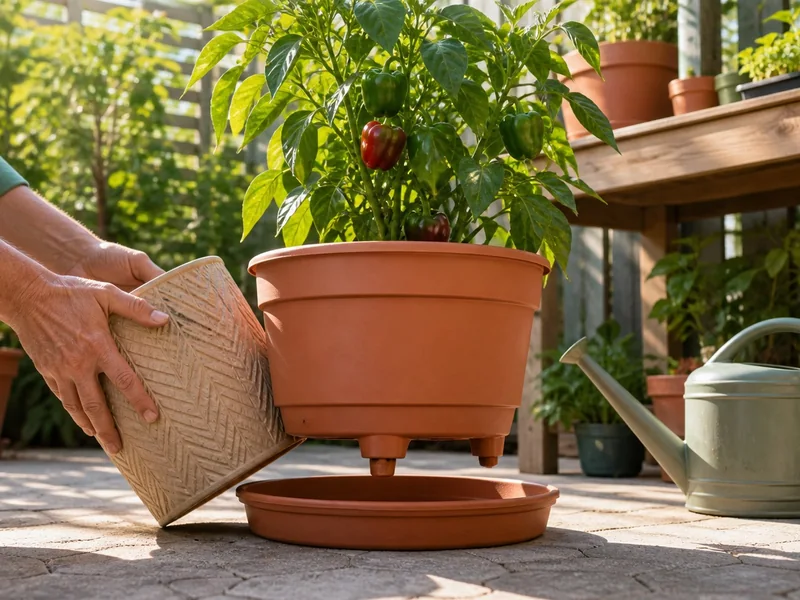
For containers, keep drain holes open, remove sealed sleeves, and raise the pot above an empty saucer. Use enough root space for the plant without surrounding a small root ball with a large volume of continually wet mix.
For in-ground peppers, Utah State University Extension recommends deep, infrequent irrigation and consistent moisture in well-drained soil. NC State also favors even sites and raised beds where standing water increases Phytophthora risk.
New plants need the soil line and root ball set correctly from the start. The same drainage principle used when transplanting jalapenos applies to other pepper varieties.
Repair a low spot, compacted layer, or leaking emitter before changing frequency. Drip irrigation and raised rows reduce repeated saturation more reliably than another calendar guess.
Mulch only after excess water has a way out. Mulch over a draining bed reduces the next dry-wet swing, while mulch over a saturated bed can hide moisture and slow evaporation.
Water the soil you have rather than the schedule you planned because clay, pot volume, heat, wind, mulch, and fruit load all change the interval.
- Virginia Cooperative Extension - Properly Watering Container Houseplants
- University of Maryland Extension - Maintaining container grown vegetables
- NC State Extension - Phytophthora blight of peppers
- University of Minnesota Extension - Watering the vegetable garden
- Utah State University Extension - How to grow peppers in your garden