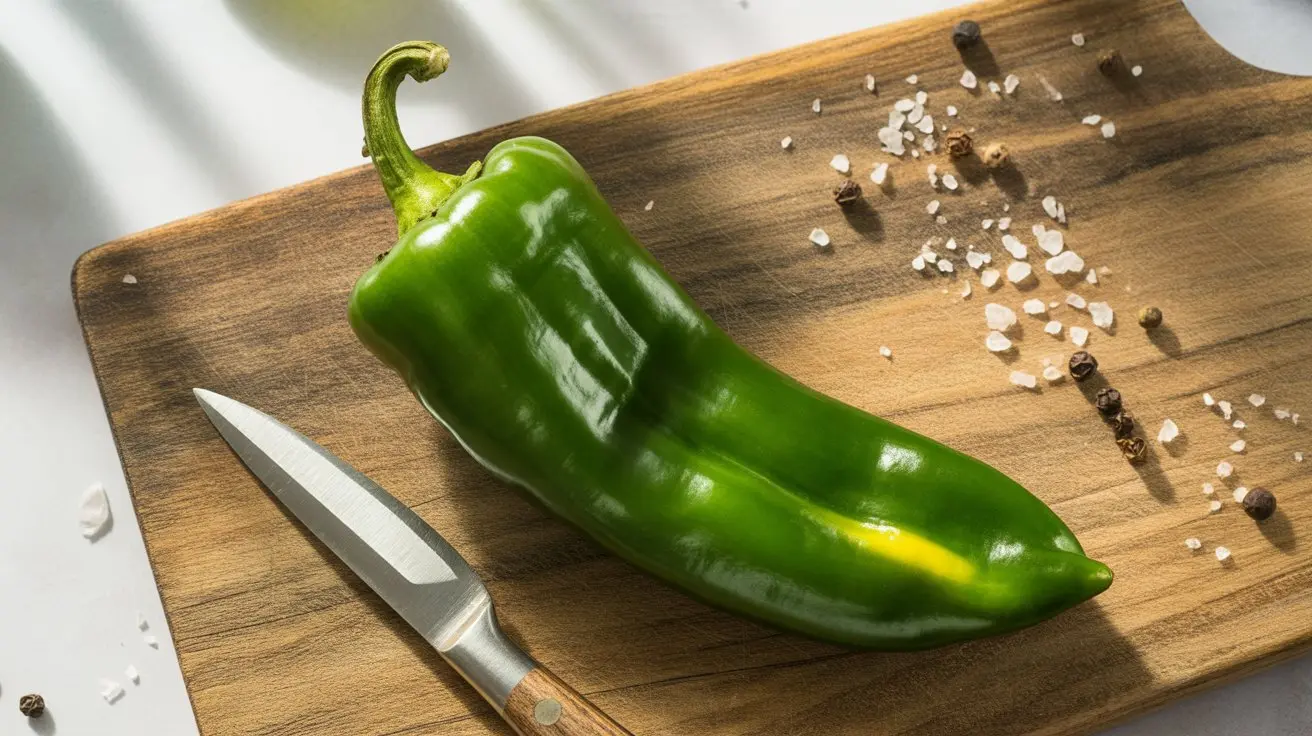
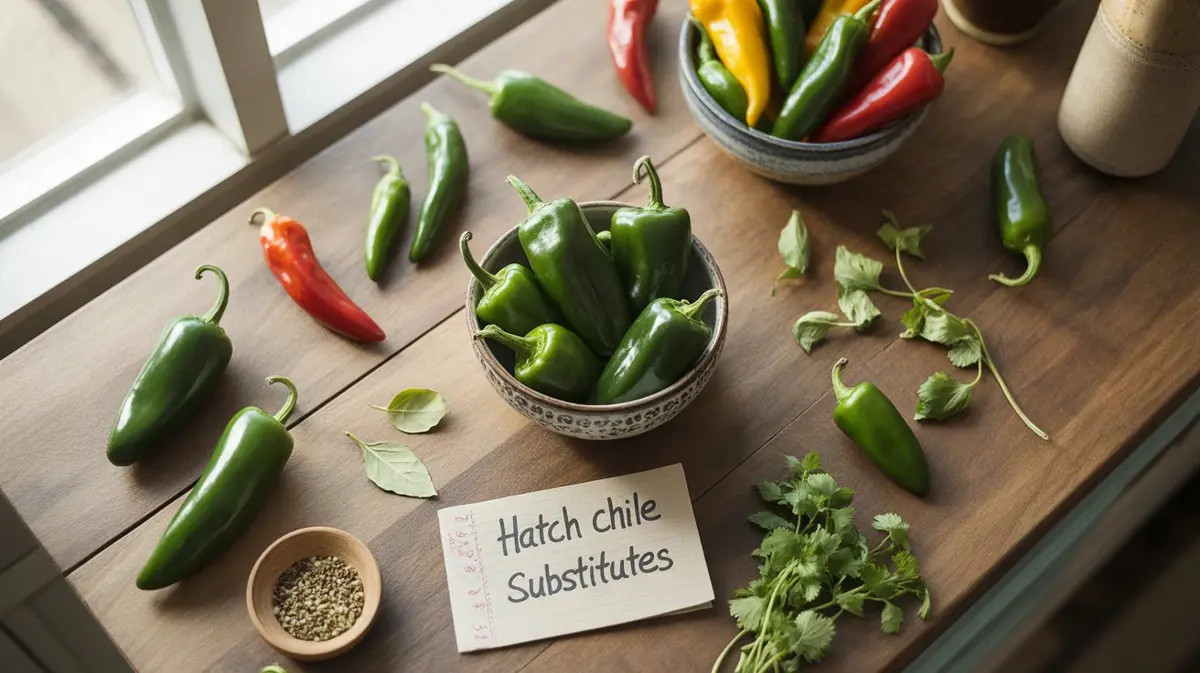
Hatch chiles bring a specific earthy sweetness and mild-to-medium heat (1,000-8,000 SHU) that's tied to the Hatch Valley's soil and climate in New Mexico. Outside of peak season or that region, finding fresh Hatch chiles can be genuinely difficult. The seven swaps below cover everything from dried and smoked options to fresh alternatives that hold up in green chile stew, enchiladas, and roasted preparations.
These alternatives are ranked by how closely they match Hatch Chile’s heat level and flavor profile. Use the conversion ratios to adjust quantities in your recipe.
#1
New Mexico Chile Closest Match
The closest match by a wide margin. New Mexico chiles share the same earthy, sweet character that defines Hatch flavor — not a coincidence, since Hatch chiles are technically a regional variety of New Mexico chile grown in the Hatch Valley. The 1,000-8,000 SHU range lines up almost exactly. Use a 1:1 ratio in any recipe. If you find dried New Mexico chiles, rehydrate and use them as a direct stand-in for roasted Hatch. For anyone curious about how closely these two overlap, the side-by-side breakdown of Hatch versus New Mexico is worth reading before you decide which to stock.
#2
Sandia Pepper Runner-Up
Sandia is another New Mexico-bred variety with 5,000-7,000 SHU and a bright, sweet flavor profile from its Southwest origins. It runs hotter than a mild Hatch but sits comfortably within the same range as a hot Hatch. Use a 1:1 ratio and expect slightly more heat. It roasts beautifully and holds its structure in stews — one of the better fresh substitutes when Hatch season ends.
#3
Jalapeño Also Great
A practical everyday substitute. Jalapeños bring that grassy brightness at 2,500-8,000 SHU, landing in the same heat band as Hatch, though the flavor skews greener and less earthy. They lack the roasted depth that makes Hatch distinctive, but they're available year-round and work well in cooked applications. Use a 1:1 ratio for fresh jalapeños. For reference, a medium jalapeño sits within the heat category this pepper belongs to — the same tier as Hatch. Roasting jalapeños before adding them to a dish helps approximate the smokier, more complex character of roasted Hatch.
#4
Fresno Pepper
Fresno peppers (2,500-10,000 SHU) bring a fruity, slightly smoky quality that compensates for what jalapeños lack in depth. They're red at maturity, which changes the color of your dish, but the flavor complexity is closer to Hatch than a standard green jalapeño. Use a 1:1 ratio. Best suited for salsas, sauces, and roasted applications where the fruity notes enhance rather than clash.
#5
Chipotle
Chipotle's deep smoke and sweetness make it a compelling dried or canned substitute at 2,500-8,000 SHU. It's a smoked, dried jalapeño — so it shares the same botanical family as Hatch — but the smoke is more assertive than what roasted Hatch delivers. Start with a 0.75:1 ratio (three-quarters the amount called for) and adjust. Chipotles in adobo work particularly well in braised meats and stews where that extra smokiness integrates rather than dominates.
#6
Gochugaru
A Korean dried chile flake at 1,500-10,000 SHU with a smoky-sweet profile that bridges Eastern and Southwestern flavors. It's a pantry staple in many kitchens and works surprisingly well as a Hatch substitute in cooked dishes, soups, and marinades. The texture is different — flakes rather than whole chiles — so use a 0.5:1 ratio by volume and build from there. Not ideal for fresh applications, but excellent in anything slow-cooked.
#7
Puya Pepper
Puya runs at 5,000-8,000 SHU — on the hotter end compared to an average Hatch — and delivers a fruity, smoky character rooted in Mexican chile traditions. It's primarily a dried chile, so it works best as a Hatch substitute in sauces, moles, and slow-cooked dishes rather than as a fresh swap. Use a 0.75:1 ratio to account for the increased heat. Puya is part of the regional pepper tradition that spans the U.S. Southwest and northern Mexico, giving it genuine culinary kinship with Hatch.
Anaheim pepper seems like an obvious choice — it's a mild green chile in the same species and often marketed as a Hatch alternative. The problem is heat and flavor depth. Anaheim tops out around 2,500 SHU, which makes it significantly milder than most Hatch chiles, and the flavor is thinner. The Anaheim versus Hatch comparison shows just how much ground you lose on both heat and earthiness.
Poblano is another tempting pick for roasted green chile dishes. It looks right and roasts well, but it sits at 1,000-1,500 SHU with a more vegetal, almost chocolatey flavor. That diverges noticeably from Hatch's sweet, earthy profile.
Banana pepper occasionally gets suggested for mild Hatch applications, but its tangy, acidic character moves in the opposite direction from what Hatch brings to a dish. The flavor mismatch is too significant for most recipes.
Substitution Tip
When substituting Hatch Chile (1K–8K SHU), always start with less of a hotter substitute and add more to taste. For milder substitutes, you can increase the quantity. Our swap ratio calculator gives precise conversion amounts, and the heat unit converter translates between Scoville and other scales.
Fact-Checked & Expert Reviewed
Editorial Standards: All facts verified against authoritative sources. Content reviewed by subject matter experts before publication.
Review Process:
Written by
Sofia Torres
(Lead Culinary Reviewer)
, reviewed by
Karen Liu
(Lead Fact-Checker & Science Editor)
. Last updated February 19, 2026.
Canned green chiles — often labeled as 'Hatch' or 'New Mexico green chile' — are a perfectly reasonable substitute in cooked dishes like enchiladas, stews, and dips. They're already roasted and peeled, which saves prep time, though they tend to be softer and milder than fresh roasted Hatch. Drain them well before use and expect the heat to land on the lower end of the 1,000-8,000 SHU range.
New Mexico chile is the top pick for green chile stew — the flavor profile is nearly identical, and it handles long cooking times without losing structure. If New Mexico chiles aren't available, Sandia peppers or fresh jalapeños roasted until charred are the next best options for maintaining that earthy, roasted character the dish depends on.
Hatch chiles are a regional designation for New Mexico chiles grown specifically in the Hatch Valley of southern New Mexico — the soil, elevation, and climate there produce a distinct flavor. Technically, any New Mexico chile variety (Big Jim, NuMex Heritage 6-4, etc.) grown outside that valley cannot be labeled 'Hatch,' though the flavor difference is subtle enough that New Mexico chile is the closest substitute available.
Dried New Mexico red chiles are the standard dried substitute — toast them briefly in a dry pan, then rehydrate in hot water for 20-30 minutes before blending into sauces or adding to stews. Dried Puya or Guajillo chiles can also work in cooked applications, though Guajillo adds more acidity and Puya brings more heat than a typical Hatch chile.
Yes, though the substitute matters. Fresh Sandia peppers and jalapeños both blister and char well under a broiler or over an open flame, making them solid stand-ins for roasted Hatch in salsas and chile-forward dishes. Fresno peppers also roast well and add a fruitier dimension that complements dishes where you'd normally use red or ripe Hatch chiles.