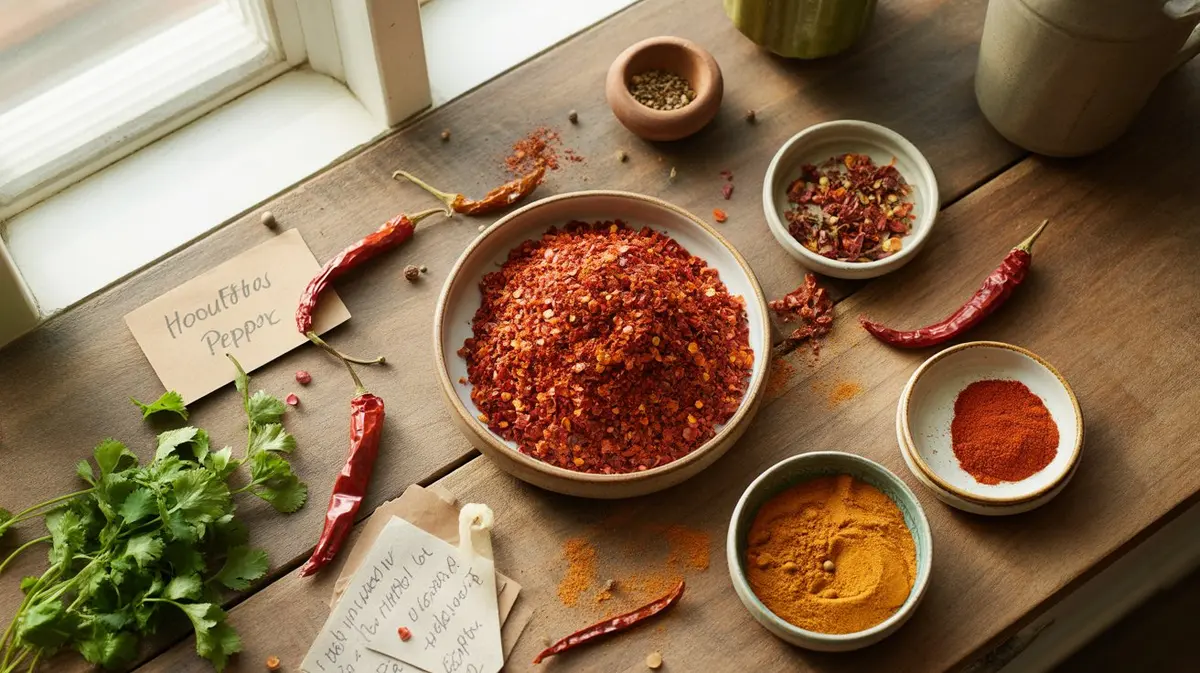
Gochugaru is the backbone of kimchi, tteokbokki, and countless Korean dishes — a sun-dried, coarsely ground chili with a gentle warmth that lands somewhere between a whisper and a proper tingle, layered with smoke and natural sweetness. Running out mid-recipe is a real problem because no single substitute perfectly mirrors that flavor profile. The seven options below get you close, ranked by how well they replicate both the heat and the character.
These alternatives are ranked by how closely they match Gochugaru’s heat level and flavor profile. Use the conversion ratios to adjust quantities in your recipe.
#1
Gochugaru Flakes Closest Match
Gochugaru flakes' sun-dried smoky sweetness are essentially the same product in a different grind — coarser, with visible flecks of dried skin. The 1,500-10,000 SHU range matches exactly, and the flavor profile (sweet, faintly smoky, mildly fruity) is identical to the powder form.
Conversion: Use a 1:1 ratio by volume, but expect a slightly chunkier texture in sauces. For kimchi paste, this is a near-perfect swap.
#2
Chipotle Runner-Up
Chipotle's deep wood-smoke sweetness makes it one of the stronger flavor matches on this list. It hits 2,500-8,000 SHU — firmly within gochugaru's range — and the smokiness is arguably more pronounced, which can be an asset or a liability depending on the dish.
Chipotle is a smoked, dried jalapeño, so the smoke character reads differently than Korean sun-dried chili. In stews and braises, this distinction matters less. In fresh kimchi paste, it can feel slightly off.
Conversion: Start at a 1:1 ratio, then pull back by about 20% if the smoke feels heavy. Chipotle powder works better than ground chipotle in adobo for dry applications.
#3
Pasilla de Oaxaca Also Great
Pasilla de Oaxaca's rich chocolate-smoke depth sits at 4,000-10,000 SHU — slightly hotter on the upper end than a typical gochugaru. This Mexican smoked chili carries a richness that bridges the gap between gochugaru's sweetness and chipotle's intensity.
Conversion: Use a 3:4 ratio (three parts Pasilla de Oaxaca for every four parts gochugaru called for). Grind dried pods before using.
#4
Morita Pepper
Morita's fruity smoked heat occupies the 5,000-10,000 SHU bracket — hotter than gochugaru's lower end, so watch your quantities. Like chipotle, morita is a smoked jalapeño, but it's smoke-dried for a shorter time, leaving more moisture and a fruitier edge.
That fruitiness is what earns morita a higher ranking than pasilla de Oaxaca here. The combination of smoke and fruit gets closer to gochugaru's character, even if the cultural context differs entirely.
Conversion: Use a 1:2 ratio (half the amount of morita). Rehydrate dried moritas before blending into pastes.
#5
Fresno Pepper
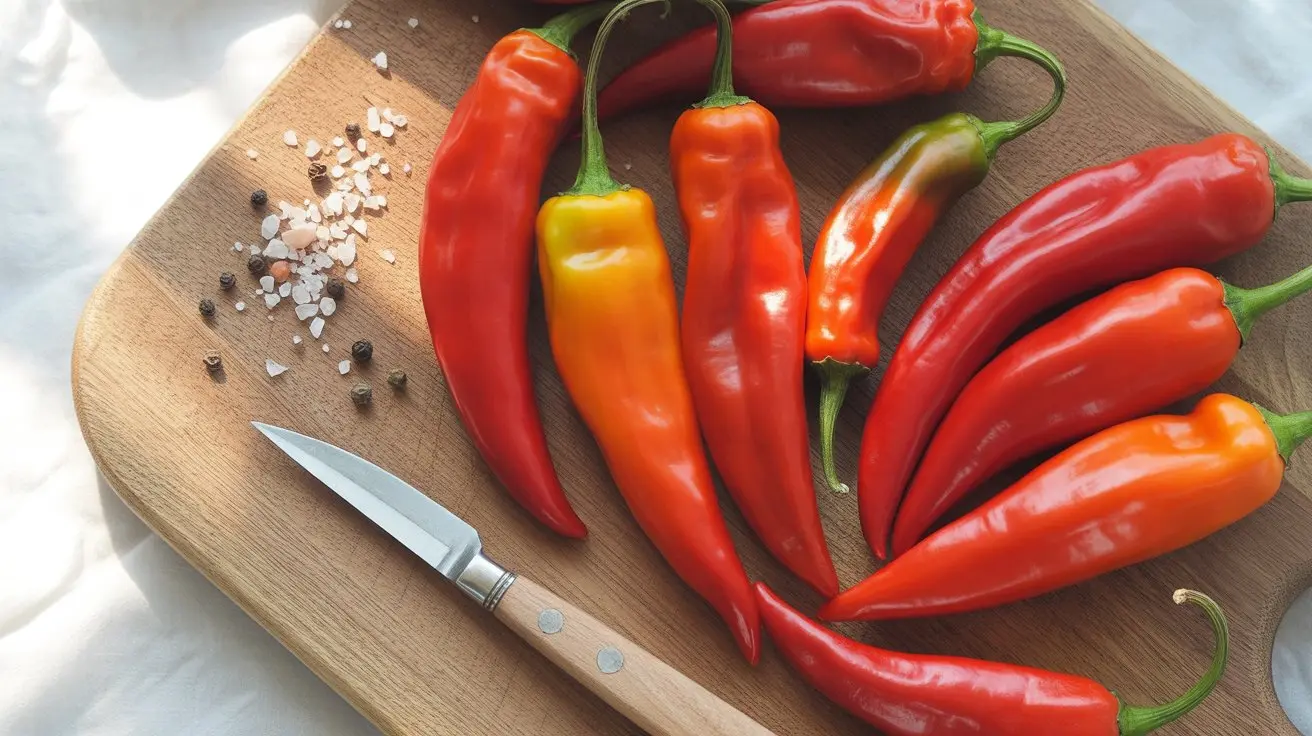
Fresno's bright fruity smokiness lands at 2,500-10,000 SHU — a range that overlaps well with gochugaru. Fresh Fresnos are juicy and fruity; dried or smoked Fresnos get considerably closer to the flavor you need.
For a direct side-by-side look at how these two compare structurally, the Fresno flavor and heat breakdown covers the details. The key limitation: Fresnos lack gochugaru's distinctive sun-dried quality, so the swap works better in cooked applications than in raw preparations like kimchi.
Conversion: Use a 1:1 ratio for dried/smoked Fresno powder. For fresh Fresnos in a paste, double the quantity and reduce other liquids slightly.
#6
Jalapeño
Jalapeño's grassy bright heat is a practical emergency substitute when nothing else is available. At 2,500-8,000 SHU, the heat range fits, but the flavor profile is a significant departure — no smoke, no sweetness, just clean vegetal heat.
Fresh jalapeños work in a pinch for dishes where gochugaru plays a supporting role. They fail in dishes where gochugaru is the primary flavor driver, like kimchi or gochujang-based sauces.
Conversion: 1:1 ratio for fresh, minced jalapeño. Reduce by 25% for jalapeño powder, which concentrates differently.
#7
Korean Green Pepper
Korean green pepper's mild grassy character sits at 1,500-10,000 SHU — technically overlapping with gochugaru — but this is the most situational substitute on the list. The flavor is fresh and grassy rather than smoky or sweet, which makes it a poor match for most gochugaru applications.
Where it does work: dishes that use gochugaru primarily for color and mild heat rather than smoke, or as a garnish element. The regional pepper tradition that produced both peppers means Korean green peppers appear in many of the same dishes, just in different roles.
Conversion: Use a 1.5:1 ratio (one and a half times as much Korean green pepper). Expect a greener, brighter result rather than the characteristic red hue.
For context on where gochugaru sits across the heat category it belongs to, the SHU range spans mild warmth up to a genuine kick — which is why substitutes need to match both the intensity ceiling and the flavor floor.
Cayenne pepper seems like an obvious stand-in — it's red, it's widely available, and the heat range overlaps. The problem is cayenne's flavor is sharp and one-dimensional, with none of gochugaru's smoke or sweetness. In kimchi, cayenne produces a harsh, acidic heat that tastes nothing like the original.
Aleppo pepper is a closer cultural cousin and shares some sweetness, but its oiliness and distinctly Middle Eastern flavor profile pull dishes in a different direction. It also tops out around 10,000 SHU on a good day, with most batches sitting milder. For a detailed look at how these two compare, the Aleppo vs. gochugaru side-by-side breakdown covers the key differences.
Kashmiri chili powder offers the right color and mild heat, but its flavor is more floral and less smoky than gochugaru. It's popular as a color substitute in Indian cooking, but the flavor mismatch in Korean dishes is noticeable. See the gochugaru vs. Kashmiri chili comparison for a fuller breakdown of where each works best.
Substitution Tip
When substituting Gochugaru (2K–10K SHU), always start with less of a hotter substitute and add more to taste. For milder substitutes, you can increase the quantity. Our swap ratio calculator gives precise conversion amounts, and the heat unit converter translates between Scoville and other scales.
Fact-Checked & Expert Reviewed
Editorial Standards: All facts verified against authoritative sources. Content reviewed by subject matter experts before publication.
Review Process:
Written by
Sofia Torres
(Lead Culinary Reviewer)
, reviewed by
Karen Liu
(Lead Fact-Checker & Science Editor)
. Last updated February 19, 2026.
Standard red pepper flakes (typically crushed cayenne or a blend) lack gochugaru's signature smokiness and sweetness, so the flavor swap is noticeable in dishes like kimchi. They work acceptably in cooked applications where gochugaru is one of several spices, but use about 60% of the called-for amount since crushed flakes tend to run hotter.
Gochugaru flakes are the closest match for kimchi because they share the same sun-dried flavor profile and produce the characteristic deep red color in the paste. If you cannot find flakes, a blend of chipotle powder and a small amount of sweet paprika (roughly 3:1 ratio) approximates the smoky-sweet balance better than any single alternative.
Gochujang contains gochugaru as a primary ingredient, but it also includes fermented soybean paste, glutinous rice, and salt — making it a paste rather than a dry spice. It works as a flavor substitute in sauces and marinades, but the added fermented depth and moisture content will change the texture and saltiness of your dish.
Start with about three-quarters of a tablespoon of chipotle powder per tablespoon of gochugaru called for, since chipotle's smoke can be more assertive. Taste and adjust — some chipotle batches are milder, and the swap works better in dishes with other bold flavors to balance the smokiness.
Yes — gochugaru's vivid red color is functional in Korean cooking, not just decorative, and many substitutes fall short on this front. Fresno pepper powder and Kashmiri chili both hold the red color reasonably well; chipotle and morita produce a darker, browner result that changes the visual appearance of dishes like kimchi or tteokbokki sauce.