

Espelette Pepper Substitutes: Sweet Paprika and Cayenne, or Ancho
Espelette is a finishing spice at 1,500 to 2,500 SHU, so a substitute has to carry its brick-red colour and sweet-pepper aroma as much as its faint warmth. Sweet paprika with a pinch of cayenne is the pantry answer and ancho is the closest single pepper most shops stock.
Heat at a glance
Match What Espelette Is Doing in the Dish
Espelette is a finishing spice, not a heat source, and a substitute that gets the heat right while missing that job will still be wrong.
The Syndicat du Piment d'Espelette, which administers the AOP, places the pepper at 1,500 to 2,500 Scoville and rates it 4 on a scale of 10. For scale, the same source puts cayenne at 30,000 to 50,000.
That is a narrow band. Most of the peppers people reach for sit outside it, so the useful question is which part of Espelette a given recipe is actually using.
The syndicate describes tomato and sweet-pepper aromatics and a slow build of gently sweet flavour. On eggs, white beans, or grilled fish, that aroma and the brick-red colour are doing more work than the heat is.
So decide first, because the two halves are bought separately.
If the dish wants colour and a savoury lift, a heatless option is fine and easier to control. If it wants the faint warmth too, add that on its own rather than hunting for one pepper carrying both.
Seven Espelette Substitutes, Ranked by What They Preserve
Sweet paprika with a pinch of cayenne, the pantry answer
Closest MatchSweet paprika is the closest thing most kitchens already have, and at 0 to 1,000 SHU it carries the brick-red colour and mild sweetness with little or none of the warmth.
Use it 1:1 by volume wherever Espelette is dusted on at the end. On eggs, roasted potatoes, and white bean stew it lands the colour but finishes flatter.
Add the missing edge separately. Roughly 10 parts paprika to 1 part cayenne restores a gentle warmth without making the dish hot, and Espelette against paprika covers where the two diverge.
Keep the blend dry and add it after cooking. Paprika turns bitter when it is fried hard in oil.
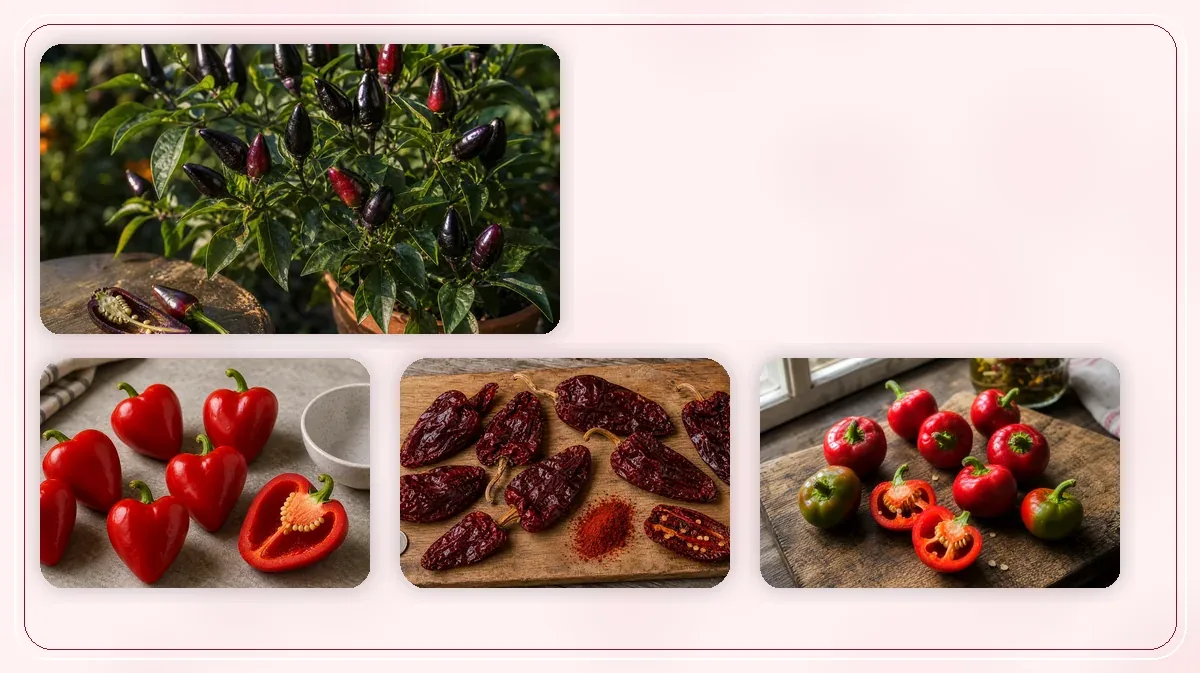
Ancho, the closest single pepper you can actually buy
Runner-UpAncho sits at 1,000 to 2,000 SHU, which overlaps Espelette's band from below, and ground ancho is stocked in most supermarkets that carry a Mexican aisle.
Swap it 1:1 by volume and expect a darker, raisin-sweet result rather than a bright one.
That difference is worth knowing before you commit. Ancho leans dried-fruit and cocoa where Espelette leans tomato and sweet pepper, so it suits braises and rubs more than a finishing dust on fish.
Use a slightly lighter hand in pale dishes, since ancho darkens a cream sauce in a way paprika does not.
Dried rocotillo, the exact heat match
Also GreatRocotillo is published at 1,500 to 2,500 SHU, the same band as Espelette, which makes it the only option here that needs no heat correction at all.
Use it 1:1 by volume. Its fruity, faintly floral character sits closer to Espelette's personality than most mild North American peppers do.
Availability is the catch. Dried rocotillo is uncommon outside Caribbean grocers and online spice sellers, so it is a good swap to plan for rather than one to improvise with.
It works best in sauces, sofrito bases, and slow-cooked dishes where the fruit has time to open up.
Aleppo, for oil-based dishes
Aleppo is published at 10,000 SHU, four to six times Espelette's band, so this is the one swap on the list that genuinely needs measuring.
Start at half a teaspoon of Aleppo for every teaspoon of Espelette and taste before adding more.
The flakes are sun-dried and semi-moist rather than powder-dry, which changes where they work. They excel in olive oil, marinades, and braises, and behave awkwardly in a dry rub.
Go lighter still in cream sauces, on fish, and in delicate vinaigrettes, because the raisin-like sweetness carries further than Espelette's does. Aleppo against Espelette covers the rest.
Dried NuMex Big Jim, for savoury work
NuMex Big Jim runs 500 to 3,000 SHU, a wider band that straddles Espelette, so the pod you get matters more than with the others.
Use it 1:1 by volume and taste early, since the same named variety can land at either end of that range.
It dries to a mild, earthy, faintly sweet powder that skews savoury rather than fruity. That suits meat rubs and stews and works against it in eggs or fish.
Check the label rather than the family name. Several New Mexico varieties share a naming convention while sitting nowhere near each other on heat.
Dried habanada, for the aroma without the warmth
Habanada was bred to carry habanero's fruit with no capsaicin at all, and our profile lists it as heatless.
Ground, it gives a floral, apricot-like depth that is arguably more aromatic than Espelette itself.
Substitute 1:1 by volume, then decide separately whether the dish still wants warmth. A few grains of cayenne will supply it without touching the aroma.
Sourcing is the limit here. Dried habanada powder means a specialty retailer or drying your own, so treat it as a deliberate choice rather than a substitution you fall back on.
Dried sweet bell, for colour and body only
Fresh bell pepper is no use here, but dried and ground sweet bell pepper at 0 SHU gives mild sweetness and enough body to carry a dusting.
It has none of Espelette's earthiness and none of its warmth, so it is the weakest match on flavour and the safest on heat.
Use it 1:1 by volume in egg dishes, cream sauces, and compound butters, where colour and sweetness are most of the job.
Anywhere the recipe leans on Espelette for character rather than colour, pick something further up this list.
Espelette Substitute Ratios and Heat
Every heat figure below is the range this site publishes for that pepper, and every ratio is a starting point to taste from rather than a conversion.
| Substitute | Start at | Published heat | Best for |
|---|---|---|---|
| Sweet paprika with a little cayenne | 1:1, then 10 parts paprika to 1 cayenne | 0 to 1,000 SHU before the cayenne | The pantry answer, and the closest colour match |
| Ancho | 1:1 by volume | 1,000 to 2,000 SHU | The closest single pepper you can buy in a supermarket |
| Rocotillo, dried | 1:1 by volume | 1,500 to 2,500 SHU | An exact heat match with a fruitier edge |
| Aleppo | 1/2 teaspoon per 1 teaspoon, then taste | 10,000 SHU | Oil-based dishes, where its moisture and fruit help |
| NuMex Big Jim, dried | 1:1 by volume | 500 to 3,000 SHU | Savoury rubs and stews rather than delicate plates |
| Habanada, dried | 1:1 by volume | Heatless | Espelette's aroma with none of its warmth |
| Sweet bell, dried and ground | 1:1 by volume | Heatless | Colour and body only, when heat is unwanted |
Two of these need no correction at all. Rocotillo shares Espelette's exact band, and ancho sits just under it, so both go in at one to one and the only judgement left is flavour.
Aleppo is the one that will catch you out if you pour by habit, because ten thousand against two thousand is a real gap rather than a rounding difference.
Swaps That Take the Dish Somewhere Else
NuMex Heritage Big Jim is the trap on this list, and an earlier version of this page fell into it.
The name suggests a mild Hatch-type. It is published at 9,500 SHU.
Swapped 1:1 for Espelette, that is roughly four times the heat the recipe expects. Read the variety's own figure rather than the family it appears to belong to.
Cayenne powder on its own is a mismatch for a different reason. At 30,000 to 50,000 SHU its heat is sharp and one-dimensional where Espelette's is gentle and fruity.
Diluted about 10 to 1 into paprika it becomes useful, which is the first entry on this list. Straight, it flattens everything it touches.
Chipotle powder has the earthiness and the mild heat on paper, and then the smoke rewrites the dish. Espelette is not a smoky pepper, and mesquite pulls a Basque plate somewhere it was not going.
Gochugaru looks the part and shares the mild-to-moderate range. Its brightness reads as fermentation-adjacent rather than earthy, which is a real flavour, just not this one.
Substitution tip: When substituting Espelette Pepper, start with less of a hotter substitute and add more to taste. For milder substitutes, increase the quantity.
Our swap ratio calculator gives precise conversion amounts, and the heat unit converter translates between Scoville and other scales.
Espelette Substitute FAQ
- Syndicat du Piment d'Espelette - Piment d'Espelette AOP
- Varieties & Plant Breeding - Chile Pepper Institute, NMSU