
Japanese Peppers: Fresh Frying Pods and Dried Heat
Japanese peppers like shishito and togarashi are mild, thin-skinned, and designed for quick cooking. One in ten shishitos delivers a surprise burst of heat.

All Japanese Peppers
Every variety in this collection, sorted by maximum Scoville heat rating. Click any card for the full profile with flavor notes, anatomy details, growing tips, and substitutes.


Species Breakdown
Japan peppers span multiple Capsicum species. Each species has distinct characteristics, which the profiles below explain in detail.
Six Profiles Split Into Fresh and Dried Paths
This collection displays six Japanese pepper profiles: Shishito, Fushimi, Japones, Togarashi, Santaka, and Yatsufusa. Every listed profile belongs to Capsicum annuum, but a shared species does not make the pods interchangeable.
The practical split is form. Shishito and Fushimi lead toward whole fresh cooking, while Japones, Togarashi, Santaka, and Yatsufusa lead toward dried pods, flakes, powder, or a measured hot component.
Shishito and Fushimi are whole green-pod choices separated by shape and published heat.
Japones and Togarashi occupy the 15,000 to 30,000 SHU lane, but the sold form still changes use.
Santaka and Yatsufusa require measured additions rather than a mild-pepper substitution.
Shishito and Fushimi Need Different Fresh-Pod Decisions
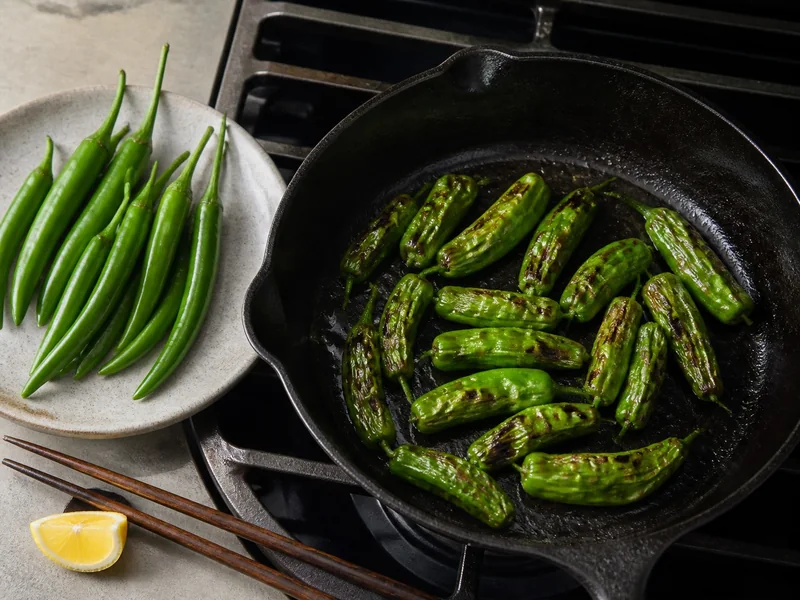
Shishito sits at 50 to 200 SHU in this collection and has the wrinkled, compact shape shown blistering in the in-post image. Its thin wall and small size support fast whole-pod cooking, but the published range still allows a mild variation from pod to pod.
Fushimi is the heatless path at 0 SHU, with a longer, smoother green pod. Choose it when the dish needs fresh pepper shape and sweetness without relying on the occasional bite associated with Shishito.
The two peppers can share a hot pan, yet their shapes change timing. Watch the skin rather than the clock, remove each batch when it blisters and softens, and avoid crowding the pan with enough pods to trap steam.
| Profile | Published heat | Visible cue | Starting decision |
|---|---|---|---|
| Shishito | 50 to 200 SHU | Short, wrinkled green pod | Blister whole and expect mild variation |
| Fushimi | 0 SHU | Long, smooth green pod | Choose for heatless fresh-pepper use |
Yatsufusa and Santaka Carry Concentrated Heat
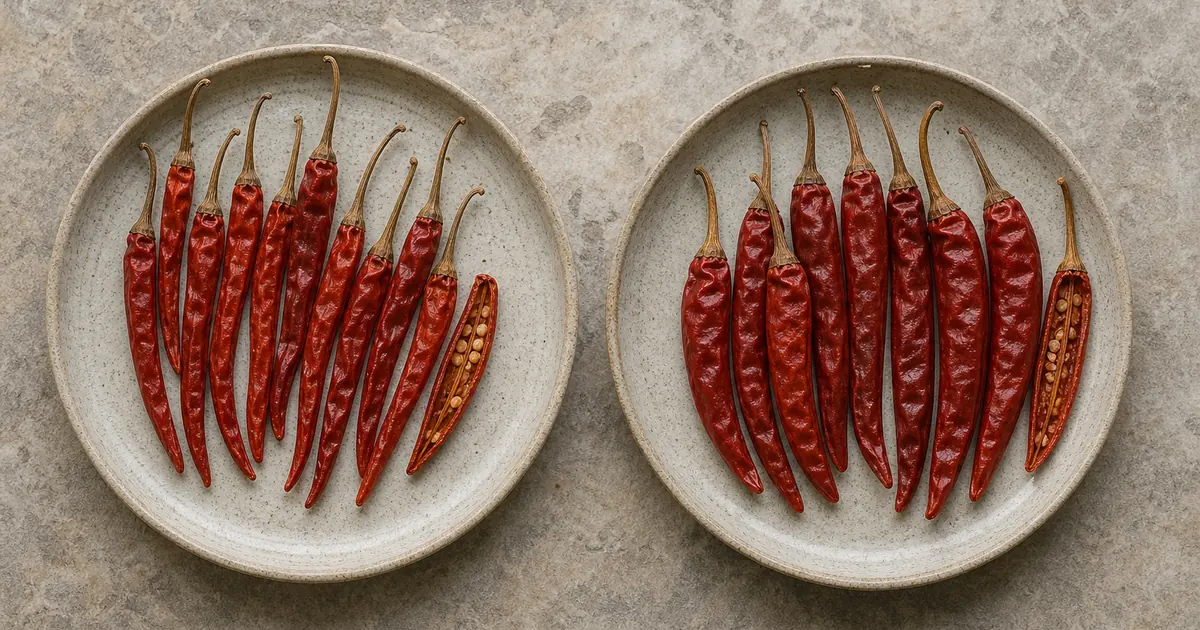
Yatsufusa is the hottest profile in the displayed set at 75,000 SHU. Santaka follows at 40,000 to 50,000 SHU, so neither belongs in a one-for-one swap with a mild green frying pepper.
Both are compact red-chile decisions, but the cultivar name still matters when a seed packet, recipe, or heat comparison calls for one specifically. Measure dried pieces or powder before adding them, then increase only after the heat has dispersed through the whole dish.
New Mexico State University's Chile Pepper Institute classifies cultivated peppers by species and treats cultivar identity separately from a general chile name. That distinction supports comparing the named profiles instead of assuming every small Japanese red chile has the same range.
Japones Is the Dried-Pod Bridge
Japones occupies the middle dried-heat lane at 15,000 to 30,000 SHU. It is useful when a cook wants a whole dried pod that can be toasted briefly, infused, crushed, or removed after flavoring a liquid.
A dry pan can wake up aroma, but darkening the pod heavily introduces bitterness. Open a window, use low to moderate heat, and stop when the chile becomes fragrant rather than waiting for smoke.
Whole pods release heat more slowly than fine powder because less surface area touches the food at once. That physical difference makes sold form part of the dosage decision even when the cultivar name stays the same.
Togarashi Names Require a Form Check
Togarashi in this inventory is a pepper profile at 15,000 to 30,000 SHU. On packages and menus, however, the same word may appear inside names for ground chile or multi-ingredient seasoning blends, so the front label alone does not settle what is in the container.
Check the ingredient list for a single chile, a powder, or a blend before substituting. A mixture that includes citrus peel, sesame, seaweed, or other seasonings changes aroma, salt balance, and texture in ways a plain dried pepper cannot reproduce.
Sansho creates a separate naming trap because it comes from Zanthoxylum, not Capsicum. Research on hydroxy-alpha-sanshool describes the tingling compound behind that sensory effect, which is different from using a Capsicum chile simply to add capsaicin heat.
Buy the Named Pepper and Match the Form
Start with the intended task: blister a fresh pod, add a heatless green pepper, infuse with a whole dried chile, or season with powder. Then match the profile, heat range, and sold form instead of shopping from the word “Japanese” alone.
Fresh pods should be firm and free of wet soft spots. University of Minnesota Extension advises refrigerating harvested peppers and handling them gently, while dried pods and powders need an airtight container away from moisture, light, and stove heat.
For seeds, preserve the full cultivar name and compare it with the mature pod description. A packet labeled only “Japanese hot pepper” can establish a broad use, but it cannot prove that the plant is Yatsufusa, Santaka, Japones, or another named cultivar.
Before you buy
- Match the full cultivar name to the intended dish.
- Confirm fresh pod, whole dried pod, powder, or blend.
- Use the published heat range to set a starting amount.
- Reject fresh peppers with wet soft spots and dried peppers with moisture.
Heat Level Distribution
How japanese peppers distribute across the Scoville scale. Click any tier to browse all peppers at that heat level.
Heat Range Comparison
Visual breakdown of where each variety falls on the Scoville scale. Wider bars show a larger documented SHU spread between individual pods.
The causes of pepper heat variation explain why pods from one cultivar do not always measure alike.
Related Comparisons
Side-by-side breakdowns of heat, flavor, and cooking uses. Each comparison covers Scoville ratings, pod anatomy, and substitution options.
 30K SHU
vs
30K SHU
30K SHU
vs
30K SHU
De Arbol vs Japones: Salsa Flavor or Clean Oil Heat
Chile de arbol and japones share a 15,000 to 30,000 SHU band, but their best jobs differ. Choose de arbol for chile-forward Mexican… 2.5K SHU
vs
200 SHU
2.5K SHU
vs
200 SHU
Padron vs Shishito: Two Blistering Tapas Peppers
Padrón and shishito peppers occupy the same cooking niche, small, blister-friendly, mostly mild, yet they come from opposite ends of… 10K SHU
vs
200 SHU
10K SHU
vs
200 SHU
Korean Green vs Shishito: Mild Snacking Peppers
Both the Korean green pepper and the shishito register at 0 SHU on standardized tests, yet anyone who has eaten them knows heat is…Browse all comparisons in our comparison hub, or use the pepper tools for calculators and finders.
Related Guides
Reference guides and recipes tied to the same pepper family, region, or use-case.


Explore Other Origins
Peppers evolved in the Americas and spread worldwide through the Columbian Exchange. Each region developed distinct varieties shaped by local cuisine and climate.
Frequently Asked Questions
Keep Reading
Jump into the wider database, heat tiers, comparisons, and substitute references without another card wall.