
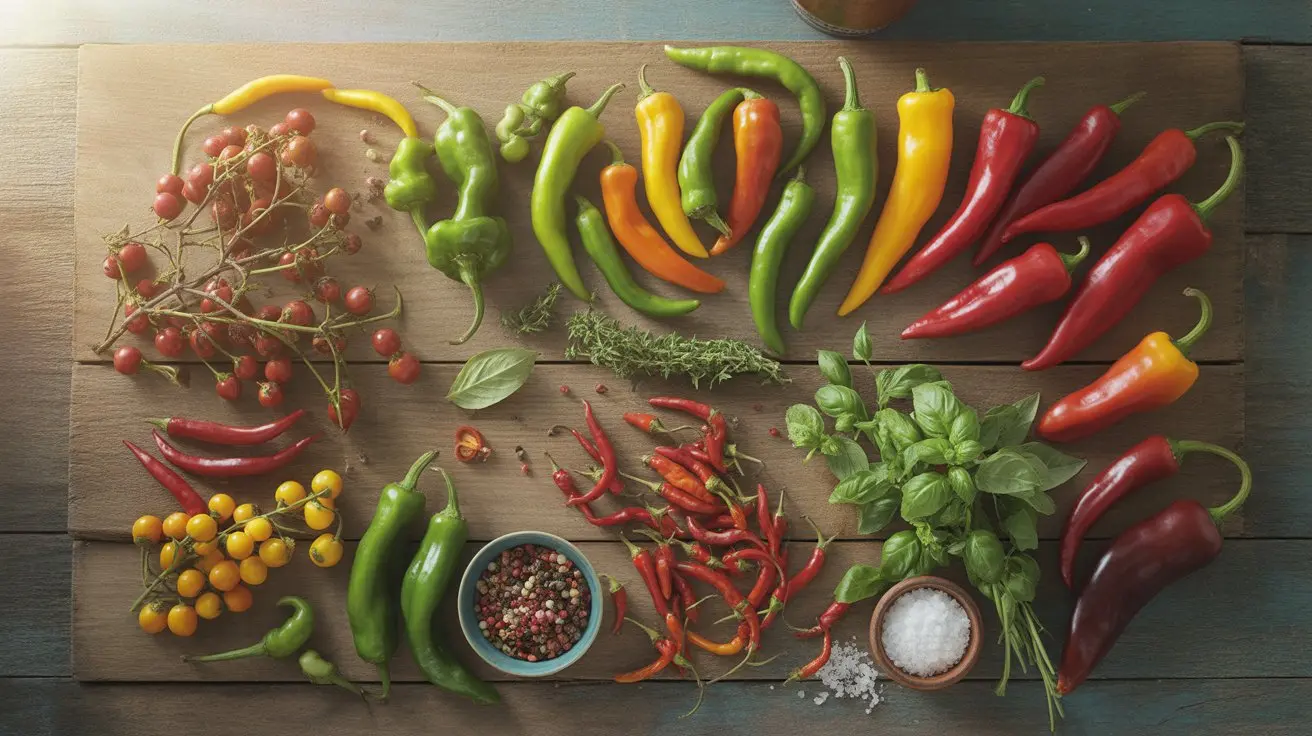
Pepper Species Guide (5 Domesticated)
The 5 domesticated Capsicum species explained. Key traits, climate needs, and top varieties. Find your perfect heat level.

Why Species Matter More Than Heat Level
Most people sort peppers by how hot they are. That's useful, but it misses something fundamental: the five domesticated Capsicum species each carry distinct genetics that shape flavor, climate tolerance, pod structure, and how long they take to ripen.
Knowing which species you're working with tells you more about a pepper's behavior in the garden and the kitchen than any Scoville heat unit measurement alone. This guide covers all five, with real-world context for growers and cooks.
Capsicum annuum: The Species You Already Know
Capsicum annuum is the most widely cultivated pepper species on the planet, and for good reason — it's adaptable, productive, and spans an enormous range of heat and flavor. Visit the full annuum species page for a complete variety breakdown.
The flavor profile of annuum peppers tends toward clean, bright, and vegetal. Bell peppers, poblanos, jalapeños, and serranos all belong here. So does paprika. So does cayenne, with its sharp, penetrating heat that sits in the hot tier around 30,000-50,000 SHU.
Serrano is another annuum worth understanding on its own terms. Serrano's crisp, grassy bite runs hotter than jalapeño — typically 10,000-23,000 SHU — and its thin walls make it ideal raw or lightly cooked.
Annuum plants are generally the most cold-tolerant of the five species and finish fastest. Most varieties mature in 70-90 days from transplant. If you're gardening in a short-season climate, annuum is almost always your best starting point.
One annuum that doesn't get enough attention outside Europe: Espelette, the mildly fruity Basque pepper with protected designation of origin status in France. It's proof that annuum varieties can be as regionally specific and culinarily serious as any wine grape.
Capsicum chinense: Heat, Complexity, and Caribbean Roots
Despite the name, Capsicum chinense has nothing to do with China. The misnomer comes from an 18th-century botanist who incorrectly assumed the species originated there. Its actual home is the Caribbean and Amazonian South America — and that origin shows up in the flavor.
Chinense peppers carry a characteristic fruity, almost tropical aroma that's inseparable from their heat. Habaneros, Scotch bonnets, ghost peppers, and most of the modern superhots — Carolina Reaper, 7 Pot Primo — are all chinense. Explore the full profile at the chinense species page.
The super-hot tier above 1,000,000 SHU is almost exclusively chinense territory. That's not a coincidence — the species has a genetic predisposition toward high capsaicin expression that the others simply don't match.
For growers, chinense is the demanding one. Plants need long, warm seasons — 90-120+ days to maturity — and hate cold nights. In northern climates, starting seeds indoors in January or February is standard practice. The full seed-starting guide covers timing in detail.
The flavor payoff is real, though. Even the hottest chinense varieties have a fruity depth that annuum peppers don't replicate. Caribbean pepper traditions built entire cuisines around this combination of fruit and fire.
Capsicum baccatum: The South American Wild Card
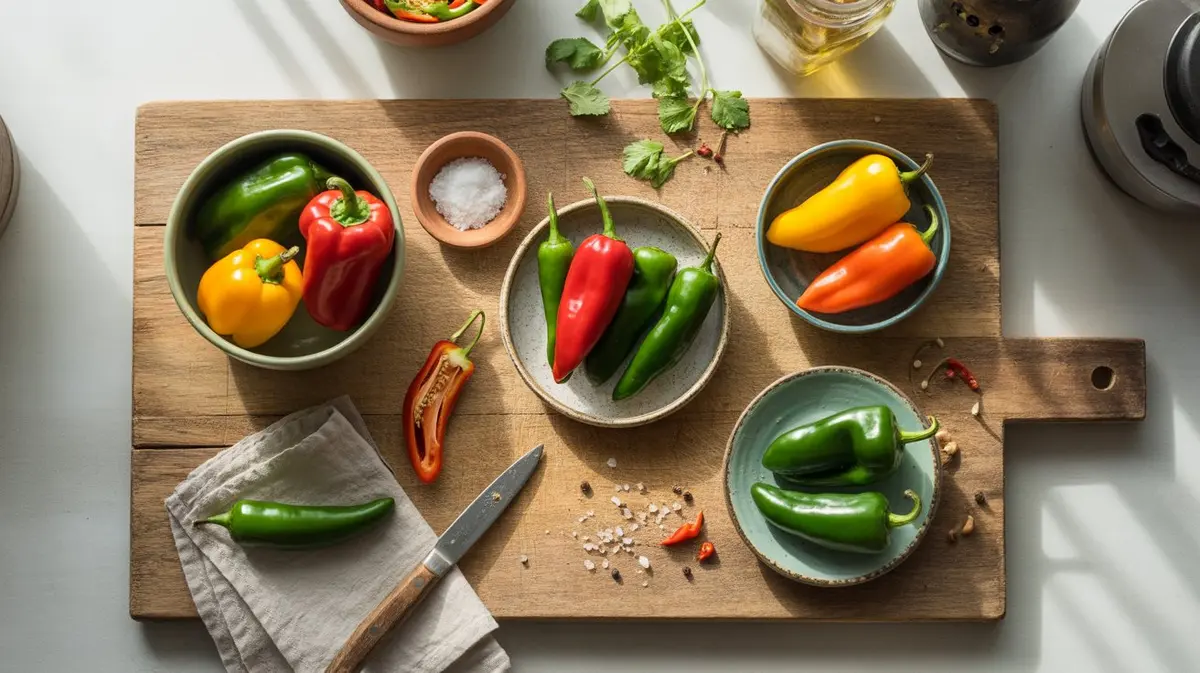
The flavor is distinctive — citrusy, bright, with a clean heat that doesn't linger the way chinense does. Aji amarillo, aji panca, and aji limon are all baccatum. So is the cascabel, known for its nutty, earthy warmth and rattling seeds when dried.
Baccatum plants grow tall — sometimes reaching 4-5 feet — and they're prolific once established. The species is more cold-tolerant than chinense but still needs a reasonably long season. Heat range varies widely across varieties, from mild to the extra-hot bracket above 100,000 SHU in some aji varieties.
One thing that sets baccatum apart visually: the flowers often have distinctive yellow or cream spots on the petals, a reliable ID marker when you're not sure what you're growing.
If you cook South American food regularly, baccatum varieties belong in your garden. They're not interchangeable with annuum or chinense — the flavor profile is different enough that substitutions never quite work.
Capsicum frutescens: Small Pods, Big History
Capsicum frutescens is a smaller species in terms of variety count, but its cultural footprint is enormous. Tabasco pepper — the variety that became a brand — is frutescens. So are most bird's eye chilis used across Southeast Asia and Africa.
See the complete variety list at the frutescens species page.
Tabasco's sharp, vinegary heat profile is characteristic of the species: intense, fast-hitting, and relatively thin-flavored compared to chinense. Frutescens peppers rarely develop the fruity complexity of their chinense cousins, but that directness is part of their appeal in hot sauces and fermented preparations.
SHU range for frutescens typically falls between 30,000 and 100,000, putting most varieties in the hot tier. The plants tend to be compact and highly productive, with pods that often point upward — a trait associated with wind pollination resistance in tropical climates.
Frutescens is the species most associated with African pepper traditions and much of Thai cooking's baseline heat. If you're trying to replicate authentic bird's eye chili flavor, there's no real annuum substitute — the species difference is too significant.
Growers should know that frutescens plants can be perennial in frost-free climates, sometimes producing for multiple years. In temperate zones, they're treated as annuals, but a potted plant overwintered indoors will often come back stronger the second year.
Capsicum pubescens: The High-Altitude Outlier
Of all five species, Capsicum pubescens is the most genetically isolated. It doesn't cross with the other four domesticated species — a reproductive barrier that makes it botanically unique. The full profile is at the pubescens species page.
The name means "hairy" in Latin, which is exactly what the plants are. Fuzzy stems and leaves make pubescens immediately recognizable. The seeds are black — another trait shared by no other domesticated Capsicum — and the pods tend to be thick-walled and apple-shaped.
Rocoto and manzano are the two main varieties most people encounter. They originated in the Andean highlands — altitudes above 8,000 feet — which explains their unusual cold tolerance. While chinense struggles below 60°F nights, pubescens can handle temperatures that would stall any other pepper species.
The flavor is apple-like and juicy, with a heat that builds slowly. SHU range is typically 30,000-100,000, though some rocotos push higher. The thick flesh makes them excellent for stuffing — they're sometimes called the "rocoto relleno" pepper in Peru for exactly this reason.
The tradeoff for their cold tolerance is a very long growing season — 150+ days in some cases. Even in ideal conditions, pubescens plants take their time. They're also shorter-day-length sensitive, which can complicate fruiting in northern summers with very long days.
If you're in a cool coastal climate or high-elevation garden where other peppers struggle, pubescens is worth the patience. Nowhere else in the Capsicum genus will you find a pepper that actually prefers cool nights.
How the Species Compare: Key Growing Traits
Putting the five side by side makes the practical differences clearer:
- Cold tolerance: Pubescens handles the coolest conditions; chinense needs the most warmth; annuum, baccatum, and frutescens fall in between.
- Days to maturity: Annuum is fastest (70-90 days); pubescens is slowest (150+ days); chinense runs 90-120 days depending on variety.
- Plant size: Baccatum often grows tallest; pubescens and frutescens tend to stay compact; annuum varies enormously by variety.
- Flavor character: Chinense brings tropical fruit notes; baccatum leans citrusy; annuum is clean and vegetal; frutescens is sharp and direct; pubescens tastes apple-like and juicy.
- Heat ceiling: Chinense holds all the superhot records; frutescens and baccatum reach extra-hot but rarely higher; annuum and pubescens top out in the hot range for most varieties.
Flavor First: Understanding What Each Species Tastes Like
Before you reach for a Scoville chart, consider flavor. The heat difference between a 50,000 SHU annuum and a 50,000 SHU chinense is real — they don't feel the same in your mouth even at identical measurements.
Annuum heat is clean and direct, hitting the front of the mouth and fading relatively quickly. Chinense heat builds slower, lingers longer, and comes wrapped in that fruity, floral character. Frutescens hits fast and sharp with minimal aftertaste. Baccatum has a bright, citrus-forward burn that dissipates cleanly. Pubescens heat is deep and slow-building, more like a rolling warmth than a spike.
Understanding the chemistry behind capsaicin's burn helps explain why the same SHU can feel so different across species — it's not just concentration but how capsaicinoids bind to receptors and how long they stay there.
The mirasol's bright, tea-like heat — an annuum variety — is a good example of how species flavor character holds even after drying. Dried as guajillo, it retains that clean annuum profile, distinct from a dried chinense like ancho or mulato.
Picking the Right Species for Your Kitchen
The species question becomes practical fast when you're trying to match a recipe's intended flavor. A mole negro calls for dried chinense and mulato (annuum) together — not because of heat, but because the flavor combination is irreplaceable.
For everyday cooking and the widest variety selection, annuum is the answer. For tropical heat with fruity complexity, chinense. For Andean and South American dishes, baccatum. For fermented hot sauces and Southeast Asian cooking, frutescens. For cool-climate gardens or stuffed pepper preparations, pubescens.
Peppers in the mild heat tier and medium heat range are dominated by annuum, which is why most grocery store peppers feel interchangeable — they're often the same species, just different varieties. Step outside annuum and the flavor differences become immediately obvious.
Cross-species substitutions are possible but imperfect. If a recipe calls for habanero (chinense) and you substitute cayenne (annuum) at the same SHU, you'll get similar heat but lose the fruity character entirely. That trade-off is sometimes acceptable and sometimes not, depending on the dish.
Species and Heat Level: Where Each One Lives
The five species don't distribute evenly across the heat spectrum. Annuum covers everything from zero-heat bells to 50,000+ SHU cayennes. Chinense owns the top of the chart. Frutescens clusters in the hot range. Baccatum spans mild to extra-hot. Pubescens stays in the hot-to-very-hot range without pushing into superhot territory.
For growers interested in the extra-hot range above 100,000 SHU, both chinense and baccatum offer options. For anything in the super-hot category above 1 million SHU, chinense is essentially the only game in town.
The species distribution across heat tiers isn't random — it reflects the evolutionary pressures each species faced and the selective breeding humans have applied over thousands of years. Chinense's heat capacity is a genetic trait that breeders have amplified deliberately. Annuum's versatility is why it became the global standard.
Frequently Asked Questions
-
Annuum covers the widest variety range and is fastest to mature, with clean vegetal flavor. Chinense takes longer to grow, tolerates heat better, and produces the fruity, tropical character found in habaneros and superhots - a flavor annuum simply cannot replicate.
-
The four species - annuum, chinense, baccatum, and frutescens - can sometimes cross, though offspring are often less fertile. Capsicum pubescens is reproductively isolated and does not cross with any of the other four domesticated species.
-
Capsicum pubescens handles the coldest conditions of any domesticated species, originating in Andean highlands above 8,000 feet. Capsicum annuum is the next best option, with the shortest season requirements and reasonable tolerance for cool nights.
-
They belong to different species - habanero is Capsicum chinense, jalapeño is Capsicum annuum. Chinense peppers carry a fruity, floral character from their distinct capsaicinoid profile, while annuum heat is cleaner and more direct, even when SHU measurements overlap.
-
Flower color and seed color are reliable markers: pubescens has purple flowers and black seeds; baccatum flowers have yellow spots on petals; chinense flowers are white with no markings. Pod shape, leaf texture, and plant habit also differ significantly across species.
