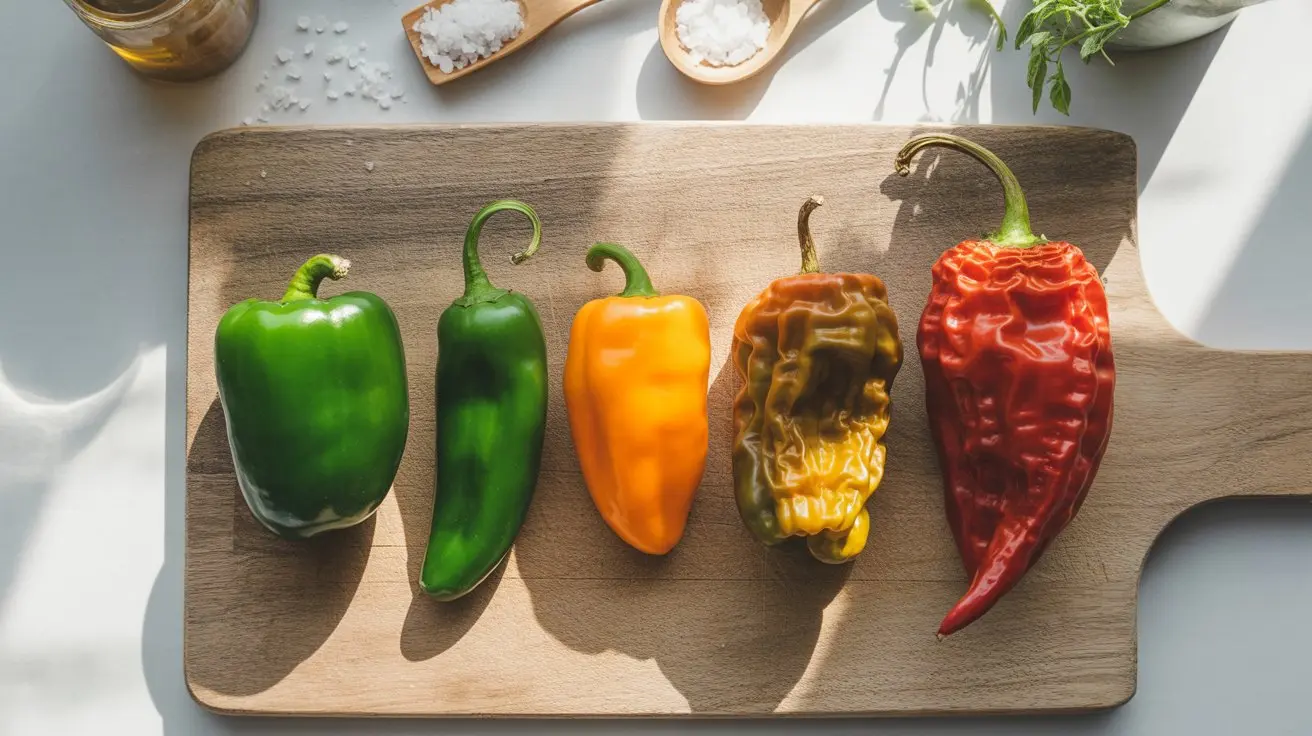
Pepper Heat Chart
Visual Scoville scale chart comparing 50+ peppers from bell (0 SHU) to Pepper X (2.69M SHU). Free printable version included. Find your perfect heat level.

How Flavor and Heat Work Together on the Scoville Scale
Before you get lost in numbers, consider this: two peppers can share the same SHU rating yet taste completely different. A mildly spiced, sweet bell-pepper hybrid and a smoky ancho both sit under 2,500 SHU, but they bring entirely different things to a dish. Heat level is one dimension; flavor complexity is another — and the chart below captures both.
The Scoville scale measures capsaicinoid concentration, originally through human taste panels and now primarily through high-performance liquid chromatography testing. The unit — Scoville Heat Units, or SHU — represents the dilution ratio at which capsaicin becomes undetectable.
The Full Pepper Heat Chart: 50+ Peppers Ranked
Use this as your reference. Peppers are organized into five tiers that reflect meaningful jumps in heat experience, not arbitrary cutoffs.
Mild (0 – 2,500 SHU)
These peppers are about flavor first. Bell peppers clock in at 0 SHU — no capsaicin whatsoever. Pimientos land around 100–500 SHU. Banana peppers reach up to 500 SHU. The sweet, thick-walled bullhorn type sits in this same mild zone, prized for roasting rather than heat. Pepperoncini top out near 500 SHU.
The ornamental NuMex Easter pepper also lives at the mild end, producing colorful pods with minimal burn — a novelty that earns its place in low-heat cooking. Anaheim peppers range 500–2,500 SHU, making them one of the most versatile mild options in American kitchens. Explore the full mild pepper SHU range for more options in this tier.
Medium (2,500 – 30,000 SHU)
This is where heat becomes noticeable but doesn't dominate. Poblanos sit at 1,000–2,000 SHU — technically straddling mild and medium. Jalapeños, the universal benchmark, range 2,500–8,000 SHU. Chipotle peppers (smoked jalapeños) fall in the same range.
The Beaver Dam pepper's mild-to-medium sweet heat lands around 500–5,000 SHU, depending on growing conditions — a Hungarian-American heirloom with more flavor depth than its SHU suggests. Serrano peppers push to 10,000–23,000 SHU. Hungarian wax peppers vary wildly, 5,000–15,000 SHU. The medium heat pepper zone covers everything from date-night salsa to dishes with real presence.
Hot (30,000 – 100,000 SHU)
Cayenne is the anchor here at 30,000–50,000 SHU — roughly 10 times hotter than a typical jalapeño. Tabasco peppers reach 30,000–50,000 SHU as well. De Arbol peppers climb to 15,000–65,000 SHU.
The striking Black Pearl ornamental pepper produces pods in the 10,000–30,000 SHU range — edible, genuinely hot, and visually dramatic in the garden. Thai bird's eye chilis hit 50,000–100,000 SHU, which explains why a small handful can overwhelm a large pot of curry. Check the hot pepper SHU bracket for a deeper breakdown of this tier.
Extra Hot (100,000 – 350,000 SHU)
Habaneros define this category for most cooks: 100,000–350,000 SHU, with fruity tropical notes that make the heat feel almost earned. Scotch bonnets share a similar range, 100,000–350,000 SHU, with a distinctly sweeter profile. Both belong to Capsicum chinense, the species responsible for most extreme heat.
The NuMex Suave Orange habanero's low-heat version is remarkable — it delivers habanero flavor at only 800 SHU, bred specifically for people who want the taste without the fire. Rocoto peppers from South America (South American pepper traditions) reach 100,000–200,000 SHU within Capsicum pubescens. The extra-hot SHU tier is where casual heat tolerance ends for most people.
Super Hot (350,000+ SHU)
Above 350,000 SHU, we enter territory that requires respect and often protective gear when handling. Ghost peppers (Bhut Jolokia) from India's northeastern pepper-growing regions average 1,000,000 SHU. Trinidad Moruga Scorpion peppers hit 1,200,000–2,000,000 SHU. The Carolina Reaper held the world record at 1,641,183 SHU average (with peaks above 2.2 million) per the Chile Pepper Institute at New Mexico State University.
Pepper X , developed by Ed Curlin, now holds the Guinness record at 2,693,000 SHU. For context: that is roughly 400 times hotter than a jalapeño. The super-hot pepper range is not for cooking in the traditional sense — it is for extreme hot sauce production and competitive eating.
Understanding Capsaicin: Why Peppers Burn
Capsaicin binds to the TRPV1 receptor in your mouth, which normally responds to temperatures above 109°F (43°C). Your body interprets this chemical signal as actual heat — that is why dairy fat (not water) provides relief, because capsaicin is lipophilic. For the full capsaicin chemistry and how the burn works, the receptor science goes deeper than most people expect.
Different capsaicinoids burn differently. Capsaicin produces a long, lingering heat; dihydrocapsaicin hits harder upfront. The ratio of these compounds varies by species and even by growing conditions — which is why two jalapeños from the same plant can taste noticeably different in intensity.
Heat Tier Quick-Reference Table
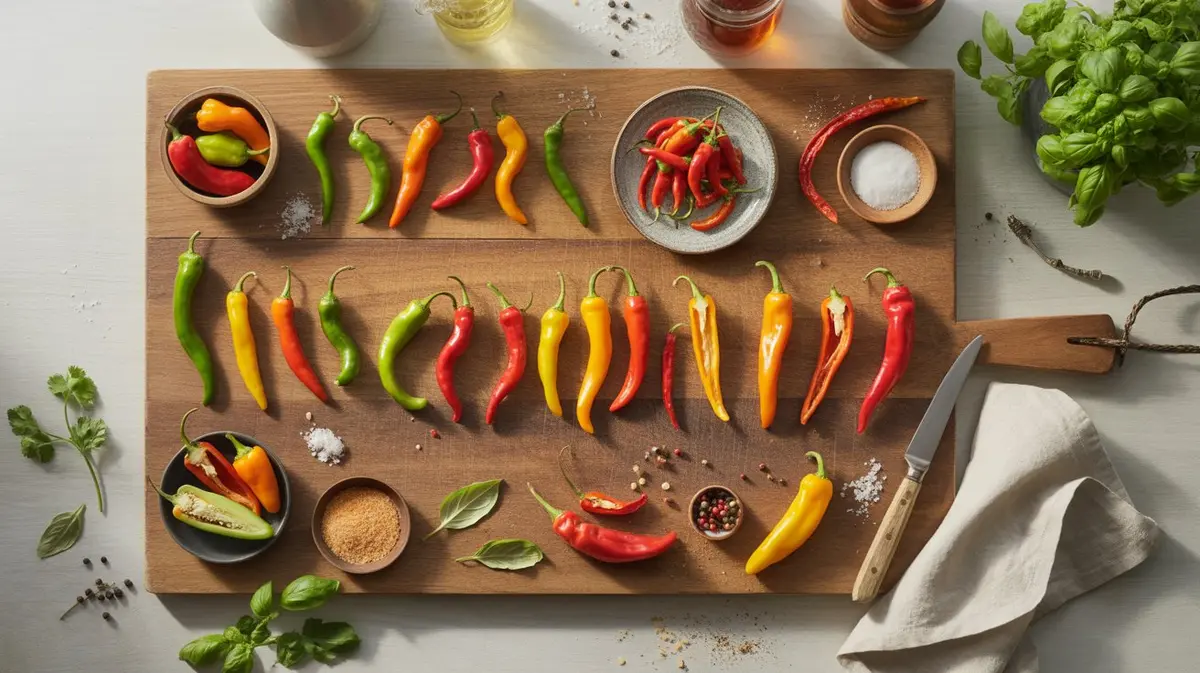
A condensed version for printing or quick reference:
- 0 SHU: Bell pepper, sweet banana pepper
- 100–500 SHU: Pimiento, pepperoncini, cubanelle
- 500–2,500 SHU: Anaheim, NuMex Easter, Bullhorn types
- 2,500–8,000 SHU: Jalapeño, Beaver Dam, poblano (upper end)
- 10,000–23,000 SHU: Serrano, Hungarian wax
- 30,000–50,000 SHU: Cayenne, Tabasco, de Arbol
- 50,000–100,000 SHU: Thai bird's eye, Chiltepin
- 100,000–350,000 SHU: Habanero, Scotch bonnet, Fatalii
- 350,000–700,000 SHU: Red Savina habanero, Chocolate habanero
- 855,000–1,000,000 SHU: Ghost pepper (Bhut Jolokia)
- 1,200,000–2,000,000 SHU: Trinidad Moruga Scorpion, 7-Pot Primo
- 1,641,183 SHU avg: Carolina Reaper (Chile Pepper Institute, 2013)
- 2,693,000 SHU: Pepper X (Guinness World Records, 2023)
Regional Origins and Heat Patterns
Geography shaped heat levels over thousands of years of cultivation. Mexican pepper traditions gave us a spectrum from mild ancho to searing chiltepin — the wild ancestor of many cultivated varieties. Caribbean-grown peppers trend toward the Capsicum chinense species, which produces disproportionately high heat relative to pod size.
Thai pepper varieties pack serious heat into tiny pods — bird's eye chilis are among the most globally consumed hot peppers by volume. African pepper traditions center on Peri-Peri (African bird's eye), which sits at 50,000–175,000 SHU and drives an entire cuisine. Italian pepper varieties skew mild, with peperoncino being the notable exception.
Species and Their Typical Heat Ranges
Capsicum frutescens includes Tabasco and bird's eye chilis — smaller pods, persistent heat. Capsicum baccatum covers aji peppers from South America: fruity, bright, typically 10,000–100,000 SHU. The Capsicum chinense species dominates the super-hot category — ghost peppers, habaneros, Carolina Reapers, and Pepper X all belong here.
How Growing Conditions Affect SHU
The same pepper variety can measure significantly different SHU depending on soil stress, water availability, and temperature. Drought stress and heat drive capsaicin production higher — a jalapeño grown in poor, dry soil will typically be hotter than one raised in rich, well-irrigated beds. This is why published SHU ranges are ranges, not fixed numbers.
Altitude matters too. Peppers grown at higher elevations with intense UV exposure often produce more capsaicinoids. If you want to grow your own and understand what affects heat, the full seed-to-harvest growing guide covers variety selection, soil prep, and the conditions that push heat higher. The Hungarian pepper growing tradition demonstrates this well — paprika varieties grown in different regions produce measurably different heat profiles from the same seed stock.
Choosing the Right Heat Level for Cooking
Matching heat level to cooking method matters as much as matching it to tolerance. Mild peppers — 0–2,500 SHU — carry flavor without burn, making them ideal for stuffing, roasting, and sauces where pepper is the star. A Cajun Belle's mild sweet-heat character works perfectly in dishes where you want pepper flavor front and center without overpowering other ingredients.
Medium-heat peppers are the workhorses of most cuisines. Jalapeños and serranos add heat that builds gradually and fades — useful for dishes where you want warmth throughout rather than an assault upfront. At the hot end, a little cayenne or Thai chili goes a long way; use them to season fat-based sauces where capsaicin disperses evenly.
For super-hots, the standard advice is extraction — using them to infuse oil or vinegar, then removing the pepper before serving. Cooking with a whole ghost pepper in a dish meant for four people is a reasonable approach; cooking with a Carolina Reaper the same way is not.
Printable Version and How to Use This Chart
The chart above is designed to be printed at standard letter size. For the cleanest print, use the browser's print function and select "fit to page." The tier-based layout keeps the most-used ranges (mild through hot) visible without scrolling.
Bookmark the mild tier page, medium tier page, or extra-hot tier if you cook regularly in a specific heat range — each has expanded pepper lists, flavor notes, and substitution options for that bracket specifically. For side-by-side comparisons between specific peppers, the comparison pages go deeper than this chart can.
Heat tolerance is trainable. Regular exposure to capsaicin desensitizes TRPV1 receptors over time — which is why experienced chili cooks can handle peppers that would be genuinely painful for someone who eats mild food regularly. Start one tier above your comfort zone and work up. The chart gives you the map; the kitchen gives you the experience.
Frequently Asked Questions
-
As of 2023, Pepper X holds the Guinness World Record at 2,693,000 SHU, surpassing the Carolina Reaper. Both were developed by Ed Curlin of PuckerButt Pepper Company in South Carolina.
-
Commercial SHU figures are often rounded averages from HPLC testing and can vary significantly by harvest, growing conditions, and individual pod. Treat published ranges as guidelines, not precise measurements.
-
Jalapeños (2