Comparing Peri Peri and Cayenne: Differences
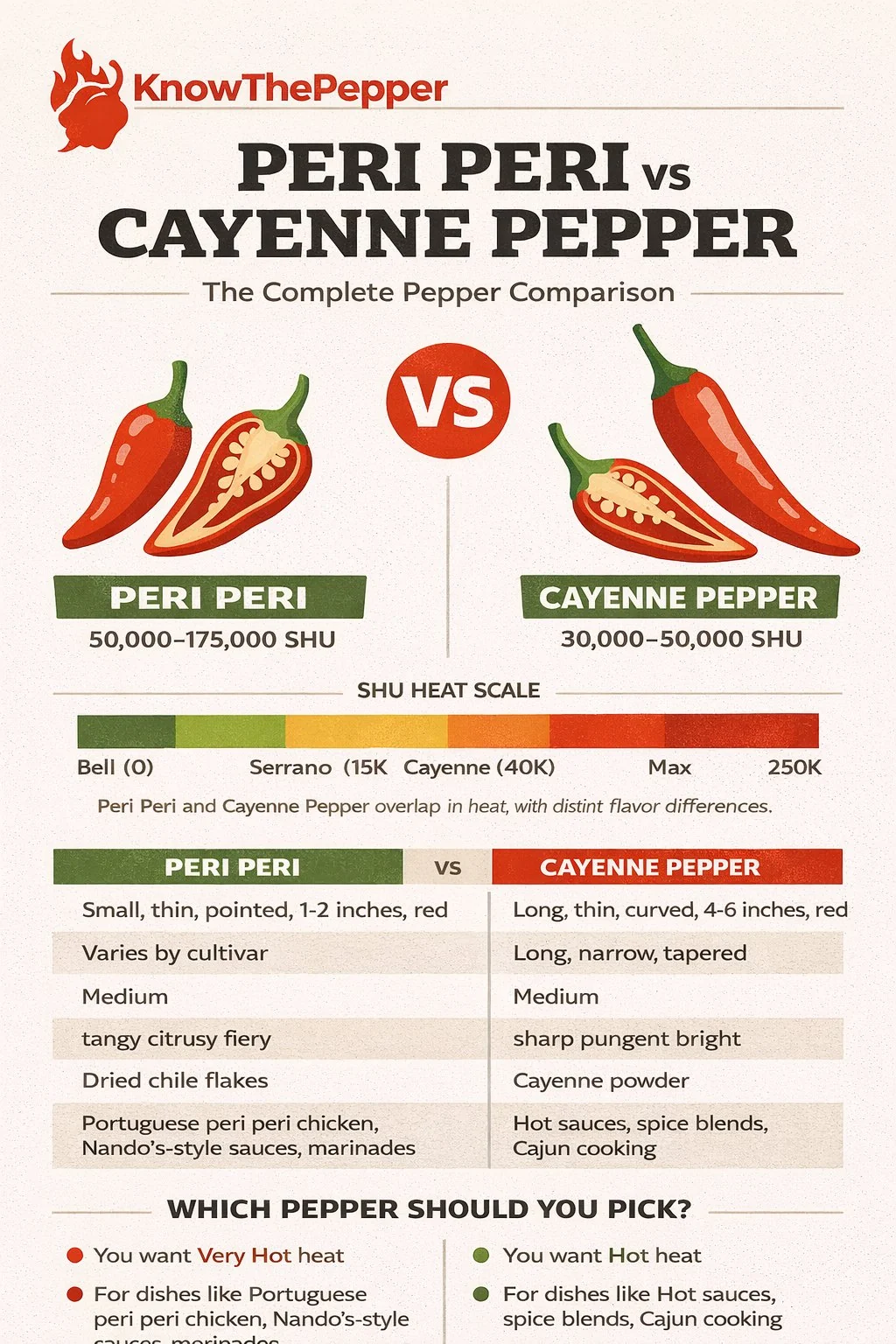
Peri peri and cayenne are both serious heat sources, but they sit in different leagues. Peri peri runs 50,000-175,000 SHU with a bright citrusy bite, while cayenne lands at a comparatively measured 30,000-50,000 SHU with clean, neutral heat. The choice between them shapes a dish's character as much as its fire.

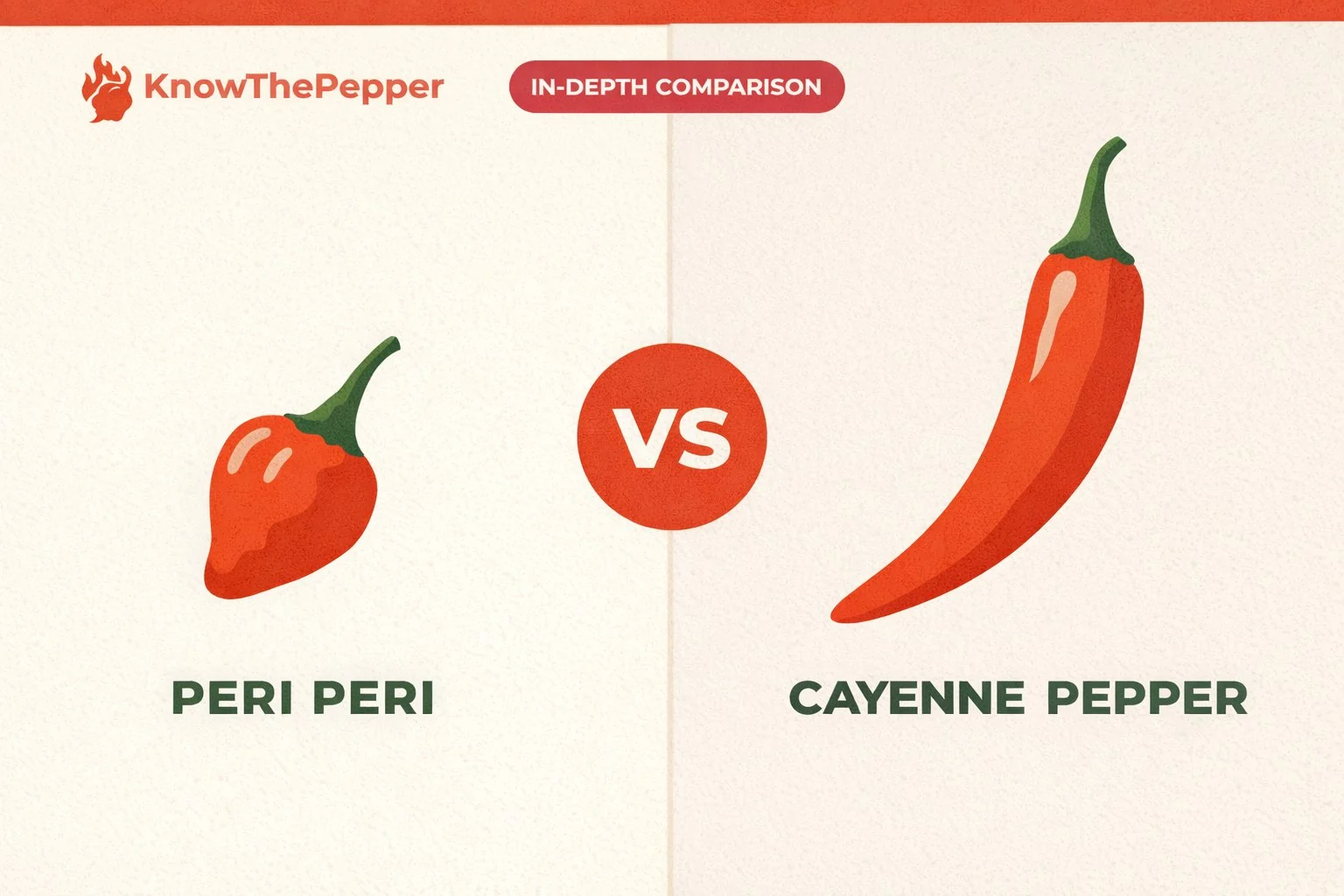
Peri Peri measures 50K–175K SHU while Cayenne Pepper registers 30K–50K SHU — making Peri Peri 4× hotter. Peri Peri is known for its citrusy and hot flavor (C. frutescens), while Cayenne Pepper offers neutral and peppery notes (C. annuum).
- Heat difference: Peri Peri is 4× hotter
- Species: C. frutescens vs C. annuum
- Best for: Peri Peri excels in hot sauces and extreme dishes, Cayenne Pepper in fresh salsas and mild recipes
Peri Peri
Extra-HotCayenne Pepper
HotPeri Peri vs Cayenne Pepper Comparison
Peri Peri vs Cayenne Pepper Heat Levels
Cayenne opens with a sharp, immediate burn that spreads across the tongue evenly - it's the kind of heat you know well, reliable and clean. Peri peri hits differently: there's a fruity brightness first, then a wave of intensity that builds and lingers far longer than cayenne ever does.
On the Scoville scale's testing methodology, cayenne measures 30,000-50,000 SHU, placing it firmly in the hot pepper intensity band alongside familiar kitchen staples. Peri peri reaches 50,000-175,000 SHU at its peak, pushing it into the extra-hot SHU classification - territory shared with Thai bird's eye chilis and approaching habanero levels.
For a practical reference: a Fresno chili sits around 2,500-10,000 SHU. Cayenne is roughly 3-5x hotter than a Fresno. Peri peri at peak heat can be 17x hotter than that same Fresno - a meaningful difference when you're scaling a recipe.
The species gap matters here too. Cayenne belongs to C. annuum, the most cultivated pepper species, which tends to produce predictable, moderate capsaicin distribution. Peri peri is C. frutescens, a species known for volatile heat variation - the same plant can produce fruits ranging from 50k to 175k SHU depending on growing conditions and stress. That unpredictability is part of why peri peri marinades can vary so dramatically from one bottle to the next.
The receptor chemistry behind how both compounds register as pain is identical - capsaicin binding to TRPV1 channels - but peri peri delivers a higher capsaicin load with more aromatic compounds riding alongside it.
Flavor Profile Comparison
The first time I encountered peri peri in its raw form - not the bottled sauce, but the actual fresh pepper - I was struck by how the citrus hit before the heat.
Few peppers have traveled as far or worked as hard as cayenne.
Cayenne's flavor reputation is essentially "hot and neutral" - and that's not a criticism. Its clean, peppery taste with minimal sweetness or fruitiness is exactly why it became the default heat-adder in spice blends worldwide. It boosts fire without competing with other flavors. There's a mild earthiness, a faint dried-pepper note, and then mostly heat.
Peri peri is a different animal entirely. The citrus quality isn't subtle - it's forward and bright, almost lemony in fresh form, with a complexity that recalls the fruity heat profile of African pepper varieties. Dried or as a sauce, it develops more depth: smoky, tangy, slightly floral. The heat and flavor arrive together rather than sequentially.
For comparison, the cayenne-versus-red-pepper-flakes heat and flavor breakdown illustrates how cayenne's neutrality makes it interchangeable with other dried chilis - something peri peri can't claim. Peri peri's personality is too distinct.
Aroma is another dividing line. Fresh cayenne has a mild green-pepper smell that fades when dried. Peri peri - especially the African bird's eye variety - carries a sharp, almost vinegary aroma even before any acid is added. That's why peri peri sauce recipes typically use lemon juice and garlic: the pepper's own character calls for those companions.
In terms of South American pepper heritage, cayenne's French Guiana origins shaped a pepper optimized for drying and grinding. Peri peri's African cultivation history pushed the plant toward fresh and fermented applications - two completely different culinary destinies built into the genetics.
Culinary Uses for Peri Peri and Cayenne Pepper
Cayenne is the workhorse. Ground cayenne powder goes into dry rubs, chili blends, curry powders, hot sauces, and anything that needs background heat without flavor interference. It's the reason a recipe says "a pinch of cayenne" - it's calibrated, predictable, and widely available. The cayenne-versus-jalapeño heat and flavor difference shows why cayenne dominates dried applications where fresh jalapeños would add too much moisture and grassy flavor.
Peri peri is a feature ingredient, not a background player. Its primary home is the Portuguese-African piri piri chicken tradition: whole birds marinated in blended peri peri peppers, lemon, garlic, and oil, then grilled over high heat. The citrus-forward pepper flavor penetrates the meat and chars beautifully. Nando's built a global chain on this single preparation.
Beyond the classic chicken, peri peri works in: - Seafood marinades (shrimp, prawns, firm white fish) - Chili oil infusions where you want more complexity than standard flakes - Hot sauce bases where fruit and fire are both desired - Rice and grain dishes in East African cooking
For substitution: replacing cayenne with peri peri requires cutting quantity by roughly half given the heat differential, and accounting for the citrus flavor shift - add a squeeze of lemon if the dish needs that neutrality back. Going the other direction, substituting cayenne for peri peri means increasing quantity and adding lemon zest or a splash of vinegar to approximate the brightness.
The gochugaru versus cayenne flavor and heat comparison is useful context here - like gochugaru, peri peri brings flavor complexity that makes direct substitution imperfect. Cayenne is the pepper that substitutes cleanly; peri peri is the one that leaves a gap when it's missing.
Dried cayenne powder keeps well for 2-3 years. Peri peri sauce or paste in the fridge lasts 2-3 weeks once opened; dried peri peri flakes hold for about a year before the citrus notes fade significantly.
Which Should You Choose?
Cayenne wins on versatility and consistency. If a recipe calls for background heat, if you're building a spice blend, or if you need something that won't clash with delicate flavors, cayenne is the right call. Its predictable 30,000-50,000 SHU range and neutral taste make it the most useful all-purpose hot pepper in a spice cabinet.
Peri peri wins on character. When the pepper is the point - when you want heat and citrus brightness and that distinctly African flavor profile - nothing substitutes cleanly. The 50,000-175,000 SHU range means it also simply outguns cayenne in any application where maximum heat matters.
For everyday cooking: stock cayenne. For grilling, marinades, and dishes where you want the pepper to announce itself, peri peri earns its place. The two rarely compete directly because they serve different purposes - one is infrastructure, the other is architecture.
Can You Substitute One for the Other?
Proceed with caution. Peri Peri is 4× hotter than Cayenne Pepper.
Need a different option altogether? Search for peppers that match your target heat and flavor with precise swap ratios.
Growing Peri Peri vs Cayenne Pepper
If you’re deciding which pepper to grow at home, consider your climate and patience level. Peri Peri and Cayenne Pepper have different maturation times and temperature preferences. Hotter varieties generally need a longer, warmer growing season to develop their full capsaicin content. Our zone-based planting date tool can pinpoint the best sowing window for your area.
Peri peri grows best in full sun with well-draining soil and consistent warmth - it's a tropical species that does not tolerate frost. Start seeds indoors 10-12 weeks before last frost, keeping soil temperature at 80-85°F for germination.
The plants stay compact, typically reaching 18-24 inches, which makes them workable in containers. A 5-gallon pot with quality potting mix and a slow-release fertilizer will carry a plant through a full season.
For comparison, the cultivation approach for its close botanical relative is nearly identical - both prefer the same temperature ranges and soil conditions.
Cayenne is one of the more forgiving hot peppers to grow, which explains its global reach. Start seeds indoors 8-10 weeks before last frost.
For practical guidance on growing cayenne from transplant to harvest, the key variables are consistent heat and full sun. Cayenne wants at least 6-8 hours of direct light daily and struggles in cool, wet summers.
Transplant outdoors once nighttime temps stay above 55°F. Space plants 18-24 inches apart.
History & Origin of Peri Peri and Cayenne Pepper
Both peppers carry centuries of culinary heritage. Peri Peri traces its roots to Africa, while Cayenne Pepper originates from French Guiana. Understanding their backstory helps explain why each pepper developed its distinctive traits.
Buying & Storage
Whether you’re shopping for Peri Peri or Cayenne Pepper, the same quality indicators apply. Fresh peppers should feel firm and heavy for their size, with taut, glossy skin and no soft or wet spots. Minor stem cracks known as “corking” are perfectly normal and often indicate a mature, flavorful pod.
- Firm pods with taut skin and consistent color
- Should feel heavy relative to size
- Minor stem cracks (“corking”) are normal
- Avoid anything soft, shriveled, or with dark wet spots
- Fresh: Paper bag, crisper drawer — 1–2 weeks
- Frozen: Wash, dry, freeze on sheet pan — 6+ months
- Dried: Airtight, away from light — up to 1 year
The Verdict: Peri Peri vs Cayenne Pepper
Peri Peri and Cayenne Pepper occupy very different positions on the heat spectrum. Peri Peri delivers 4× more heat with its distinctive citrusy and hot character. Cayenne Pepper, with its neutral and peppery profile, excels in everyday cooking.
Frequently Asked Questions
Related Comparisons
Sources pending verification.