
Gochugaru vs Cayenne: Key Differences Compared
Gochugaru and cayenne are both C. annuum peppers, but they land in completely different culinary worlds. Gochugaru brings a smoky, fruity sweetness at 1,500-10,000 SHU, while cayenne delivers a sharp, clean burn at 30,000-50,000 SHU. The gap between them is wider than the numbers alone suggest — flavor philosophy included.

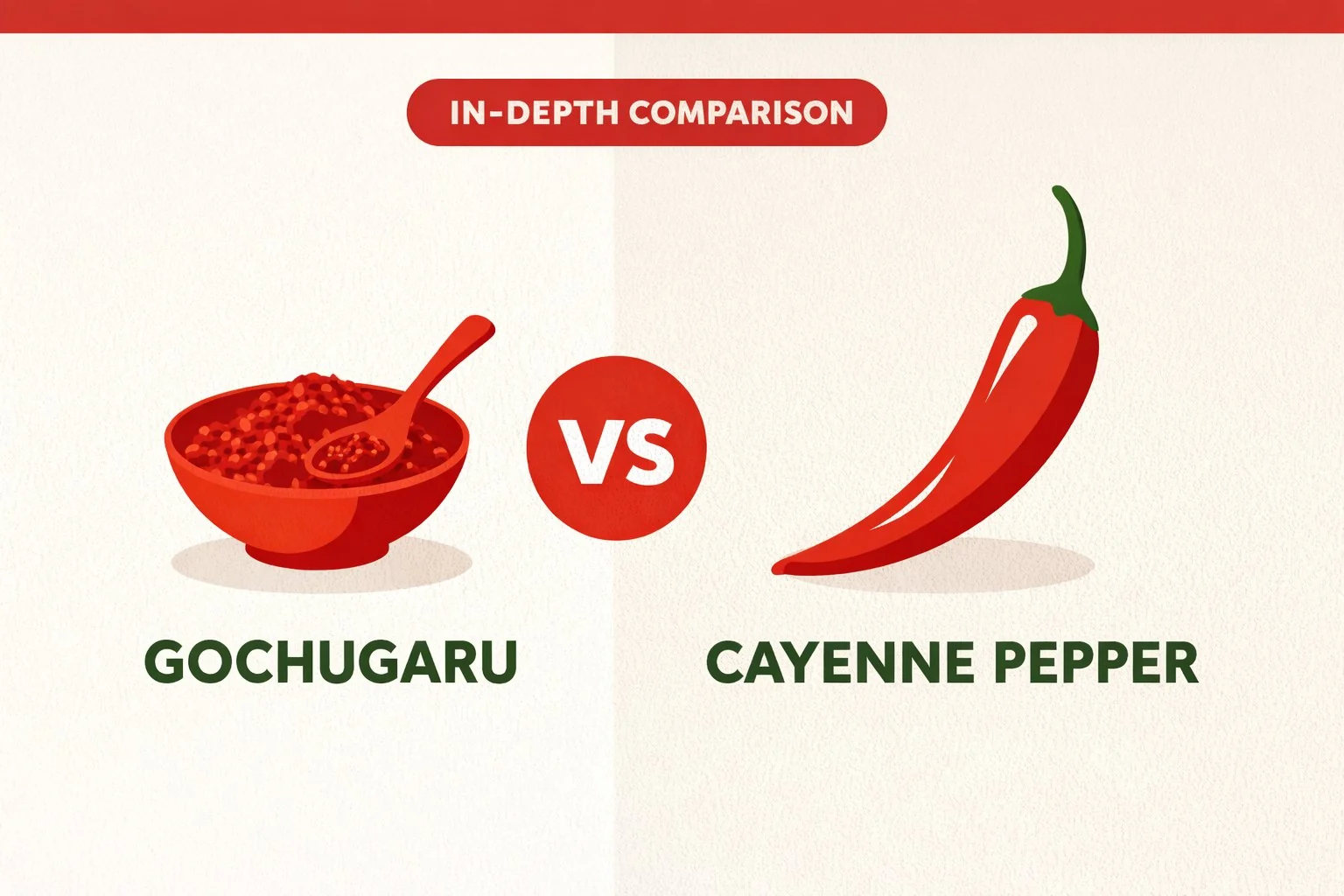
Gochugaru measures 2K–10K SHU while Cayenne Pepper registers 30K–50K SHU — making Cayenne Pepper 5× hotter. Gochugaru is known for its smoky and sweet flavor (C. annuum), while Cayenne Pepper offers neutral and peppery notes (C. annuum).
- Heat difference: Cayenne Pepper is 5× hotter
- Species: Both are C. annuum
- Best for: Gochugaru excels in everyday cooking and salsas, Cayenne Pepper in fresh salsas and mild recipes
Gochugaru
HotCayenne Pepper
HotGochugaru vs Cayenne Pepper Comparison
Gochugaru vs Cayenne Pepper Heat Levels
Flavor shapes how heat lands, and this is where the divide starts. Gochugaru's smokiness and natural sweetness soften its burn even at the top of its range — the heat feels rounded, almost gentle. Cayenne's neutral, peppery profile strips away any cushioning, so the heat arrives clean and immediate.
The numbers back this up. Gochugaru sits at mild-to-medium SHU territory — 1,500 to 10,000 SHU depending on the batch and drying method. At its hottest, it barely reaches the lower edge of what most people consider genuinely spicy. Cayenne runs 30,000 to 50,000 SHU, placing it firmly in the hot pepper intensity band where casual spice tolerance starts to sweat.
For a jalapeño reference point: a standard jalapeño tops out around 8,000 SHU. Gochugaru at its mildest is actually cooler than a jalapeño, and at its hottest is roughly on par. Cayenne, by contrast, runs 4 to 6 times hotter than that same jalapeño — a substantial jump that fundamentally changes how you'd use each pepper.
The capsaicin chemistry behind this is straightforward — more capsaicinoids mean more TRPV1 activation and the burn response that follows. Both peppers share the same C. annuum species, but selective breeding pushed cayenne toward high capsaicin yield while Korean gochugaru varieties were cultivated for color and flavor depth over raw heat. You can verify exact measurements using the Scoville testing methodology — results vary by crop year and processing.
Flavor Profile Comparison
The first time I cooked with gochugaru, I expected something close to crushed red pepper flakes.
Few peppers have traveled as far or worked as hard as cayenne.
Gochugaru's flavor is what makes it irreplaceable in Korean cooking. Dried Korean chiles bring a layered sweetness with a faint smokiness — the result of sun-drying, which concentrates sugars and creates mild Maillard-adjacent complexity. There's also a subtle earthiness, almost like dried fruit, that makes gochugaru taste more like an ingredient than a seasoning.
Cayenne tastes like heat first, pepper second. Its flavor profile is intentionally neutral — a clean, sharp peppery note that functions as a background amplifier rather than a featured flavor. This is not a criticism; it's precisely why cayenne works in so many applications. It adds fire without redirecting a dish.
The aroma difference is equally telling. Gochugaru smells rich and slightly sweet when you open the bag — it's an inviting scent. Cayenne's aroma is sharper, more volatile, with a nose-tingling quality that signals the heat to come.
For side-by-side context, Aleppo pepper's fruity, moderate warmth actually sits closer to gochugaru's flavor character than cayenne does, despite the three being categorized similarly in some spice racks.
Gochugaru also has a visual role — its deep red color stains dishes a vibrant crimson, which is part of kimchi's signature look. Cayenne contributes color too, but the orange-red hue is secondary to its heat function. These are peppers built for different jobs, and their flavors reflect that.
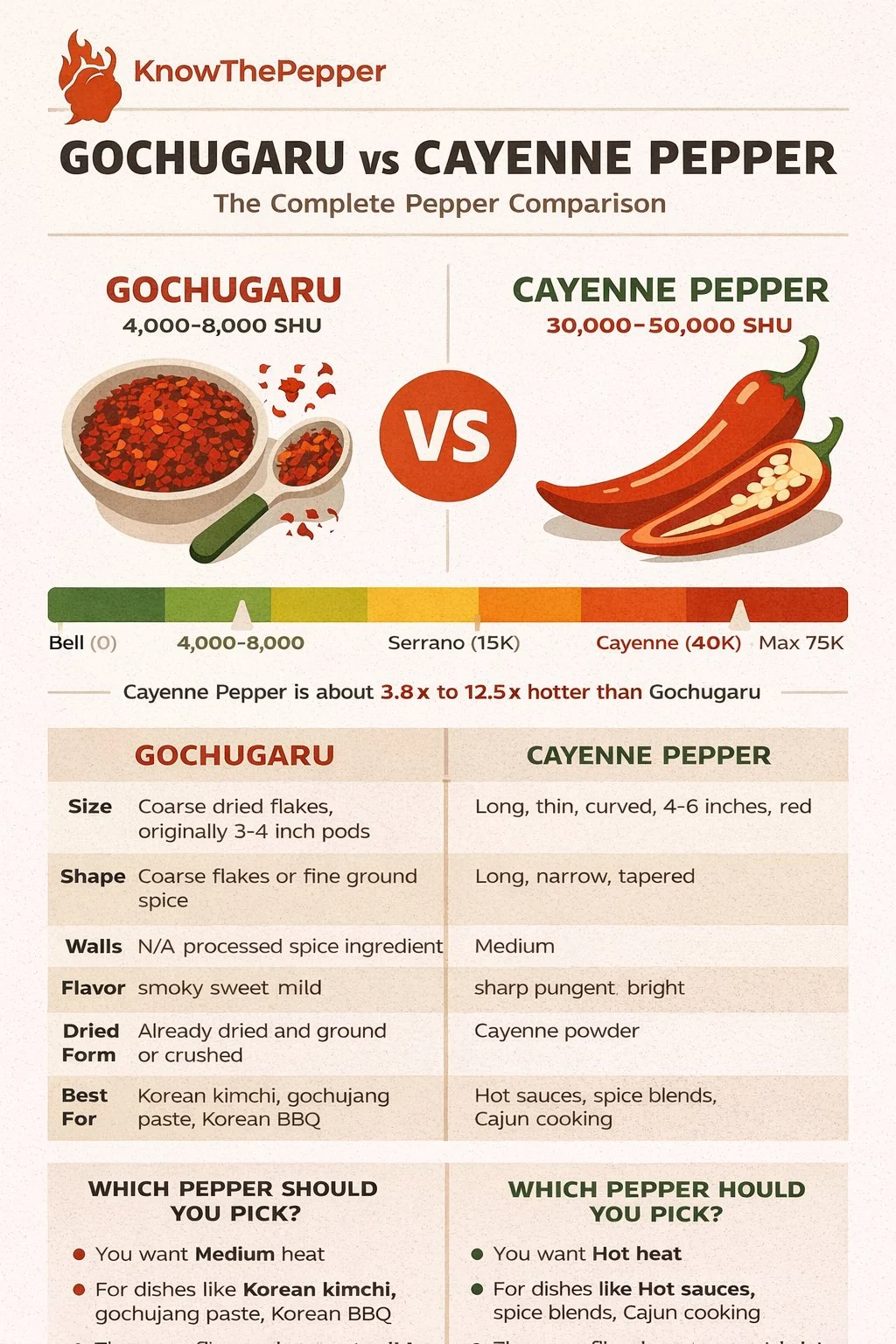
Culinary Uses for Gochugaru and Cayenne Pepper
Gochugaru is the backbone of Korean fermentation. Kimchi requires it — not just for heat but for the fermentation environment it creates and the color it imparts. Gochugaru also anchors gochujang (fermented chili paste), tteokbokki sauce, and sundubu-jjigae (soft tofu stew). It's used in quantities that would be unthinkable with cayenne — tablespoons, not pinches.
Cayenne belongs to a different pantry category. It's a finishing spice, a heat-booster, a background note. It shows up in hot sauces, Cajun spice blends, dry rubs, and anything where you want heat without flavor competition. The cayenne-vs-jalapeño heat gap is useful context here — cayenne runs much hotter, so recipes that call for fresh jalapeños cannot simply swap in cayenne powder without significant adjustment.
Substitution ratios matter here. If a recipe calls for 1 tablespoon gochugaru and you're using cayenne, start with 1/4 teaspoon and adjust upward — you'll get comparable heat but lose the smoky-sweet depth entirely. Going the other direction (cayenne to gochugaru), use roughly 4:1 gochugaru to cayenne and expect a milder, sweeter result.
For gochugaru substitutes with more complete flavor coverage, the gochugaru swap options page covers combinations like Aleppo plus smoked paprika that better replicate the full profile.
Cayenne also differs from cayenne vs red pepper flakes comparisons — both are hot but the grind, blend, and flavor differ. When cooking Korean dishes, gochugaru's coarse, slightly oily texture contributes to sauce body in ways a fine cayenne powder cannot replicate. For non-Korean applications where you just need heat, cayenne is the more versatile workhorse.
Which Should You Choose?
Choose gochugaru when the dish is built around it — Korean BBQ marinades, kimchi, jjigae, or any recipe where deep red color and smoky-sweet flavor are load-bearing elements. It belongs to the Korean pepper tradition of prioritizing flavor complexity over raw heat, and that philosophy is baked into every application.
Choose cayenne when heat is the point and flavor neutrality is an asset. It's the right call for hot sauces, spice rubs, and dishes from South American pepper traditions where sharp, clean fire is the goal. Both belong to the C. annuum botanical family, but they've been bred in opposite directions.
They are not interchangeable. The heat gap is too large and the flavor profiles too different for casual swapping. If you only stock one, cayenne is more broadly applicable — but gochugaru is irreplaceable for what it does specifically. Serious cooks keep both.
Can You Substitute One for the Other?
Yes — direct substitution works. Gochugaru and Cayenne Pepper are close enough in heat to swap at roughly 1:1. The main difference will be flavor. For more swap options, explore ranked alternatives with conversion ratios.
Growing Gochugaru vs Cayenne Pepper
If you’re deciding which pepper to grow at home, consider your climate and patience level. Gochugaru and Cayenne Pepper have different maturation times and temperature preferences. Hotter varieties generally need a longer, warmer growing season to develop their full capsaicin content. Our zone-based planting date tool can pinpoint the best sowing window for your area.
Growing gochugaru-style peppers is straightforward if you can give them a long, warm season. Start seeds indoors 8-10 weeks before last frost - these are *C.
Transplant after all frost risk passes into full sun with well-draining soil. Plants reach 2-3 feet and produce heavily.
Drying is where most home growers get tripped up. Traditional sun-drying requires consistent heat and low humidity over several weeks.
Cayenne is one of the more forgiving hot peppers to grow, which explains its global reach. Start seeds indoors 8-10 weeks before last frost.
For practical guidance on growing cayenne from transplant to harvest, the key variables are consistent heat and full sun. Cayenne wants at least 6-8 hours of direct light daily and struggles in cool, wet summers.
Transplant outdoors once nighttime temps stay above 55°F. Space plants 18-24 inches apart.
History & Origin of Gochugaru and Cayenne Pepper
Both peppers carry centuries of culinary heritage. Gochugaru traces its roots to Korea, while Cayenne Pepper originates from French Guiana. Understanding their backstory helps explain why each pepper developed its distinctive traits.
Buying & Storage
Whether you’re shopping for Gochugaru or Cayenne Pepper, the same quality indicators apply. Fresh peppers should feel firm and heavy for their size, with taut, glossy skin and no soft or wet spots. Minor stem cracks known as “corking” are perfectly normal and often indicate a mature, flavorful pod.
- Firm pods with taut skin and consistent color
- Should feel heavy relative to size
- Minor stem cracks (“corking”) are normal
- Avoid anything soft, shriveled, or with dark wet spots
- Fresh: Paper bag, crisper drawer — 1–2 weeks
- Frozen: Wash, dry, freeze on sheet pan — 6+ months
- Dried: Airtight, away from light — up to 1 year
The Verdict: Gochugaru vs Cayenne Pepper
Gochugaru and Cayenne Pepper sit in the same heat tier but serve different roles. Cayenne Pepper delivers 5× more heat with its distinctive neutral and peppery character. Gochugaru, with its smoky and sweet profile, excels in everyday cooking.
Frequently Asked Questions
Related Comparisons
Sources pending verification.
