Bird's Eye Chili vs Jalapeño – Heat & Flavor Compared
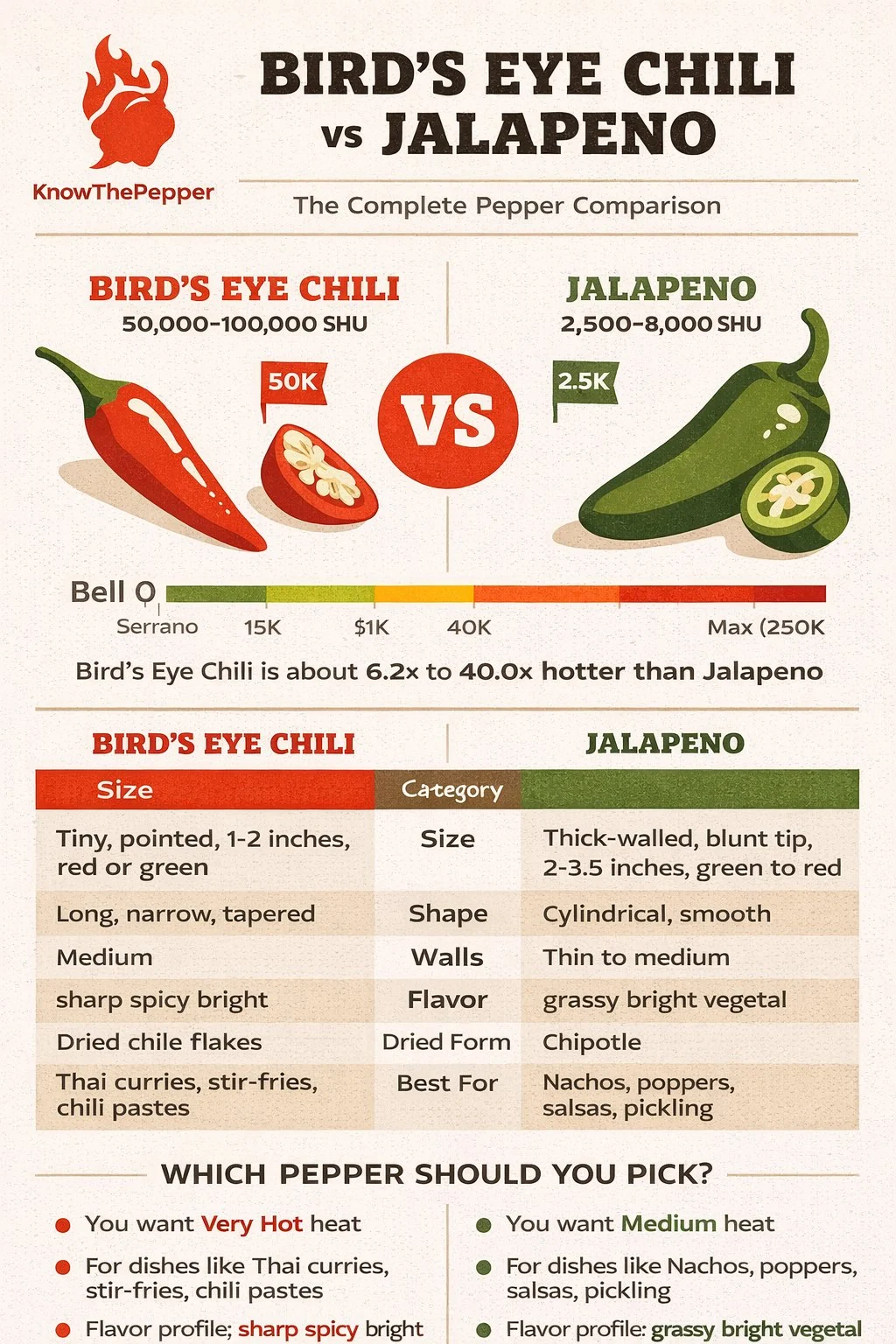
Bird's eye chili and jalapeño share the same species — C. annuum — but land in completely different heat territory. At 50,000-100,000 SHU, the bird's eye chili hits 6 to 40 times hotter than a jalapeño's 2,500-8,000 SHU. Same botanical family, radically different fire.

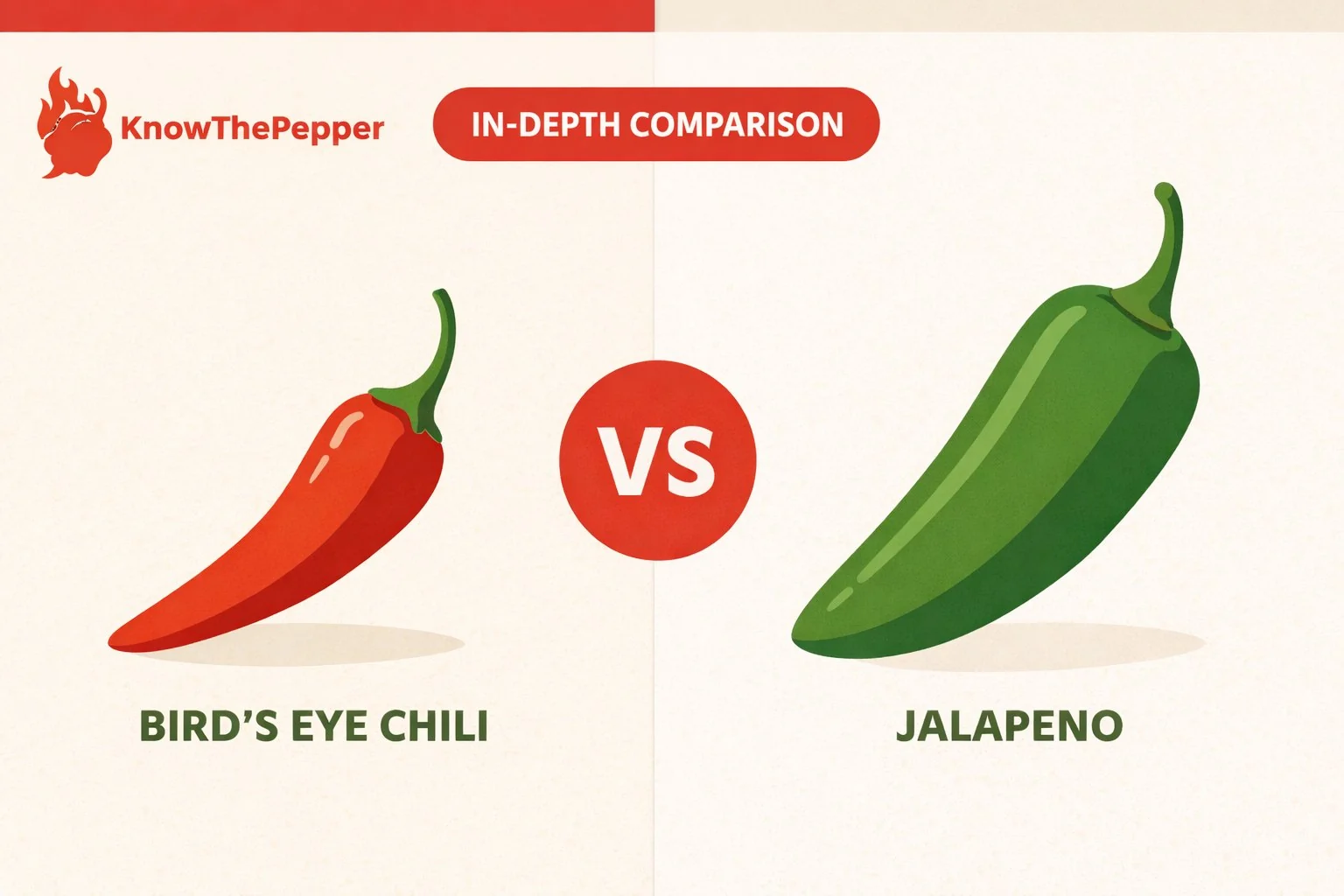
Bird's Eye Chili measures 50K–100K SHU while Jalapeño registers 3K–8K SHU — making Bird's Eye Chili 13× hotter. Bird's Eye Chili is known for its peppery and bright flavor (C. annuum), while Jalapeño offers bright and grassy notes (C. annuum).
- Heat difference: Bird's Eye Chili is 13× hotter
- Species: Both are C. annuum
- Best for: Bird's Eye Chili excels in hot sauces and extreme dishes, Jalapeño in fresh salsas and mild recipes
Bird's Eye Chili
Extra-HotJalapeño
MediumBird's Eye Chili vs Jalapeño Comparison
Bird's Eye Chili vs Jalapeño Heat Levels
The numbers tell the story fast. Bird's eye chili registers 50,000-100,000 SHU on the Scoville heat index, placing it firmly in the hot pepper classification alongside cayenne and Thai chilies. The jalapeño sits at a comparatively gentle 2,500-8,000 SHU, comfortably in the medium heat tier — the kind of heat most people can eat without blinking.
The multiplier gap is striking. A bird's eye at its mildest (50,000 SHU) is still roughly 6 times hotter than a peak jalapeño. At maximum heat, the comparison becomes almost absurd — a 100,000 SHU bird's eye lands 40 times hotter than a mild jalapeño at 2,500 SHU. That's not a step up; it's a different category of experience.
Both peppers get their heat from capsaicin binding to TRPV1 receptors — the same capsaicin burn mechanism at work — but the concentration differs dramatically. Bird's eye delivers that heat fast, with a sharp, almost electric onset that hits the front of the mouth and spreads quickly. Jalapeño heat tends to build more slowly and sit at the back of the palate, fading within a minute or two.
For context, bird's eye chili sits just below habanero territory. If jalapeño heat is background noise, bird's eye is a fire alarm.
Flavor Profile Comparison
Size is genuinely deceptive here.
Few peppers have earned their reputation as thoroughly as the jalapeño.
Strip away the heat and you're still looking at two quite different peppers. Jalapeño has a bright, grassy flavor — fresh-cut green, slightly vegetal, with a clean snap when raw. It's a flavor that works in the background without demanding attention, which is exactly why it appears in everything from guacamole to cream cheese dips.
Bird's eye chili brings a peppery, bright intensity that's harder to ignore. The flavor is sharper and more aromatic, with a citrus-adjacent edge that becomes more noticeable when the chili is used fresh. Dried bird's eye develops a slightly smoky, concentrated heat that the fresh version doesn't have.
Both are C. annuum species — a family known for producing peppers with clean, direct flavor rather than the fruity complexity you'd find in habaneros or Scotch bonnets. That shared genetics means neither pepper has a particularly sweet or tropical note; they're both in the savory-heat camp.
Aroma matters here too. Fresh jalapeño has a mild, green-pepper scent that's almost neutral. Bird's eye smells noticeably more pungent — the capsaicin concentration is high enough that cutting a handful releases a sharp, nose-clearing fragrance. In Thai cooking, that aroma is part of the dish's identity, not just a side effect.
For cooking purposes: jalapeño flavor holds up well to long cooking times without turning bitter. Bird's eye can turn harsh if overcooked, which is why it often goes in near the end of a dish or is used as a finishing element.
Culinary Uses for Bird's Eye Chili and Jalapeño
These two peppers have built entirely different culinary identities, shaped as much by their origins as their heat.
Jalapeño, rooted in Mexican pepper tradition, is a workhorse. It's the pepper you slice raw into pico de gallo, stuff with cream cheese, smoke into chipotle, or pickle for nachos. Its moderate heat means it can carry significant volume in a dish — four or five slices in a taco won't overwhelm the other flavors. Roasting a jalapeño mellows it further and adds a pleasant char note that pairs well with cheese, corn, and grilled meats.
Bird's eye chili, central to Thai and Southeast Asian cooking, operates differently. You typically use fewer of them — one or two in a curry paste, a handful sliced thin into a nam prik sauce. The heat is high enough that bird's eye functions more like a seasoning than a vegetable. Thai basil stir-fries, som tum, and pad kra pao all depend on bird's eye's sharp heat to cut through rich sauces and fatty proteins.
Substitution ratios require real adjustment. Swapping bird's eye for jalapeño in a Thai recipe? Use 3-4 jalapeños per bird's eye chili to approximate the heat — and accept that the flavor profile will be greener and less peppery. Going the other direction, replacing jalapeño with bird's eye? Start with one-quarter of the called-for jalapeño weight and taste as you go.
For fresh salsas and relishes, jalapeño wins on versatility. For chili oils, dipping sauces, and anything that needs heat to carry through a coconut milk base, bird's eye is the right call. Neither pepper is a perfect substitute for the other — they're built for different cuisines with different expectations around heat tolerance.
If you're looking at cayenne's sharper heat versus jalapeño's grassiness, that comparison offers useful context for understanding where bird's eye sits in the broader spectrum.
Which Should You Choose?
Choose based on cuisine and heat tolerance, not on which pepper seems more impressive.
Jalapeño is the right pepper when you want heat that participates without dominating — for salsas, stuffed appetizers, American-style hot sauces, or any dish where non-chili-heads will be eating. Its 2,500-8,000 SHU range gives you control, and its grassy flavor works across a wide range of ingredients. The cherry bomb vs jalapeño heat gap is another useful reference if you're calibrating around that medium range.
Bird's eye chili is the call when you're cooking Thai, Vietnamese, or other Southeast Asian dishes that are built around its specific heat character. At 50,000-100,000 SHU, it's not a casual addition — it's a structural ingredient. Used correctly, its sharp, peppery brightness makes dishes that jalapeño simply cannot replicate.
For heat-seekers building a home pantry: keep both. They don't compete; they serve different kitchens.
Can You Substitute One for the Other?
Proceed with caution. Bird's Eye Chili is 13× hotter than Jalapeño.
Need a different option altogether? Search for peppers that match your target heat and flavor with precise swap ratios.
Growing Bird's Eye Chili vs Jalapeño
If you’re deciding which pepper to grow at home, consider your climate and patience level. Bird's Eye Chili and Jalapeño have different maturation times and temperature preferences. Hotter varieties generally need a longer, warmer growing season to develop their full capsaicin content. Our zone-based planting date tool can pinpoint the best sowing window for your area.
Bird's eye chili is among the more forgiving hot peppers to grow, provided you give it heat and full sun. Start seeds indoors 8-10 weeks before last frost - these need soil temperatures above 75°F to germinate reliably.
The plant stays compact, typically 18-24 inches tall, which makes it suitable for containers. A 3-gallon pot works fine for a single plant.
For pest and disease management, see the practical guidance on common pepper pests and diseases - aphids and spider mites are the main threats, particularly in dry conditions. Good airflow around plants prevents fungal issues.
Jalapeños are among the most forgiving hot peppers to grow, but they do have preferences worth knowing.
Start seeds indoors 8–10 weeks before your last frost date. Soil temperature for germination should stay between 75–85°F — a heat mat under the seed tray makes a real difference in germination speed and uniformity.
Transplant outdoors once nighttime temps stay consistently above 55°F. Jalapeños want full sun — at least 6 hours daily — and well-drained soil with a pH around **6.
History & Origin of Bird's Eye Chili and Jalapeño
Both peppers carry centuries of culinary heritage. Bird's Eye Chili traces its roots to Thailand, while Jalapeño originates from Mexico. Understanding their backstory helps explain why each pepper developed its distinctive traits.
Buying & Storage
Whether you’re shopping for Bird's Eye Chili or Jalapeño, the same quality indicators apply. Fresh peppers should feel firm and heavy for their size, with taut, glossy skin and no soft or wet spots. Minor stem cracks known as “corking” are perfectly normal and often indicate a mature, flavorful pod.
- Firm pods with taut skin and consistent color
- Should feel heavy relative to size
- Minor stem cracks (“corking”) are normal
- Avoid anything soft, shriveled, or with dark wet spots
- Fresh: Paper bag, crisper drawer — 1–2 weeks
- Frozen: Wash, dry, freeze on sheet pan — 6+ months
- Dried: Airtight, away from light — up to 1 year
The Verdict: Bird's Eye Chili vs Jalapeño
Bird's Eye Chili and Jalapeño occupy very different positions on the heat spectrum. Bird's Eye Chili delivers 13× more heat with its distinctive peppery and bright character. Jalapeño, with its bright and grassy profile, excels in everyday cooking.
Frequently Asked Questions
Related Comparisons
Sources pending verification.