

A Peri Peri Substitute Must Match Both Its Citrusy Bite and Intense Heat
Peri peri peppers, the fiery little African bird's eye chiles behind Portuguese piri piri sauce, bring a sharp, citrusy heat that sits well above most pantry staples. Finding a true substitute means matching both that bright, acidic bite and the intense heat level. The seven options below cover the full spectrum, from near-identical heat and flavor to milder workarounds when that's all you have on hand.
Heat at a glance
What Can You Use Instead of Peri Peri Pepper?
Malagueta Pepper (Brazilian)
Closest MatchIf there's one substitute that consistently surprises people, it's the small but searingly hot Brazilian malagueta, which shares deep roots with African peri peri through the Portuguese spice trade. Both belong to C. frutescens, the botanical family that produces thin-walled, intensely hot fruits with that characteristic sharp, almost vinegary heat signature.
Flavor-wise, the match is closer than any other pepper on this list, use a 1:1 ratio with confidence.
This is the best match for peri peri chicken, garlic-lemon sauce, and vinegar-based table sauce. Keep the chile amount at 1:1 by weight, then adjust lemon, vinegar, or garlic separately.
Malagueta brings a similar quick burn, so increasing the chile to chase citrus flavor usually makes the sauce too hot.
Prik Kee Noo
Runner-UpThe prik kee noo's sharp Southeast Asian heat punches with similar intensity and a clean, grassy burn that mirrors peri peri's no-nonsense fire. It lacks the slight citrus undertone but compensates with a bright, fresh flavor that works well in marinades and sauces.
Substitute at 1:1.
If your recipe leans on peri peri's brightness, add a small squeeze of lime juice.
Prik kee noo is a strong fresh fallback for grilled meat marinades and blended sauce. It is sharper and less fruity, so add citrus zest or a small splash of cider vinegar to rebuild brightness.
Start at 1:1 by count, then reduce if the pods are especially small and seed-heavy.
Guntur Sannam
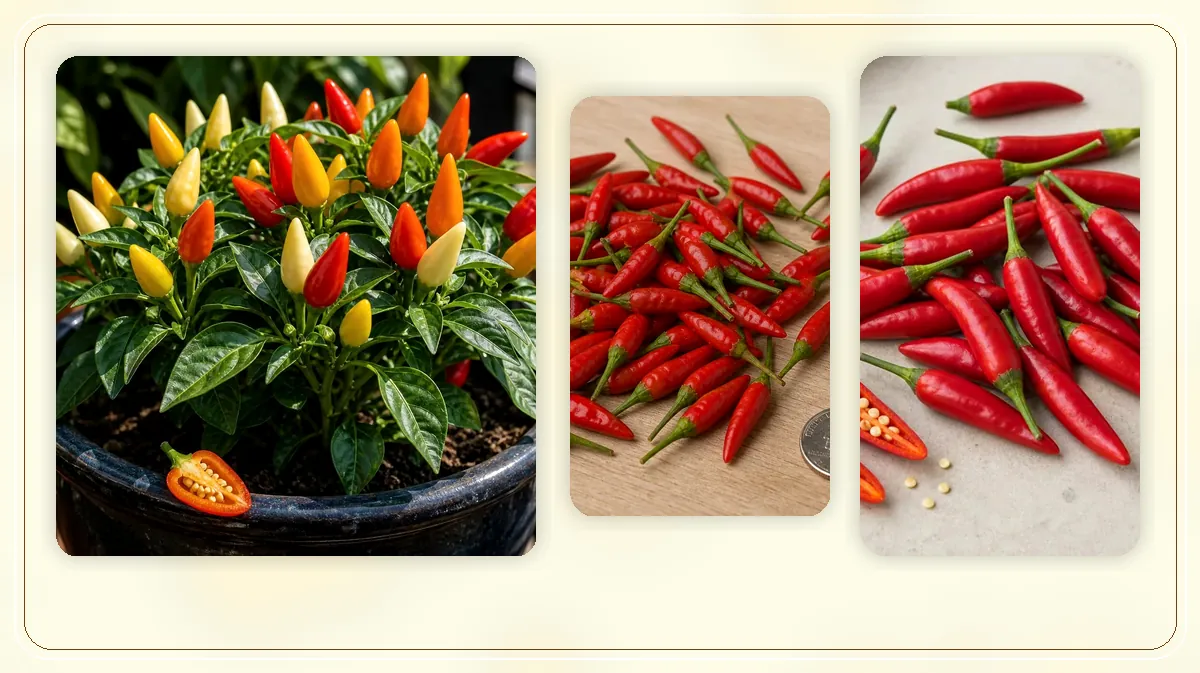
Also GreatFrom the pepper-growing heartland of Andhra Pradesh, the Guntur Sannam's deep South Asian heat brings a smoky, earthy warmth that differs from peri peri's sharper profile but delivers comparable fire. It's widely used in spice blends and dried preparations, making it a practical swap in dry rubs and spice pastes.
Use a 1:1 ratio in cooked applications.
Reduce slightly in fresh preparations where the earthier flavor would be more noticeable.
Lumbre
The Lumbre pepper's New Mexico-bred intensity offers a cleaner, slightly sweeter heat than peri peri with less of the acidic sharpness.
It performs best as a substitute in grilled dishes and sauces where peri peri's citrus edge isn't the dominant note. Start with a 1:1 ratio and adjust upward if you want more punch, Lumbre's heat builds slowly compared to peri peri's immediate bite.
Rocotillo
The rocotillo's Caribbean fruity character brings a pleasant sweetness that softens the swap considerably. This is the right move when cooking for heat-sensitive guests or when the dish needs peri peri's color and aroma more than its fire.
Use a 1.5:1 ratio (1.5 parts rocotillo for every 1 part peri peri) and consider adding a pinch of cayenne to compensate for the heat gap.
It integrates well into slow-cooked stews and braised dishes.
Bell Pepper
The bell pepper's zero-heat sweetness sits at the opposite end of the fire spectrum, but it earns a spot on this list for specific applications, particularly when you need peri peri's bulk, color, and body without any heat at all.
Think of it as a structural substitute rather than a flavor substitute. Use a 2:1 ratio (two parts bell pepper for one part peri peri) and always supplement with black pepper, smoked paprika, or a dash of hot sauce to approximate the complexity.
This swap works best in rice dishes and slow-cooked sauces.
7.
Habanada
The habanada's tropical, heat-free sweetness is essentially a habanero with all the fruity aromatics and none of the capsaicin, which makes it a useful peri peri substitute when you want that bright, almost floral flavor without the burn. It's particularly effective in marinades and glazes where peri peri contributes aroma as much as heat.
Substitute at 1:1 by volume and pair with a small amount of white wine vinegar to replicate peri peri's acidic edge.
For anyone curious about the regional pepper tradition of Africa that gave us peri peri, the habanada's flavor profile hints at the same C. chinense lineage, just without the extra-hot tier.
Best Pick by Application
For piri piri sauce, malagueta is the best substitute because the pepper size, thin wall, and sharp heat behave like peri peri in vinegar, garlic, lemon, and oil. Use 1:1 by weight.
For grilled chicken marinade, prik kee noo is the most practical fresh swap.
It brings clean heat and enough green bite to cut through oil. Add a little lemon zest or vinegar to recover peri peri's sharper edge.
For dry spice blends, Guntur Sannam works better than fresh Thai chiles. It gives red color, steady heat, and a deeper dried-chile flavor that can stand up to paprika, garlic powder, and salt.
Which Peppers Make Poor Peri Peri Pepper Substitutes?
Cayenne powder seems like an obvious swap, it's hot, it's red, it's in every spice rack.
But the flavor profile is fundamentally different: cayenne is dry, dusty, and one-dimensional where peri peri is bright and citrus-forward. The heat also distributes differently in sauces, often creating a gritty texture rather than the clean bite peri peri delivers.
NuMex Joe E. Parker is a mild Anaheim-type pepper that looks the part but tops out at a fraction of peri peri's heat. Its thick walls and low moisture content make it unsuitable for the thin, punchy preparations peri peri excels in, piri piri sauce made with Joe E. Parker would taste more like roasted pepper puree than the sharp condiment you're after.
NuMex Heritage Big Jim runs into the same problem at scale, it's a large, mild New Mexico chile bred for volume and sweetness, not intensity. The structural mismatch alone (thick-walled versus thin-walled) would require significant recipe adjustments that ultimately produce a different dish.
Sweet chili sauce is not a peri peri substitute. It adds sugar and starch, and the heat lands far below what a peri peri marinade needs.
Large mild roasting chiles can make a sauce red, but they turn piri piri into roasted pepper sauce. Keep them for body only if another hot pepper supplies the bite.
Do not use smoked dried chiles when the recipe expects bright peri peri heat. Smoke can work in barbecue sauce, but it changes lemon-garlic peri peri into a different sauce style.
Peri Peri Pepper Substitute FAQ
- Varieties & Plant Breeding - Chile Pepper Institute, NMSU
- Capsicum frutescens L. - USDA GRIN Taxonomy
- Oxford Reference