Thai Chili or Cayenne? Side-by-Side Comparison
Thai chili and cayenne are both C. annuum peppers that bring serious heat, but they sit at different points on the scale and behave differently in the kitchen. Thai chili tops out at 100,000 SHU, while cayenne peaks at 50,000 SHU — making Thai chili potentially twice as hot. The flavor gap between them is just as important as the heat gap for anyone deciding which to reach for.

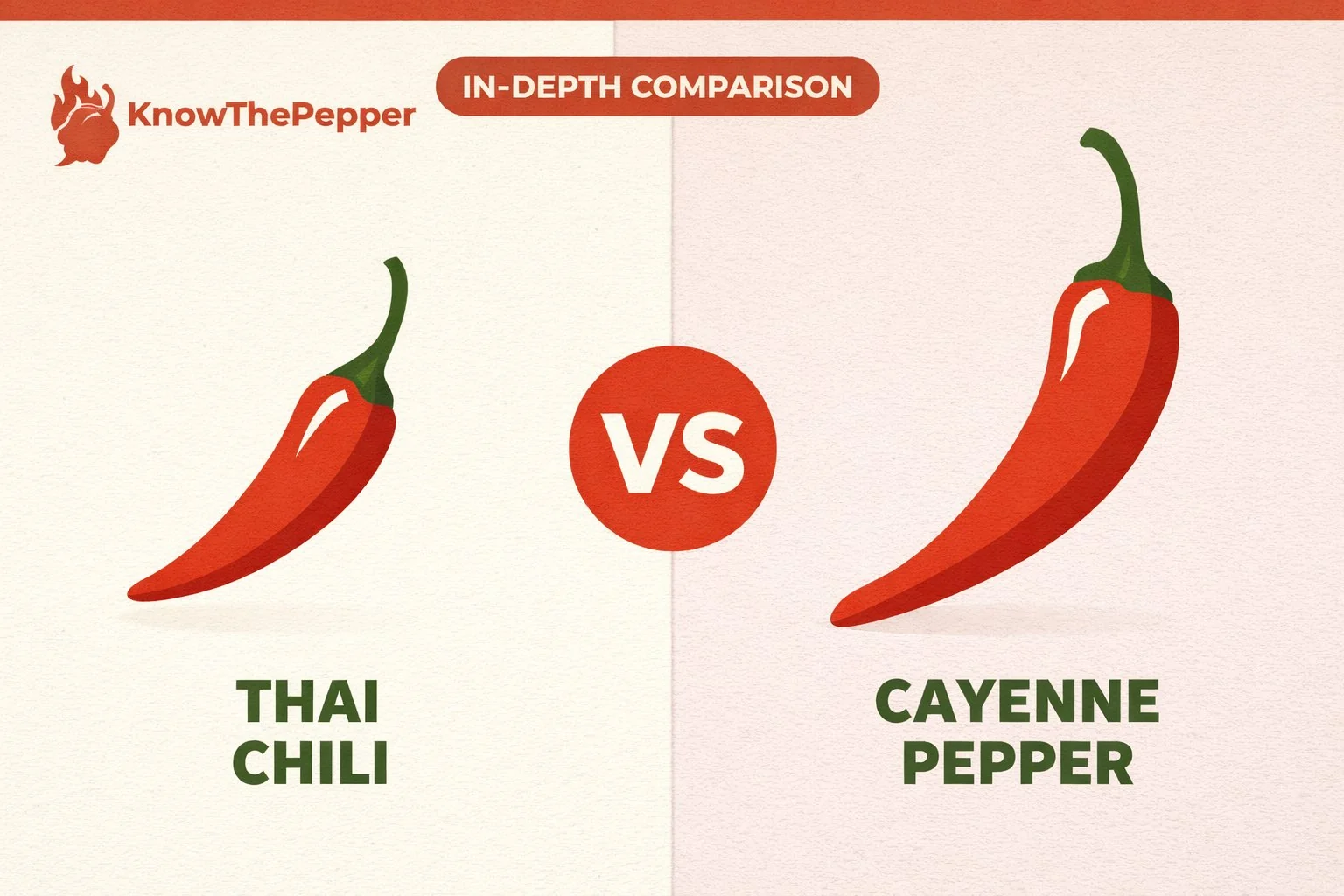
Thai Chili measures 50K–100K SHU while Cayenne Pepper registers 30K–50K SHU — making Thai Chili 2× hotter. Thai Chili is known for its bright and peppery flavor (C. annuum), while Cayenne Pepper offers neutral and peppery notes (C. annuum).
- Heat difference: Thai Chili is 2× hotter
- Species: Both are C. annuum
- Best for: Thai Chili excels in hot sauces and extreme dishes, Cayenne Pepper in fresh salsas and mild recipes
Thai Chili
Extra-HotCayenne Pepper
HotThai Chili vs Cayenne Pepper Comparison
Thai Chili vs Cayenne Pepper Heat Levels
Before the numbers, consider the burn itself. Cayenne delivers a clean, linear heat — it rises quickly and fades without much drama. Thai chili hits differently: the heat is sharper, more insistent, and lingers longer at the back of the throat. Both share the same botanical family, but their capsaicin expression is noticeably different in practice.
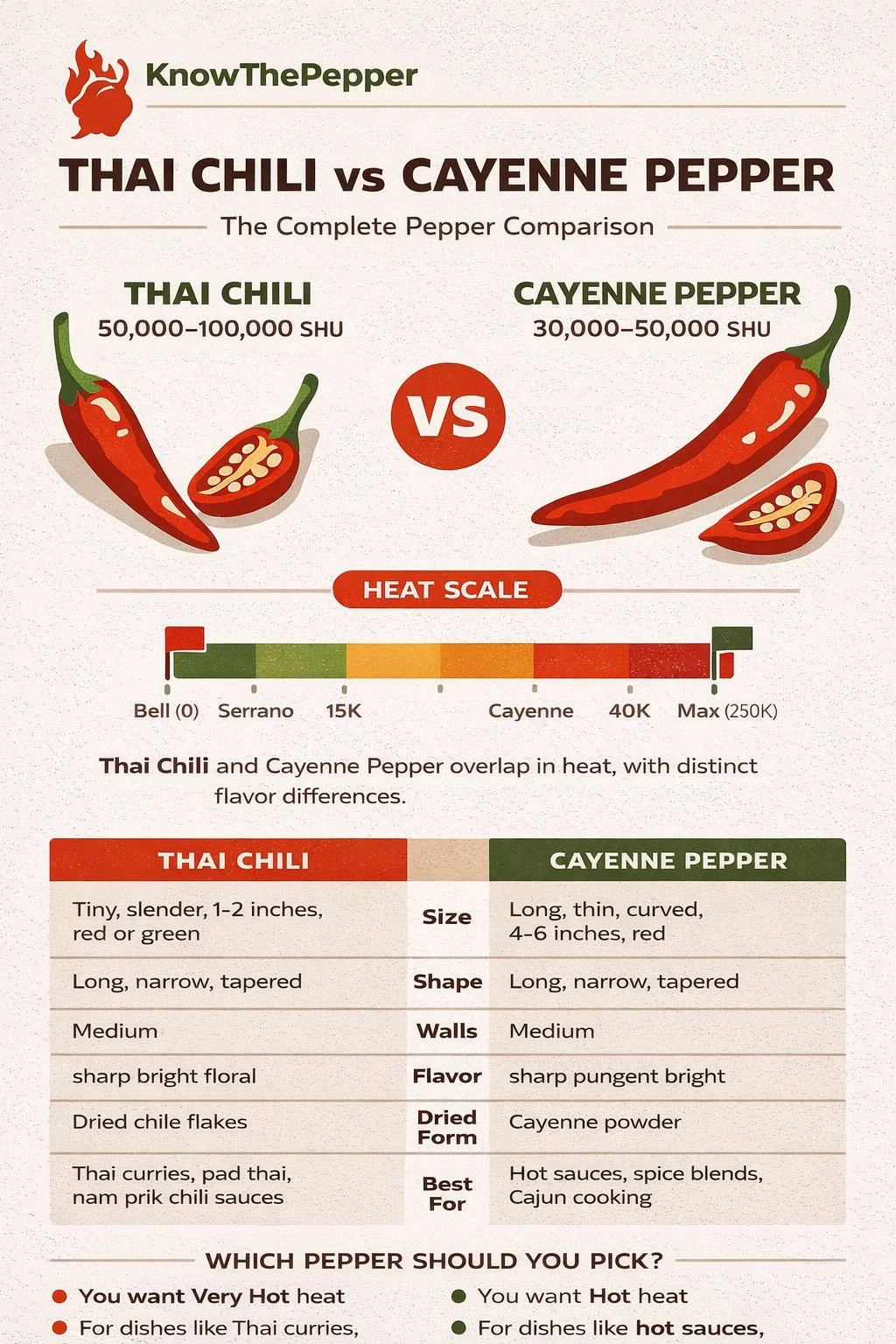
Thai chili registers 50,000-100,000 SHU on the Scoville testing scale, placing it firmly in the hot pepper intensity band. At its peak, that is roughly 12 times hotter than a typical jalapeño (averaging 8,000 SHU). Even at its floor, Thai chili clocks in around 6 times the jalapeño benchmark.
Cayenne lands at 30,000-50,000 SHU — still substantial, but the ceiling is exactly where Thai chili's floor begins. Against a jalapeño, cayenne runs about 4 to 6 times hotter depending on the individual pod. The heat gap between these two peppers is real: when Thai chili is at maximum potency, it can be more than three times hotter than cayenne at its mildest.
For anyone calibrating recipes or tolerances, that gap matters. A dish built around cayenne powder will taste meaningfully milder than the same dish built around Thai chili — even if the volume used is identical. Understanding how capsaicin chemistry drives that burn helps explain why the two peppers feel so different despite being the same species.
Flavor Profile Comparison
Small enough to overlook, fierce enough to remember — the Thai chili punches well above its size.
Few peppers have traveled as far or worked as hard as cayenne.
Cayenne's flavor profile is often described as neutral and peppery — a clean heat vehicle that amplifies dishes without redirecting them. It adds fire without competing with other ingredients, which is exactly why it became the backbone of so many spice blends and hot sauces. There is almost no sweetness, no fruitiness, no grassiness. Just heat and a mild earthiness.
Thai chili brings something more assertive. The flavor is bright and peppery with a sharper, more vegetal edge — especially when fresh. Dried Thai chilies develop a slightly smoky, concentrated quality that is different again from the fresh pod. The aroma of fresh Thai chili is noticeably more pungent than cayenne; slicing one open releases a sharp, almost floral heat smell that cayenne simply does not have.
Both peppers are thin-walled with low moisture content, which makes them well-suited to drying and powdering. But they dry to different flavor profiles. Cayenne powder is a workhorse spice — mild in flavor complexity, high in heat delivery. Dried Thai chili retains more of its bright character and tends to taste more like a pepper even after drying.
In side-by-side cooking, cayenne disappears into a dish while Thai chili announces itself. That is neither a compliment nor a criticism — it depends entirely on the goal. Dishes from Thai regional pepper traditions are built around Thai chili's assertive presence. Western spice blends and Cajun cooking lean on cayenne precisely because it stays in the background.
Culinary Uses for Thai Chili and Cayenne Pepper
Cayenne is one of the most versatile heat sources in any pantry. Powdered cayenne integrates seamlessly into dry rubs, marinades, soups, and chili without altering the flavor direction of the dish. It is the pepper behind most commercial hot sauces, and it shows up in everything from Cajun seasoning blends to Indian spice mixes. A pinch of cayenne in chocolate desserts or caramel sauce is a classic technique — it adds warmth without tasting like pepper.
Thai chili dominates Southeast Asian cooking: pad thai, green curry, larb, som tum, and countless stir-fries depend on its sharp, forward heat. It is used fresh, dried, and as a base for chili pastes like nam prik. The whole dried pods are often bloomed in hot oil to release their heat and aroma before other ingredients are added — a technique that extracts maximum flavor from a small quantity.
Substitution ratios: When swapping cayenne for Thai chili, use roughly 1.5 to 2 times the volume of cayenne to approximate the same heat level, keeping in mind that cayenne powder is more concentrated by weight than whole dried Thai chili. Going the other direction — replacing cayenne with Thai chili — cut the quantity by about half and expect a brighter, more noticeable pepper flavor in the finished dish.
For fresh applications, Thai chili has no real cayenne equivalent since cayenne is rarely sold fresh outside growing regions. Bird's eye chili, which shares Thai chili's sharp-heat profile, is a closer fresh substitute in those contexts. If you are building a spice blend and need cayenne's neutral heat, Thai chili powder will work but will shift the flavor profile noticeably.
Cayenne is the better choice for South American-influenced recipes and any dish where background heat is the goal. Thai chili is the right call when the pepper itself needs to be part of the flavor story.
Which Should You Choose?
These two peppers solve different problems. Cayenne is the utility player — reliable, neutral, and available everywhere in dried or powdered form. It heats without flavoring, which makes it indispensable for spice blends, sauces, and any dish where you want fire without pepper character. The cayenne-vs-jalapeño heat gap is already significant; most home cooks find it plenty hot.
Thai chili is for when you want the pepper to show up. Its brighter, sharper flavor and higher heat ceiling — up to 100,000 SHU — make it the right tool for Southeast Asian cooking and any dish that needs assertive, forward heat. It is not a direct swap for cayenne; it will change the flavor of a dish, not just the temperature.
Both belong to the C. annuum species family, which means they are easier to grow than many superhots, and both respond well to drying. If you only keep one, cayenne wins on versatility. If you cook Thai or Southeast Asian food regularly, Thai chili is non-negotiable. The honest answer is that they are different tools — and keeping both costs almost nothing.
Can You Substitute One for the Other?
Proceed with caution. Thai Chili is 2× hotter than Cayenne Pepper.
Need a different option altogether? Search for peppers that match your target heat and flavor with precise swap ratios.
Growing Thai Chili vs Cayenne Pepper
If you’re deciding which pepper to grow at home, consider your climate and patience level. Thai Chili and Cayenne Pepper have different maturation times and temperature preferences. Hotter varieties generally need a longer, warmer growing season to develop their full capsaicin content. Our zone-based planting date tool can pinpoint the best sowing window for your area.
The hardest part of growing Thai chilies is not germination — it is managing heat stress during fruiting. These plants originate from a tropical climate and expect warmth, but sustained temperatures above 95°F (35°C) cause flower drop before pods can set.
Germination itself is straightforward at 80–85°F soil temperature, typically within 10–14 days. Start seeds indoors 8–10 weeks before last frost.
They prefer well-draining soil with consistent moisture but will tolerate brief dry spells better than waterlogging. Feed with a low-nitrogen fertilizer once flowering begins; too much nitrogen pushes leaf growth at the expense of pods.
Cayenne is one of the more forgiving hot peppers to grow, which explains its global reach. Start seeds indoors 8-10 weeks before last frost.
For practical guidance on growing cayenne from transplant to harvest, the key variables are consistent heat and full sun. Cayenne wants at least 6-8 hours of direct light daily and struggles in cool, wet summers.
Transplant outdoors once nighttime temps stay above 55°F. Space plants 18-24 inches apart.
History & Origin of Thai Chili and Cayenne Pepper
Both peppers carry centuries of culinary heritage. Thai Chili traces its roots to Thailand, while Cayenne Pepper originates from French Guiana. Understanding their backstory helps explain why each pepper developed its distinctive traits.
Buying & Storage
Whether you’re shopping for Thai Chili or Cayenne Pepper, the same quality indicators apply. Fresh peppers should feel firm and heavy for their size, with taut, glossy skin and no soft or wet spots. Minor stem cracks known as “corking” are perfectly normal and often indicate a mature, flavorful pod.
- Firm pods with taut skin and consistent color
- Should feel heavy relative to size
- Minor stem cracks (“corking”) are normal
- Avoid anything soft, shriveled, or with dark wet spots
- Fresh: Paper bag, crisper drawer — 1–2 weeks
- Frozen: Wash, dry, freeze on sheet pan — 6+ months
- Dried: Airtight, away from light — up to 1 year
The Verdict: Thai Chili vs Cayenne Pepper
Thai Chili and Cayenne Pepper occupy very different positions on the heat spectrum. Thai Chili delivers 2× more heat with its distinctive bright and peppery character. Cayenne Pepper, with its neutral and peppery profile, excels in everyday cooking.
Frequently Asked Questions
Related Comparisons
Sources pending verification.