Kashmiri Chili or Cayenne? Side-by-Side Comparison
Kashmiri chili and cayenne are both C. annuum peppers, but they occupy completely different roles in the kitchen. Kashmiri sits at 1,000-2,000 SHU — a deeply colored, mild pepper prized for its vivid red hue — while cayenne burns at 30,000-50,000 SHU, roughly 15-25 times hotter. Choosing between them is less about heat preference and more about what you actually want the pepper to do in a dish.

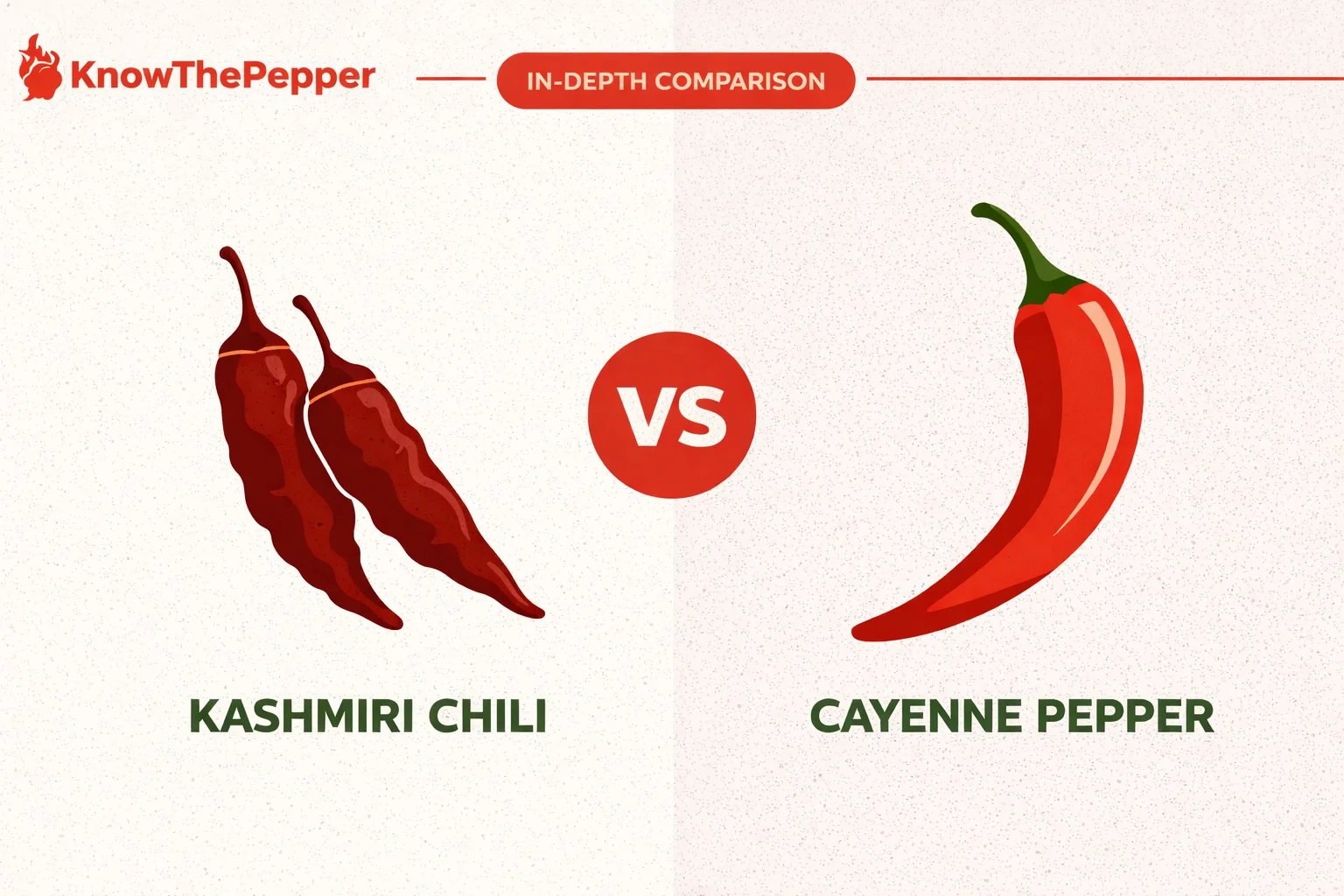
Kashmiri Chili measures 1K–2K SHU while Cayenne Pepper registers 30K–50K SHU — making Cayenne Pepper 25× hotter. Kashmiri Chili is known for its mild and sweet flavor (C. annuum), while Cayenne Pepper offers neutral and peppery notes (C. annuum).
- Heat difference: Cayenne Pepper is 25× hotter
- Species: Both are C. annuum
- Best for: Kashmiri Chili excels in everyday cooking and salsas, Cayenne Pepper in fresh salsas and mild recipes
Kashmiri Chili
MediumCayenne Pepper
HotKashmiri Chili vs Cayenne Pepper Comparison
Kashmiri Chili vs Cayenne Pepper Heat Levels
The heat gap here is genuinely striking. Kashmiri chili registers 1,000-2,000 SHU on the pepper heat index, placing it firmly in the mild pepper band — a range where most people feel only a whisper of warmth. A standard jalapeño runs 2,500-8,000 SHU, which means Kashmiri is actually milder than a jalapeño at its upper end.
Cayenne, by contrast, lands at 30,000-50,000 SHU — sitting squarely in the hot pepper intensity spectrum. That puts cayenne roughly 4-6 times hotter than a jalapeño, and anywhere from 15 to 50 times hotter than Kashmiri chili depending on where each sample falls in its range.
The character of the heat differs too. Cayenne's burn is sharp and immediate, hitting the front of the mouth and spreading quickly. It comes from a higher capsaicin concentration — and understanding the molecular structure of that burn explains why cayenne feels almost electric compared to Kashmiri's barely-there tingle.
Kashmiri's low capsaicin load is actually a feature, not a limitation. Indian cooks use it in quantities that would be impossible with cayenne — tablespoons of Kashmiri powder in a single dish are common, building color and body without overwhelming heat. Cayenne demands restraint; a quarter teaspoon can dominate a pot of soup.
Flavor Profile Comparison
Color is the whole point with Kashmiri chili.
Few peppers have traveled as far or worked as hard as cayenne.
Flavor is where Kashmiri chili genuinely surprises. Most people expect a red pepper powder to taste sharp and hot — Kashmiri delivers something closer to a sweet, mildly earthy depth. The flavor profile is often described as mild and sweet, with a subtle fruitiness that doesn't compete with other spices. It contributes color more than it contributes heat or sharpness.
Cayenne reads as neutral and peppery — a clean, direct heat vehicle without much sweetness or complexity. It doesn't add a distinct flavor note so much as it amplifies heat and adds a dry, slightly sharp bite. That neutrality is actually useful: cayenne blends into sauces, rubs, and spice mixes without announcing itself.
The aroma difference is equally telling. Kashmiri powder smells almost sweet when you open the bag — faintly paprika-like, warm, and inviting. Cayenne smells sharper and more pungent, with an edge that signals heat before you even taste it.
For dishes where color is the goal — tandoori marinades, butter chicken, rogan josh — Kashmiri's pigment-rich flesh produces that signature deep red without the heat penalty. Comparing Kashmiri chili to paprika reveals how similar they are in this color-forward role, though Kashmiri carries a bit more heat than most sweet paprikas.
Cayenne's flavor neutrality makes it the better choice when you need heat without altering a dish's existing flavor architecture. Hot sauces, spice blends, and dishes where you want burn without sweetness all favor cayenne.
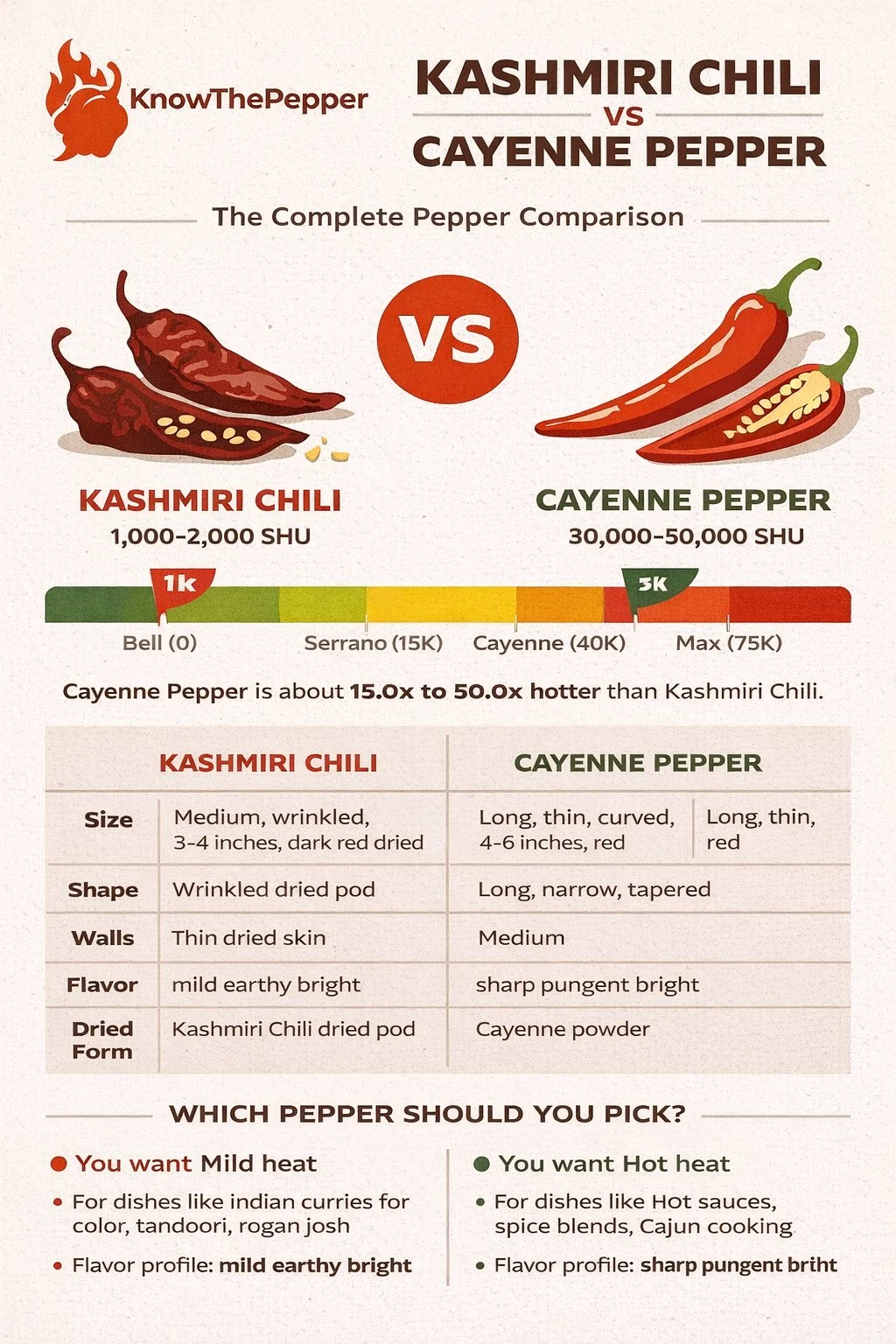
Culinary Uses for Kashmiri Chili and Cayenne Pepper
These two peppers rarely compete for the same job. Kashmiri chili is a colorist's tool — ground into powder and used in Indian cooking primarily to achieve that vivid orange-red color in dishes like tandoori chicken, butter chicken, and kebab marinades. The mild heat means you can use 2-4 tablespoons per dish without blowing out the heat level. It's also the backbone of many spice blends where color consistency matters.
Cayenne is a heat driver. It shows up in hot sauces, Cajun spice blends, chili powders, and anywhere you need a reliable, measurable kick. A typical recipe calls for 1/4 to 1/2 teaspoon — a fraction of what Kashmiri requires for color.
Substitution between them is tricky precisely because of this gap. If a recipe calls for Kashmiri and you only have cayenne, use roughly 1/4 teaspoon cayenne plus 1 teaspoon sweet paprika to approximate both the heat and color. Going the other direction — replacing cayenne with Kashmiri — requires about 15-20 times the volume of Kashmiri to match cayenne's heat, which will likely alter the dish's texture and color significantly.
For paprika-to-cayenne comparisons in spice blends, the logic is similar: paprika and Kashmiri function as color and body contributors, while cayenne is the heat variable you dial up or down independently.
Kashmiri chili also works well in dry rubs for grilled meats — the sweet mild flavor chars nicely without burning bitter. Cayenne in a dry rub serves a completely different purpose: building heat in the crust. Some recipes use both, layering Kashmiri's color with cayenne's fire.
Both peppers come from the C. annuum botanical family, which includes an enormous range of heat and flavor profiles — a reminder that species alone tells you very little about what a pepper will actually do in a pan.
Which Should You Choose?
If your goal is color and mild warmth in Indian or South Asian cooking, Kashmiri chili is the right choice — nothing else produces that signature red without the heat load. It's the pepper to reach for when you want visual impact and gentle flavor depth, and it's why Indian pepper cultivation has centered around color-rich varieties for centuries.
Cayenne wins when heat output is the point. It's consistent, widely available, and neutral enough to fit into almost any cuisine. The South American pepper tradition that produced cayenne was optimizing for heat intensity, and that DNA shows in every jar of cayenne powder on the spice rack.
For those exploring peri-peri against cayenne's heat output, cayenne sits in a similar intensity zone — both are serious heat tools, unlike Kashmiri. If you cook Indian food regularly, keep both on hand. They are not interchangeable — they solve different problems entirely.
Can You Substitute One for the Other?
Yes — direct substitution works. Kashmiri Chili and Cayenne Pepper are close enough in heat to swap at roughly 1:1. The main difference will be flavor. For more swap options, explore ranked alternatives with conversion ratios.
Growing Kashmiri Chili vs Cayenne Pepper
If you’re deciding which pepper to grow at home, consider your climate and patience level. Kashmiri Chili and Cayenne Pepper have different maturation times and temperature preferences. Hotter varieties generally need a longer, warmer growing season to develop their full capsaicin content. Our zone-based planting date tool can pinpoint the best sowing window for your area.
Kashmiri chili is a warm-season annual that performs best in USDA zones 9–11 outdoors, though it grows well as a container plant in cooler climates when brought inside before frost. Start seeds indoors 8–10 weeks before last frost, maintaining soil temperature around 75–85°F for germination.
The plants are relatively compact — typically 18–24 inches tall — and moderately productive. They prefer well-drained, slightly acidic soil with consistent moisture.
For those comparing cultivation approaches, the Aji Panca's similarly low-heat growing profile offers a useful parallel — both reward patience over intensity manipulation.
Cayenne is one of the more forgiving hot peppers to grow, which explains its global reach. Start seeds indoors 8-10 weeks before last frost.
For practical guidance on growing cayenne from transplant to harvest, the key variables are consistent heat and full sun. Cayenne wants at least 6-8 hours of direct light daily and struggles in cool, wet summers.
Transplant outdoors once nighttime temps stay above 55°F. Space plants 18-24 inches apart.
History & Origin of Kashmiri Chili and Cayenne Pepper
Both peppers carry centuries of culinary heritage. Kashmiri Chili traces its roots to India, while Cayenne Pepper originates from French Guiana. Understanding their backstory helps explain why each pepper developed its distinctive traits.
Buying & Storage
Whether you’re shopping for Kashmiri Chili or Cayenne Pepper, the same quality indicators apply. Fresh peppers should feel firm and heavy for their size, with taut, glossy skin and no soft or wet spots. Minor stem cracks known as “corking” are perfectly normal and often indicate a mature, flavorful pod.
- Firm pods with taut skin and consistent color
- Should feel heavy relative to size
- Minor stem cracks (“corking”) are normal
- Avoid anything soft, shriveled, or with dark wet spots
- Fresh: Paper bag, crisper drawer — 1–2 weeks
- Frozen: Wash, dry, freeze on sheet pan — 6+ months
- Dried: Airtight, away from light — up to 1 year
The Verdict: Kashmiri Chili vs Cayenne Pepper
Kashmiri Chili and Cayenne Pepper occupy very different positions on the heat spectrum. Cayenne Pepper delivers 25× more heat with its distinctive neutral and peppery character. Kashmiri Chili, with its mild and sweet profile, excels in everyday cooking.
Frequently Asked Questions
Related Comparisons
Sources pending verification.