Kashmiri chili and paprika occupy a similar mild-heat territory, but they arrive there from very different directions. Kashmiri sits at 1,000-2,000 SHU with a distinctive deep-red pigmentation prized across Indian cooking, while paprika ranges from virtually zero heat to a gentle warmth depending on variety and processing. The two share enough overlap to substitute for one another in some contexts, but their flavor profiles and colorant intensity diverge significantly.
Comparison Contributor·Updated Jun 26, 2026·
Reviewed by
Karen Liu
Quick Comparison
Kashmiri Chili measures 1K–2K SHU while Paprika Pepper registers 0–1K SHU. That makes Kashmiri Chili about 2x hotter by upper SHU range. Kashmiri Chili is known for its mild and sweet flavor (C. annuum), while Paprika Pepper offers sweet and mild notes (C. annuum).
Kashmiri Chili
1K–2K SHU
Medium · mild and sweet
Paprika Pepper
0–1K SHU
Medium · sweet and mild
Heat difference: Kashmiri Chili is about 2× hotter by upper SHU range
Species: Both are C. annuum
Best for: Kashmiri Chili excels in everyday cooking and salsas, Paprika Pepper in fresh salsas and mild recipes
On the the Scoville measurement scale, Kashmiri chili registers 1,000-2,000 SHU - comfortably within the mild-pepper SHU bracket. Paprika, depending on type (sweet, smoked, hot), typically falls between 0-500 SHU for most commercial varieties, with Hungarian hot paprika occasionally reaching 1,000 SHU at its upper limit.
To put Kashmiri's heat in perspective: a serrano pepper averages around 10,000-23,000 SHU, making Kashmiri chili roughly 8 to 15 times milder than a serrano. Paprika sits even further back - a serrano can be 20 to 50 times hotter than a typical sweet paprika.
The burn character of Kashmiri is gentle and front-of-mouth, fading quickly without the lingering throat heat you get from hotter C. annuum varieties. Paprika's heat, when present at all, is barely perceptible - more of a background warmth than an actual bite. Neither pepper will challenge heat-tolerant cooks, but Kashmiri does deliver a noticeable tingle that paprika rarely matches.
For dishes where you want color without significant heat, paprika wins outright. When you want that same color plus a mild, clean chili warmth, Kashmiri is the better call. Both belong firmly in the mild end of the spectrum - they're built for flavor, not fire.
Paprika peppers sit at the mildest end of the pepper spectrum, delivering sweetness with almost no perceptible heat - a stark contrast to even the gentlest Fresno, which runs roughly 2,500 to 10,000 SHU by comparison.
Kashmiri chili's flavor is where it earns its reputation. The dried pods carry a mildly sweet, slightly tangy character with earthy undertones and almost no bitterness. The aroma when ground is distinctly fruity-smoky - closer to a dried berry than a raw pepper. This is why it anchors so many Indian spice blends: it adds complexity, not just heat.
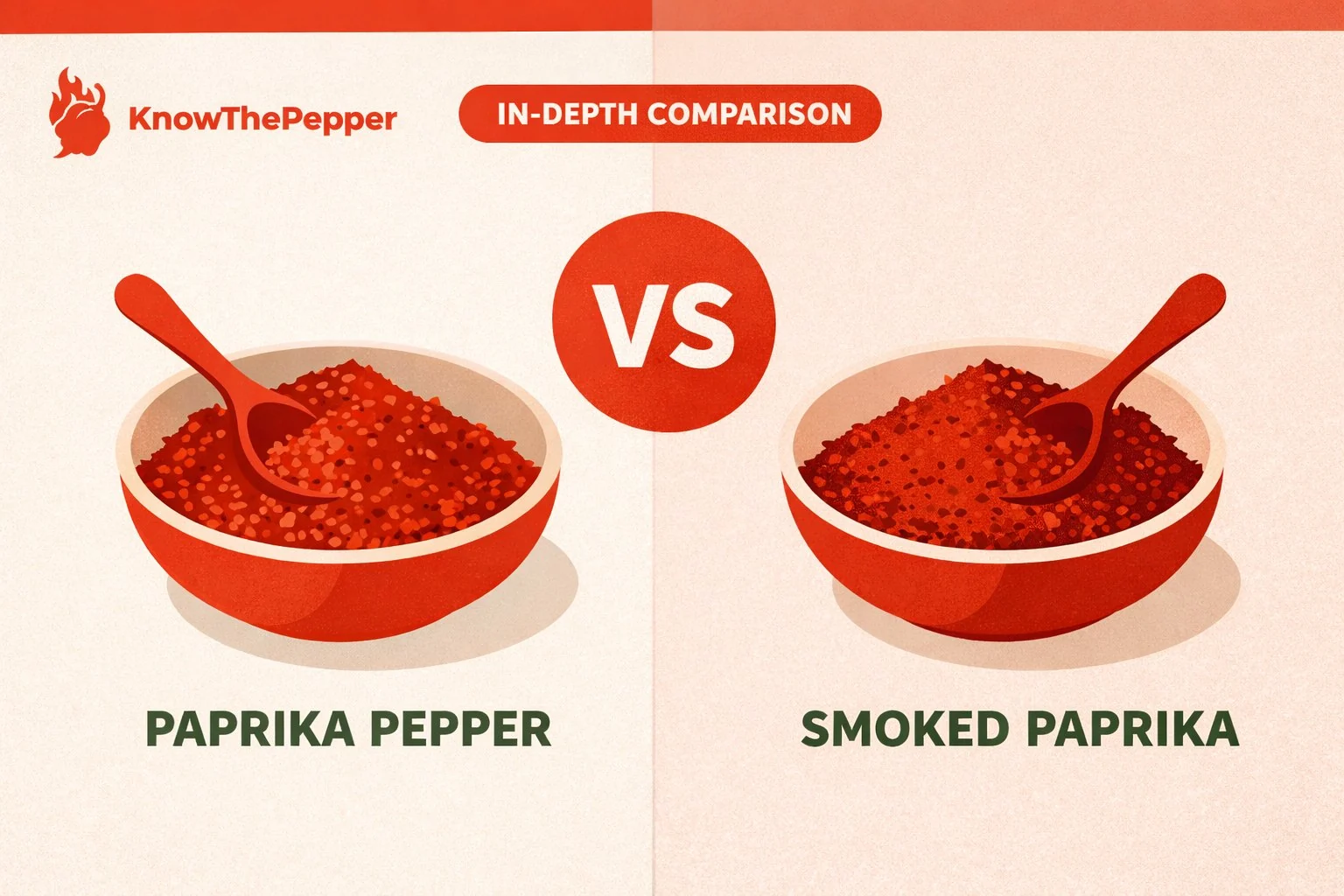
Paprika's flavor varies dramatically by processing method. Sweet paprika (the Hungarian and Spanish standard) tastes mildly fruity and almost candy-like, with very little savory depth. Smoked paprika (pimentón) introduces a wood-smoke character that can dominate a dish. Hot paprika edges toward a sharper, more pungent note. None of these taste quite like Kashmiri - the Indian pepper has a richer, more complex dried-chili backbone.
Aroma is another point of divergence. Kashmiri ground chili smells like dried fruit and warm spice. Sweet paprika smells mild and slightly sweet; smoked paprika smells like a campfire. When you open a jar of each side by side, they're clearly different spices despite overlapping heat ranges.
In cooking, Kashmiri chili deepens a sauce's flavor while simultaneously painting it red. Paprika tends to sit more on the surface - contributing color and a mild sweetness without the same depth. For slow-cooked curries, stews, or marinades, that distinction matters considerably.
Culinary Uses for Kashmiri Chili and Paprika Pepper
Kashmiri Chili
Medium
Kashmiri chili powder is the backbone of Rogan Josh, butter chicken, and tandoori marinades - dishes where the visual impact matters as much as flavor. The standard ratio in most restaurant-style Rogan Josh is 2-3 teaspoons per serving, enough to turn the sauce a deep amber-red without pushing heat past comfortable.
Dried and ground paprika is where this pepper truly performs, but fresh paprika peppers are worth knowing in the kitchen too. Raw, they eat like a sweeter, thinner-walled bell pepper - good in salads, stuffed, or roasted.
Kashmiri chili is foundational to North Indian cooking. It's the spice responsible for the vivid red color in dishes like rogan josh, butter chicken, and tandoori preparations - and crucially, it achieves that color without making the dish aggressively spicy. Whole dried Kashmiri chilis go into tempering oil at the start of cooking; ground Kashmiri chili powder gets stirred into marinades, spice pastes, and curries.
Paprika dominates European and Middle Eastern kitchens. Hungarian goulash, Spanish chorizo, Turkish kebabs, and Moroccan tagines all rely on it. Smoked paprika has become a staple in American barbecue rubs and roasted vegetable seasoning. The sweet, color-forward paprika profile suits anything where you want warm red color and gentle sweetness without any chili bite.
Substitution guidance: Kashmiri chili and sweet paprika can sub for each other in a pinch, but expect flavor differences. Use 1 teaspoon Kashmiri in place of 1.5 teaspoons sweet paprika to approximate the color and add slightly more heat depth. Going the other direction, replace 1 teaspoon Kashmiri chili with 1 teaspoon sweet paprika plus a small pinch of cayenne to replicate the mild warmth.
For color-critical applications like tandoori chicken or rogan josh, paprika alone won't replicate Kashmiri's specific red-orange hue - the pigment compounds differ. Conversely, Kashmiri won't deliver smoked paprika's wood-smoke character, so they aren't interchangeable in Spanish or Portuguese dishes.
Both peppers work well in spice rubs, compound butters, and slow braises. The dried pepper characteristics found in Dundicut vs. Kashmiri comparisons highlight how regional Indian peppers each bring distinct color and flavor signatures - Kashmiri being the mildest and most color-saturated of the group.
For everyday home cooking, keeping both in the pantry makes more sense than trying to force one to do the other's job.
If your priority is authentic Indian color and mild chili flavor, Kashmiri is the clear choice. Nothing replicates its specific deep-red pigment and gentle fruity heat in the context of Indian cooking. It's also worth exploring the broader Indian pepper traditions to understand why Kashmiri became so central to subcontinental cuisine.
If you're cooking European or Mediterranean dishes - goulash, paprikash, chorizo, roasted peppers - paprika is the right tool. The cayenne-vs-paprika heat difference illustrates how paprika's near-zero heat was deliberately bred for color-forward cooking rather than spice.
For heat-sensitive cooks who want color without fire, paprika is the safer bet. For anyone wanting a step up - just a gentle tingle alongside that red color - Kashmiri delivers without overwhelming.
Start near 1:1 by amount. The heat ranges are close enough that flavor, form, and recipe role matter more than a strict Scoville conversion.
Growing Kashmiri Chili vs Paprika Pepper
Growing notes
Kashmiri Chili
Kashmiri chili is a warm-season annual that performs best in USDA zones 9-11 outdoors, though it grows well as a container plant in cooler climates when brought inside before frost. Start seeds indoors 8-10 weeks before last frost, maintaining soil temperature around 75-85°F for germination.
The plants are relatively compact - typically 18-24 inches tall - and moderately productive. They prefer well-drained, slightly acidic soil with consistent moisture.
Paprika peppers are among the more rewarding varieties to grow - productive, relatively disease-resistant, and visually striking when the plants load up with red fruit in late summer.
Start seeds indoors 8-10 weeks before your last frost date. Germination is reliable at 75-85°F soil temperature; a heat mat helps considerably.
Plants reach 24-36 inches tall and benefit from caging or staking once fruit sets - the heavy load of thick-walled peppers can tip unsupported plants. Space them 18-24 inches apart for good airflow, which reduces fungal pressure.
Where They Come From
Origin & background
Kashmiri Chili
India · C. annuum
The Kashmir Valley's cool climate and rich alluvial soil created ideal conditions for a distinct chili landrace that local farmers selected over generations for deep color and mild heat. Chili cultivation in Kashmir likely intensified after Portuguese traders introduced Capsicum species to South Asia in the 16th century, with regional varieties diverging quickly based on local culinary preferences.
Kashmiri cuisine prizes color and layered spicing over raw heat, which explains why farmers selected for pigment-dense pods rather than capsaicin. The pepper became embedded in Wazwan - the elaborate multi-course feast of Kashmiri cuisine - where dishes like Rogan Josh owe their signature crimson appearance almost entirely to Kashmiri chili powder.
Origin & background
Paprika Pepper
Hungary · C. annuum
Paprika's story begins with Columbus, who brought Capsicum annuum back from the Americas in the late 15th century. The pepper arrived in Hungary via the Ottoman Empire, likely through the Balkans, sometime in the 16th or 17th century.
Hungarian farmers in the Kalocsa and Szeged regions spent generations selecting for sweetness and color, gradually breeding out most of the heat. By the 19th century, paprika had become central to Hungarian national identity - essential to goulash, chicken paprikash, and countless other dishes.
Buying & Storage
Whether you’re shopping for Kashmiri Chili or Paprika Pepper, the same quality indicators apply. Fresh peppers should feel firm and heavy for their size, with taut, glossy skin and no soft or wet spots. Minor stem cracks known as “corking” are perfectly normal and often indicate a mature, flavorful pod.
Selection
What to look for
Firm pods with taut skin and consistent color
Should feel heavy relative to size
Minor stem cracks (“corking”) are normal
Avoid anything soft, shriveled, or with dark wet spots
Storage
How to store them
Fresh: Paper bag, crisper drawer, 1 to 2 weeks
Frozen: Wash, dry, freeze on sheet pan, 6+ months
Dried: Airtight and away from light, up to 1 year
Mistakes to avoid
Common misses
Kashmiri Chili
Equating green with unripe. Different products.
Overcooking. Cell walls break down fast.
Sealed plastic storage. Causes rot. Use paper bags.
Common misses
Paprika Pepper
Equating green with unripe. Different products.
Overcooking. Cell walls break down fast.
Sealed plastic storage. Causes rot. Use paper bags.
Final call
Kashmiri Chili vs Paprika Pepper
Kashmiri Chili and Paprika Pepper
sit in the same heat tier but serve different roles. Kashmiri Chili delivers about 2× more upper-range heat with its distinctive mild and sweet character.
Paprika Pepper, with its sweet and mild profile, excels in everyday cooking.
Heat gap about 2× by upper rangeKashmiri Chili mild and sweetPaprika Pepper sweet and mild
Choose Kashmiri chili when red color and gentle warmth need to arrive together. It is the better fit for rogan josh, tandoori-style marinades, butter chicken base, chili oil bloom, and any spice paste where color should stain the oil without making the dish aggressively hot. In our stovetop test, Kashmiri powder bloomed into a deeper red than sweet paprika after 30 seconds in warm oil.
Choose sweet paprika pepper profile when the recipe needs sweetness, smoke, or color with little heat. Sweet paprika is better in deviled eggs, chicken paprikash, dry rubs for pork, and cream sauces where extra chile bite would distract. Smoked paprika is its own lane: it brings campfire aroma that Kashmiri chili does not naturally provide.
For a color-first curry, use 1 teaspoon Kashmiri chili where a recipe calls for 1 tablespoon sweet paprika, then adjust upward if the heat level is still comfortable. For a rub or egg topping, keep paprika at full volume and add only a pinch of Kashmiri chili if the dish needs warmth.
Swap Limits
Paprika can replace Kashmiri chili when color matters more than heat, but the dish will be milder and often sweeter. Add a pinch of cayenne only if the recipe can handle sharper heat; do not use enough cayenne to chase the full Kashmiri volume, because cayenne changes the burn pattern.
Kashmiri chili can replace paprika in stews and marinades, but it is not the right swap for smoked paprika unless smoke is added from another ingredient. A tiny amount of chipotle powder can cover that smoke gap, but it also adds a different dried jalapeno flavor.
The best rule is form first, then heat. Use paprika substitutes for sweet or smoked powder roles, and use Kashmiri chili when the recipe needs the Indian-style red color plus mild chile warmth.
Buying And Prep Notes
Kashmiri chili is often sold as whole dried pods or powder, and color is the buying signal. Good powder should look deep red, not brown and dusty. If the jar smells flat before it touches warm oil, it will not give the red bloom that makes Kashmiri chili useful in sauces and marinades.
Paprika needs an even closer label check. Sweet paprika, hot paprika, and smoked paprika behave like different ingredients. Sweet paprika gives color and sweetness, hot paprika can add a mild bite, and smoked paprika changes the whole dish with smoke. Kashmiri chili can replace some sweet or hot paprika roles, but it does not replace smoke.
Bloom both powders gently. Add them to warm fat off direct high heat, stir for 20-30 seconds, then add liquid or wet ingredients. Paprika scorches quickly, and Kashmiri powder can turn bitter if it sits in dry heat.
For a red curry base, Kashmiri chili is the better color tool. For chicken paprikash or a dry rub where pepper sweetness is expected, paprika is still the cleaner choice.
Quick Choice Matrix
Use Kashmiri chili when the recipe needs a red oil bloom, mild warmth, and Indian-style color. It is the better pick for marinades, curry bases, tandoori-style chicken, and chile pastes that should look vivid red.
Use paprika when the recipe needs pepper sweetness, smoke, or a mild red dusting. It is the better pick for chicken paprikash, deviled eggs, roasted potatoes, and dry rubs.
Do not choose by color alone. Choose by flavor lane: Kashmiri for warm red chile color, paprika for sweet or smoked pepper seasoning.
Common Mistake
The common mistake is replacing Kashmiri chili with smoked paprika because both are red powders. Smoke is not part of the Kashmiri profile, and it can pull a curry or marinade toward barbecue flavor. If paprika is the only option, use sweet paprika for color and add heat separately with a small pinch of cayenne.
Ratio Note
Use 1 teaspoon Kashmiri chili for 1 tablespoon sweet paprika when color is the goal and heat must stay moderate. Use equal parts only in dishes that already expect chile warmth, such as marinades or curry bases.
Fact-Checked & Expert Reviewed
Editorial Standards: Head-to-head comparisons include blind tasting when applicable. Heat levels cross-referenced with multiple sources. All substitution ratios tested side-by-side.
Review Process:
Written by
James Thompson
(Lead Comparison Reviewer)
, reviewed by
Karen Liu
(Lead Fact-Checker & Science Editor)
. Last updated June 26, 2026.
Kashmiri Chili vs Paprika Pepper FAQ
Sweet paprika can approximate Kashmiri's red color but won't replicate the mild chili warmth or the specific fruity depth. A blend of 1 teaspoon sweet paprika plus a pinch of cayenne comes closer to Kashmiri's combined color and heat profile than paprika alone.
Kashmiri chili has an exceptionally high concentration of carotenoid pigments, particularly capsanthin, which gives dishes that deep brick-red to orange-red hue. This pigment concentration is higher than most other mild red chilis, which is why Kashmiri is specifically sought out for color-critical dishes like tandoori and rogan josh.
No — smoked paprika introduces a wood-smoke flavor that has no equivalent in Kashmiri chili, and it will noticeably change the character of Indian dishes. Sweet paprika is the closer functional substitute when Kashmiri isn't available.
Kashmiri chili measures 1,000-2,000 SHU, while most commercial sweet paprika falls between 0-500 SHU. Hungarian hot paprika can reach up to 1,000 SHU at its upper range, putting it at roughly the same floor as Kashmiri — but the average paprika product is considerably milder.
Both work well in dry rubs, but the choice depends on cuisine context. Smoked paprika dominates barbecue and Mediterranean-style rubs for its color and smoke. Kashmiri chili powder suits tandoori-style marinades and Indian dry rubs where fruity chili depth is more appropriate than smokiness.