
Carolina Reaper vs Habanero: What's the Difference?
The Carolina Reaper and habanero share the same species and a fruity flavor base, but they sit in completely different heat categories. Reapers clock in at 1,400,000-2,200,000 SHU, making them among the hottest peppers on Earth, while habaneros peak at 350,000 SHU - potent by most standards, but tame by comparison. Choosing between them comes down to how much pain you want alongside your flavor.

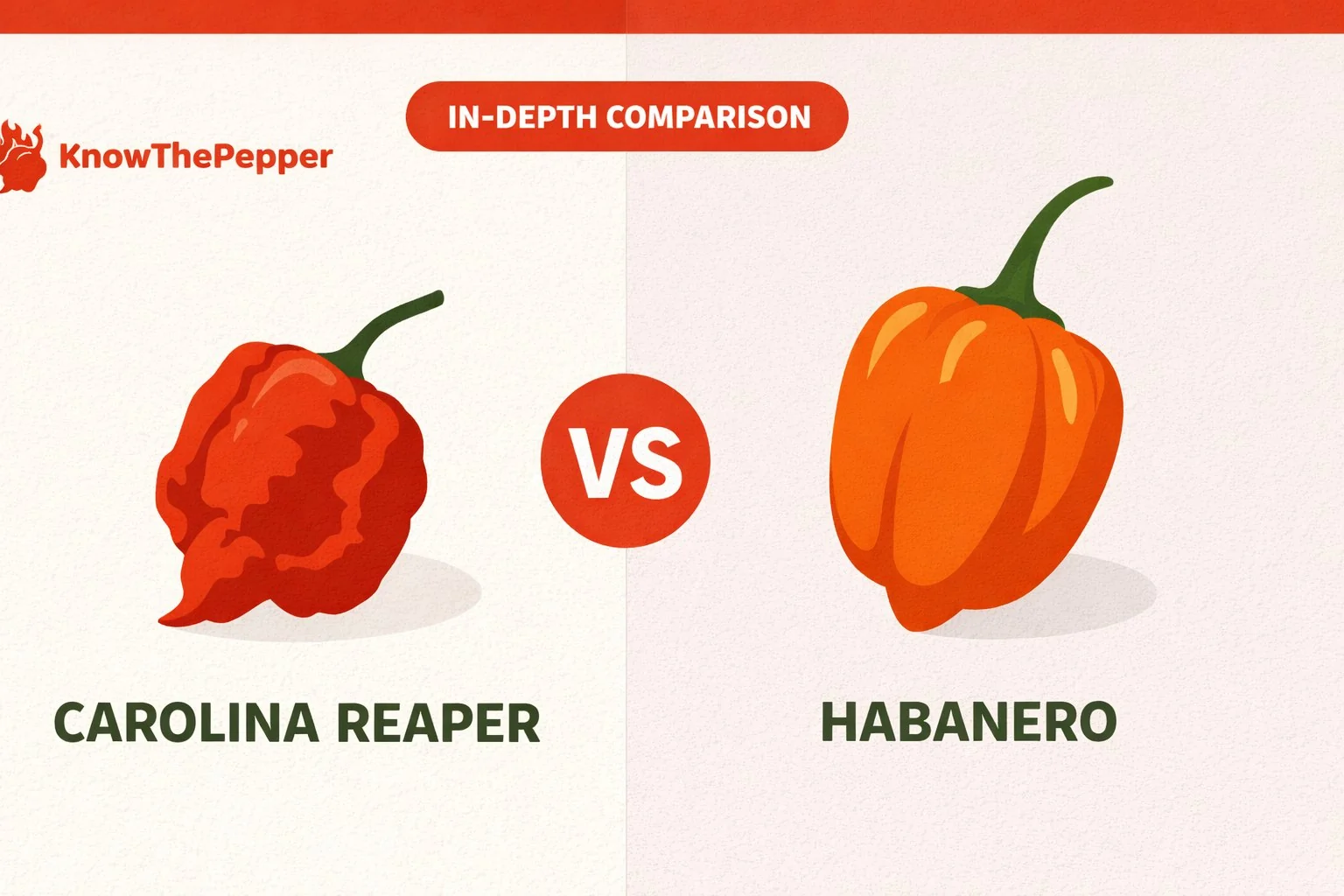
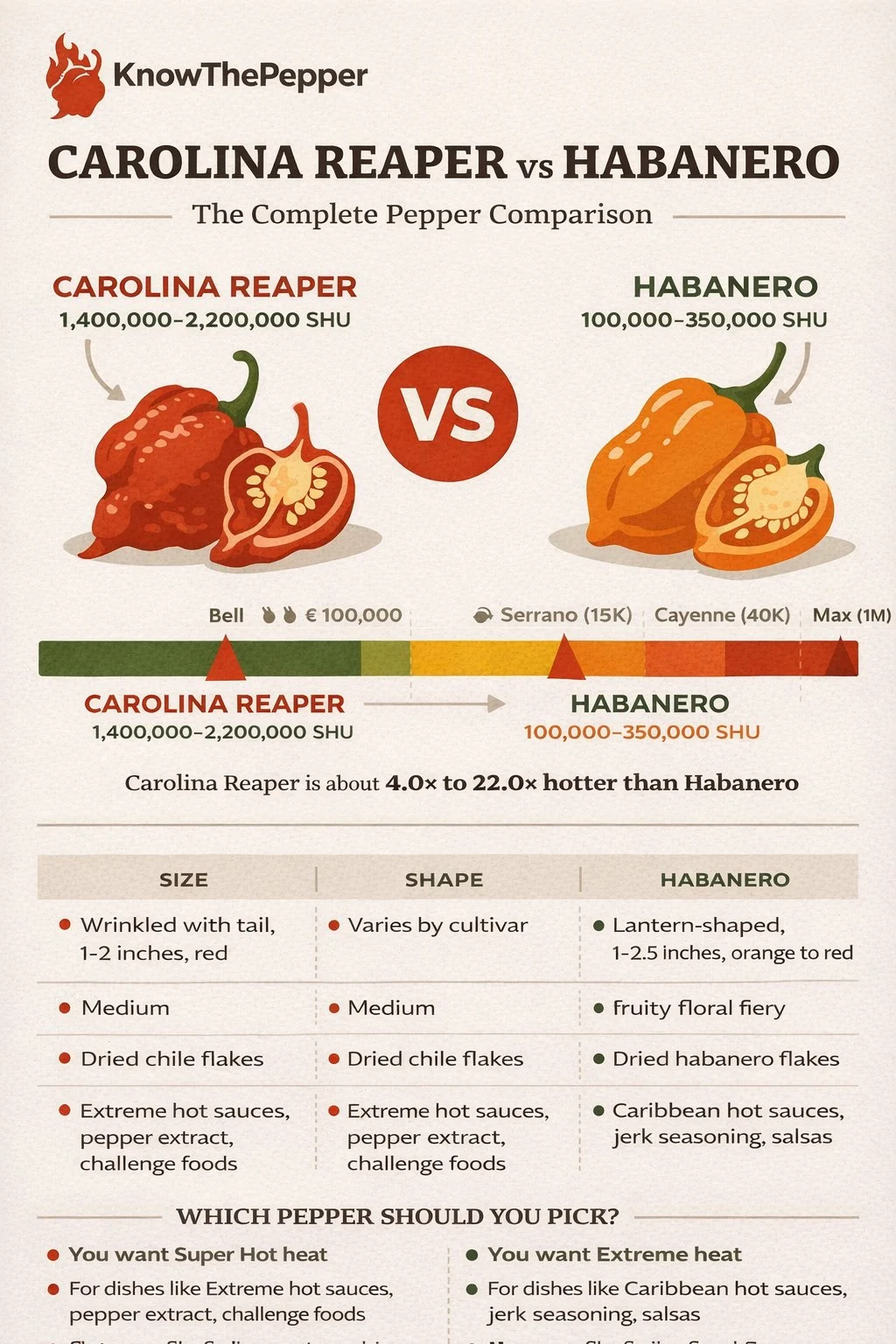
Carolina Reaper measures 1.4M–2.2M SHU while Habanero registers 100K–350K SHU — making Carolina Reaper 6× hotter. Carolina Reaper is known for its fruity and sweet flavor (C. chinense), while Habanero offers fruity and citrusy notes (C. chinense).
- Heat difference: Carolina Reaper is 6× hotter
- Species: Both are C. chinense
- Best for: Carolina Reaper excels in hot sauces and extreme dishes, Habanero in hot sauces and spicy dishes
Carolina Reaper
Super-HotHabanero
Extra-HotCarolina Reaper vs Habanero Comparison
Carolina Reaper vs Habanero Heat Levels
The numbers here are genuinely staggering. A habanero ranges from 100,000 to 350,000 SHU, which already puts it in the extra-hot pepper range - roughly 10 to 20 times hotter than a Fresno chili. That is serious heat by any reasonable measure.
The Carolina Reaper operates in an entirely different atmosphere. At 1,400,000 to 2,200,000 SHU, it holds a position in the super-hot pepper category that few peppers have ever challenged. Compared to a Fresno, that is approximately 90 to 140 times hotter. Against the habanero itself, the Reaper delivers roughly 4 to 6 times more capsaicin intensity.
Both belong to C. chinense, the same botanical family responsible for many of the world's most extreme peppers. That shared genetics explains why both carry fruity top notes - but the Reaper's capsaicin load is so concentrated that the heat overwhelms everything almost immediately.
The character of the burn differs too. Habanero heat builds fast, peaks sharply, and fades within 10-15 minutes for most people. Reaper heat is slower to arrive, then locks in with a full-body intensity - sweating, hiccups, and a lingering burn that can last 30-45 minutes. Understanding why capsaicin triggers that receptor response helps explain why the Reaper feels categorically different, not just quantitatively hotter.
Flavor Profile Comparison
Behind the Carolina Reaper's scorpion-tailed, wrinkled exterior is a flavor profile that catches first-timers completely off guard.
Few peppers balance heat and flavor as well as the habanero.
Strip away the heat and both peppers offer genuinely appealing flavor - which is exactly why they both have devoted followings among serious cooks.
Habaneros lead with bright citrus. There is a distinct orange-and-apricot quality to ripe orange habaneros, with a floral lift that hits right after the initial bite. The fruity note is clean and forward, which is why habanero works so well in fruit-based salsas and Caribbean marinades. Habaneros from Mexican pepper-growing traditions have been cultivated for that balance of fruit and fire for centuries.
The Carolina Reaper also carries fruit - specifically a deep, almost tropical sweetness that some describe as chocolate or berry-adjacent. But accessing that flavor requires getting past the first wave of searing heat, which most people never quite manage. Experienced tasters report the sweetness clearly; everyone else reports the burn.
Aroma is another point of difference. Habanero has a recognizable, slightly perfumed scent that announces itself when you slice one open. Reaper pods have a heavier, almost candy-like smell that can be deceptive given what follows.
For cooking, habanero flavor integrates. It blends into sauces, marinades, and dishes without demanding all the attention. Reaper flavor, when used in tiny amounts, can add complexity - but dosing is everything. A quarter teaspoon of Reaper powder in a pot of chili is meaningful. A full pod is a different project entirely.
Both peppers hail from American pepper breeding programs and Caribbean lineages - the Reaper was developed in South Carolina, while habaneros trace back through the Yucatan and broader Caribbean basin.
Culinary Uses for Carolina Reaper and Habanero
Jerk chicken is where habanero earns its reputation. The pepper's citrus-fruit character pairs naturally with allspice, thyme, and brown sugar - traditional jerk profiles were built around this exact combination. Two to three habaneros in a marinade for four chicken pieces hits a genuinely exciting heat level without becoming inedible.
Beyond jerk, habaneros shine in homemade hot sauce recipes where their flavor can be balanced with mango, pineapple, or roasted garlic. They work in Thai-inspired dishes, Caribbean rice, and anywhere you want noticeable heat with actual flavor payoff. A single habanero seeds-in will heat a large batch of salsa to the edge of most people's comfort zone.
For comparison shopping on the flavor side, the heat-and-flavor matchup between Bulgarian carrot pepper and habanero shows how much variety exists within the extra-hot range.
The Carolina Reaper demands more respect and smaller quantities. It works best as a finishing element - a pinch of dried Reaper powder added to a completed sauce, or a thin slice added to a large pot of stew. Professional hot sauce makers use Reaper mash at concentrations of 1-3% to build extreme-heat products without losing all other flavor.
If a recipe calls for habanero and you want to substitute Reaper, use roughly one-sixth the amount and expect a different flavor profile. Going the other direction - replacing Reaper with habanero - requires about six times as much pepper to approach similar heat, though you will never quite get there.
For cooks exploring the germination and growing walkthrough for either pepper, both require long seasons and warm conditions - Reapers typically need 90+ days to full maturity, habaneros somewhat less.
Which Should You Choose?
Habanero is the practical choice for most cooking situations. The heat is serious enough to matter, the flavor is genuinely good, and you can use it in quantities that actually affect a dish. It rewards skill and restraint without requiring protective gloves to handle. Cooks who want their food hot and flavorful reach for habaneros.
The Carolina Reaper is a specialty ingredient, not a daily driver. Its place is in extreme hot sauces, challenge contexts, or very small doses where you need maximum capsaicin impact with minimal volume. The flavor is real - comparing the Reaper against the ghost pepper or looking at the Reaper versus Chocolate Bhutlah matchup shows it holds its own on flavor within the super-hot tier.
But if someone asks which pepper makes dinner better, habanero wins without much debate. If someone asks which pepper proves a point, the Reaper has no competition.
Can You Substitute One for the Other?
Proceed with caution. Carolina Reaper is 6× hotter than Habanero.
Need a different option altogether? Search for peppers that match your target heat and flavor with precise swap ratios.
Growing Carolina Reaper vs Habanero
If you’re deciding which pepper to grow at home, consider your climate and patience level. Carolina Reaper and Habanero have different maturation times and temperature preferences. Hotter varieties generally need a longer, warmer growing season to develop their full capsaicin content. Our zone-based planting date tool can pinpoint the best sowing window for your area.
Starting Carolina Reapers from seed requires patience - germination takes 14 to 21 days at soil temperatures between 80-85°F. Bottom heat from a seedling mat is essentially non-negotiable for reliable germination rates.
Transplant outdoors only after nighttime temperatures stay consistently above 60°F. The plants need a long season - 150 to 180 days from transplant to mature red pods - so starting seeds indoors 10 to 12 weeks before last frost is standard.
Full sun and well-draining soil with a pH around **6.0 to 6.
Starting habaneros from seed requires patience. Germination takes 10–21 days at soil temperatures of 80–85°F — a heat mat is not optional, it's essential.
Transplant seedlings outdoors only after nighttime temperatures stay consistently above 55°F. Habaneros are frost-intolerant and will stall in cold soil.
Full sun — at least 6–8 hours daily — is non-negotiable. In containers, use a 5-gallon minimum; habaneros develop substantial root systems.
History & Origin of Carolina Reaper and Habanero
Both peppers carry centuries of culinary heritage. Carolina Reaper traces its roots to USA, while Habanero originates from Mexico. Understanding their backstory helps explain why each pepper developed its distinctive traits.
Buying & Storage
Whether you’re shopping for Carolina Reaper or Habanero, the same quality indicators apply. Fresh peppers should feel firm and heavy for their size, with taut, glossy skin and no soft or wet spots. Minor stem cracks known as “corking” are perfectly normal and often indicate a mature, flavorful pod.
- Firm pods with taut skin and consistent color
- Should feel heavy relative to size
- Minor stem cracks (“corking”) are normal
- Avoid anything soft, shriveled, or with dark wet spots
- Fresh: Paper bag, crisper drawer — 1–2 weeks
- Frozen: Wash, dry, freeze on sheet pan — 6+ months
- Dried: Airtight, away from light — up to 1 year
The Verdict: Carolina Reaper vs Habanero
Carolina Reaper and Habanero occupy very different positions on the heat spectrum. Carolina Reaper delivers 6× more heat with its distinctive fruity and sweet character. Habanero, with its fruity and citrusy profile, excels in everyday cooking.
Frequently Asked Questions
Related Comparisons
Sources pending verification.
