Ancho vs Guajillo: Mexican Dried Chile Guide
Ancho and guajillo are the two most essential dried chiles in Mexican cooking, yet they serve very different purposes. Ancho (dried poblano) brings deep, raisin-sweet earthiness with minimal heat (1,000-2,000 SHU), while guajillo delivers a brighter, tangier profile with noticeably more kick (2,500-5,000 SHU). Understanding when to use each — and when to combine them — is the foundation of serious Mexican sauce work.

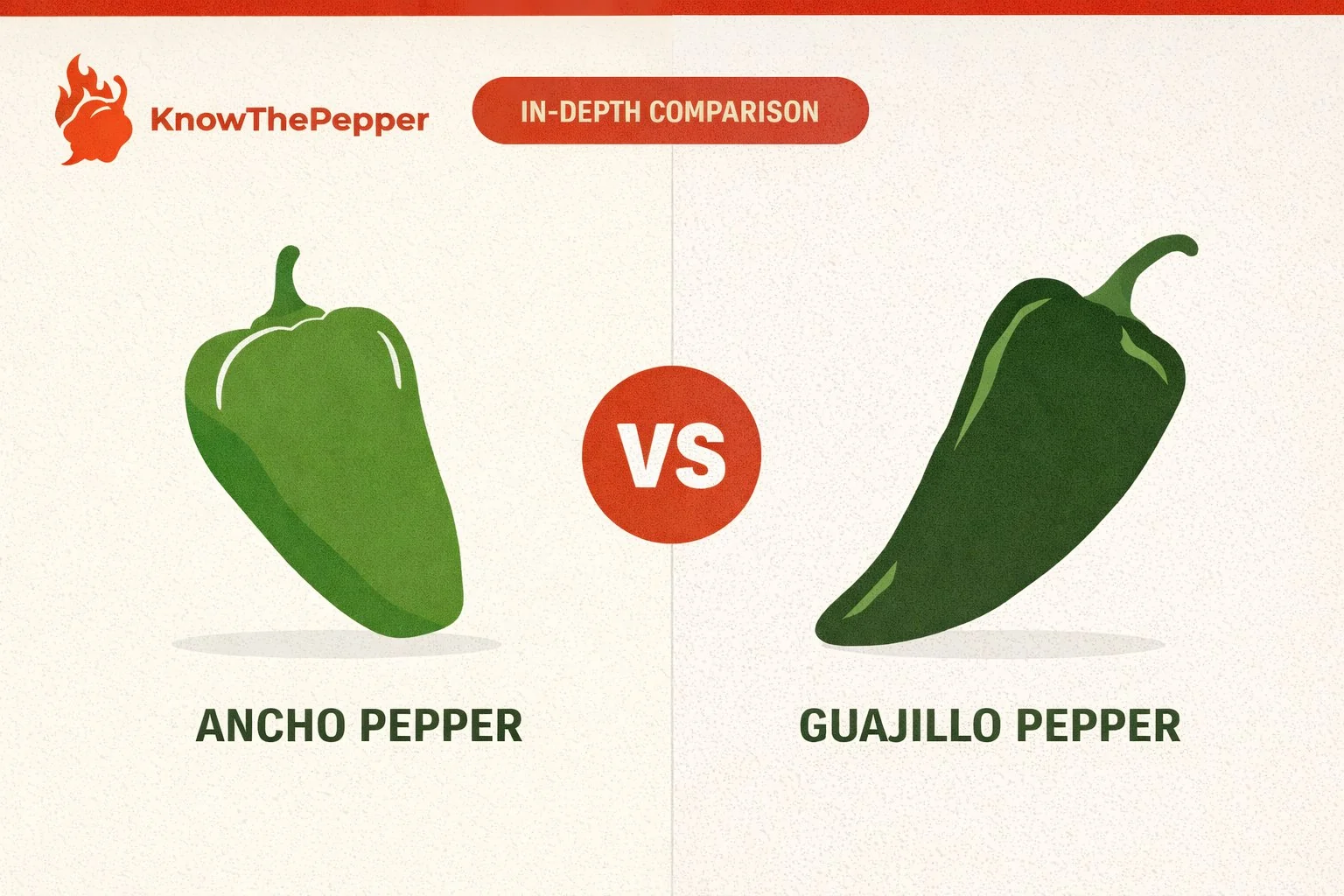
Ancho Pepper measures 1K–2K SHU while Guajillo Pepper registers 3K–5K SHU — making Guajillo Pepper 3× hotter. Ancho Pepper is known for its sweet and raisin-like flavor (C. annuum), while Guajillo Pepper offers tangy and sweet notes (C. annuum).
- Heat difference: Guajillo Pepper is 3× hotter
- Species: Both are C. annuum
- Best for: Ancho Pepper excels in everyday cooking and salsas, Guajillo Pepper in fresh salsas and mild recipes
Ancho Pepper
MediumGuajillo Pepper
MediumAncho Pepper vs Guajillo Pepper Comparison
Ancho Pepper vs Guajillo Pepper Heat Levels
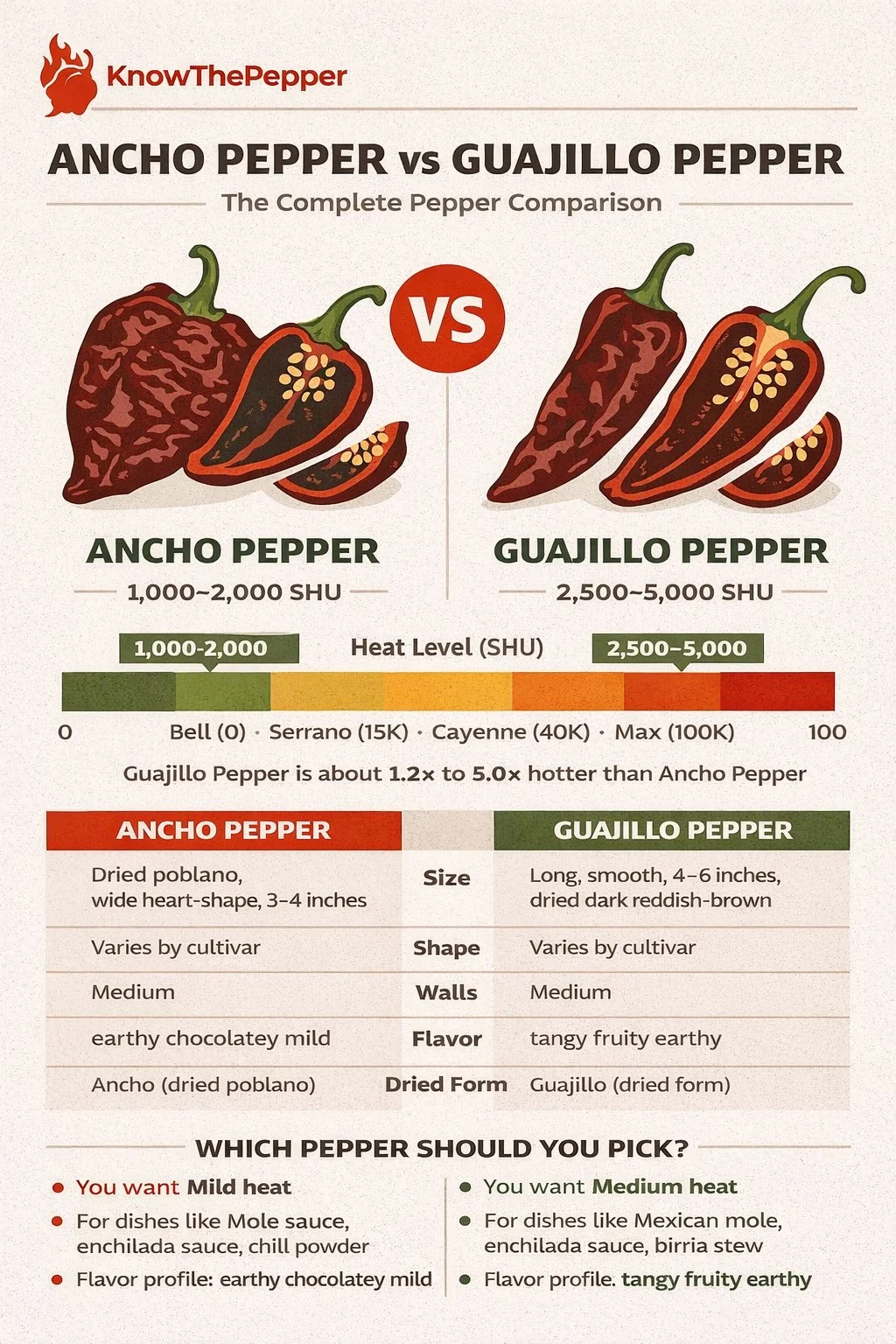
On the Scoville scale's unit definition, ancho sits at 1,000-2,000 SHU and guajillo at 2,500-5,000 SHU. Neither is intimidating, but the gap between them is real and matters in a finished dish.
For a useful reference: the Anaheim pepper typically measures around 500-2,500 SHU. Ancho barely edges past the lower end of that range, while guajillo can hit twice the Anaheim's ceiling. Guajillo is roughly 2-3 times hotter than ancho when you compare their midpoints — 1,500 SHU versus 3,750 SHU.
Both peppers belong to the mild-to-medium heat position on the scale, which is exactly what makes them so versatile. Neither will overwhelm a dish; they function as flavor vehicles that happen to carry some warmth.
The character of the heat differs too. Ancho's capsaicin load is low enough that the warmth arrives as a background glow — you feel it at the back of the throat after the flavor has already done its work. Guajillo's heat is more immediate, with a cleaner front-of-mouth presence. Both trigger the TRPV1 heat response that registers as warmth, but guajillo gets there faster and with more persistence.
For cooks managing spice-sensitive guests, ancho is the safer choice. Guajillo is still mild enough for most palates, but it has a genuine edge that shows up in larger quantities.
Flavor Profile Comparison
Long before dried chiles appeared on supermarket shelves, the ancho was already central to Mexican cuisine — a staple ground into sauces, rehydrated for stews, and layered into moles that could take days to prepare.
Long before supermarkets stocked dried chiles by the bag, guajillo peppers were already a cornerstone of Mexican cooking.
This is where the two chiles really diverge. Ancho — the dried form of the poblano — carries flavors that read as chocolate, dried fruit, and a specific raisin-like sweetness. There's a slight earthiness underneath, almost like dried mulato or dark coffee. The aroma when you toast an ancho in a dry skillet is genuinely complex: sweet smoke, cocoa, a little dried cherry.
Guajillo is brighter and more acidic. The flavor profile runs toward cranberry, green tea, and a mild tannic quality that gives sauces a pleasant sharpness. Where ancho rounds things out, guajillo cuts through. The skin of the guajillo is notably tough and smooth, which affects how it rehydrates — it takes longer and benefits from a longer soak in hot water.
In terms of aroma, ancho smells sweeter and more enveloping when toasted; guajillo smells sharper, almost fruity-tart. These aren't subtle differences — a sauce built on ancho alone has a different identity than one built on guajillo.
The two are frequently combined in classic Mexican chile preparations precisely because they complement each other. Ancho provides body and sweetness; guajillo provides acidity and color (its deep red skin contributes a vivid brick-red to sauces). Mole negro, for instance, often calls for both alongside darker chiles like pasilla.
For anyone curious about how ancho compares to its close relative, the pasilla-to-ancho flavor contrast is worth understanding — pasilla runs drier and more herb-like, which further clarifies what makes ancho's sweetness distinctive.
Culinary Uses for Ancho Pepper and Guajillo Pepper
Both chiles anchor some of the most important preparations in Mexican cooking, but they don't overlap as much as their similar heat levels might suggest.
Ancho is the workhorse of mole. Its sweetness and body make it ideal for mole poblano, enchilada sauce, and any preparation where you want depth without sharpness. Rehydrated ancho blends into a silky paste that thickens sauces naturally. It also works well in adobo marinades for pork or chicken — the sweetness balances vinegar and dried oregano well. For a from-scratch red chile base, ancho is typically the first dried chile to reach for.
Guajillo is the backbone of birria, pozole rojo, and chile colorado. Its tangy profile holds up to long braises and cuts through fatty meats like lamb and beef short ribs. The color it contributes is exceptional — a deep, clear red that makes salsas and braises visually striking. Guajillo also appears frequently in chipotle-versus-guajillo sauce comparisons because both are used in similar braising applications, though guajillo lacks the smokiness.
For substitution: if a recipe calls for ancho and you only have guajillo, use a 1:1 ratio but expect a tangier, slightly hotter result. Add a pinch of sugar or a small piece of dark chocolate to approximate ancho's sweetness. Going the other direction — replacing guajillo with ancho — works at 1:1 as well, but the sauce will be sweeter and less acidic; a small splash of apple cider vinegar can help correct the balance.
Combining both is the most common professional approach. A ratio of 2 ancho : 1 guajillo gives you richness with just enough brightness. Reverse it to 1 ancho : 2 guajillo for a more vibrant, acidic sauce suited to lighter proteins.
Both belong to C. annuum, the species that also includes bell peppers, jalapeños, and Anaheims — which is part of why their flavor profiles feel approachable rather than aggressive. The chipotle-versus-ancho breakdown is useful if you're deciding between a smoky dried chile and ancho's unsmoked sweetness for a specific dish.
Which Should You Choose?
If your recipe needs body, sweetness, and a chile flavor that recedes into the background and lets other ingredients shine, ancho is the right call. It's the gentler of the two, and its chocolate-raisin character makes it almost universally compatible with Mexican spice blends.
If you need color, acidity, and a chile that asserts itself in a long braise or a straightforward red sauce, guajillo earns its place. Its heat — while still mild at 2,500-5,000 SHU — gives finished dishes a presence that ancho alone cannot provide.
For most serious Mexican cooking, the real answer is both. Ancho and guajillo are designed to work together. Stock both, learn their individual characters, and you'll have the foundation for the majority of dried-chile preparations in the broader Mexican pepper tradition. Neither is a specialty item — both are widely available dried, and growing your own starting from seed is covered in a step-by-step indoor starting guide if you want to go further.
Can You Substitute One for the Other?
Yes — direct substitution works. Ancho Pepper and Guajillo Pepper are close enough in heat to swap at roughly 1:1. The main difference will be flavor. For more swap options, explore ranked alternatives with conversion ratios.
Growing Ancho Pepper vs Guajillo Pepper
If you’re deciding which pepper to grow at home, consider your climate and patience level. Ancho Pepper and Guajillo Pepper have different maturation times and temperature preferences. Hotter varieties generally need a longer, warmer growing season to develop their full capsaicin content. Our zone-based planting date tool can pinpoint the best sowing window for your area.
Growing anchos means growing poblanos and drying them yourself — the transformation happens post-harvest. Plants thrive in USDA zones 9–11 as perennials and are treated as annuals elsewhere.
Transplant outdoors after all frost risk passes, spacing plants 18–24 inches apart in full sun. Poblanos are heavy feeders — a balanced fertilizer at transplant followed by a phosphorus-forward feed once flowering begins keeps production strong.
Fruits are ready to dry when they turn fully red — this is when sugar content peaks and the dried ancho will have its characteristic sweetness. Hang or dehydrate at 125–135°F until completely leathery with no soft spots.
Growing guajillo means starting with the mirasol variety — the fresh pepper that becomes guajillo after drying. If you're new to starting chiles from seed indoors, mirasol is a forgiving choice: germination is reliable, and the plants are vigorous once established.
Start seeds 8–10 weeks before your last frost date. Mirasol plants prefer full sun and well-drained soil, thriving in USDA zones 9–11 or as annuals in cooler climates.
The upward-pointing fruit habit (the 'looking at the sun' trait) means pods dry naturally on the plant in hot, dry climates. In humid regions, harvest before the first frost and finish drying indoors using a dehydrator set to 135°F for 8–12 hours.
History & Origin of Ancho Pepper and Guajillo Pepper
Both peppers carry centuries of culinary heritage. Ancho Pepper traces its roots to Mexico, while Guajillo Pepper originates from Mexico. Understanding their backstory helps explain why each pepper developed its distinctive traits.
Buying & Storage
Whether you’re shopping for Ancho Pepper or Guajillo Pepper, the same quality indicators apply. Fresh peppers should feel firm and heavy for their size, with taut, glossy skin and no soft or wet spots. Minor stem cracks known as “corking” are perfectly normal and often indicate a mature, flavorful pod.
- Firm pods with taut skin and consistent color
- Should feel heavy relative to size
- Minor stem cracks (“corking”) are normal
- Avoid anything soft, shriveled, or with dark wet spots
- Fresh: Paper bag, crisper drawer — 1–2 weeks
- Frozen: Wash, dry, freeze on sheet pan — 6+ months
- Dried: Airtight, away from light — up to 1 year
The Verdict: Ancho Pepper vs Guajillo Pepper
Ancho Pepper and Guajillo Pepper sit in the same heat tier but serve different roles. Guajillo Pepper delivers 3× more heat with its distinctive tangy and sweet character. Ancho Pepper, with its sweet and raisin-like profile, excels in everyday cooking.
Frequently Asked Questions
Related Comparisons
Sources pending verification.