
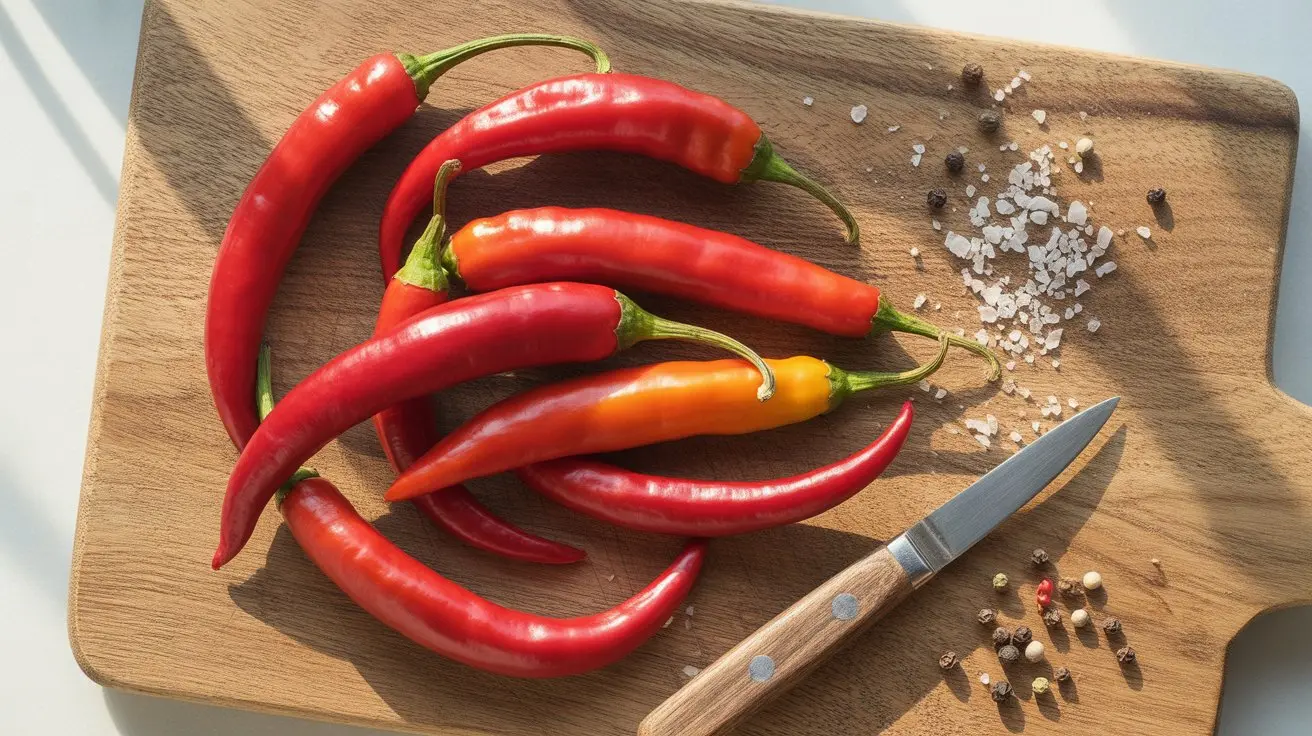
Best Thai Chili substitutes and alternatives for cooking
Substitute Guide Extra-Hot

7 Best Substitutes for Thai Chili (Ranked)

Source Pepper
Thai Chili
50K–100K SHU · bright and peppery · Thailand
Full Profile →
Quick Summary

Thai chili runs 50,000-100,000 SHU with a clean, bright peppery bite that anchors countless Southeast Asian dishes. Finding a true stand-in means matching both that sharp heat and the pepper's quick, forward-hitting intensity. The substitutes below are ranked by how closely they replicate the full Thai chili experience.

Heat Level
50K–100K
SHU
Flavor
bright and peppery
Substitutes
7
ranked options
Advertisement

Best Thai Chili Substitutes

These alternatives are ranked by how closely they match Thai Chili’s heat level and flavor profile. Use the conversion ratios to adjust quantities in your recipe.
#1
Bird's Eye Chili Closest Match

Running 50,000-100,000 SHU, Bird's Eye is the closest match you will find. The first time I grabbed a handful at an Asian grocery thinking they were Thai chilies, I realized the two are nearly interchangeable in most recipes. The peppery, forward-hitting heat of Bird's Eye lands in exactly the same register as Thai chili, with a similarly bright, clean finish.

Substitute 1:1 by count or weight. No adjustment needed.

#2
Thai Dragon Runner-Up

Think of Thai Dragon as Thai chili's slightly sharper sibling. At 50,000-100,000 SHU, it hits the same heat range but with a more pointed, almost metallic brightness. The sharp Southeast Asian heat of Thai Dragon performs identically in stir-fries and nam prik, though the flavor edge is a touch more aggressive.

Use a 1:1 ratio, but taste as you go if your dish is heat-sensitive.

#3
Siling Labuyo Also Great

This Filipino variety tops out at 80,000-100,000 SHU, sitting at the higher end of the Thai chili range. The pungent, sharp character of Siling Labuyo makes it one of the better structural matches, though the heat is slightly more intense on average. It belongs to the same botanical family as Thai chili, which keeps flavor compatibility high.

Reduce to 3 peppers for every 4 Thai chilies called for, or match 1:1 if you want the extra heat.

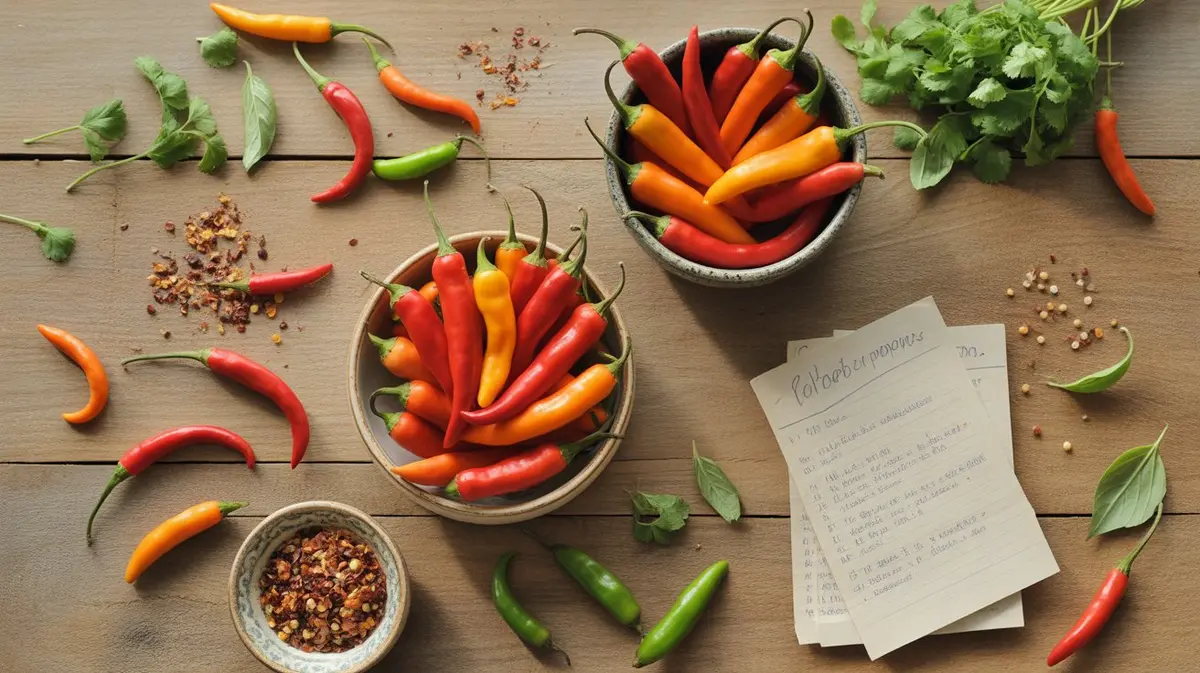
Comparison of Thai Chili with similar peppers for substitution
#4
Cabe Rawit

Cabe Rawit is the Indonesian kitchen workhorse that lives in the same heat band: 50,000-100,000 SHU. The sharp, bright Indonesian heat of Cabe Rawit makes it a natural swap in any dish where Thai chili provides background fire rather than a starring role. It is widely used across sambal preparations, which tells you something about its versatility.

Substitute 1:1. Flavor is slightly less bright than Thai chili but close enough that most dishes won't notice.

#5
Malagueta

Brazilian in origin, Malagueta clocks in at 60,000-100,000 SHU with a citrusy brightness that partially mirrors Thai chili's clean peppery profile. The citrus-edged heat from this South American staple won't replicate the exact flavor note, but the intensity lands correctly. It performs well in any context where Thai chili is used fresh or pickled.

Use 1:1 by count. Expect a slightly more citrus-forward finish.

#6
Chiltepin

The wild ancestor of many domesticated peppers, Chiltepin hits 50,000-100,000 SHU with a smoky, citrus-inflected heat that diverges from Thai chili's cleaner profile. That said, the smoky intensity of this ancient wild pepper still delivers the right heat level for most applications. These tiny round peppers belong to the regional pepper tradition of Mexico in spirit if not geography, representing a similarly deep food-culture connection.

Use 1 Chiltepin per 2 Thai chilies when cooking whole. If grinding, match by weight but expect a smokier result.

#7
Rocoto

Rocoto is the outlier on this list, ranging 30,000-100,000 SHU with thicker flesh and a distinctly fruity, crisp character. The fruity, thick-walled Andean pepper known as Rocoto doesn't mimic Thai chili's texture or flavor at all, but it can deliver comparable heat in cooked applications where texture matters less. For sauces, pastes, or braises, it works reasonably well.

Use half the volume called for and taste before adding more. The lower end of Rocoto's range is significantly milder than Thai chili, so individual fruit heat varies considerably.

All seven of these sit within the high-heat category that Thai chili calls home, which means any of them can step in without fundamentally changing a dish's heat profile. The differences come down to flavor nuance: Bird's Eye and Thai Dragon stay truest to the source, while Chiltepin and Rocoto introduce new dimensions that work better in some contexts than others.

Related Aji Panca: 1K–1.5K SHU, Flavor & Recipes
Peppers to Avoid as Thai Chili Substitutes

Guajillo seems like a reasonable swap on paper, but its 2,500-5,000 SHU range makes it roughly 10-20 times milder than Thai chili. You would need an impractical quantity to approximate the heat, and the dried, leathery flavor profile heads in a completely different direction.

Anaheim pepper runs 500-2,500 SHU, which is so far below Thai chili's range that no ratio adjustment can bridge the gap. Anaheim brings mild, sweet pepper flavor to a role that demands sharp, assertive heat.

Fresno chili sits at 2,500-10,000 SHU and often appears in Asian-inspired recipes, which makes it tempting. The fruity brightness is appealing, but the heat ceiling is roughly 5-10 times lower than Thai chili. For dishes that depend on Thai chili's intensity, Fresno will produce a noticeably tamer result that changes the dish's fundamental character.

Substitution Tip

When substituting Thai Chili (50K–100K SHU), always start with less of a hotter substitute and add more to taste. For milder substitutes, you can increase the quantity. Our swap ratio calculator gives precise conversion amounts, and the heat unit converter translates between Scoville and other scales.

Fact-Checked & Expert Reviewed
Editorial Standards: All facts verified against authoritative sources. Content reviewed by subject matter experts before publication.
Review Process: Written by Sofia Torres (Lead Culinary Reviewer) , reviewed by Karen Liu (Lead Fact-Checker & Science Editor) . Last updated February 19, 2026.
Related Aleppo Pepper: 10K–30K SHU, Flavor & Recipes

Thai Chili Substitute FAQ

Yes, Bird's Eye chili is the closest substitute available and works at a 1:1 ratio in virtually every application. The heat range and flavor profile overlap enough that most recipes won't show any meaningful difference.

Dried Thai chilies concentrate heat slightly, so use about 75% of the fresh quantity called for and rehydrate in warm water before adding to cooked dishes. The bright, peppery edge softens somewhat when dried, which is worth accounting for in raw preparations.

Thai chili runs 50,000-100,000 SHU, while guajillo typically lands at 2,500-5,000 SHU, making Thai chili roughly 10-20 times hotter. This gap is large enough that guajillo cannot substitute for Thai chili in any heat-dependent application.

Siling Labuyo's range of 80,000-100,000 SHU skews toward the upper end of Thai chili's 50,000-100,000 SHU band, so on average it runs slightly hotter. Reducing the count by about 25% keeps the heat level consistent with most Thai chili recipes.

The bright, clean peppery bite of fresh Thai chili hits immediately and dissipates quickly, which is different from the slower burn of many other hot peppers. Bird's Eye and Cabe Rawit come closest to replicating that forward, clean heat in uncooked applications.

Sources & References
Karen Liu
Fact-checked by Karen Liu
Contributing Editor & Food Scientist
All Substitutes Browse Peppers Substitute Finder Tool