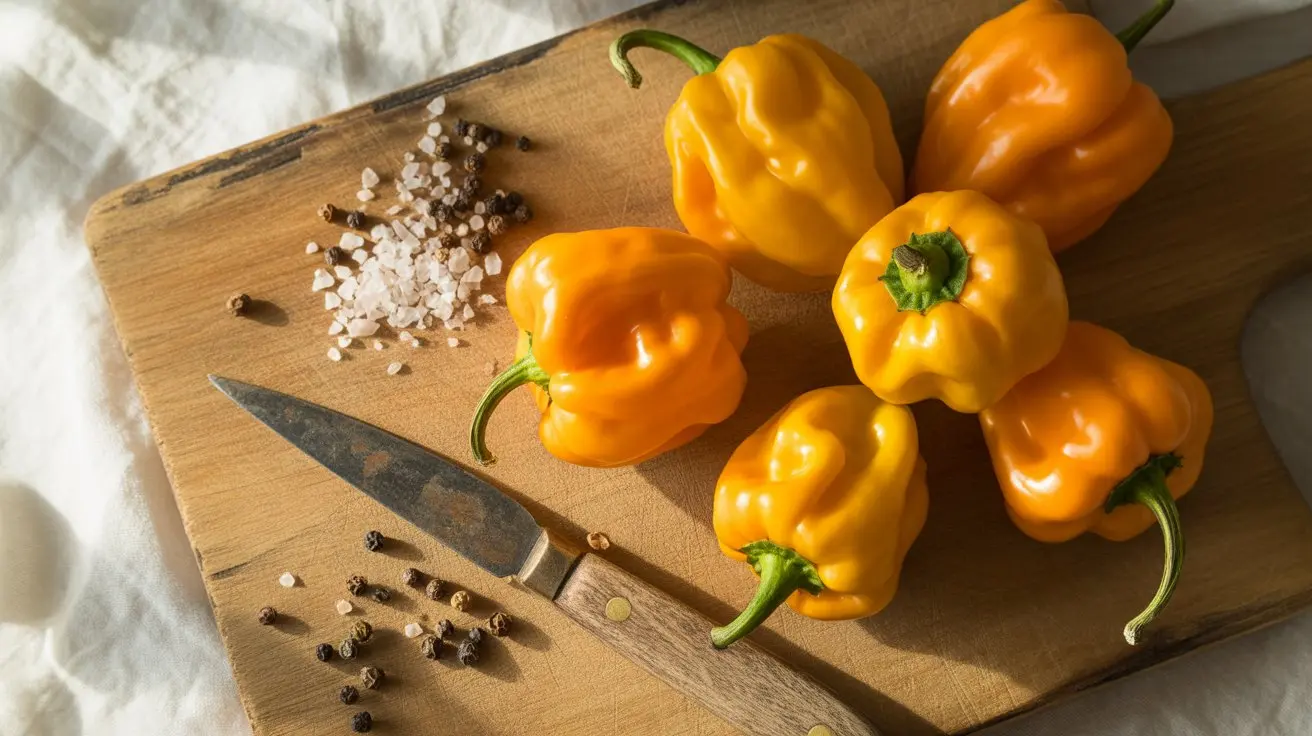
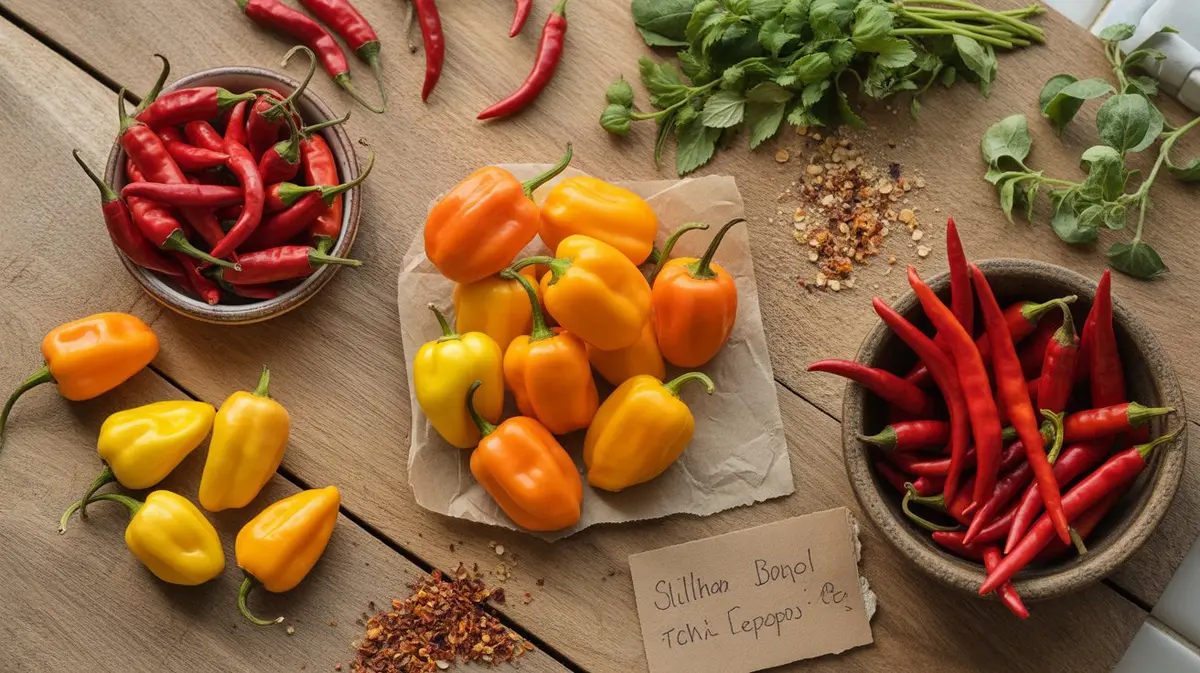
Habaneros bring [100,000-350,000 SHU](https://knowthepepper.com/peppers/habanero/) of fruity, citrusy fire to sauces, marinades, and salsas — but they're not always on hand, and sometimes the heat is simply more than a dish needs. The right substitute depends on whether you're chasing that signature C. chinense fruitiness, matching the heat level, or both. The seven options below cover every scenario, from near-perfect flavor twins to slightly milder workarounds.
These alternatives are ranked by how closely they match Habanero’s heat level and flavor profile. Use the conversion ratios to adjust quantities in your recipe.
#1
Scotch Bonnet Closest Match
100,000-350,000 SHU — The Scotch Bonnet's fruity Caribbean heat is the closest you'll get to a habanero without actually using one. Both belong to C. chinense, the botanical family responsible for that distinctive tropical fruitiness, and their heat ranges overlap almost perfectly.
Flavor-wise, Scotch Bonnets lean slightly sweeter and more tropical where habaneros carry more citrus edge. Use a 1:1 ratio — same pepper count, same dice size. This swap is nearly invisible in jerk marinades, hot sauces, and Caribbean stews.
#2
Fatalii Runner-Up
125,000-400,000 SHU — The Fatalii's searing citrus-forward bite actually runs hotter than a standard habanero at its peak, so start with 0.75:1 (three-quarters of what the recipe calls for). Originating in Central Africa, Fatalii peppers carry a sharp lemon-lime brightness that complements habanero's citrusy character well.
This is a strong pick when you want the citrus note amplified — particularly good in ceviche-style preparations or fruit-based hot sauces.
#3
White Habanero Also Great
100,000-350,000 SHU — The White Habanero's floral, fruity heat profile sits in the same SHU bracket with a noticeably more delicate, almost perfumed quality. Use 1:1 without hesitation. The floral note adds an interesting dimension in dishes where habanero's citrus punch might otherwise dominate.
Think cream-based sauces, fruit salsas, or anything where you want heat that doesn't announce itself quite so aggressively.
#4
Jamaican Hot Chocolate
100,000-350,000 SHU — The Jamaican Hot Chocolate's smoky, fruity depth makes it the most interesting departure on this list. Same heat range, but the flavor profile shifts toward a warm, earthy smokiness that works beautifully in slow-cooked dishes and barbecue applications.
Substitute 1:1. If a recipe leans on habanero for brightness, this swap changes the flavor character noticeably — that's not a problem, just something to plan for.
#5
Madame Jeanette
100,000-350,000 SHU — Less familiar outside of Surinamese and Dutch Caribbean cooking, the Madame Jeanette's tropical fruity punch holds up well against habanero in most applications. The flavor is lush and tropical, slightly less citrusy than a habanero but with comparable fire.
Use 1:1. These are harder to source than Scotch Bonnets but worth seeking out if you want something slightly different from the usual suspects. They're part of the regional pepper tradition of tropical C. chinense varieties bred for maximum fruitiness alongside serious heat.
#6
Aji Chombo
100,000-350,000 SHU — Panama's answer to the Scotch Bonnet, the Aji Chombo's bright tropical heat is nearly interchangeable with habanero in most recipes. The fruity, tropical flavor profile makes it a natural fit in hot sauces, ceviche, and rice dishes.
Substitute 1:1. Availability is the main limitation — specialty Latin markets are your best bet outside of Panama and Colombia. Heat sits comfortably within the extra-hot heat category that habaneros occupy.
#7
Wiri Wiri
100,000-350,000 SHU — The Wiri Wiri's bright, snappy fruitiness comes in a much smaller package — these Guyanese peppers are roughly the size of a small cherry. The heat and fruity character align well with habanero, but the smaller size means you'll need to adjust by count rather than volume.
For one habanero, use 3-4 Wiri Wiri peppers depending on size. They're excellent in pepper sauces and stews where the whole pepper is added during cooking. The side-by-side heat gap between these and serrano is substantial — habaneros run roughly 5-10 times hotter than serrano's 10,000-23,000 SHU ceiling, and Wiri Wiri sits in that same elevated bracket.
Cayenne seems like a reasonable swap given its availability, but it tops out around 50,000 SHU — roughly half the heat of a mid-range habanero. More importantly, cayenne's flavor is sharp and one-dimensional, with none of the tropical fruitiness that defines C. chinense varieties. You'd need to double the quantity to approach the heat, and the flavor would still fall flat.
Serrano peppers are another common suggestion that doesn't hold up under scrutiny. A heat comparison between habanero and serrano shows serranos maxing out around 23,000 SHU — you'd need five or more serranos to approximate a single habanero's heat, and the grassy, bright flavor reads nothing like habanero's fruity depth.
Thai bird's eye chilis bring serious heat (50,000-100,000 SHU) but belong to C. annuum and C. frutescens — completely different species with a sharp, almost metallic heat and no fruity undertone. They can match intensity in a pinch but won't replicate the flavor character that makes habanero irreplaceable in Caribbean and Mexican cooking.
Substitution Tip
When substituting Habanero (100K–350K SHU), always start with less of a hotter substitute and add more to taste. For milder substitutes, you can increase the quantity. Our swap ratio calculator gives precise conversion amounts, and the heat unit converter translates between Scoville and other scales.
Fact-Checked & Expert Reviewed
Editorial Standards: All facts verified against authoritative sources. Content reviewed by subject matter experts before publication.
Review Process:
Written by
Sofia Torres
(Lead Culinary Reviewer)
, reviewed by
Karen Liu
(Lead Fact-Checker & Science Editor)
. Last updated February 18, 2026.
Absolutely — Scotch Bonnet is the traditional choice in jerk seasoning and swaps 1:1 with habanero. The flavor is slightly sweeter and more tropical, but the heat range is identical at 100,000-350,000 SHU, so the dish will land in the same heat territory.
White Habanero is your best option — same 100,000-350,000 SHU range but with a softer, more floral quality that feels less aggressive. If you want to step down in heat while keeping fruitiness, a ripe Aji Amarillo (around 30,000-50,000 SHU) carries tropical notes but at a fraction of the fire.
Plan on 3-4 Wiri Wiri peppers per habanero, adjusting for size since these small Guyanese peppers vary considerably. Heat output is comparable, but because they're so small, it's easier to add them whole to stews and sauces rather than trying to dice them.
At its peak, yes — Fatalii can reach 400,000 SHU compared to habanero's 350,000 SHU ceiling, though average specimens are closer in heat. Use about three-quarters of the called-for habanero amount when substituting Fatalii, especially if you're working with particularly ripe, red specimens.
Heat is the obvious issue — cayenne caps at around 50,000 SHU and serrano at roughly 23,000 SHU, both far below habanero's floor of 100,000 SHU. The bigger problem is flavor: neither belongs to C. chinense, so they lack the tropical, fruity character that makes habanero distinctive in Caribbean and Mexican recipes.