
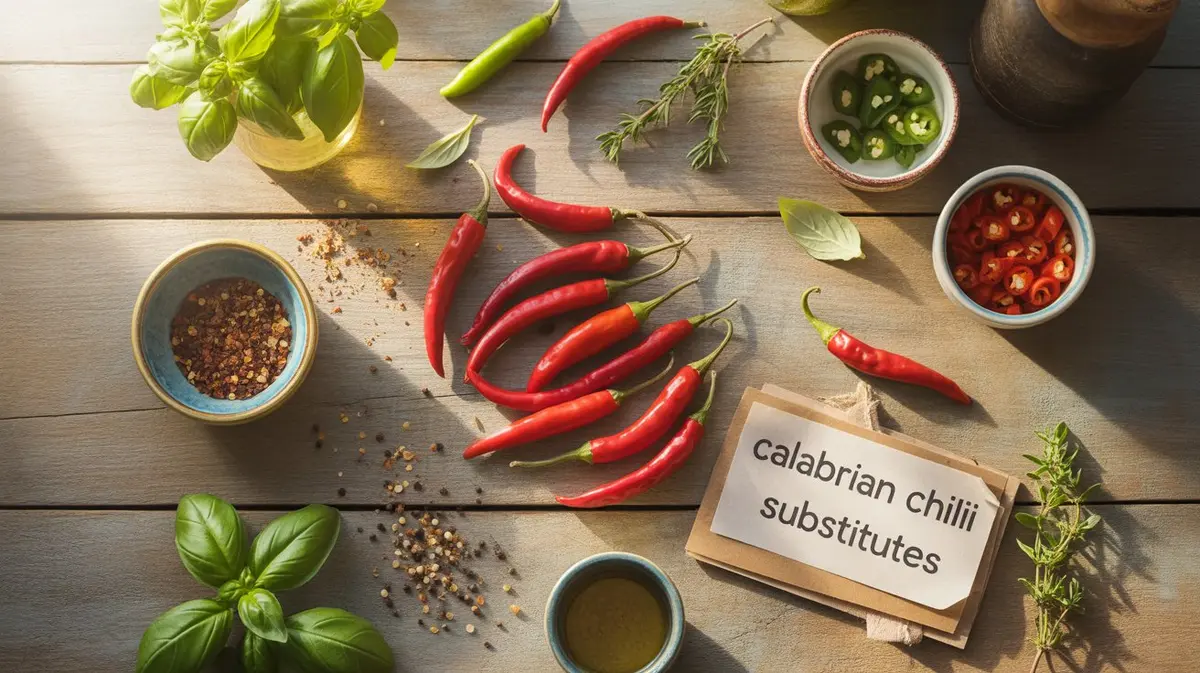
Best Calabrian Chili substitutes and alternatives for cooking
Substitute Guide Hot

What to Use Instead of Calabrian Chili (7 Swaps)

Source Pepper
Calabrian Chili
25K–40K SHU · fruity and smoky · Italy
Full Profile →
Quick Summary

Calabrian chili brings a specific combination of fruity depth, smokiness, and medium-high heat (25,000-40,000 SHU) that's hard to replicate with a single ingredient. Whether your jar ran out mid-recipe or you need a fresh pepper alternative, matching that Italian character requires picking the right swap for your dish. The seven options below cover everything from pantry staples to specialty finds.

Heat Level
25K–40K
SHU
Flavor
fruity and smoky
Substitutes
7
ranked options
Advertisement

Best Calabrian Chili Substitutes

These alternatives are ranked by how closely they match Calabrian Chili’s heat level and flavor profile. Use the conversion ratios to adjust quantities in your recipe.
#1
De Arbol Closest Match

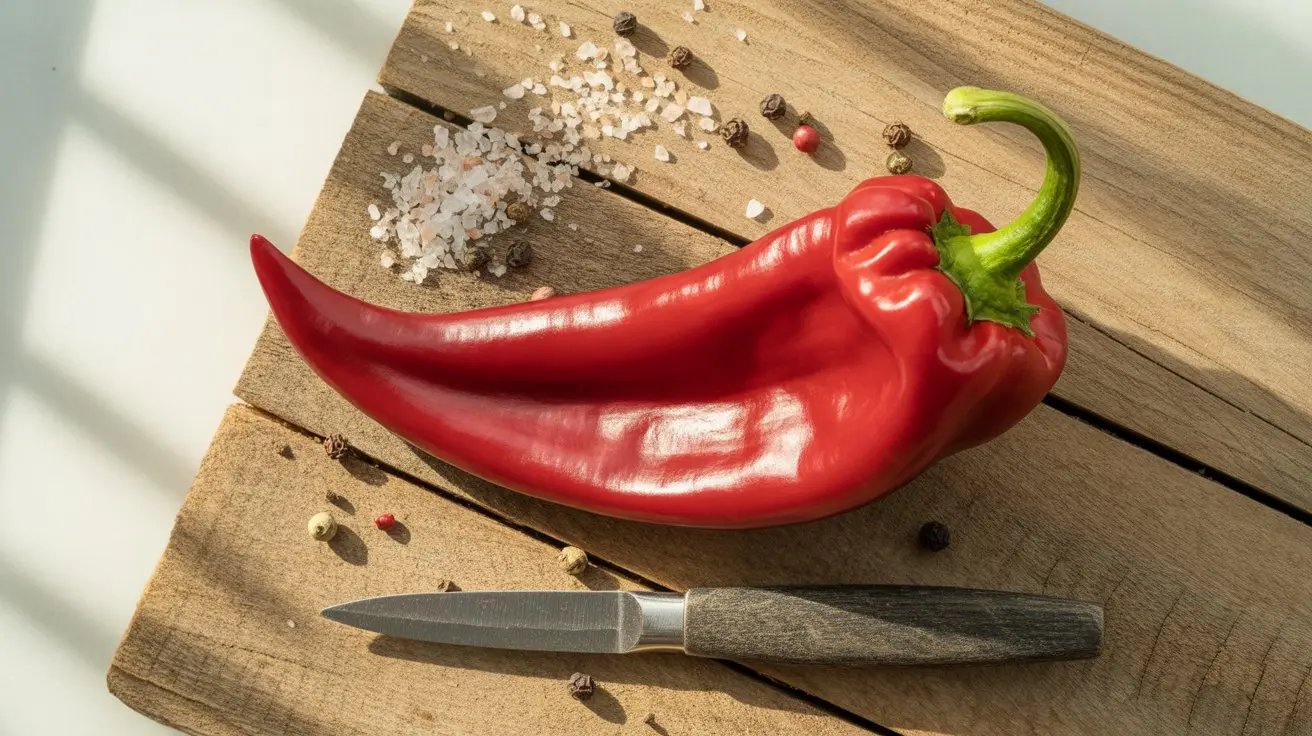
De Arbol sits at 15,000-30,000 SHU - slightly milder than Calabrian chili but carries a smoky, nutty depth that mirrors the Calabrian's signature character better than almost anything else on this list. The smokiness is the key match; where Calabrian chili gets its from the drying and curing process typical of the regional pepper tradition, de arbol delivers something structurally similar from its own thin-walled drying. Use 1.5 dried de arbol chilis for every 1 Calabrian, or if you're working with paste, blend soaked de arbol with a small amount of olive oil to approximate the texture.

Flavor note: de arbol lacks the fruity top note, so add a pinch of smoked paprika if that dimension matters in your dish.

#2
Cayenne Pepper Runner-Up

Cayenne runs 30,000-50,000 SHU, putting it at the upper end of Calabrian's range and occasionally beyond. The sharp, peppery heat of cayenne is clean and direct - no smokiness, no fruit - but it's the most reliable pantry substitute when you need heat fast. Use ¾ teaspoon cayenne powder for every 1 teaspoon of Calabrian paste, and consider adding a drop of tomato paste or roasted red pepper to compensate for the missing body.

This is the workhorse swap, not the nuanced one. It keeps the heat bracket honest without trying to replicate the full flavor profile.

#3
Red Pepper Flakes Also Great

Most kitchens have a jar of these sitting by the stove. Red pepper flakes span 15,000-45,000 SHU - that wide range reflects the mixed pepper blend most commercial versions contain. The sharp, peppery bite of standard crushed red flakes won't give you smokiness or fruit, but they distribute heat evenly in sauces, pasta, and braises.

Conversion: use ½ teaspoon flakes for every 1 Calabrian chili. If you can find Calabrian-style flakes (increasingly available at specialty grocers), the match improves considerably. These also belong to the botanical family that Calabrian chili comes from, so the capsaicin chemistry is closely aligned.

Comparison of Calabrian Chili with similar peppers for substitution
#4
Aji Amarillo

For dishes where the fruity character of Calabrian chili is the whole point - think pasta alla 'nduja, arrabbiata variations, or any preparation where the pepper is a featured flavor - aji amarillo is the most interesting substitute on this list. At 30,000-50,000 SHU, the fruity, raisin-like intensity of aji amarillo brings genuine complexity. The fruit profile differs (tropical rather than Mediterranean), but it's far more dimensional than plain cayenne.

Aji amarillo paste is available at Latin grocery stores and many online retailers. Use a 1:1 ratio for paste-to-paste substitution. Expect the dish to taste different but equally interesting.

#5
Manzano Pepper

Manzano runs cooler at 12,000-30,000 SHU, and the fruity, apple-like character of manzano makes it one of the better fresh substitutes when you want texture alongside heat. It won't replicate the smokiness, but the fruity sweetness parallels Calabrian's softer flavor notes.

Use 1.5 fresh manzano peppers (seeded and minced) for every 1 Calabrian chili called for. Because manzano brings less heat overall, taste as you go and adjust upward. Best used in applications where you'd use fresh Calabrian rather than paste - pizza toppings, bruschetta, or stirred into warm olive oil.

#6
Tabasco Pepper

The pepper behind the famous sauce hits 30,000-50,000 SHU with a sharp, vinegary punch that's distinctly different from Calabrian's profile. The vinegar note in most tabasco preparations actually works in some contexts - it brightens rich dishes the same way Calabrian chili's acidity does in Italian cooking.

Whole tabasco peppers are harder to source than the sauce, so this substitute works best when you're adding heat to a liquid-based dish. Use 1 teaspoon Tabasco sauce per Calabrian chili, and reduce any added acid in the recipe to compensate. Not ideal for oil-packed applications.

#7
Jwala Pepper

Jwala sits at 20,000-30,000 SHU with a sharp, pungent character that's more linear than Calabrian's layered profile. It's an Indian finger chili, so the culinary context is quite different - but as a raw heat provider in pasta sauces or meat braises, it works. The pungency reads similarly to a serrano on the palate, roughly 3-4 times hotter than serrano at its peak.

Use 1 fresh jwala for every 1 Calabrian. Mince finely and cook in olive oil early to mellow the sharp edge. This is a functional substitute rather than a flavor match - useful when you need the hot pepper heat category covered and nothing else is available.

Related Aji Amarillo: 30K–50K SHU, Flavor & Recipes
Peppers to Avoid as Calabrian Chili Substitutes

Bishop's Crown looks promising at first - the 5,000-30,000 SHU range overlaps with Calabrian chili, and the fruity, sweet flavor seems like a partial match. The problem is the heat ceiling. Bishop's Crown regularly comes in at the low end of that range, and its sweetness is more bell-pepper-adjacent than the savory fruit of Calabrian. In dishes built around heat as a structural element, Bishop's Crown simply doesn't deliver.

Lemon Drop presents a similar mismatch. The 15,000-30,000 SHU range is reasonable, but the bright citrus character of lemon drop pulls the flavor in an entirely different direction - acidic and sharp rather than smoky and warm. In Italian-style preparations, that citrus note clashes with the olive oil, cured meat, and tomato flavors that typically surround Calabrian chili.

Guntur Chili runs hot enough at 35,000-50,000 SHU, but the earthy, pungent profile is firmly South Asian in character. It can overwhelm a dish built around Calabrian's subtler Mediterranean warmth.

Substitution Tip

When substituting Calabrian Chili (25K–40K SHU), always start with less of a hotter substitute and add more to taste. For milder substitutes, you can increase the quantity. Our swap ratio calculator gives precise conversion amounts, and the heat unit converter translates between Scoville and other scales.

Fact-Checked & Expert Reviewed
Editorial Standards: All facts verified against authoritative sources. Content reviewed by subject matter experts before publication.
Review Process: Written by Sofia Torres (Lead Culinary Reviewer) , reviewed by Karen Liu (Lead Fact-Checker & Science Editor) . Last updated February 19, 2026.
Related Aji Charapita: 30K–50K SHU, Taste & Recipes

Calabrian Chili Substitute FAQ

Most generic chili pastes lack the smoky, fruity complexity that defines Calabrian chili. If that's all you have, blend it with a small amount of smoked paprika and olive oil to get closer to the Italian character.

A reasonable starting point is ¾ teaspoon cayenne powder per whole Calabrian chili or per teaspoon of Calabrian paste. Cayenne runs slightly hotter on average, so start conservatively and adjust to taste.

Calabrian chili at 25,000-40,000 SHU sits roughly 2-3 times hotter than a serrano, which typically measures around 10,000-23,000 SHU. The heat is comparable in everyday cooking terms but Calabrian brings additional flavor complexity a serrano doesn't.

Red pepper flakes are the most practical swap for pizza - they distribute evenly across the surface and hold up to oven temperatures without releasing excess moisture. For a more authentic result, look for Calabrian-style crushed pepper at specialty grocers.

Manzano and aji amarillo are the best candidates for oil-packed preparations - both hold texture reasonably well and carry enough flavor to stand up to olive oil infusion. Tabasco-based substitutes won't work in this format since the vinegar content separates in oil.

Sources & References
Karen Liu
Fact-checked by Karen Liu
Contributing Editor & Food Scientist
All Substitutes Browse Peppers Substitute Finder Tool