

KnowThePepper
Banana Pepper: Mild Yellow Chile for Pickling
Banana pepper is a mild C. annuum chile best known for pale yellow, curved pods and pickled rings. Most sweet banana peppers sit at 0-500 SHU, so the eating experience is tangy and gently sweet rather than hot. Use it fresh on sandwiches and salads, pickle it with a tested acidified recipe, or swap it with pepperoncini when you want a similar mild briny bite.
- Species: C. annuum
- Heat tier: Mild (0-999 SHU)
What is Banana Pepper?
Banana pepper is a mild, curved yellow chile in the Capsicum annuum pepper group group. Sweet banana peppers are generally listed at 0-500 Scoville Heat Units, which keeps them in the mild pepper tier. The name comes from the long tapered pod: pale yellow while young, sometimes turning orange or red as it ripens.
The fresh flavor is crisp, tangy, and lightly sweet. It is not a bell pepper substitute in every dish because the walls are thinner and the acidity reads brighter. Pickled banana pepper rings taste stronger because vinegar, salt, and time push the pepper toward a sharper deli-style bite.
Do not assume every yellow wax pepper is the same thing. Hungarian wax pepper and hot banana types can look similar but land hotter. If a plant sold as sweet banana pepper is noticeably spicy, the practical explanation is usually a hot type, mislabeled seed or plant stock, or saved seed that did not stay true.
This profile covers the banana pepper itself: heat, flavor, kitchen uses, storage, and basic growing context. For ratio decisions, use the dedicated banana pepper substitute guide. For side-by-side decisions, start with banana pepper vs pepperoncini or banana pepper vs Hungarian wax pepper.
History & Origin of Banana Pepper
Banana pepper has a weaker documented origin trail than named landraces or university-bred cultivars. The sources used for this profile support the species and market type, but they do not support a precise single breeder, town, or year. For that reason, it is safer to treat banana pepper as a modern C. annuum market type rather than an heirloom with one verified birthplace.
The broader pepper species has deep roots in the Americas, while banana pepper as shoppers know it is tied to fresh-market and pickling use in North American gardens, delis, and grocery jars. That distinction matters: a species-origin claim is not the same as a cultivar-origin claim.
Seed catalogs and grocery labels also split the family into sweet banana, hot banana, and wax-pepper neighbors. When buying plants, read the seed packet or nursery tag for heat level instead of trusting pod color alone. Yellow, curved pods can be mild, medium, or hot depending on the cultivar.
Banana Pepper Heat & Flavor Profile
The Banana Pepper delivers 0–500 Scoville Heat Units, placing it in the Mild tier (0-999 SHU).
Flavor notes: mild, tangy, slightly sweet.
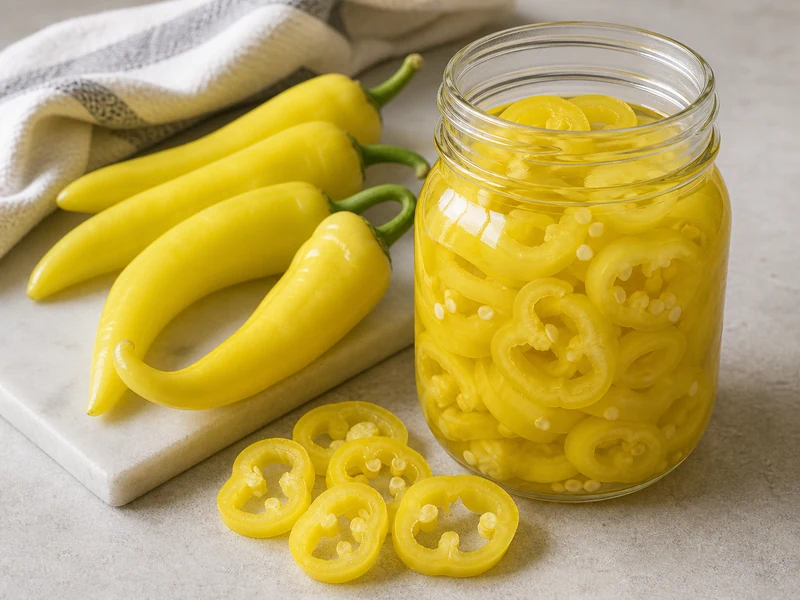
The Nutrition Behind Banana Pepper
Banana peppers are a low-calorie vegetable, but exact nutrition numbers vary by cultivar, serving size, raw versus pickled form, and USDA database entry. Use FoodData Central or a product label for precise calories, sodium, and vitamin values instead of treating a generic web number as universal.
The most relevant nutrition distinction is heat chemistry. At 0-500 SHU, sweet banana peppers contain only trace practical capsaicin compared with hotter peppers. If you are reading about capsaicin-specific effects, use the capsaicin-specific heat chemistry and do not assume a mild pickled banana pepper provides the same dose as jalapeno or habanero.
Pickled banana peppers can add significant sodium because the brine carries salt. For routine use, the practical serving context is simple: fresh rings add crunch and vitamin-rich pepper flavor. Pickled rings add acidity and salt. Neither form should be framed as a medical treatment.
Best Ways to Cook with Banana Peppers
Pickling is the banana pepper's strongest kitchen role. The National Center for Home Food Preservation publishes a tested yellow pepper rings formula that explicitly includes yellow banana peppers and uses 5% vinegar for water-bath processing. For a full full process, use the pickled banana peppers guide or the broader peppers for pickling hub.
Fresh banana peppers work best where crunch and acidity help the dish: sandwiches, hoagies, salads, pizza, eggs, grain bowls, and slaws. Slice them thin when raw. If the pods have ripened orange or red, expect a sweeter, softer bite and less of the sharp yellow snap.
For cooking, treat banana pepper as a thin-walled mild pepper. It sautees quickly, softens faster than a bell pepper, and loses crunch if baked too long. Small stuffed banana peppers can work, but they are better as snack-size roasted peppers than as big stuffed-pepper shells.
For swaps, mild pepperoncini rings is closest when the dish needs a mild pickled ring. larger cubanelle frying peppers is better when you need a larger frying pepper. jalapeno heat changes the job because it brings more heat, while long hot Italian pepper pushes the dish much spicier. See banana pepper vs cubanelle, banana pepper vs jalapeno, and banana pepper vs Italian pepper before swapping by shape alone.
Buying & Storing Banana Pepper
Buy fresh banana peppers that feel firm, glossy, and heavy for their size. Pale yellow to bright yellow pods usually give the classic tangy snap. Orange or red pods are more mature and usually sweeter, but they may be softer. Avoid wet dark spots, wrinkled skin, and collapsed stems.
Store fresh peppers unwashed in the refrigerator crisper and use them within about a week for best texture. Wash only before cutting. If you slice them in advance, keep them covered and refrigerated, then use them quickly because thin walls dry out faster than bell pepper strips.
Refrigerator quick pickles are not shelf-stable. For pantry storage, use a tested acidified canning process such as the National Center for Home Food Preservation yellow pepper rings method. Opened commercial jars should follow the label and stay refrigerated after opening.
Freezing is useful for cooked dishes, not raw crunch. Slice or chop the peppers, freeze them on a tray, then move them to a freezer bag. The texture softens after thawing, so frozen banana peppers belong in eggs, sauces, soups, and sauteed dishes rather than fresh sandwiches.
Dried form: Banana peppers are normally used fresh or pickled. They do not have a standard dried market name like ancho or chipotle.
Swaps & Substitutes for Banana Pepper
Compare substitutes for Banana Pepper by form, flavor, and heat before choosing a ratio. Measured adjustments must account for the dish and the concentration of the replacement.
Direct comparisons show where flavor, form, and preparation differ in the Banana Pepper vs Jalapeno and Banana Pepper vs Pepperoncini matchups.
How to Grow Banana Peppers
Grow sweet banana peppers with the same warm-season rules used for other C. annuum peppers. University of Minnesota Extension recommends starting pepper seed about eight weeks before outdoor planting and transplanting after nighttime lows are above 50 degrees F. Warm soil and steady moisture matter more than heavy fertilizer.
Choose seed or starter plants labeled sweet banana if your goal is mild pickling rings. Hot banana, Hungarian wax, and mixed wax-pepper seed can look close at the seedling stage, so tag plants early if you grow more than one yellow wax type. For seed-starting workflow, use the grow peppers from seed guide.
A hot fruit on a plant sold as sweet banana pepper is not proof that today's flower cross-pollinated into a hot fruit. Cross-pollination mainly matters when saved seed is planted in a later generation. For a current-season surprise, first suspect a hot cultivar, mislabeled plant, or seed lot that did not stay true. Keep pest and disease scouting practical with the pepper pests and diseases guide.
Banana Pepper FAQ


- Ask Extension - sweet banana peppers are hot?
- National Center for Home Food Preservation - Pickled Yellow Pepper Rings
- University of Minnesota Extension - Growing peppers in home gardens
- USDA FoodData Central
- Chile Pepper Institute, New Mexico State University
Species classification: C. annuum - based on published botanical taxonomy.