
Poblano vs Anaheim: What's the Difference?
Poblano and Anaheim peppers share the same species and overlapping SHU ranges, yet they taste and cook quite differently. Poblanos bring an earthy depth that makes them essential to Mexican cuisine, while Anaheims offer a sweeter, milder profile suited to Southwestern American cooking. Knowing which to reach for depends less on heat and more on flavor direction.

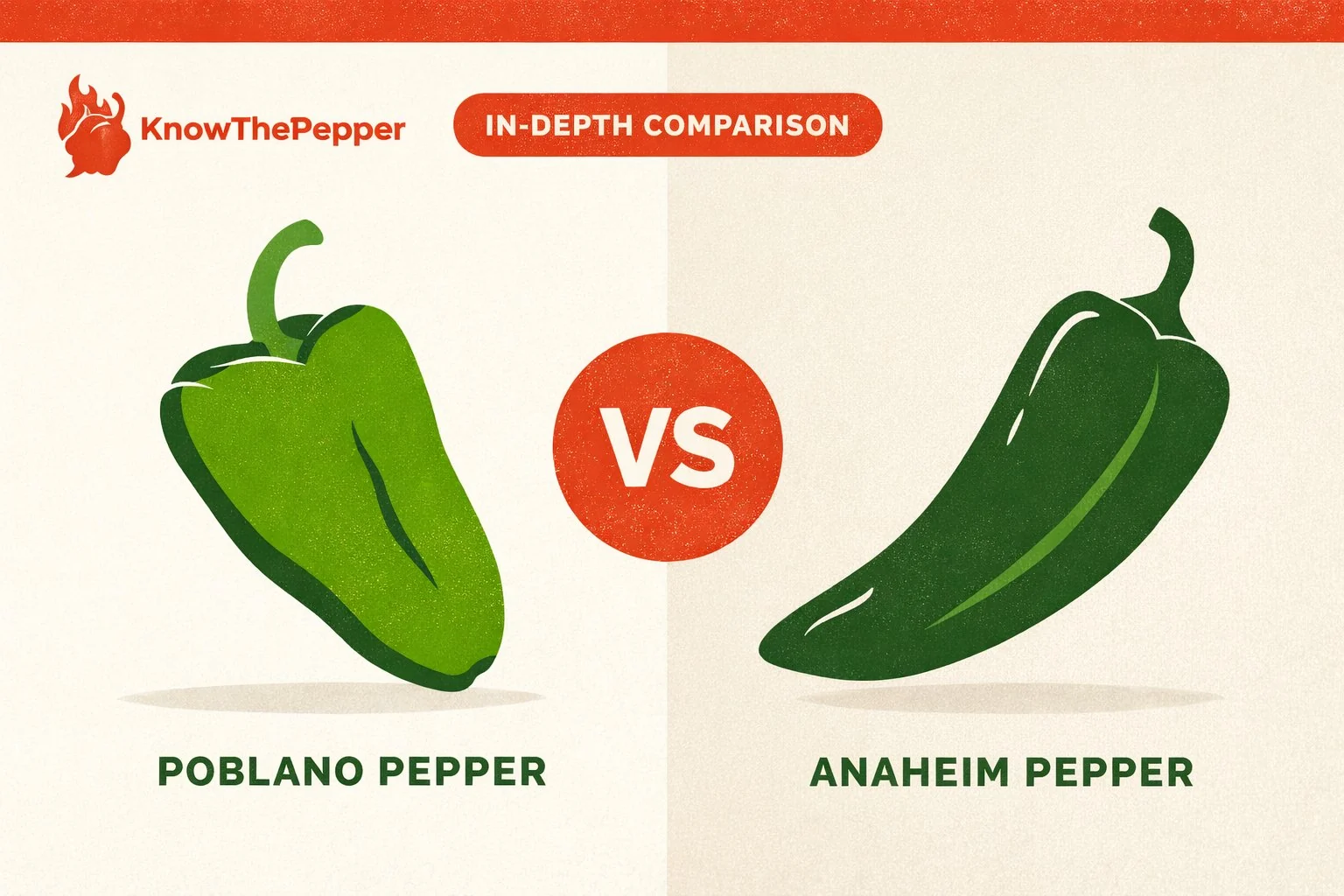
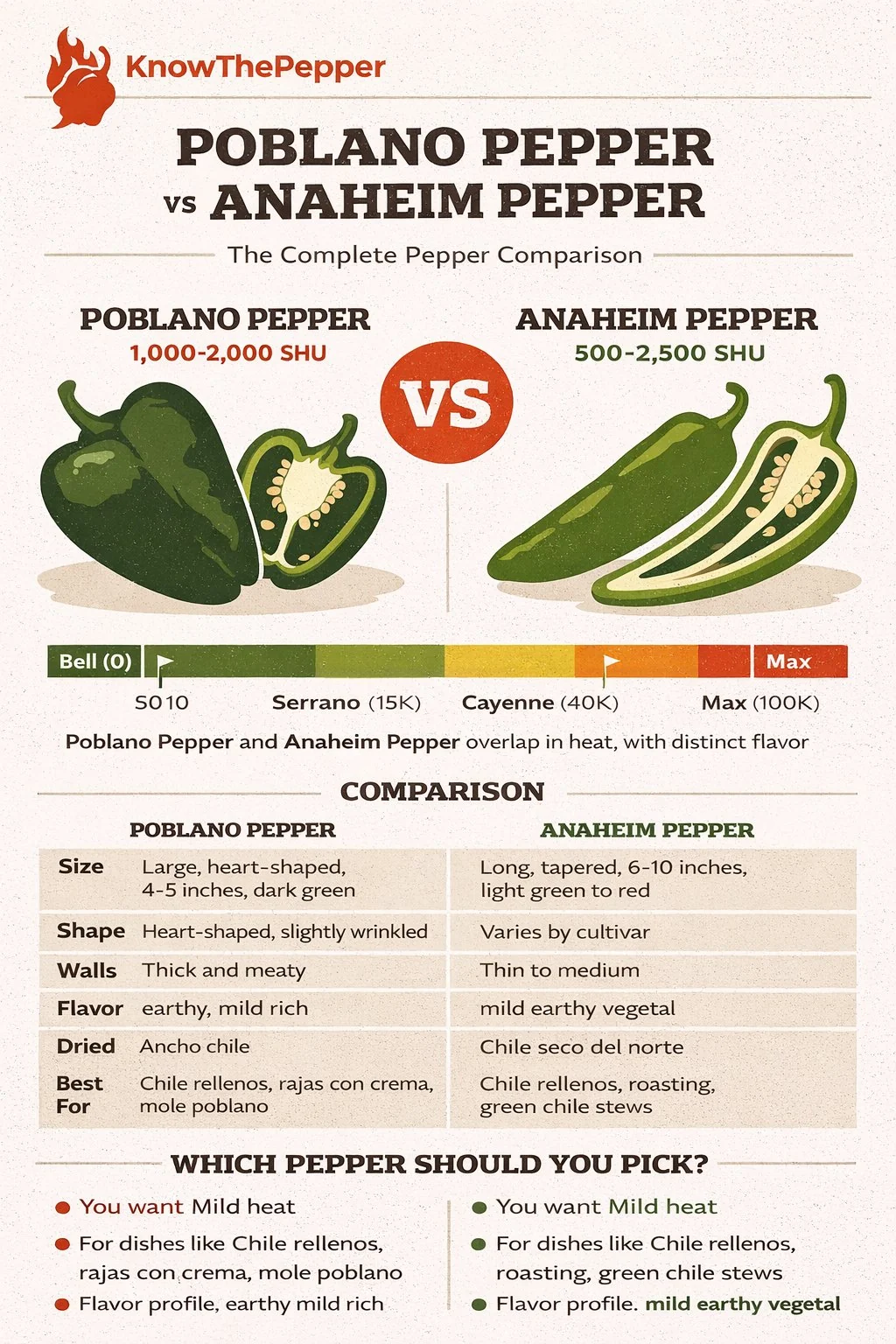
Poblano Pepper measures 1K–2K SHU while Anaheim Pepper registers 500–3K SHU — roughly equal in heat. Poblano Pepper is known for its earthy and rich flavor (C. annuum), while Anaheim Pepper offers mild and sweet notes (C. annuum).
- Species: Both are C. annuum
- Best for: Poblano Pepper excels in everyday cooking and salsas, Anaheim Pepper in fresh salsas and mild recipes
Poblano Pepper
MediumAnaheim Pepper
MediumPoblano Pepper vs Anaheim Pepper Comparison
Poblano Pepper vs Anaheim Pepper Heat Levels
Both peppers sit in the mild-to-medium SHU zone — roughly 500-2,500 SHU combined — but they arrive there differently. The poblano clocks in at 1,000-2,000 SHU, a fairly consistent band. Anaheims run 500-2,500 SHU, meaning the mildest Anaheim is half as hot as the mildest poblano, yet the hottest Anaheim can edge past it.
For reference against a serrano (typically 10,000-23,000 SHU), both of these peppers look tame — a mid-range poblano is roughly 8-10 times milder than a serrano, and a mid-range Anaheim sits even further back at 12-15 times milder. Neither pepper is going to challenge anyone who regularly eats salsas.
The practical heat difference between them is small enough that most palates won't notice in a cooked dish. Where it matters is in raw preparations: a fresh Anaheim eaten out of hand is noticeably gentler, almost sweet, while a raw poblano carries a faint pepper bite that lingers. Check the Scoville measurement index if you want to map these against hundreds of other varieties — the overlap between these two is genuinely unusual for peppers with such different culinary identities.
Capsaicin distribution also differs. Poblanos concentrate heat near the seed cavity; Anaheims spread it more evenly through the flesh. That means a well-seeded poblano can drop considerably in heat, making it even milder in finished dishes like chiles rellenos.
Flavor Profile Comparison
Pick up a fresh poblano and the first thing you notice is the weight.
At 500–2,500 SHU, the Anaheim sits at the gentler end of the medium heat peppers category — closer to a bell pepper in burn than anything that'll make you reach for milk.
Heat numbers tell only part of the story here. The flavor gap between these two peppers is actually wider than the heat gap.
Poblanos taste earthy, almost chocolatey when roasted, with a grassy undertone that deepens under dry heat. That complexity is why Mexican cooks prize them — a roasted, peeled poblano has a flavor that stands on its own, not just as a vehicle for fillings. The skin is thicker and waxy, which means roasting and peeling is nearly mandatory for most preparations; the raw flesh can taste slightly vegetal and bitter.
Anaheim peppers lean sweet and clean. Fresh, they taste like a more flavorful bell pepper — crisp, mild, with a gentle pepper aroma. Roasted, they soften and sweeten further without developing the same earthy depth poblanos produce. The thinner skin means they can be used raw in salads or salsas without the roasting step that poblanos almost always require.
Aroma is another point of divergence. Slice a fresh poblano and you get a green, grassy scent with an herbal edge. Anaheims smell lighter, closer to a sweet pepper. In slow-cooked dishes like soups or braises, poblanos release more complexity into the liquid; Anaheims contribute mild sweetness without dominating.
For dishes where pepper flavor is the star — mole, rajas, chiles en nogada — the poblano's depth is irreplaceable. For dishes where pepper serves as a mild backdrop, Anaheim's clean profile keeps it from competing with other flavors.
Culinary Uses for Poblano Pepper and Anaheim Pepper
These peppers have carved out distinct culinary territories, though they can pinch-hit for each other in a pinch.
Poblano's home territory is traditional Mexican cooking. Chiles rellenos — roasted, peeled, stuffed with cheese or picadillo and fried in egg batter — are built around the poblano's size and flavor. Rajas (roasted strips in cream sauce) depend on that earthy depth. Mole poblano, one of Mexico's most complex sauces, uses dried poblanos (called anchos) as a backbone. If you're cooking dishes from Mexican culinary tradition, the poblano is often non-negotiable.
Dried, the poblano becomes the ancho chile — a staple in red chile sauces, enchilada bases, and adobo marinades. This drying transformation intensifies the earthy, slightly fruity character and makes anchos one of the most versatile dried chiles available.
Anaheim peppers dominate Southwestern American cooking, particularly dishes from New Mexico and California. They're the default pepper in green chile stew, huevos rancheros variations, and roasted green chile sauces. Their mild sweetness makes them ideal for stuffing when you want a pepper that won't overshadow delicate fillings. They're also easier to use raw — diced into salsas, layered into sandwiches, or added fresh to grain bowls.
For substitution: use poblanos in place of Anaheims when you want more flavor complexity, accepting a slightly thicker flesh. Go the other direction — Anaheim for poblano — when you need a milder, sweeter result or when the dish benefits from a thinner-walled pepper. In stuffed preparations, the size difference matters: poblanos are wider and hold more filling. A 1:1 swap by count works for most cooked dishes, though you may need two Anaheims to match one stuffed poblano.
Both peppers shine in roasted pepper preparations where starting from fresh-grown fruit makes a real difference in flavor.
Which Should You Choose?
Pick a poblano when flavor complexity is the goal. Roasted and peeled, it brings an earthy richness that no other mild pepper replicates — essential for authentic chiles rellenos, rajas, or any preparation where the pepper itself needs to carry weight. The heat-and-flavor side-by-side of jalapeño vs. poblano shows how the poblano holds its own even against spicier competition on flavor grounds.
Choose an Anaheim when you want mild, sweet pepper flavor without the prep work. They're faster to use raw, take less effort to peel after roasting, and suit dishes where pepper is a supporting player rather than the lead.
For comparing the Hatch chile's regional heat character against the poblano's earthiness, the differences become even sharper — Hatch chiles can run considerably hotter. And if you're wondering how either stacks up against something even milder, the bell pepper's zero-heat profile versus the poblano's subtle bite makes for a useful reference point.
Both belong in a well-stocked kitchen. They are not interchangeable — they are complementary.
Can You Substitute One for the Other?
Yes — direct substitution works. Poblano Pepper and Anaheim Pepper are close enough in heat to swap at roughly 1:1. The main difference will be flavor. For more swap options, explore ranked alternatives with conversion ratios.
Growing Poblano Pepper vs Anaheim Pepper
If you’re deciding which pepper to grow at home, consider your climate and patience level. Poblano Pepper and Anaheim Pepper have different maturation times and temperature preferences. Hotter varieties generally need a longer, warmer growing season to develop their full capsaicin content. Our zone-based planting date tool can pinpoint the best sowing window for your area.
Poblanos are rewarding garden plants, but they need a long season. Start seeds indoors 10-12 weeks before your last frost date — this is one case where rushing transplant time costs you yield.
For a full breakdown of seed-starting methods and timing, the complete pepper growing guide covers everything from soil mix to hardening off. Poblanos specifically want consistent moisture — irregular watering leads to blossom end rot and cracked fruit.
Transplant into full sun once nighttime temps stay above 55°F. Space plants 18-24 inches apart; they can reach 3 feet tall with good conditions.
Anaheims are among the more forgiving chiles to grow, though they still need warm conditions to produce well. Start seeds indoors 8–10 weeks before last frost.
Transplant outdoors after all frost risk has passed, spacing plants 18–24 inches apart. They prefer full sun and well-drained soil with consistent moisture.
Plants reach 24–36 inches tall and begin producing pods around 75–80 days after transplant. Green pods are ready to harvest when they reach full size; leave them longer for red-ripe fruit.
History & Origin of Poblano Pepper and Anaheim Pepper
Both peppers carry centuries of culinary heritage. Poblano Pepper traces its roots to Mexico, while Anaheim Pepper originates from USA. Understanding their backstory helps explain why each pepper developed its distinctive traits.
Buying & Storage
Whether you’re shopping for Poblano Pepper or Anaheim Pepper, the same quality indicators apply. Fresh peppers should feel firm and heavy for their size, with taut, glossy skin and no soft or wet spots. Minor stem cracks known as “corking” are perfectly normal and often indicate a mature, flavorful pod.
- Firm pods with taut skin and consistent color
- Should feel heavy relative to size
- Minor stem cracks (“corking”) are normal
- Avoid anything soft, shriveled, or with dark wet spots
- Fresh: Paper bag, crisper drawer — 1–2 weeks
- Frozen: Wash, dry, freeze on sheet pan — 6+ months
- Dried: Airtight, away from light — up to 1 year
The Verdict: Poblano Pepper vs Anaheim Pepper
Poblano Pepper and Anaheim Pepper sit in the same heat tier but serve different roles. Anaheim Pepper delivers its distinctive mild and sweet character. Poblano Pepper, with its earthy and rich profile, excels in everyday cooking.
Frequently Asked Questions
Related Comparisons
Sources pending verification.
