Piri Piri vs Cayenne: Heat, Flavor & Key Differences
Piri piri and cayenne are both workhorses of the hot sauce world, but they sit in surprisingly different positions. Piri piri ranges from 50,000-175,000 SHU - potentially more than three times hotter than cayenne's 30,000-50,000 SHU ceiling - and brings a citrusy brightness that cayenne simply doesn't have. The choice between them shapes a dish in ways that go well beyond just dialing heat up or down.

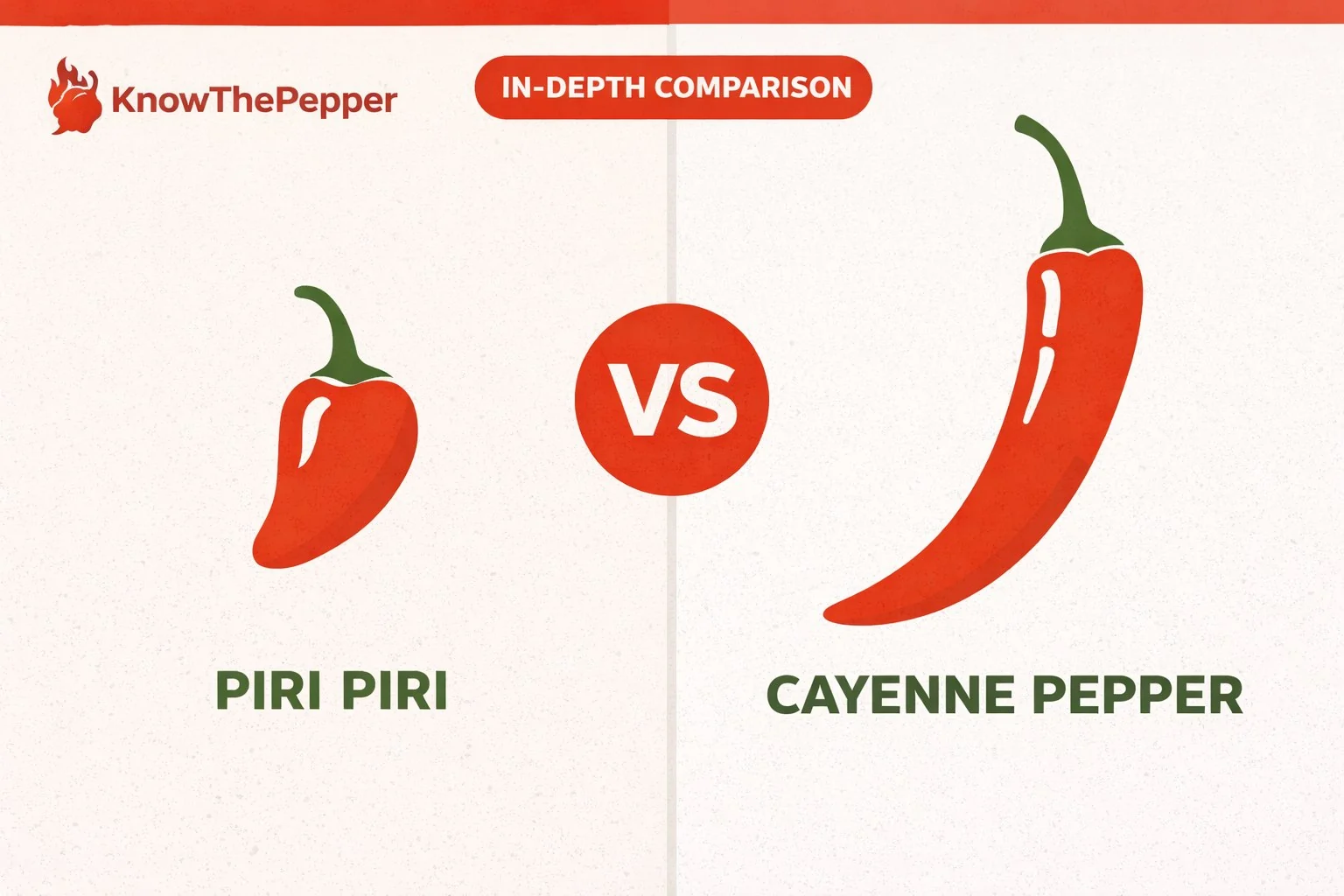
Piri Piri Pepper measures 50K–175K SHU while Cayenne Pepper registers 30K–50K SHU — making Piri Piri Pepper 4× hotter. Piri Piri Pepper is known for its fruity, citrusy, bright flavor (C. frutescens), while Cayenne Pepper offers neutral and peppery notes (C. annuum).
- Heat difference: Piri Piri Pepper is 4× hotter
- Species: C. frutescens vs C. annuum
- Best for: Piri Piri Pepper excels in hot sauces and extreme dishes, Cayenne Pepper in fresh salsas and mild recipes
Piri Piri Pepper
Extra-HotCayenne Pepper
HotPiri Piri Pepper vs Cayenne Pepper Comparison
Piri Piri Pepper vs Cayenne Pepper Heat Levels
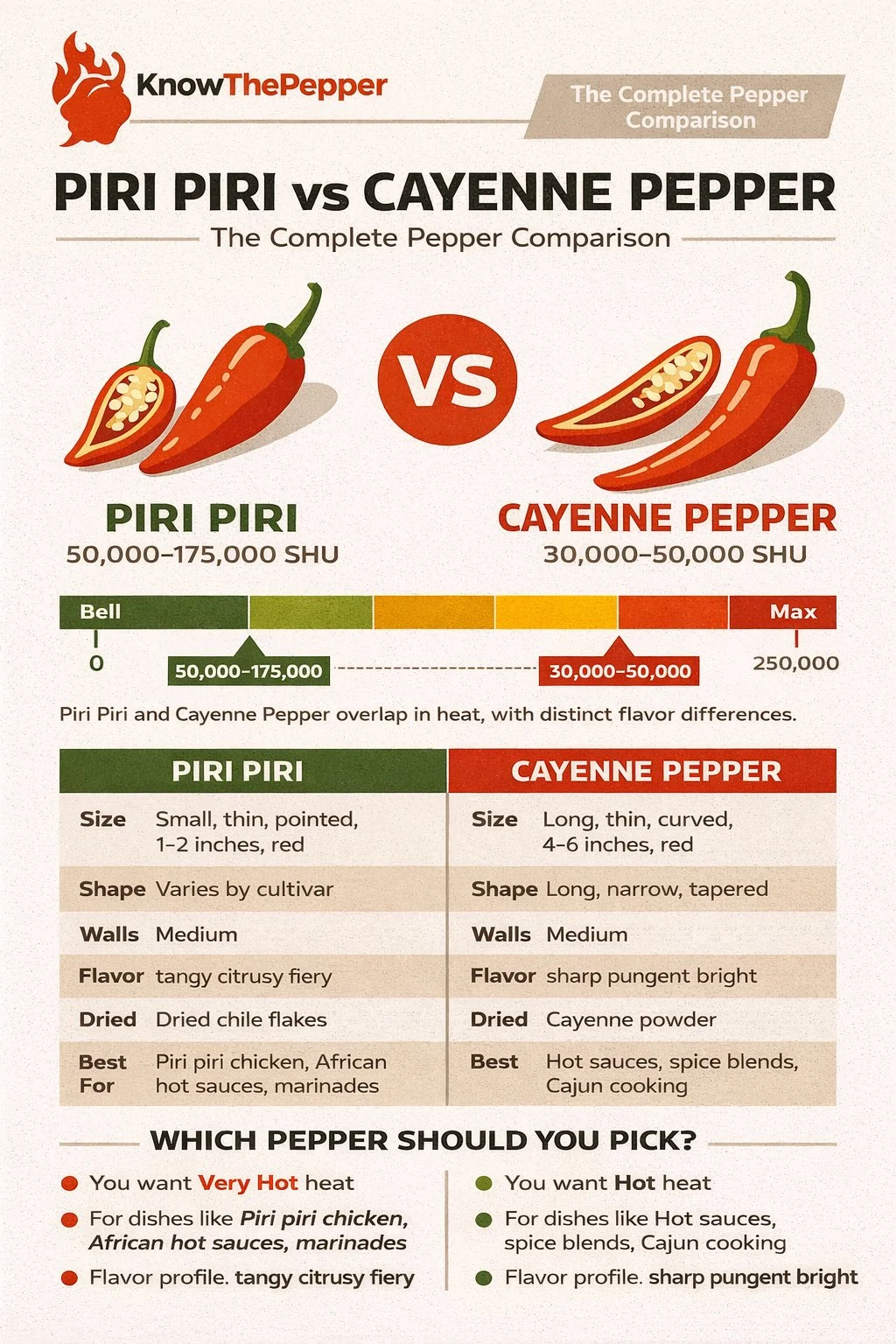
The numbers tell part of the story. Cayenne lands in a fairly consistent 30,000-50,000 SHU band, sitting comfortably in the peppers classified in the hot heat tier alongside serranos and tabasco peppers. A jalapeño averages around 5,000 SHU, which makes cayenne roughly 6-10 times hotter than a typical jalapeño.
Piri piri plays a different game entirely. Its floor of 50,000 SHU already matches cayenne's ceiling, and it can climb to 175,000 SHU - about 35 times hotter than a jalapeño at its peak. That upper range puts piri piri in striking distance of habanero territory, which surprises a lot of people who assume it's just another mid-level hot pepper.
The heat character differs too. Cayenne delivers a clean, linear burn that hits the front of the mouth and fades predictably - one reason it's been a go-to for standardized hot sauces for decades. Piri piri's burn is more complex: it builds, lingers, and has a brightness to it that feels almost acidic before the heat settles in.
Both peppers contain capsaicin and dihydrocapsaicin as their primary heat compounds - the molecular structure of capsaicin binds to TRPV1 receptors in the same way for both, but the ratio of compounds and the presence of other volatile compounds in piri piri create a noticeably different sensory experience. Cayenne is predictable. Piri piri keeps you guessing.
Flavor Profile Comparison
Here's the misconception worth clearing up first: piri piri (also spelled peri peri) refers to an actual pepper before it refers to any sauce or spice blend.
Few peppers have traveled as far or worked as hard as cayenne.
Cayenne's flavor profile is almost deliberately neutral. It contributes dry, peppery heat without much fruit, sweetness, or acidity - which is exactly why it became the default spice-cabinet pepper for so many cuisines. You're adding fire without changing the flavor direction of a dish. That restraint is genuinely useful.
Piri piri is a different animal. Grown across Southern Africa's pepper-growing regions, it carries a fruity, citrusy brightness that punches through sauces and marinades. There's a tartness to it - almost like a squeeze of lemon got baked into the pepper itself. That flavor comes partly from the pepper's high volatile oil content and partly from the C. frutescens species characteristics that also define tabasco peppers.
Cayenne, by contrast, belongs to C. annuum - the annuum botanical species that includes bell peppers, paprika, and most garden-variety chiles. The species tends toward drier, more straightforward flavor profiles.
In practical terms: if you're making a Portuguese-style piri piri chicken, cayenne is a poor substitute because you lose that citrus-forward brightness that defines the dish. But if you're adding heat to a chili or dry rub where neutrality is an asset, cayenne earns its place. The aroma difference is also notable - dried piri piri has a sharper, fruitier smell than cayenne powder, which is earthier and more muted.
Culinary Uses for Piri Piri Pepper and Cayenne Pepper
Cayenne's neutrality makes it one of the most versatile peppers in any kitchen. It disappears into spice blends, soups, and dry rubs, adding heat without announcing itself. A standard substitution ratio when you need more fire: 1 teaspoon cayenne = 1/4 teaspoon of a hotter pepper powder. It's the backbone of Creole seasoning, a key player in kimchi pastes, and the default heat source in countless hot sauces.
For a useful side-by-side on how cayenne stacks up against similar peppers in cooking applications, the serrano vs cayenne heat and flavor breakdown is worth reading - serranos share cayenne's clean heat profile but bring more vegetal character.
Piri piri thrives in wet applications - marinades, sauces, and brines where its citrusy flavor can bloom. The classic piri piri chicken marinade uses the whole pepper (or piri piri sauce) with olive oil, garlic, and lemon; the pepper's natural acidity does real work here. In dried or powdered form, piri piri adds complexity to grilled meats and seafood that cayenne powder can't replicate.
Substituting one for the other requires adjustment. Replacing piri piri with cayenne means adding a small amount of lemon zest or citric acid to approximate the brightness. Going the other direction - using piri piri where cayenne is called for - requires cutting the quantity by 30-50% given the heat gap, and accepting that the dish will taste noticeably different.
The Thai chili vs cayenne comparison is useful context here too - Thai chilis share some of piri piri's fruity intensity and show how peppers in the same heat range can behave completely differently in cooking.
Both peppers dry and powder well. Cayenne powder is widely available and consistent; piri piri powder is less common in North American markets but worth seeking out for grilling applications.
Which Should You Choose?
The right choice depends entirely on what you're building.
For neutral heat - spice blends, dry rubs, anything where you want fire without flavor interference - cayenne is the cleaner tool. Its consistency across batches and its wide availability make it the practical default.
For flavor-forward heat - marinades, hot sauces, grilled meats - piri piri delivers something cayenne can't. That citrusy brightness is a genuine flavor contribution, not just a heat delivery mechanism.
Heat tolerance matters too. Cayenne's 30,000-50,000 SHU is manageable for most people who cook with hot peppers regularly. Piri piri's 50,000-175,000 SHU range means you need to know your source - a mild piri piri and a hot one are essentially different peppers.
The cayenne vs jalapeño heat gap is a useful reference point for calibrating where you sit on the heat spectrum before committing to piri piri. Both peppers deserve a place in the cabinet - they just don't do the same job.
Can You Substitute One for the Other?
Proceed with caution. Piri Piri Pepper is 4× hotter than Cayenne Pepper.
Need a different option altogether? Search for peppers that match your target heat and flavor with precise swap ratios.
Growing Piri Piri Pepper vs Cayenne Pepper
If you’re deciding which pepper to grow at home, consider your climate and patience level. Piri Piri Pepper and Cayenne Pepper have different maturation times and temperature preferences. Hotter varieties generally need a longer, warmer growing season to develop their full capsaicin content. Our zone-based planting date tool can pinpoint the best sowing window for your area.
Capsicum frutescens varieties run warmer and take longer than most annuums, so starting seeds indoors 10-12 weeks before last frost isn't optional - it's necessary in most climates. Germination is slower and less predictable than with C.
Transplant after all frost risk has passed into full sun with well-draining soil. Piri piri plants grow compact but bushy, typically reaching 2-3 feet in height.
If your pepper leaves are turning brown mid-season, check for both nutrient deficiency and overwatering before assuming disease. **C.
Cayenne is one of the more forgiving hot peppers to grow, which explains its global reach. Start seeds indoors 8-10 weeks before last frost.
For practical guidance on growing cayenne from transplant to harvest, the key variables are consistent heat and full sun. Cayenne wants at least 6-8 hours of direct light daily and struggles in cool, wet summers.
Transplant outdoors once nighttime temps stay above 55°F. Space plants 18-24 inches apart.
History & Origin of Piri Piri Pepper and Cayenne Pepper
Both peppers carry centuries of culinary heritage. Piri Piri Pepper traces its roots to Mozambique / Southern Africa, while Cayenne Pepper originates from French Guiana. Understanding their backstory helps explain why each pepper developed its distinctive traits.
Buying & Storage
Whether you’re shopping for Piri Piri Pepper or Cayenne Pepper, the same quality indicators apply. Fresh peppers should feel firm and heavy for their size, with taut, glossy skin and no soft or wet spots. Minor stem cracks known as “corking” are perfectly normal and often indicate a mature, flavorful pod.
- Firm pods with taut skin and consistent color
- Should feel heavy relative to size
- Minor stem cracks (“corking”) are normal
- Avoid anything soft, shriveled, or with dark wet spots
- Fresh: Paper bag, crisper drawer — 1–2 weeks
- Frozen: Wash, dry, freeze on sheet pan — 6+ months
- Dried: Airtight, away from light — up to 1 year
The Verdict: Piri Piri Pepper vs Cayenne Pepper
Piri Piri Pepper and Cayenne Pepper occupy very different positions on the heat spectrum. Piri Piri Pepper delivers 4× more heat with its distinctive fruity, citrusy, bright character. Cayenne Pepper, with its neutral and peppery profile, excels in everyday cooking.
Frequently Asked Questions
Related Comparisons
Sources pending verification.