Habanero vs Manzano Pepper: Side-by-Side Pepper Comparison
The habanero and manzano are two very different peppers that share almost nothing except their status as capsicum species. Habaneros clock in at 100,000-350,000 SHU with tropical fruit heat, while the manzano (Capsicum pubescens) is a thick-walled, apple-shaped pepper from high-altitude Andean growing regions with a comparatively mild, fruity character. If you're choosing between them, you're essentially choosing between fire and flavor.

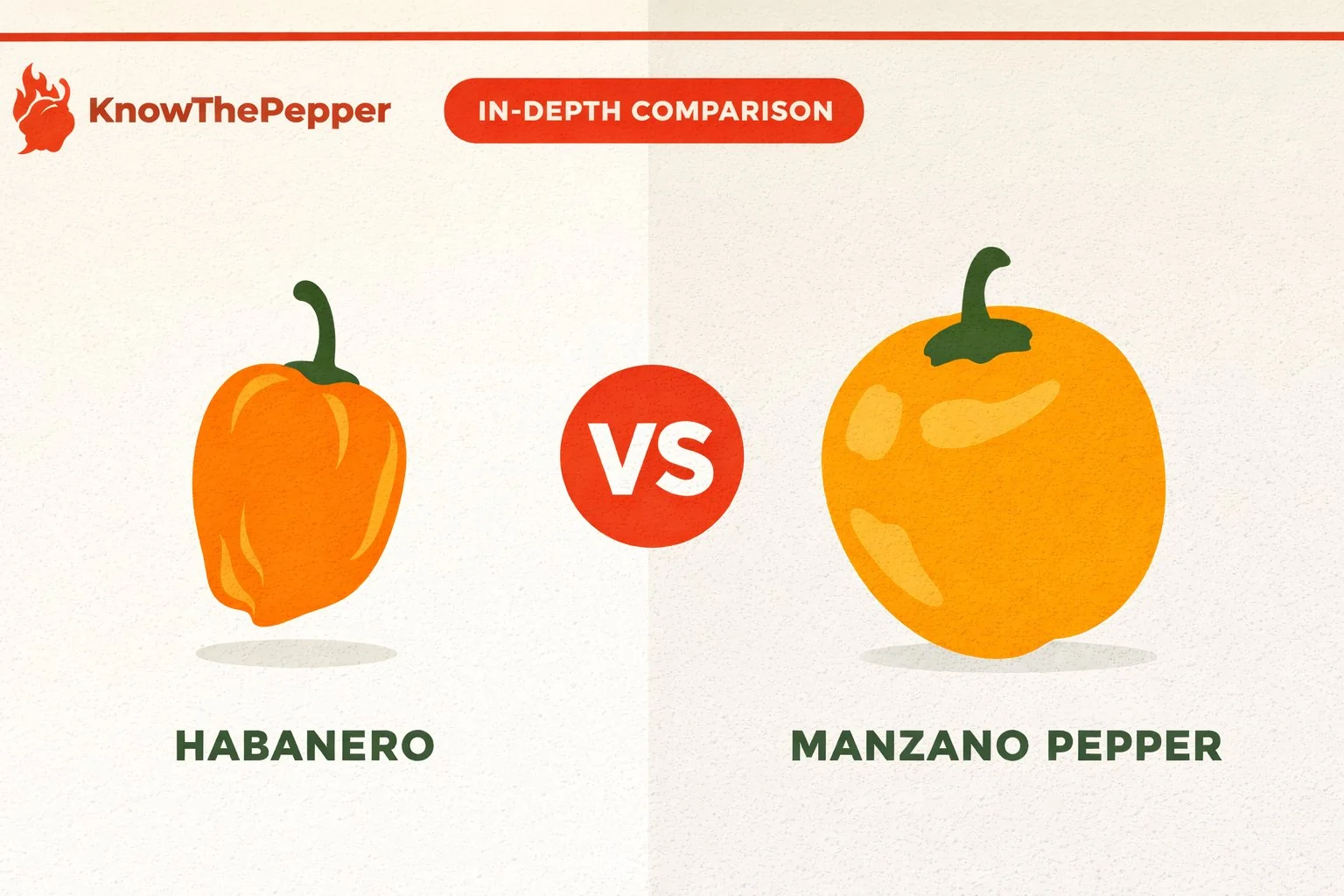
Habanero measures 100K–350K SHU while Manzano Pepper registers 12K–30K SHU — making Habanero 12× hotter. Habanero is known for its fruity and citrusy flavor (C. chinense), while Manzano Pepper offers fruity and apple-like notes (C. pubescens).
- Heat difference: Habanero is 12× hotter
- Species: C. chinense vs C. pubescens
- Best for: Habanero excels in hot sauces and extreme dishes, Manzano Pepper in fresh salsas and mild recipes
Habanero
Extra-HotManzano Pepper
HotHabanero vs Manzano Pepper Comparison
Habanero vs Manzano Pepper Heat Levels
The habanero sits firmly in the extra-hot SHU intensity zone at 100,000-350,000 Scoville Heat Units - a range so wide it reflects just how much growing conditions affect final heat. To put that in serrano terms, a habanero can run 10 to 28 times hotter than a typical serrano, which tops out around 23,000 SHU. That's not a small gap.
The manzano pepper (Capsicum pubescens) is a genuinely different beast. Most sources place it in the 12,000-30,000 SHU range - hotter than a jalapeño but well within the medium-heat zone. Compared to a serrano, a manzano is roughly equivalent or slightly above, not the multiplied intensity you get from habanero. The chemistry behind how capsaicin binds to pain receptors explains why habanero's heat hits differently - it's not just volume, it's the rate of onset and the lingering quality of the burn.
Habanero heat builds fast and sits on the back of the throat. Manzano heat is more immediate and fades faster - the thick flesh and different capsaicin distribution create a cleaner, more manageable experience. For cooks who want noticeable heat without the sustained punishment that habanero delivers, manzano occupies a genuinely useful middle ground. For anyone chasing serious fire, manzano won't get you there.
Flavor Profile Comparison
Few peppers balance heat and flavor as well as the habanero.
The manzano pepper carries a secret most shoppers miss entirely: those distinctive black seeds mark it as [C.
Habanero flavor is one of the most recognizable in the pepper world - bright citrus, tropical fruit (think apricot and peach undertones), and a floral note that comes through even in cooked applications. That fruity character isn't just pleasant on its own; it's what makes habanero work so well in fruit-based hot sauces and Caribbean-style marinades. The fruity citrus profile of the habanero is distinctive enough that experienced cooks can identify it blind.
Manzano pepper flavor is also fruit-forward, but the reference points are different - more apple and berry, less tropical. The name itself means 'apple' in Spanish, and the comparison holds up. The flesh is thick and juicy, with a sweetness that comes through when the pepper is ripe (typically orange or yellow). The aroma is milder than habanero, less assertive, and the overall effect is closer to a fruity poblano-style experience than the punchy tropical blast of habanero.
Cooking transforms both peppers differently. Habanero's volatile aromatics dissipate somewhat with heat, but the burn intensifies in concentrated sauces. Manzano holds up beautifully when roasted - the thick walls char without collapsing, and the sweetness deepens. Raw manzano in salsas delivers a crisp, apple-adjacent freshness that habanero simply cannot replicate at its heat level. These are not interchangeable flavor profiles, and substituting one for the other requires real adjustment.
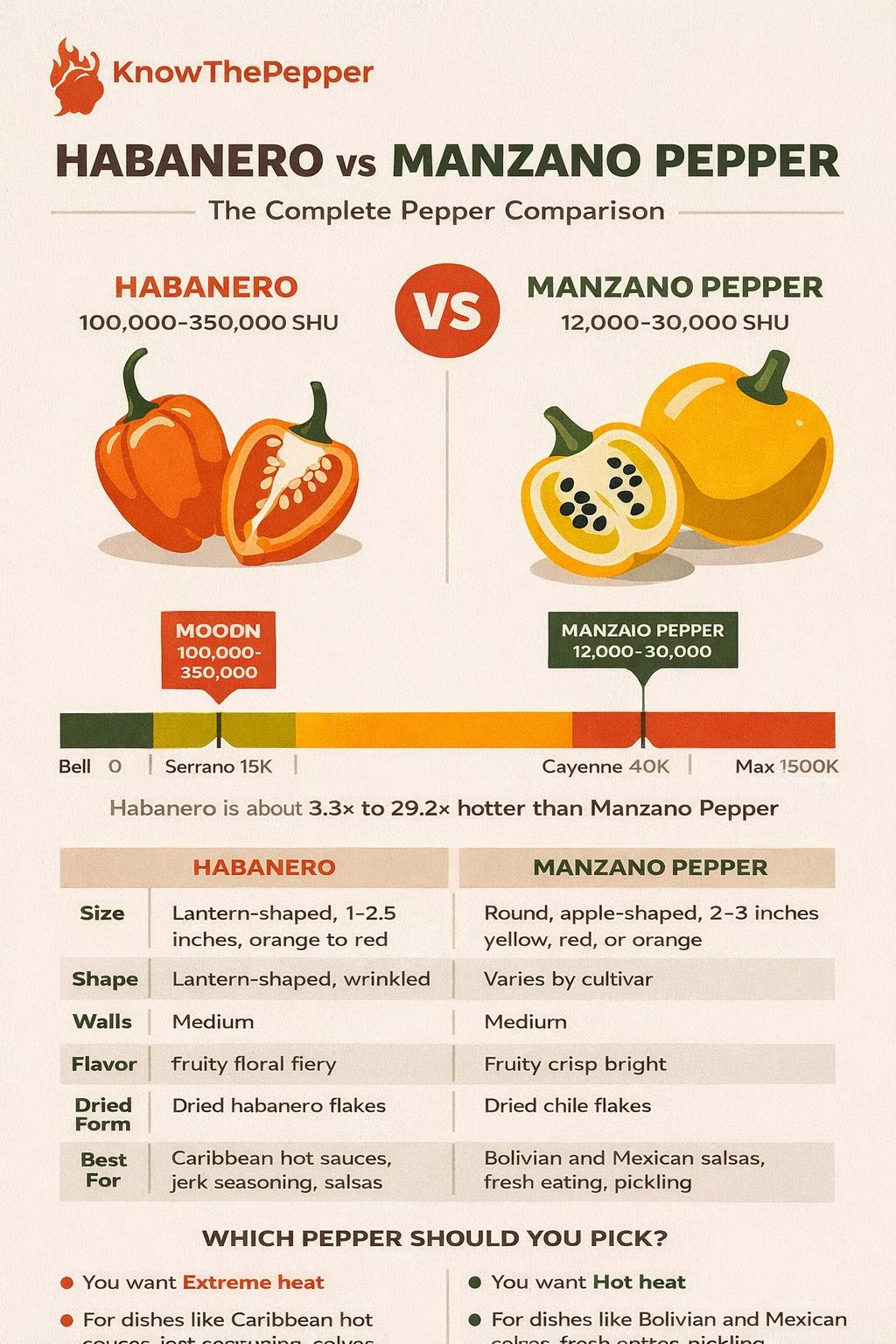
Culinary Uses for Habanero and Manzano Pepper
Habanero excels anywhere you want both serious heat and tropical fruit character working together. Classic applications include Caribbean-style habanero hot sauce recipes, mango-habanero glazes for grilled proteins, and Yucatecan salsas like xni-pec. A little goes a long way - even half a habanero can dominate a dish meant for four people. When using habanero raw, remove seeds and membranes unless you want maximum heat; the fruit flavor concentrates in the flesh itself.
Manzano pepper shines in high-altitude Mexican and Andean cooking traditions where it's most at home. Roasted and peeled, it works beautifully in salsas, stuffed preparations (the thick walls hold fillings well), and fresh table sauces. Because it's Capsicum pubescens - a different species than most common peppers - it has black seeds that are visually striking and often left in for presentation.
Substitution between these two requires heat adjustment. Replacing habanero with manzano means using 3-4 times the volume to approach similar heat, and accepting a flavor shift toward apple-sweetness. Going the other direction - manzano to habanero - use roughly one-quarter the quantity and expect a more aggressive, sustained burn.
For hot sauce work, habanero is the obvious choice if heat is the point. For fresh salsas and roasted preparations where you want fruit flavor with manageable heat, manzano is underused and worth seeking out. The manzano's swap options when it's unavailable typically include rocoto or thick-walled medium-hot peppers rather than habanero, which confirms how different these two peppers really are in practical kitchen terms.
Which Should You Choose?
These peppers serve fundamentally different purposes, and the choice between them is rarely difficult once you know what each delivers.
Choose habanero when heat is a primary goal and you want tropical fruit flavor riding alongside it. It's the right pepper for hot sauces, spicy marinades, and dishes from the broader tradition of Mexican pepper cultivation where intensity is expected. The habanero's swap options when unavailable lean toward scotch bonnets and other C. chinense varieties - the heat family it belongs to.
Choose manzano when you want noticeable but manageable heat with thick, sweet flesh that roasts and stuffs beautifully. It's a better fit for fresh preparations, stuffed pepper dishes, and anyone who finds habanero overwhelming but wants more than jalapeño-level heat.
For a closer look at how habanero stacks up against other high-heat peppers, the reaper-to-habanero heat and flavor gap and the side-by-side heat difference between Bulgarian carrot and habanero are useful reference points.
Can You Substitute One for the Other?
Proceed with caution. Habanero is 12× hotter than Manzano Pepper.
Need a different option altogether? Search for peppers that match your target heat and flavor with precise swap ratios.
Growing Habanero vs Manzano Pepper
If you’re deciding which pepper to grow at home, consider your climate and patience level. Habanero and Manzano Pepper have different maturation times and temperature preferences. Hotter varieties generally need a longer, warmer growing season to develop their full capsaicin content. Our zone-based planting date tool can pinpoint the best sowing window for your area.
Starting habaneros from seed requires patience. Germination takes 10–21 days at soil temperatures of 80–85°F — a heat mat is not optional, it's essential.
Transplant seedlings outdoors only after nighttime temperatures stay consistently above 55°F. Habaneros are frost-intolerant and will stall in cold soil.
Full sun — at least 6–8 hours daily — is non-negotiable. In containers, use a 5-gallon minimum; habaneros develop substantial root systems.
Growing manzano means accepting one fundamental difference from most chili gardening: this plant wants cool temperatures. While Thai chili's fierce compact heat thrives in hot summers, manzano prefers 55-75°F and will struggle above 90°F.
Start seeds indoors 12-14 weeks before transplant - longer than most peppers because pubescens germinates slowly. Soil temperature for germination should be 75-80°F, but once sprouted, keep plants cooler than you would annuum varieties.
The plants grow large - up to 4-5 feet in ideal conditions - and are genuinely perennial in frost-free climates. In USDA zones 9-10, a manzano plant can produce for multiple years if protected from hard freezes.
History & Origin of Habanero and Manzano Pepper
Both peppers carry centuries of culinary heritage. Habanero traces its roots to Mexico, while Manzano Pepper originates from Mexico. Understanding their backstory helps explain why each pepper developed its distinctive traits.
Buying & Storage
Whether you’re shopping for Habanero or Manzano Pepper, the same quality indicators apply. Fresh peppers should feel firm and heavy for their size, with taut, glossy skin and no soft or wet spots. Minor stem cracks known as “corking” are perfectly normal and often indicate a mature, flavorful pod.
- Firm pods with taut skin and consistent color
- Should feel heavy relative to size
- Minor stem cracks (“corking”) are normal
- Avoid anything soft, shriveled, or with dark wet spots
- Fresh: Paper bag, crisper drawer — 1–2 weeks
- Frozen: Wash, dry, freeze on sheet pan — 6+ months
- Dried: Airtight, away from light — up to 1 year
The Verdict: Habanero vs Manzano Pepper
Habanero and Manzano Pepper occupy very different positions on the heat spectrum. Habanero delivers 12× more heat with its distinctive fruity and citrusy character. Manzano Pepper, with its fruity and apple-like profile, excels in everyday cooking.
Frequently Asked Questions
Related Comparisons
Sources pending verification.