Guajillo vs Pasilla: Key Differences Compared
Guajillo and pasilla are two of Mexico's most essential dried chiles, both sitting in the mild-to-medium range but with distinctly different personalities. Guajillo brings a tangy brightness with 2,500-5,000 SHU, while pasilla runs cooler and earthier at 1,000-2,500 SHU. Knowing when to reach for each one separates a decent mole from a transcendent one.

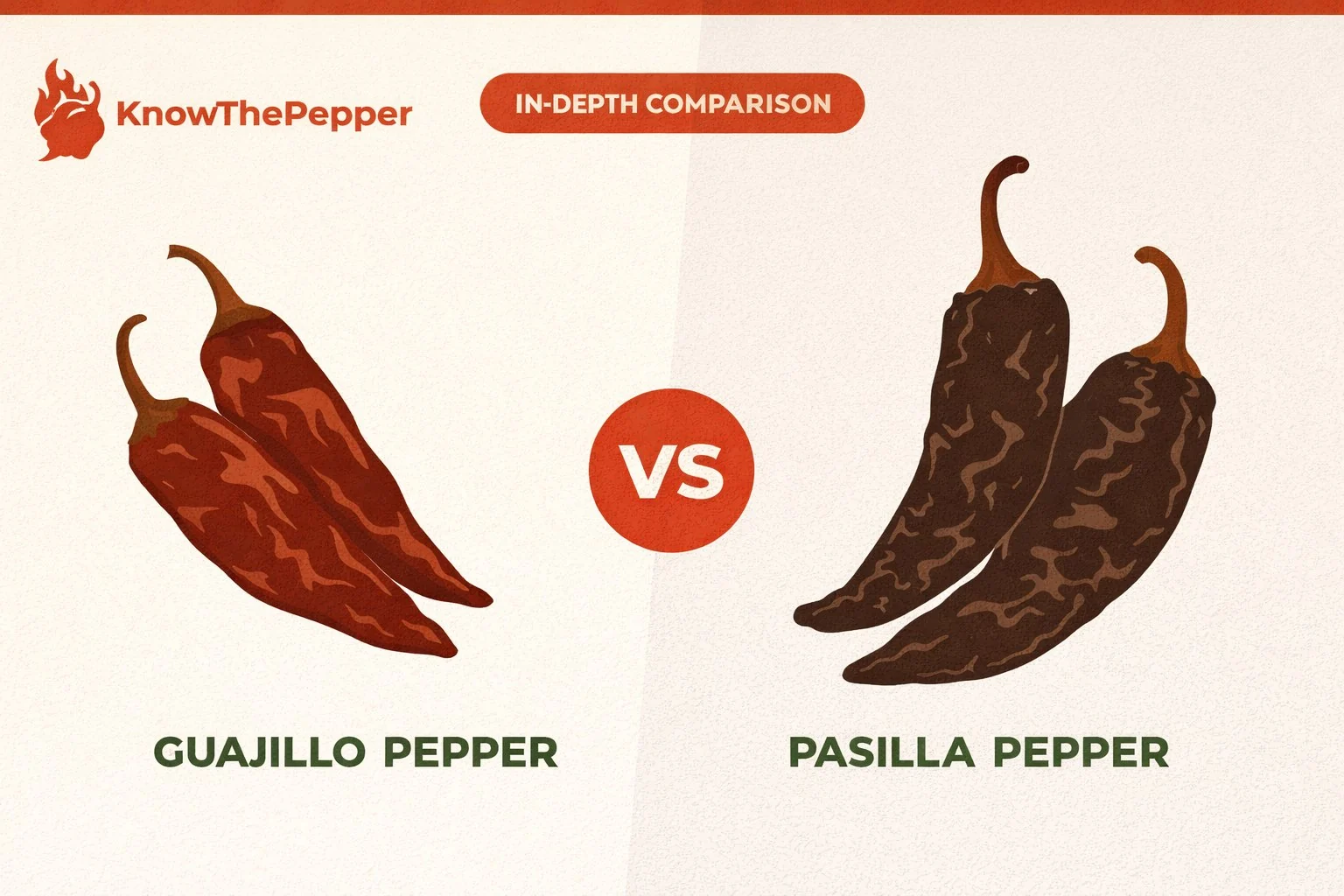
Guajillo Pepper measures 3K–5K SHU while Pasilla Pepper registers 1K–3K SHU — making Guajillo Pepper 2× hotter. Guajillo Pepper is known for its tangy and sweet flavor (C. annuum), while Pasilla Pepper offers earthy and rich notes (C. annuum).
- Heat difference: Guajillo Pepper is 2× hotter
- Species: Both are C. annuum
- Best for: Guajillo Pepper excels in everyday cooking and salsas, Pasilla Pepper in fresh salsas and mild recipes
Guajillo Pepper
MediumPasilla Pepper
MediumGuajillo Pepper vs Pasilla Pepper Comparison
Guajillo Pepper vs Pasilla Pepper Heat Levels
The gap between these two isn't dramatic, but it matters in practice. Pasilla tops out at 2,500 SHU - the same floor where guajillo begins. That means the hottest pasilla you'll encounter is roughly as warm as the mildest guajillo, and a fully ripe, well-dried guajillo can run twice as hot as a typical pasilla.
For context, the mild-to-medium heat position these peppers occupy puts them well below anything that will challenge most eaters. An anaheim pepper sits around 500-2,500 SHU - so even a mild guajillo at 2,500 SHU matches anaheim's upper ceiling, and a hot guajillo at 5,000 SHU runs about twice as intense.
Pasilla's heat tends to build gradually and stay in the mid-palate. There's no sharp front-of-mouth spike - the warmth arrives after a few chews and fades cleanly. Guajillo's heat is more upfront and lingers slightly longer, though neither pepper will leave you reaching for water.
The capsaicin distribution in both follows the standard TRPV1 heat-trigger pathway - concentrated in the placental tissue and seeds, minimal in the flesh itself. Strip the seeds from either dried chile and the heat drops noticeably. Both belong to C. annuum, which typically produces more predictable, consistent heat than the chinense or frutescens species.
Bottom line on heat: pasilla is the safer pick for heat-sensitive guests, guajillo gives you more range to work with.
Flavor Profile Comparison
Long before supermarkets stocked dried chiles by the bag, guajillo peppers were already a cornerstone of Mexican cooking.
Pasilla sits in the medium heat intensity range — warm enough to notice, gentle enough to let flavor lead.
This is where the real distinction lives. Guajillo has a bright, almost cranberry-like tanginess layered over mild sweetness - there's an acidic lift that makes sauces feel alive. Dried guajillo skins carry a slight fruitiness that softens when rehydrated but never fully disappears. The finish is clean with a faint smokiness that comes from the drying process, not the pepper itself.
Pasilla goes in the opposite direction. The flavor is deep, earthy, and almost chocolatey in well-dried specimens - think dried fig or dark raisin with a hint of licorice in the background. That richness is why pasilla anchors so many mole negro recipes. It adds body and complexity without the sharpness that guajillo brings.
Aroma tells the story before you even taste them. Crumble a piece of dried guajillo and you get a tart, berry-adjacent scent. Pasilla smells darker - more like dried mushroom or cocoa, occasionally with a faint herbal note.
In terms of regional character within Mexican cooking, guajillo is workhorse and brightener - it's the chile that makes red enchilada sauce taste like it came from a real kitchen. Pasilla is the depth-builder, the pepper you add when a dish needs weight rather than brightness.
The two do appear together in complex sauces precisely because they complement rather than duplicate each other. Guajillo provides the acid and color (a deep brick red), pasilla provides the dark, earthy backbone. Together they create a flavor profile neither achieves alone.
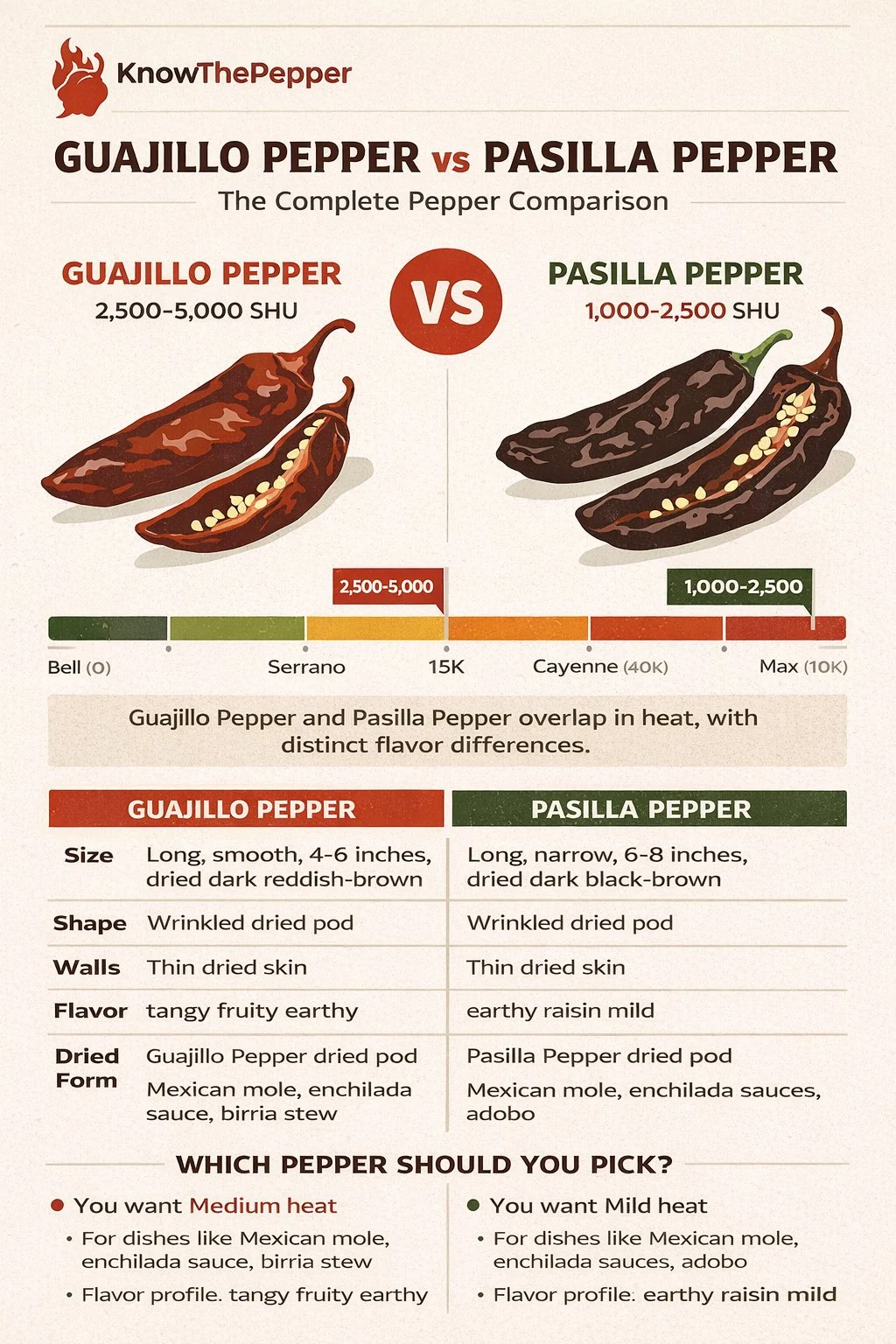
Culinary Uses for Guajillo Pepper and Pasilla Pepper
Guajillo is one of the most versatile dried chiles in the Mexican pantry. Toast it lightly in a dry pan, rehydrate in hot water for 15-20 minutes, then blend into sauces, marinades, or soups. It forms the base of classic red chile sauces for enchiladas, pozole rojo, and birria. The tangy brightness also makes it excellent in adobo-style marinades for pork or chicken - the acidity helps tenderize while adding flavor.
For the ancho vs guajillo contrast in red sauce applications, the key difference is that ancho reads sweeter and darker while guajillo stays brighter and sharper. Substitution ratio when swapping guajillo for ancho runs roughly 1:1 by weight, though you may want to add a small squeeze of lime to compensate for guajillo's missing sweetness.
Pasilla shines in slow-cooked, layered preparations. It's a cornerstone of mole negro and mole poblano, where its earthy depth integrates with chocolate, spices, and other dried chiles over long cooking times. Pasilla also works well in black bean soups, braised short ribs, and dark enchilada sauces where you want richness rather than brightness.
The smoky-meets-tangy contrast in chipotle vs guajillo preparations is worth noting - chipotle brings smoke where guajillo brings acid, so they serve different sauce roles entirely.
When substituting pasilla for guajillo or vice versa, expect flavor shifts. Swapping pasilla into a guajillo recipe produces a darker, earthier result - add a splash of apple cider vinegar to approximate the missing tang. Going the other direction (guajillo in place of pasilla), the sauce will brighten considerably; a small amount of ancho can help restore depth.
Both peppers work well in dry rubs when ground. Guajillo powder adds color and mild heat to spice blends; pasilla powder deepens the savory notes in beef rubs and chili powder mixes. For a step-by-step approach to working with dried chiles from scratch, proper toasting and rehydration technique matters more than most cooks realize.
Which Should You Choose?
Choose guajillo when brightness, color, and tangy acidity are what the dish needs. It's the better pick for red sauces, marinades, and any preparation where you want the chile to announce itself. At 2,500-5,000 SHU, it also brings slightly more heat - useful when pasilla's ceiling of 2,500 SHU feels too restrained.
Reach for pasilla when building depth and body. Moles, dark braises, and earthy soups benefit from its rich, chocolatey profile in ways guajillo simply cannot replicate.
For the heat and flavor breakdown across the guajillo vs de arbol spectrum, guajillo sits considerably milder than de arbol - useful context if you're scaling heat in a multi-chile sauce.
Most serious Mexican cooking keeps both on hand. They solve different problems. If forced to pick one for a general pantry, guajillo's wider application range gives it a slight edge - but anyone making mole without pasilla is missing the point entirely.
Can You Substitute One for the Other?
Yes — direct substitution works. Guajillo Pepper and Pasilla Pepper are close enough in heat to swap at roughly 1:1. The main difference will be flavor. For more swap options, explore ranked alternatives with conversion ratios.
Growing Guajillo Pepper vs Pasilla Pepper
If you’re deciding which pepper to grow at home, consider your climate and patience level. Guajillo Pepper and Pasilla Pepper have different maturation times and temperature preferences. Hotter varieties generally need a longer, warmer growing season to develop their full capsaicin content. Our zone-based planting date tool can pinpoint the best sowing window for your area.
Growing guajillo means starting with the mirasol variety — the fresh pepper that becomes guajillo after drying. If you're new to starting chiles from seed indoors, mirasol is a forgiving choice: germination is reliable, and the plants are vigorous once established.
Start seeds 8–10 weeks before your last frost date. Mirasol plants prefer full sun and well-drained soil, thriving in USDA zones 9–11 or as annuals in cooler climates.
The upward-pointing fruit habit (the 'looking at the sun' trait) means pods dry naturally on the plant in hot, dry climates. In humid regions, harvest before the first frost and finish drying indoors using a dehydrator set to 135°F for 8–12 hours.
Pasilla plants are tall growers, often reaching 24–36 inches with good support. Start seeds indoors 8–10 weeks before last frost — the long growing season (roughly 80–85 days to maturity) means early starts matter.
Transplant after soil temperatures stabilize above 60°F. Space plants 18–24 inches apart — they branch outward as they mature, and crowding invites fungal issues on the dense foliage.
Water consistently but avoid waterlogged soil. These plants are somewhat drought-tolerant once established, but irregular watering during pod development causes blossom drop and misshapen fruit.
History & Origin of Guajillo Pepper and Pasilla Pepper
Both peppers carry centuries of culinary heritage. Guajillo Pepper traces its roots to Mexico, while Pasilla Pepper originates from Mexico. Understanding their backstory helps explain why each pepper developed its distinctive traits.
Buying & Storage
Whether you’re shopping for Guajillo Pepper or Pasilla Pepper, the same quality indicators apply. Fresh peppers should feel firm and heavy for their size, with taut, glossy skin and no soft or wet spots. Minor stem cracks known as “corking” are perfectly normal and often indicate a mature, flavorful pod.
- Firm pods with taut skin and consistent color
- Should feel heavy relative to size
- Minor stem cracks (“corking”) are normal
- Avoid anything soft, shriveled, or with dark wet spots
- Fresh: Paper bag, crisper drawer — 1–2 weeks
- Frozen: Wash, dry, freeze on sheet pan — 6+ months
- Dried: Airtight, away from light — up to 1 year
The Verdict: Guajillo Pepper vs Pasilla Pepper
Guajillo Pepper and Pasilla Pepper sit in the same heat tier but serve different roles. Guajillo Pepper delivers 2× more heat with its distinctive tangy and sweet character. Pasilla Pepper, with its earthy and rich profile, excels in everyday cooking.
Frequently Asked Questions
Related Comparisons
Sources pending verification.