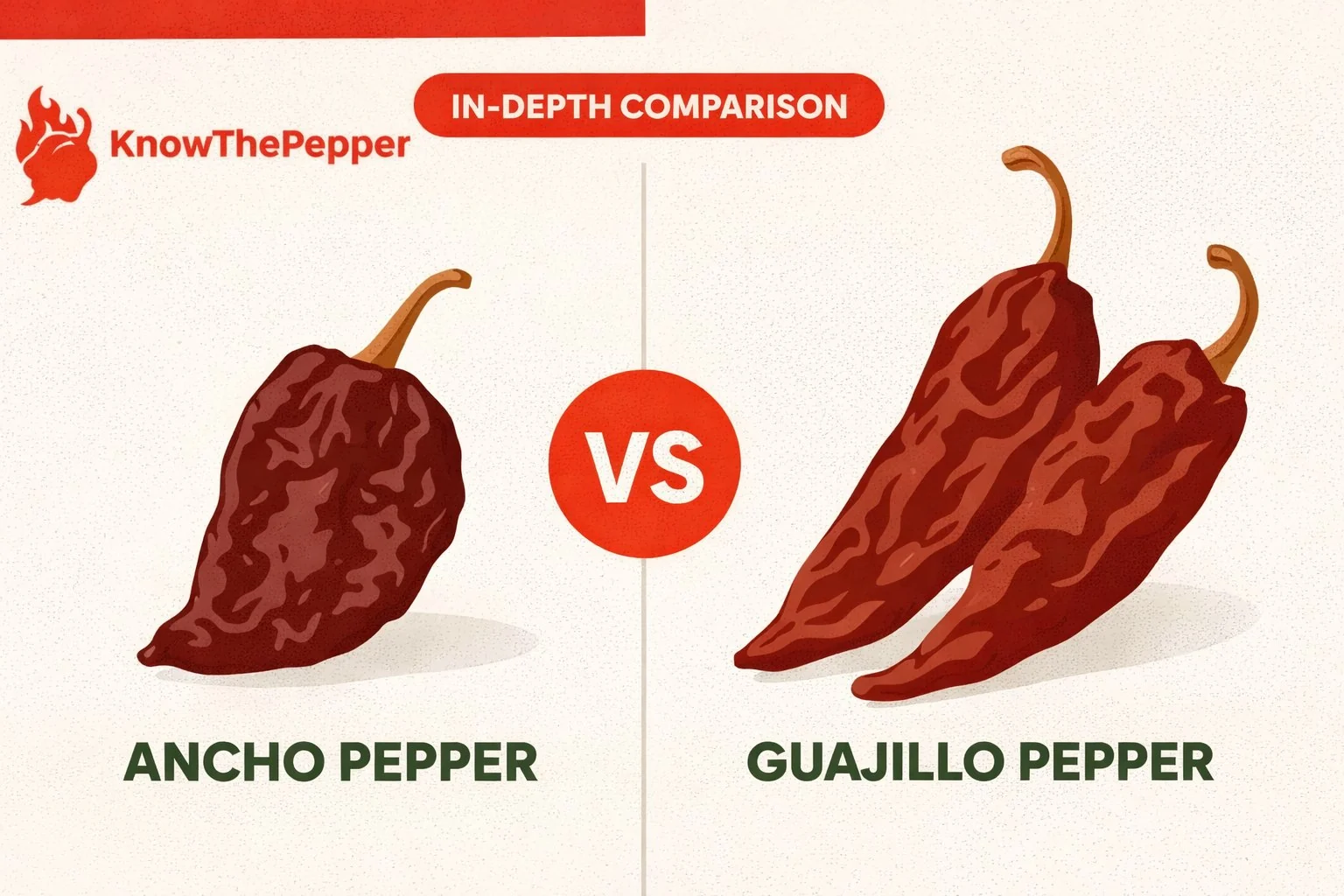
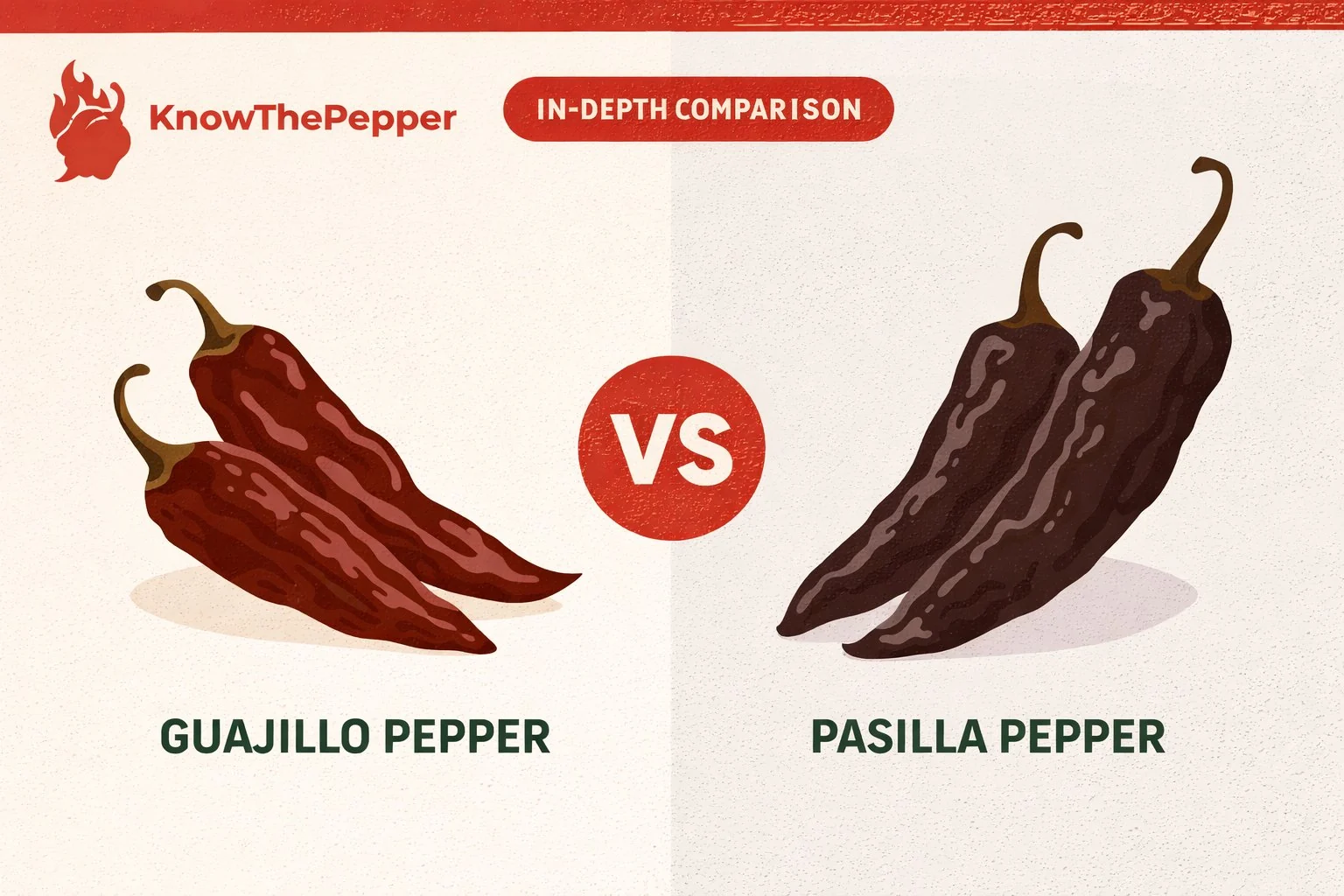
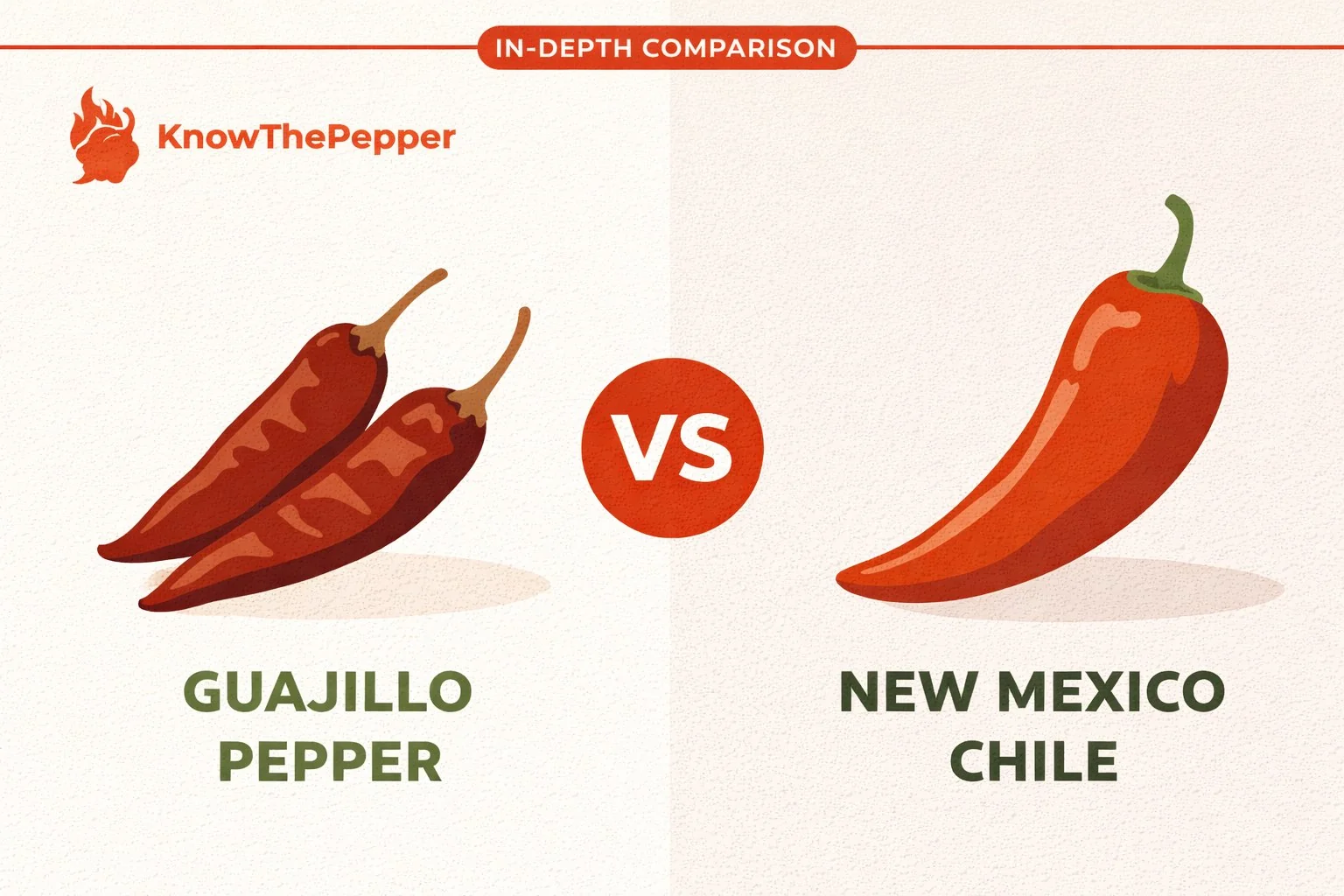
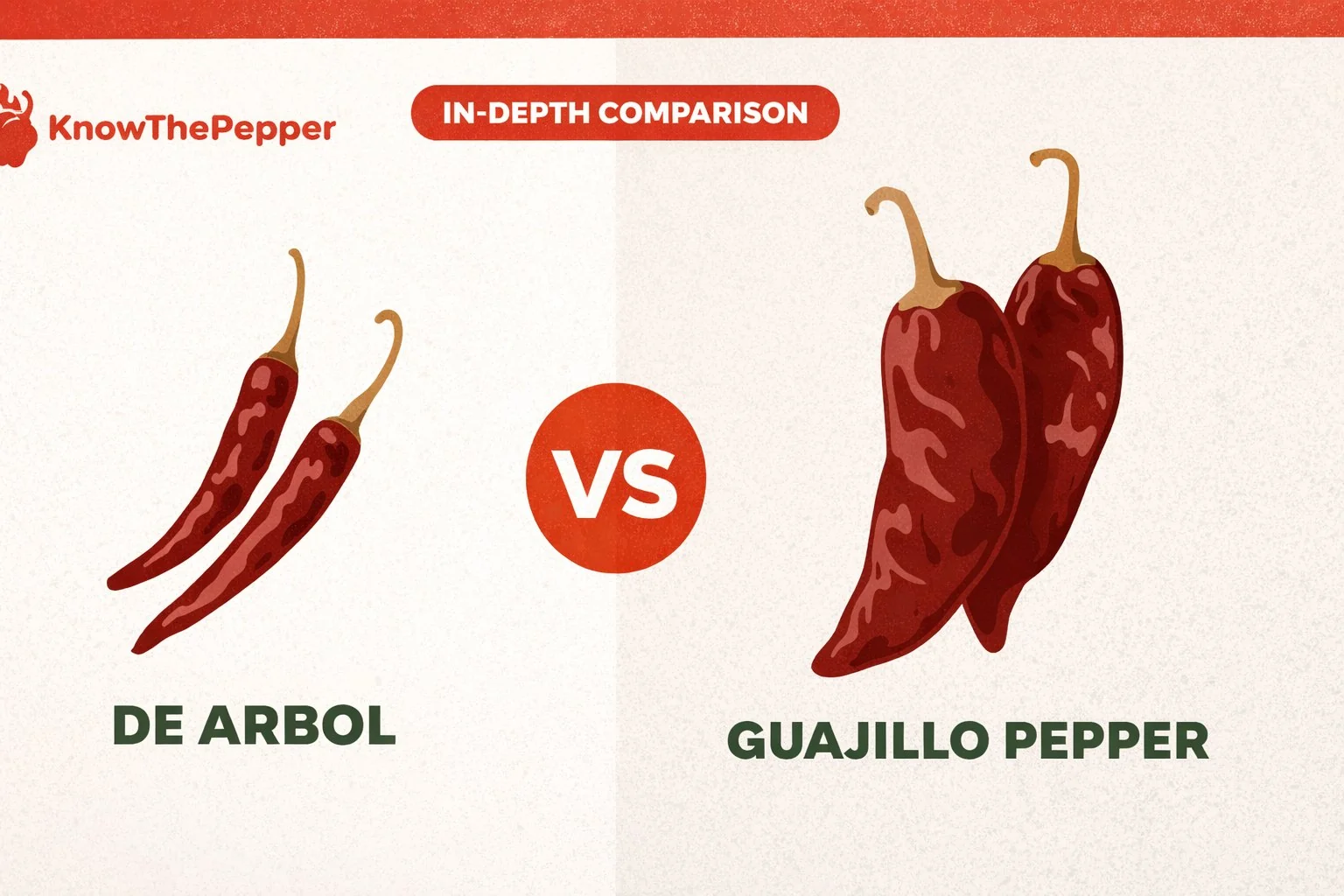
Choose guajillo pepper when the sauce needs red color, mild tang, and a dried chile you can build around. Choose de arbol when the dish needs a much hotter dried chile for spark, table salsa, or a smaller-dose background burn. These peppers can work together, but they rarely do the same job alone.
Comparison Contributor·Updated Jun 30, 2026·
Reviewed by
Karen Liu
Quick Comparison
Guajillo Pepper measures 3K–5K SHU while De Arbol registers 15K–30K SHU. That makes De Arbol about 6x hotter by upper SHU range. Guajillo Pepper is known for its tangy and sweet flavor (C. annuum), while De Arbol offers smoky and nutty notes (C. annuum).
Guajillo Pepper
3K–5K SHU
Medium · tangy and sweet
De Arbol
15K–30K SHU
Hot · smoky and nutty
Heat difference: De Arbol is about 6× hotter by upper SHU range
Species: Both are C. annuum
Best for: Guajillo Pepper excels in everyday cooking and salsas, De Arbol in fresh salsas and mild recipes
De Arbol is
about 6× hotter than Guajillo Pepper.
They fall in different heat tiers: Guajillo Pepper is classified as medium while De Arbol sits in the hot range.
Guajillo Pepper spans 3K–5K SHU, roughly 1× a jalapeño at the upper end.
De Arbol spans 15K–30K SHU, about 4× a jalapeño at the upper end.
Use the ranges to decide whether the recipe needs a measured dose, a mild overlap, or a hard substitution limit.
Tools: Scoville chart and SHU calculator.
Long before supermarkets stocked dried chiles by the bag, guajillo peppers were already a cornerstone of Mexican cooking. The fresh form, called mirasol (meaning 'looking at the sun' - a reference to how the fruits point upward on the plant), transforms into guajillo after drying.
At 2,500–5,000 SHU, the guajillo sits in the medium heat pepper range - accessible enough for people who avoid extreme spice, but with enough presence to anchor a dish. The heat builds gradually rather than hitting immediately, which is part of why it works so well in slow-cooked sauces where flavors meld over time.
De Arbol
smokynuttyC. annuum
The first time a de arbol found its way into my kitchen, I mistook it for a decorative dried chili. Slim, lacquer-red, barely three inches long - it looked ornamental.
At 15,000-30,000 SHU, de arbol sits firmly in the the hot heat tier - serious heat that builds steadily rather than ambushing you. The burn is clean and linear, spreading across the tongue without the fruity distraction of a habanero or the grassy edge of a fresh serrano.
Both peppers belong to C. annuum, so they share some underlying flavor chemistry. However, Guajillo Pepper’s tangy and sweet notes contrast with De Arbol’s smoky and nutty character.
Guajillo Pepper brings tangy and sweet notes, so it fits recipes where that flavor should remain visible.
De Arbol leans smoky and nutty, which can change the sauce, filling, marinade, or garnish even when the heat range looks close.
Culinary Uses for Guajillo Pepper and De Arbol
Guajillo Pepper
Guajillo is the backbone of chile colorado, birria, and countless enchilada sauces. Its tangy-sweet profile adds a brightness that earthy chiles like the deep, raisin-forward dried ancho can't provide on their own - most traditional mole recipes use both for exactly this reason.
To use dried guajillo, toast the pods briefly in a dry skillet (30–45 seconds per side) until fragrant, then soak in hot water for 15–20 minutes. The soaking liquid is mildly bitter; taste it before adding it to your sauce.
Guajillo powder - made from ground dried pods - is a direct substitute for paprika when you want more complexity and a touch of heat. It works beautifully as a dry rub on pork or chicken.
De Arbol
De arbol is one of those peppers that rewards a little technique. Dry-toasting the pods in a hot skillet for 20-30 seconds per side - just until fragrant - unlocks the nutty, smoky notes that define the variety.
The classic application is salsa de arbol: toasted pods rehydrated in hot water, blended with tomatoes, garlic, and a splash of apple cider vinegar. The result is a table salsa with real heat and depth, nothing like the watery commercial versions.
In mole and enchilada sauces, de arbol adds heat without muddying the flavor base. It pairs naturally with peppers built for smoking applications, and blending dried de arbol with ancho or mulato creates a layered sauce with both heat and body.
Start near 1:1 by amount. The heat ranges are close enough that flavor, form, and recipe role matter more than a strict Scoville conversion.
Growing Guajillo Pepper vs De Arbol
Growing notes
Guajillo Pepper
Growing guajillo means starting with the mirasol variety - the fresh pepper that becomes guajillo after drying. If you're new to starting chiles from seed indoors, mirasol is a forgiving choice: germination is reliable, and the plants are vigorous once established.
Start seeds 8–10 weeks before your last frost date. Mirasol plants prefer full sun and well-drained soil, thriving in USDA zones 9–11 or as annuals in cooler climates.
The upward-pointing fruit habit (the 'looking at the sun' trait) means pods dry naturally on the plant in hot, dry climates. In humid regions, harvest before the first frost and finish drying indoors using a dehydrator set to 135°F for 8–12 hours.
Growing notes
De Arbol
De arbol is a reliable producer once established, though it demands heat to perform. Start seeds indoors 8-10 weeks before last frost - germination runs 10-14 days at soil temperatures around 80-85°F.
Transplant outdoors only after nighttime temps stay consistently above 55°F. De arbol needs full sun and well-drained soil; waterlogged roots stall growth quickly.
Pods mature from green to bright red in 80-90 days from transplant. The plants set fruit prolifically - a single established plant can carry dozens of pods simultaneously.
Where They Come From
Origin & background
Guajillo Pepper
Mexico · C. annuum
Guajillo's roots stretch back centuries in central and northern Mexico, where the mirasol pepper was cultivated long before Spanish contact. The name 'guajillo' likely derives from 'guaje,' a Mexican Spanish term for a small gourd - a reference to the rattling seeds inside a fully dried pod.
Historically, guajillo was integral to Aztec and pre-Columbian cooking, used in ritual foods and everyday mole preparations. After Spanish colonization, dried chile trade routes formalized, and guajillo became a commercial staple throughout Mexico's regional pepper traditions.
Origin & background
De Arbol
Mexico · C. annuum
De arbol traces its roots to central Mexico, where it has been cultivated for centuries across the states of Jalisco, Nayarit, and Oaxaca. Pre-Columbian communities used it both fresh and dried, and the pepper became deeply embedded in regional cooking long before Spanish contact.
The pepper's Spanish name - "chili de arbol" or "tree chili" - likely emerged during the colonial period, referencing the unusually stiff, woody stem that distinguishes it visually from other dried chilies. By the 19th century, it had become a commercial crop in western Mexico, traded dried in large quantities.
Buying & Storage
Whether you’re shopping for Guajillo Pepper or De Arbol, the same quality indicators apply. Fresh peppers should feel firm and heavy for their size, with taut, glossy skin and no soft or wet spots. Minor stem cracks known as “corking” are perfectly normal and often indicate a mature, flavorful pod.
Selection
What to look for
Firm pods with taut skin and consistent color
Should feel heavy relative to size
Minor stem cracks (“corking”) are normal
Avoid anything soft, shriveled, or with dark wet spots
Storage
How to store them
Fresh: Paper bag, crisper drawer, 1 to 2 weeks
Frozen: Wash, dry, freeze on sheet pan, 6+ months
Dried: Airtight and away from light, up to 1 year
Mistakes to avoid
Common misses
Guajillo Pepper
Equating green with unripe. Different products.
Overcooking. Cell walls break down fast.
Sealed plastic storage. Causes rot. Use paper bags.
Common misses
De Arbol
Blaming the seeds. Membranes hold most capsaicin.
Adding heat too early. Capsaicin breaks down with cooking.
Not tasting individual pods. Heat varies 30%+.
Final call
Guajillo Pepper vs De Arbol
Guajillo Pepper and De Arbol
occupy very different positions on the heat spectrum. De Arbol delivers about 6× more upper-range heat with its distinctive smoky and nutty character.
Guajillo Pepper, with its tangy and sweet profile, excels in everyday cooking.
Heat gap about 6× by upper rangeGuajillo Pepper tangy and sweetDe Arbol smoky and nutty
Guajillo is the base chile. De arbol is the spark chile. That one line solves most recipes faster than a long heat chart.
Guajillo usually sits around 2,500 to 5,000 SHU. De arbol usually sits around 15,000 to 30,000 SHU. That makes de arbol roughly six times hotter at the midpoint, but the more useful difference is how much of each pepper a cook can use before the dish changes character.
Guajillo can lead a sauce. De arbol usually supports or spikes one. That is why a few de arbol pods can shift a whole batch while a guajillo sauce may start with several pods on purpose.
Their Toast Window Is Not The Same
Guajillo asks for a quick toast and a proper soak because the skin is tougher and the pepper often needs blender time to become smooth. The pod should smell sweet and red, not burnt. If the pod goes black fast, bitterness follows.
De arbol has a shorter leash. The thin pods toast quickly, and the heat can feel harsher if they scorch. Some cooks soak them for salsa. Others only soften them briefly because the pepper already gives up flavor and heat so fast.
So even the pan work is different. Guajillo needs enough prep to become a sauce builder. De arbol needs enough restraint to avoid turning sharp and bitter.
This is why one dried chile routine does not fit every Mexican pepper. Guajillo and de arbol punish different mistakes.
Red Sauce Or Table Heat
Guajillo belongs in chile colorado, enchilada sauce, birria-style blends, marinades, and red sauces that need color and mild tang without scaring the whole table. It is one of the most forgiving dried chiles because the cook can use enough to build a real sauce body.
De arbol belongs in salsa de arbol, hot oil, table salsa, sharper red sauces, and recipes where the chile should still bite after blending. It can help a base sauce too, but usually as a secondary pepper rather than the main body.
That split explains why cooks often use both together. Guajillo makes the sauce red and broad. De arbol makes it wake up.
Cooks who want another body chile usually compare guajillo with ancho. Cooks who want another sharp dried heat source usually compare de arbol with japones pepper. That split helps show why these two peppers often work better together than apart.
Blend Them Before You Force A Full Swap
Replacing guajillo with de arbol is the classic mistake. The sauce gets hotter, but it also loses body, tang, and the easy red background that guajillo gives. More de arbol does not fix that. It only raises the heat faster.
Replacing de arbol with guajillo creates the opposite problem. The sauce keeps color and mild sweetness but loses the sharp lift that de arbol was there to provide.
The smarter move is usually a blend adjustment instead of a total swap. If guajillo is missing, use another body chile and only a little de arbol for the heat. If de arbol is missing, keep the guajillo base and add heat from a nearby dried chile instead of pretending guajillo alone can do both jobs.
So the practical rule is this: do not ask one of these peppers to carry both color and spike if the recipe originally split that work in two.
How To Buy Dried Pods
Buy guajillo when the dried pods look deep red, smooth, and flexible enough to bend a little instead of cracking into flakes. Buy de arbol when the pods look bright red and clean, not nearly black or dusty.
Seed load matters too. De arbol often carries more visible seed intensity per small pod, so seed removal can change the final batch more dramatically than it does with a large guajillo.
Store both dried peppers whole and airtight until you need them. Once ground, they lose the buying clues that made the right choice easier in the first place.
Fact-Checked & Expert Reviewed
Editorial Standards: Head-to-head comparisons include blind tasting when applicable. Heat levels cross-referenced with multiple sources. All substitution ratios tested side-by-side.
Review Process:
Written by
James Thompson
(Lead Comparison Reviewer)
, reviewed by
Karen Liu
(Lead Fact-Checker & Science Editor)
. Last updated June 30, 2026.
Guajillo Pepper vs De Arbol FAQ
De arbol is much hotter. Guajillo stays in a mild-to-medium range, while de arbol jumps into a much hotter dried-chile category.
Not as a clean one-for-one swap. De arbol adds heat but does not replace guajillo's body, tang, and broader red-sauce role.
Because they solve different parts of the sauce. Guajillo builds red body and mild flavor, while de arbol adds the sharper hot edge.
De arbol. That sauce is built around the pepper's quicker, sharper heat and its ability to stay lively even in a small blended batch.