Guajillo vs De Arbol: Which Pepper to Use?
Guajillo and de arbol are both Mexican dried chilies in the C. annuum species, but they sit at opposite ends of the flavor-heat spectrum. Guajillo brings tangy sweetness at 2,500-5,000 SHU; de arbol delivers smoky, nutty fire at 15,000-30,000 SHU. Knowing which one to reach for changes the entire character of a dish.

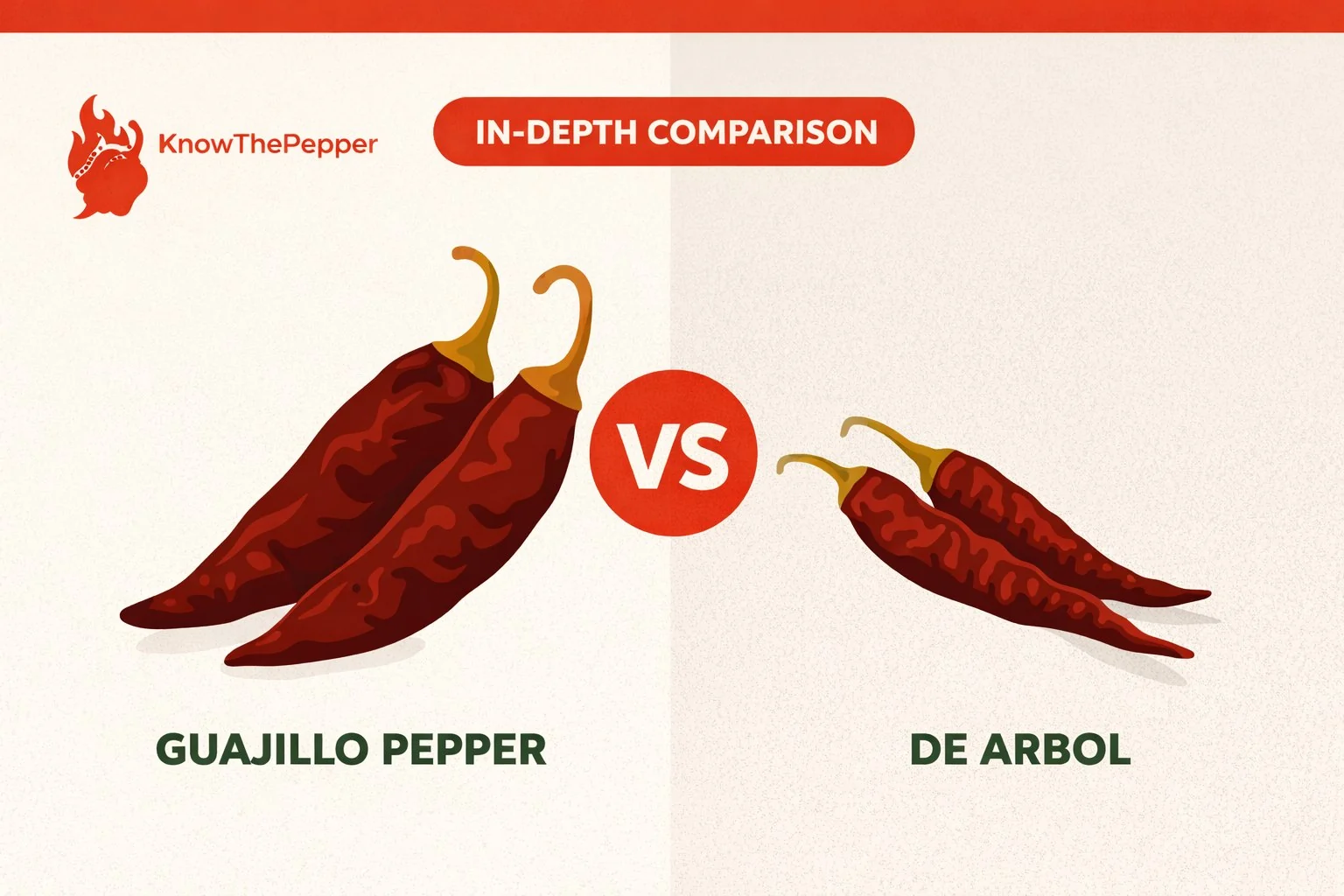
Guajillo Pepper measures 3K–5K SHU while De Arbol registers 15K–30K SHU — making De Arbol 6× hotter. Guajillo Pepper is known for its tangy and sweet flavor (C. annuum), while De Arbol offers smoky and nutty notes (C. annuum).
- Heat difference: De Arbol is 6× hotter
- Species: Both are C. annuum
- Best for: Guajillo Pepper excels in everyday cooking and salsas, De Arbol in fresh salsas and mild recipes
Guajillo Pepper
MediumDe Arbol
HotGuajillo Pepper vs De Arbol Comparison
Guajillo Pepper vs De Arbol Heat Levels
The first time I grabbed de arbol by mistake while making a batch of enchilada sauce - expecting guajillo's gentle warmth - was a memorable lesson in label-reading.
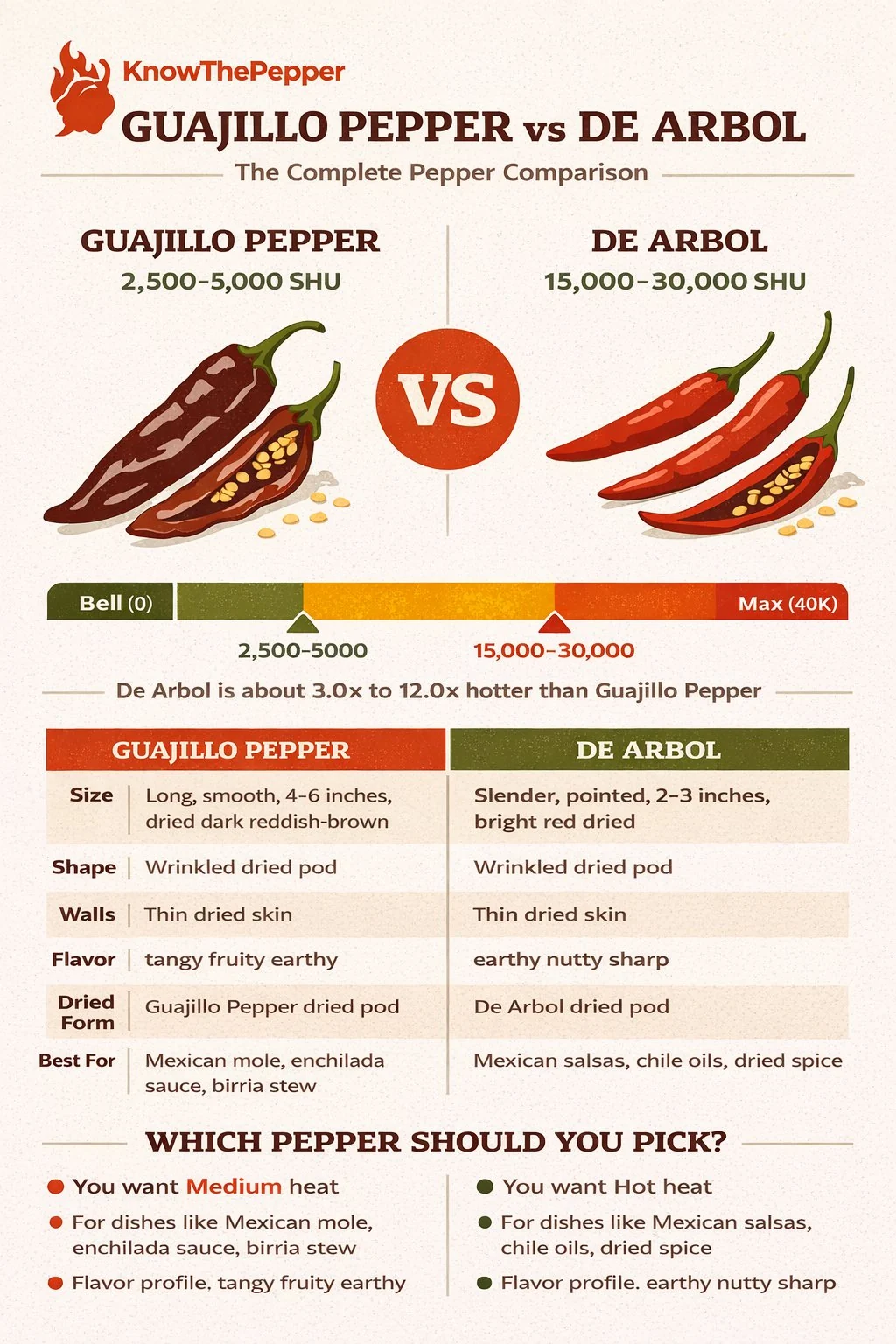
These two peppers share a species and a country, but their heat is a different conversation entirely. Guajillo sits in the mild-to-medium heat band at 2,500-5,000 SHU, a level most eaters handle without much stress. De arbol occupies the firmly hot section of the Scoville scale at 15,000-30,000 SHU - that is roughly 4 to 10 times hotter than guajillo, depending on where each specific pod falls in its range.
To put it another way: if guajillo is your baseline, de arbol at peak heat hits like a jalapeño compared to a banana pepper - a meaningful jump that changes how you dose it. Against the standard jalapeño benchmark (2,500-8,000 SHU), guajillo overlaps almost entirely, while de arbol runs 2 to 12 times hotter than a typical jalapeño.
The burn character differs too. Guajillo's heat is low and slow - it builds mildly at the back of the palate and fades fast. De arbol's capsaicin load hits sharper and lingers. If you want to understand why that lingering sensation happens at the receptor level, the chemistry behind it is worth reading. For most cooks, the practical takeaway is simple: de arbol demands respect in quantity, guajillo does not.
Flavor Profile Comparison
Long before supermarkets stocked dried chiles by the bag, guajillo peppers were already a cornerstone of Mexican cooking.
The first time a de arbol found its way into my kitchen, I mistook it for a decorative dried chili.
Heat aside, these two dried chilies taste genuinely different - and that distinction matters more than SHU numbers for most recipes.
Guajillo has a bright, tangy quality that sets it apart from most other Mexican dried chilies. There is a berry-like tartness, almost cranberry-adjacent, layered over mild sweetness. The aroma is clean and slightly fruity. Its thin skin rehydrates smoothly, making it easy to blend into silky sauces without bitterness.
De arbol goes in a smokier, nuttier direction. Toasted lightly in a dry pan, it releases an almost toasted-sesame quality that is unusual for a chili. The flavor is earthy and sharp, with less sweetness and more of a dry, woodsy bite. Its heat and flavor arrive together rather than sequentially.
For layered mole-style sauces, guajillo provides the sweet-acid backbone that balances richer ingredients like chocolate or nuts. De arbol works better as a heat accent - something you add for fire and depth without wanting its flavor to dominate. Blending both together is a classic Mexican technique: guajillo builds the base, de arbol cranks the heat dial.
Aroma matters when shopping dried chilies. Guajillo should smell faintly fruity and earthy; de arbol should smell slightly smoky and sharp. Stale versions of either lose these characteristics and taste flat - a good reason to buy from stores with high turnover rather than from dusty spice racks.
Culinary Uses for Guajillo Pepper and De Arbol
Guajillo is one of the most versatile dried chilies in Mexican regional cooking. It forms the base of countless red sauces, enchilada sauces, marinades, and pozole broths. Because the heat stays manageable, you can use it generously - 3 to 5 dried pods per cup of sauce is common - without worrying about blowing out the dish. Rehydrate in hot water for 20 minutes, then blend with garlic, onion, and a splash of the soaking liquid.
De arbol is a finishing chili as much as a base chili. A single dried pod, toasted and crumbled into oil, infuses enough heat to season a whole pan of eggs or beans. For a salsa de arbol, 4 to 6 pods per cup of tomato is typical, but adjust down if your audience is heat-sensitive. The toasting step - 30 seconds per side in a dry skillet until fragrant - is non-negotiable for developing its nutty character.
Substitution ratios matter here. Swapping de arbol for guajillo without adjustment will torch your recipe. A rough ratio: use 1 de arbol pod for every 3-4 guajillo pods called for, and expect a flavor shift toward smokier, nuttier notes. Going the other direction - guajillo in place of de arbol - requires more volume and accepts a loss of heat and smokiness.
For recipes where both shine, consider the pairing: guajillo in the base sauce, de arbol in a finishing salsa served alongside. That combination appears across Jalisco, Oaxaca, and central Mexican cooking. The ancho vs guajillo flavor breakdown is useful context if you are building a multi-chili sauce and want to understand how sweetness levels interact. Similarly, the chipotle vs guajillo heat and smoke comparison helps when smokiness is a variable in your recipe decision.
Both peppers work well in dry rubs for grilled meat. Guajillo gives color and mild tang; de arbol adds heat. Ground together in equal parts, they make a solid all-purpose Mexican chili powder.
Which Should You Choose?
Guajillo is the everyday workhorse. Its tangy, mild heat profile makes it forgiving and crowd-friendly, ideal for sauces, braises, and dishes where chili flavor should be present without demanding attention. It is the right call when feeding a mixed group or building a sauce that needs body and color.
De arbol is the specialist. Reach for it when heat is the point - salsas, chili oils, spiced nuts, or any dish where you want that smoky, sharp bite to announce itself. Its intensity means smaller quantities, which also makes it economical.
For most home cooks, keeping both on hand solves more problems than picking one. Use guajillo as your base, de arbol as your heat adjustment. If you only buy one, guajillo is more flexible across a wider range of dishes and skill levels. If you already cook with guajillo regularly and want more fire, de arbol is the natural next step - just start with half the quantity you think you need.
Can You Substitute One for the Other?
Yes — direct substitution works. Guajillo Pepper and De Arbol are close enough in heat to swap at roughly 1:1. The main difference will be flavor. For more swap options, explore ranked alternatives with conversion ratios.
Growing Guajillo Pepper vs De Arbol
If you’re deciding which pepper to grow at home, consider your climate and patience level. Guajillo Pepper and De Arbol have different maturation times and temperature preferences. Hotter varieties generally need a longer, warmer growing season to develop their full capsaicin content. Our zone-based planting date tool can pinpoint the best sowing window for your area.
Growing guajillo means starting with the mirasol variety — the fresh pepper that becomes guajillo after drying. If you're new to starting chiles from seed indoors, mirasol is a forgiving choice: germination is reliable, and the plants are vigorous once established.
Start seeds 8–10 weeks before your last frost date. Mirasol plants prefer full sun and well-drained soil, thriving in USDA zones 9–11 or as annuals in cooler climates.
The upward-pointing fruit habit (the 'looking at the sun' trait) means pods dry naturally on the plant in hot, dry climates. In humid regions, harvest before the first frost and finish drying indoors using a dehydrator set to 135°F for 8–12 hours.
De arbol is a reliable producer once established, though it demands heat to perform. Start seeds indoors 8-10 weeks before last frost — germination runs 10-14 days at soil temperatures around 80-85°F.
Transplant outdoors only after nighttime temps stay consistently above 55°F. De arbol needs full sun and well-drained soil; waterlogged roots stall growth quickly.
Pods mature from green to bright red in 80-90 days from transplant. The plants set fruit prolifically — a single established plant can carry dozens of pods simultaneously.
History & Origin of Guajillo Pepper and De Arbol
Both peppers carry centuries of culinary heritage. Guajillo Pepper traces its roots to Mexico, while De Arbol originates from Mexico. Understanding their backstory helps explain why each pepper developed its distinctive traits.
Buying & Storage
Whether you’re shopping for Guajillo Pepper or De Arbol, the same quality indicators apply. Fresh peppers should feel firm and heavy for their size, with taut, glossy skin and no soft or wet spots. Minor stem cracks known as “corking” are perfectly normal and often indicate a mature, flavorful pod.
- Firm pods with taut skin and consistent color
- Should feel heavy relative to size
- Minor stem cracks (“corking”) are normal
- Avoid anything soft, shriveled, or with dark wet spots
- Fresh: Paper bag, crisper drawer — 1–2 weeks
- Frozen: Wash, dry, freeze on sheet pan — 6+ months
- Dried: Airtight, away from light — up to 1 year
The Verdict: Guajillo Pepper vs De Arbol
Guajillo Pepper and De Arbol occupy very different positions on the heat spectrum. De Arbol delivers 6× more heat with its distinctive smoky and nutty character. Guajillo Pepper, with its tangy and sweet profile, excels in everyday cooking.
Frequently Asked Questions
Related Comparisons
Sources pending verification.