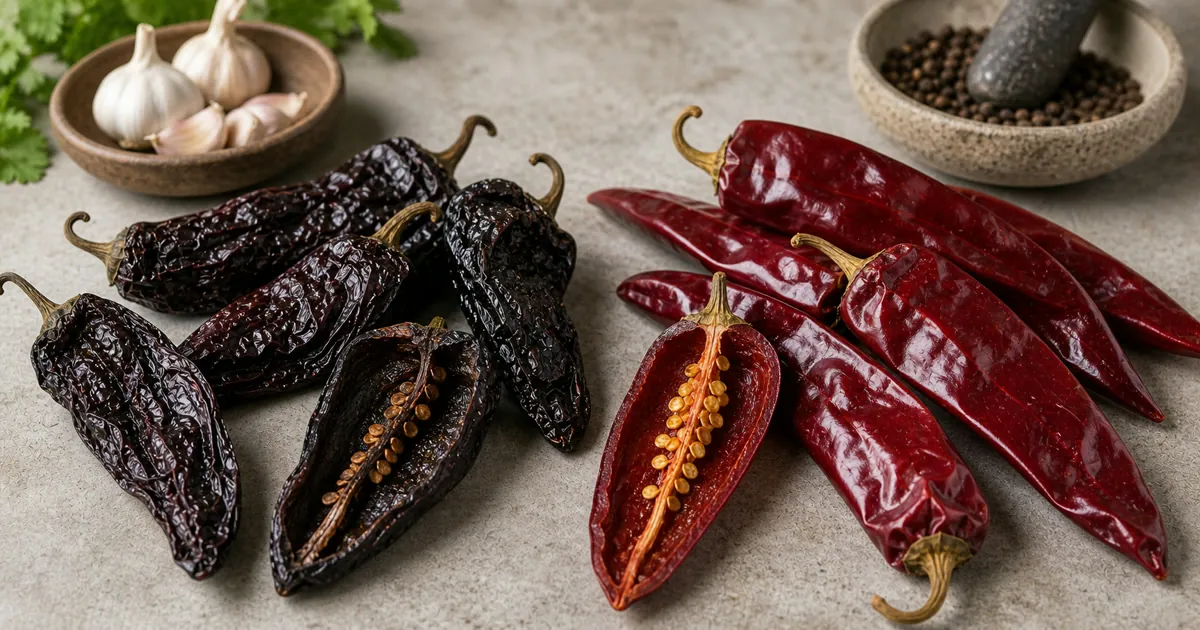
Guajillo and pasilla peppers are two of Mexico's most essential dried chiles, each with a distinct personality in the kitchen. Guajillos bring a bright, tangy heat with berry-like undertones, while pasillas lean darker and earthier with a mild, almost chocolatey depth. Understanding the difference between these two changes how you build mole, enchilada sauce, and braising liquids.
Comparison Contributor·Updated Jun 26, 2026·
Reviewed by
Karen Liu
Quick Comparison
Guajillo Pepper measures 3K–5K SHU while Pasilla Pepper registers 1K–3K SHU. That makes Guajillo Pepper about 2x hotter by upper SHU range. Guajillo Pepper is known for its tangy and sweet flavor (C. annuum), while Pasilla Pepper offers earthy and rich notes (C. annuum).
Guajillo Pepper
3K–5K SHU
Medium · tangy and sweet
Pasilla Pepper
1K–3K SHU
Medium · earthy and rich
Heat difference: Guajillo Pepper is about 2× hotter by upper SHU range
Species: Both are C. annuum
Best for: Guajillo Pepper excels in everyday cooking and salsas, Pasilla Pepper in fresh salsas and mild recipes
Both peppers sit in the mild-to-medium range on the the Scoville scoring method, though their heat characters feel quite different in practice. Guajillo peppers clock in at 2,500-5,000 SHU, while pasilla peppers run slightly milder at 1,000-2,500 SHU.
For context, a chipotle typically lands around 2,500-8,000 SHU - so a guajillo sits at the lower end of chipotle territory, and a pasilla comes in noticeably below that benchmark. Neither pepper is going to challenge anyone's heat tolerance.
What matters more than the numbers is where the heat shows up. Guajillo delivers its warmth quickly, a front-of-mouth tingle that fades cleanly. Pasilla's heat is slower and more diffuse, settling toward the back of the palate without any sharp edges. This mild heat classification makes both peppers approachable for people who want flavor complexity without the fire.
The guajillo's higher ceiling means it can add a perceptible kick to lighter sauces, while pasilla almost disappears into the background as pure flavor rather than heat. For blended sauces, guajillo provides the structural warmth and pasilla adds depth - they're complementary rather than interchangeable from a heat perspective.
This is where the real differences emerge. Guajillo is the more assertive of the two - its flavor profile runs toward dried cranberry, green tea tannins, and a subtle smokiness with a hint of acidity that brightens whatever it touches. The skin is thin and glossy reddish-brown, and it rehydrates into a smooth, vibrant red-orange liquid that colors sauces beautifully.
Pasilla (meaning "little raisin" in Spanish, a nod to its wrinkled, dark appearance) tastes exactly like that name suggests - dried fruit, dark chocolate, mild earthiness, and a hint of licorice. The skin is nearly black when dried, and rehydrated pasilla produces a deep, murky brown liquid with a rich, almost winey quality.
Aroma tells the story too. Guajillo smells fruity and slightly sharp when toasted - it wakes up a kitchen. Pasilla smells like a dark pantry: dried plums, cocoa, dried herbs. One is vivid, the other is brooding.
In terms of texture after rehydration, guajillo flesh is firmer and more uniform, making it easier to blend into smooth sauces. Pasilla can be slightly more fibrous and benefits from straining after blending.
Culinary Uses for Guajillo Pepper and Pasilla Pepper
Guajillo Pepper
Guajillo is the backbone of chile colorado, birria, and countless enchilada sauces. Its tangy-sweet profile adds a brightness that earthy chiles like the deep, raisin-forward dried ancho can't provide on their own - most traditional mole recipes use both for exactly this reason.
To use dried guajillo, toast the pods briefly in a dry skillet (30–45 seconds per side) until fragrant, then soak in hot water for 15–20 minutes. The soaking liquid is mildly bitter; taste it before adding it to your sauce.
Guajillo powder - made from ground dried pods - is a direct substitute for paprika when you want more complexity and a touch of heat. It works beautifully as a dry rub on pork or chicken.
Pasilla Pepper
Dried pasilla chiles need rehydration before most uses. Toast them briefly in a dry skillet - 30 seconds per side until fragrant - then soak in hot water for 15-20 minutes.
The rehydrated flesh blends into mole negro, enchilada sauce, and adobo marinades. Its earthiness pairs naturally with chocolate, cumin, and dried fruit.
For mole negro, pasilla typically combines with mulato and ancho. Each contributes differently: pasilla handles the earthy bass note, ancho the sweetness, mulato the mid-range depth.
Choose guajillo when the sauce needs to be vivid, bright, and slightly tangy - red enchilada sauce, pozole, marinades for grilled meats. Its color contribution alone makes it irreplaceable in certain dishes.
Reach for pasilla when building depth and darkness - mole, braised meats, black bean preparations. It functions more like a seasoning agent than a primary flavor, enriching whatever surrounds it.
The most honest answer is that serious Mexican cooking uses both. They occupy different roles in the same pantry the way bay leaves and thyme do - not competitors, but collaborators. If you can only stock one, guajillo is the more versatile starting point because its flavor is assertive enough to carry a sauce solo. Pasilla really shines in combination.
Start near 1:1 by amount. The heat ranges are close enough that flavor, form, and recipe role matter more than a strict Scoville conversion.
Growing Guajillo Pepper vs Pasilla Pepper
Growing notes
Guajillo Pepper
Growing guajillo means starting with the mirasol variety - the fresh pepper that becomes guajillo after drying. If you're new to starting chiles from seed indoors, mirasol is a forgiving choice: germination is reliable, and the plants are vigorous once established.
Start seeds 8–10 weeks before your last frost date. Mirasol plants prefer full sun and well-drained soil, thriving in USDA zones 9–11 or as annuals in cooler climates.
The upward-pointing fruit habit (the 'looking at the sun' trait) means pods dry naturally on the plant in hot, dry climates. In humid regions, harvest before the first frost and finish drying indoors using a dehydrator set to 135°F for 8–12 hours.
Growing notes
Pasilla Pepper
Pasilla plants are tall growers, often reaching 24-36 inches with good support. Start seeds indoors 8-10 weeks before last frost - the long growing season (roughly 80-85 days to maturity) means early starts matter.
Transplant after soil temperatures stabilize above 60°F. Space plants 18-24 inches apart - they branch outward as they mature, and crowding invites fungal issues on the dense foliage.
Water consistently but avoid waterlogged soil. These plants are somewhat drought-tolerant once established, but irregular watering during pod development causes blossom drop and misshapen fruit.
Where They Come From
Origin & background
Guajillo Pepper
Mexico · C. annuum
Guajillo's roots stretch back centuries in central and northern Mexico, where the mirasol pepper was cultivated long before Spanish contact. The name 'guajillo' likely derives from 'guaje,' a Mexican Spanish term for a small gourd - a reference to the rattling seeds inside a fully dried pod.
Historically, guajillo was integral to Aztec and pre-Columbian cooking, used in ritual foods and everyday mole preparations. After Spanish colonization, dried chile trade routes formalized, and guajillo became a commercial staple throughout Mexico's regional pepper traditions.
Origin & background
Pasilla Pepper
Mexico · C. annuum
Pasilla peppers trace back centuries in central and southern Mexico, particularly Oaxaca and Michoacán, where dried chiles formed the foundation of complex regional sauces. The deep-rooted Mexican pepper tradition embraced pasilla as an essential mole ingredient long before Spanish contact documented it.
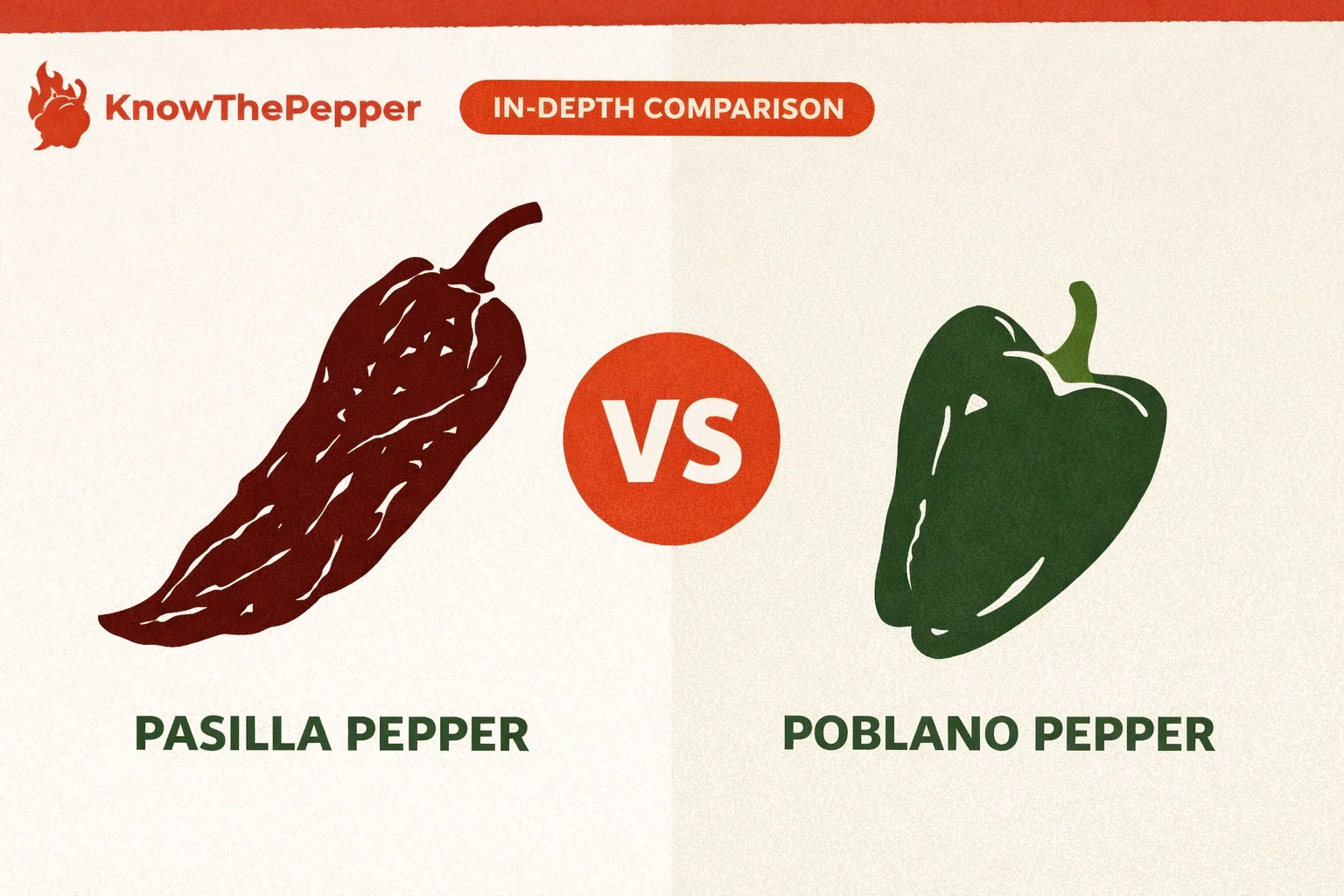
One persistent naming confusion: in California and parts of the American Southwest, fresh poblano peppers are sometimes mislabeled "pasilla." In traditional Mexican usage, pasilla refers strictly to the dried chilaca.
Buying & Storage
Whether you’re shopping for Guajillo Pepper or Pasilla Pepper, the same quality indicators apply. Fresh peppers should feel firm and heavy for their size, with taut, glossy skin and no soft or wet spots. Minor stem cracks known as “corking” are perfectly normal and often indicate a mature, flavorful pod.
Selection
What to look for
Firm pods with taut skin and consistent color
Should feel heavy relative to size
Minor stem cracks (“corking”) are normal
Avoid anything soft, shriveled, or with dark wet spots
Storage
How to store them
Fresh: Paper bag, crisper drawer, 1 to 2 weeks
Frozen: Wash, dry, freeze on sheet pan, 6+ months
Dried: Airtight and away from light, up to 1 year
Mistakes to avoid
Common misses
Guajillo Pepper
Equating green with unripe. Different products.
Overcooking. Cell walls break down fast.
Sealed plastic storage. Causes rot. Use paper bags.
Common misses
Pasilla Pepper
Equating green with unripe. Different products.
Overcooking. Cell walls break down fast.
Sealed plastic storage. Causes rot. Use paper bags.
Final call
Guajillo Pepper vs Pasilla Pepper
Guajillo Pepper and Pasilla Pepper
sit in the same heat tier but serve different roles. Guajillo Pepper delivers about 2× more upper-range heat with its distinctive tangy and sweet character.
Pasilla Pepper, with its earthy and rich profile, excels in everyday cooking.
Heat gap about 2× by upper rangeGuajillo Pepper tangy and sweetPasilla Pepper earthy and rich
Mexican cuisine treats these two peppers as distinct tools, not substitutes for each other. Guajillo is the workhorse of red sauces - it forms the backbone of enchilada sauce preparation, pozole rojo, and many commercial chile pastes. Its acidity and color make it ideal when you want a sauce that looks vivid and tastes bright. Toast it dry in a skillet for 30-45 seconds per side, then soak in hot water for 20 minutes before blending.
Pasilla belongs in mole negro, black bean soups, and any preparation where you want the pepper to dissolve into the background as pure richness. It is one of the three classic mole peppers alongside mulato and ancho. Pasilla also works well in braising liquids for beef or lamb - the dark, earthy notes complement long-cooked proteins in a way guajillo cannot.
For substitution: if a recipe calls for guajillo and you only have pasilla, use a 1:1 ratio but expect a darker, less acidic result. Add a small amount of tomato or tomatillo to compensate for the missing brightness. Going the other direction - replacing pasilla with guajillo - works in a pinch, but the sauce will be lighter in color and sharper in flavor. A touch of unsweetened cocoa powder can approximate some of the lost depth.
Both peppers are sold dried whole, as powder, or as paste. Whole dried chiles give the best flavor - powders lose volatile aromatics quickly after grinding. Store whole dried chiles in an airtight container away from light; they keep well for up to a year.
Decision By Dish
Choose guajillo when the sauce needs a bright red color, tangy dried fruit, and mild-to-medium heat. It is better for enchilada sauce, adobo, pozole rojo, birria-style chile blends, and marinades where the red color should stay clear.
Choose pasilla when the sauce needs darker raisin, cocoa, and earthy depth. It is better for mole-style sauces, braises, black bean dishes, and blends where the chile should deepen the base rather than brighten it.
Both are dried Mexican chiles, but their colors and moods differ. Guajillo lifts. Pasilla darkens. That is the decision the page owns.
Swap Limits
Use 1 guajillo for 1 pasilla by weight only when color matters more than dark depth. Add a small piece of ancho or a pinch of cocoa if the sauce misses pasilla's deeper note.
Use 1 pasilla for 1 guajillo only when a darker sauce is acceptable. Add a splash of vinegar or a little tomato if the dish needs guajillo's tangier edge.
Do not judge the swap by heat alone. The SHU ranges overlap enough that flavor and color decide most recipes.
Testing And Serving Notes
In rehydrated sauce tests, guajillo blended into a clearer brick-red puree. Pasilla made the sauce browner and softer, with more raisin and cocoa. Both needed seed removal to avoid bitterness.
Guajillo handled vinegar and citrus better because its tangy side stayed clear. Pasilla worked better with nuts, chocolate, beans, and slow-cooked meat because it gave background depth.
Toast both gently. Burnt dried chile skin turns bitter fast and can flatten either pepper.
Quick Rule For Menu Planning
For menu planning, use guajillo when the dish should read red, clean, and tangy. Use pasilla when it should read dark, soft, and raisin-like. This is why guajillo fits enchilada sauce and adobo so well, while pasilla fits mole-style blends and deeper braises.
If a recipe already includes ancho, guajillo often balances it with brightness. If a recipe already includes chipotle or smoked chile, pasilla may make the blend too dark unless you add tomato, vinegar, or guajillo for lift.
For service, strain sauces made with either chile if the skins stay gritty after blending. A smooth guajillo sauce should look red and glossy. A smooth pasilla sauce should look darker and taste round rather than sharp.
Buying Prep And Storage Notes
Buy guajillo when the dried pods are flexible, glossy, and deep red. Brittle pods can still work, but they need careful soaking and may taste flatter. Guajillo powder should smell tangy and fruity, not dusty.
Buy pasilla when the pods are dark, wrinkled, and raisin-like without smelling musty. True pasilla is long and dark, not the fresh poblano that some stores mislabel as pasilla. That label confusion is a common source of bad swaps.
For prep, wipe dried pods clean, remove stems and most seeds, then toast briefly until aromatic. Soak in hot water until pliable before blending. Save some soaking liquid, but taste it first because bitter liquid can ruin a sauce.
Common Mistakes
The biggest mistake is choosing by heat alone. Guajillo and pasilla are both manageable, but guajillo makes a brighter red sauce while pasilla makes a darker, softer sauce.
The second mistake is over-toasting. Both chiles turn bitter if the skin scorches. A few seconds per side on a warm skillet is enough.
The third mistake is using fresh peppers for a dried-chile recipe. Fresh substitutes add water and green flavor, while these two chiles contribute dried fruit, skin tannin, and concentrated color.
Service Examples
Service example: for enchilada sauce, guajillo gives the cleaner red color most people expect. Pasilla can be added for depth, but using only pasilla makes the sauce darker and less tangy.
Service example: for mole-style sauce, pasilla is more at home because it supports nuts, seeds, chocolate, and slow-cooked aromatics. Guajillo can still help with color, but it should not be the only deep note.
Service example: for pozole rojo, guajillo is usually the safer base because broth needs color and lift. Pasilla can make the bowl taste softer and darker, which may be good in a blend but heavy by itself.
Service example: for chile marinades, use guajillo when citrus or vinegar is present. Use pasilla when the marinade leans toward dried fruit, garlic, and long cooking.
Fact-Checked & Expert Reviewed
Editorial Standards: Head-to-head comparisons include blind tasting when applicable. Heat levels cross-referenced with multiple sources. All substitution ratios tested side-by-side.
Review Process:
Written by
James Thompson
(Lead Comparison Reviewer)
, reviewed by
Karen Liu
(Lead Fact-Checker & Science Editor)
. Last updated June 26, 2026.
Guajillo Pepper vs Pasilla Pepper FAQ
Technically yes, but the result will be noticeably different - lighter in color and sharper in flavor rather than dark and earthy. Adding a small amount of unsweetened cocoa powder and a dried mulato or ancho chile helps approximate the depth that pasilla provides in traditional mole negro.
No - they are completely different varieties with distinct flavor profiles, heat levels, and culinary applications. Guajillo is a dried mirasol chile with a tangy, berry-like flavor, while pasilla is a dried chilaca chile with dark, earthy, chocolatey notes.
Guajillo runs hotter at 2,500-5,000 SHU compared to pasilla at 1,000-2,500 SHU, though both are mild enough that heat is rarely the deciding factor when choosing between them. The flavor difference is far more significant than the heat gap.
Pasilla's nearly black dried skin produces a deep brown liquid when rehydrated, while guajillo's reddish-brown skin yields a bright red-orange color. This color difference is one of the main reasons traditional recipes specify which chile to use - the visual result is part of the dish.
Yes - a dry toast in a hot skillet for 30-45 seconds per side before soaking dramatically improves the flavor of both peppers by activating volatile aromatics. Be careful not to let them char or turn black, which creates bitterness rather than depth.