Cayenne vs Red Pepper Flakes: Key Differences Compared
Cayenne and red pepper flakes both bring serious heat to the kitchen, but they differ in consistency, flavor complexity, and best applications. Cayenne is a single-pepper powder registering 30,000-50,000 SHU, while red pepper flakes are a blend of dried peppers landing at 15,000-45,000 SHU with a sharper, more variable bite. Knowing which to reach for can make or break a dish.

Cayenne Pepper measures 30K–50K SHU while Red Pepper Flakes registers 15K–45K SHU — roughly equal in heat. Cayenne Pepper is known for its neutral and peppery flavor (C. annuum), while Red Pepper Flakes offers sharp and peppery notes (C. annuum).
- Species: Both are C. annuum
- Best for: Cayenne Pepper excels in everyday cooking and salsas, Red Pepper Flakes in fresh salsas and mild recipes
Cayenne Pepper
HotRed Pepper Flakes
HotCayenne Pepper vs Red Pepper Flakes Comparison
Cayenne Pepper vs Red Pepper Flakes Heat Levels
On paper, these two look nearly identical in heat range, but the reality at the cutting board is more nuanced.
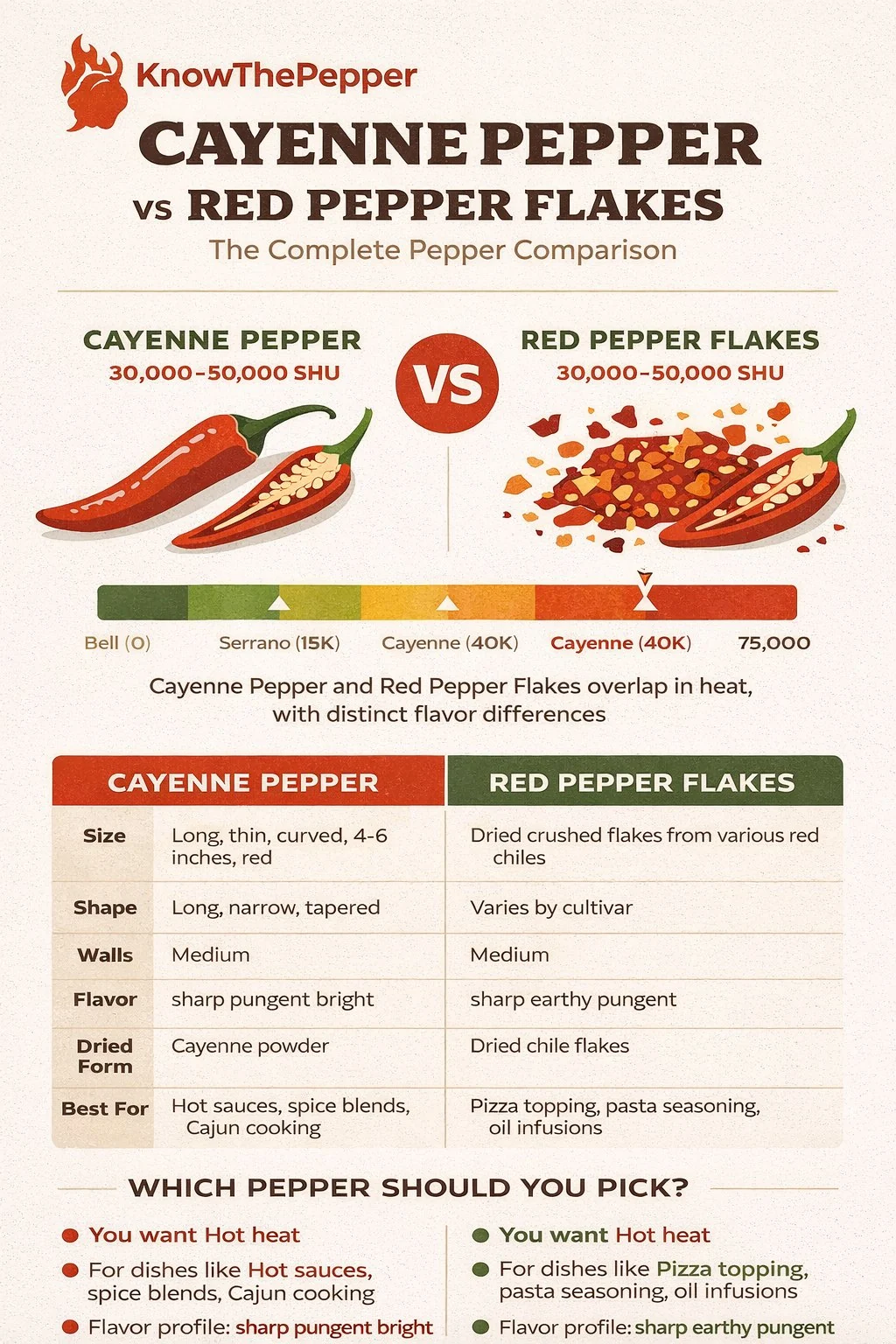
Cayenne pepper clocks in at a consistent 30,000-50,000 SHU — its floor is higher than red pepper flakes, which means it reliably delivers serious heat every time. Positioned firmly in the hot pepper intensity classification, cayenne sits roughly 3-5 times hotter than a typical chipotle (which averages around 8,000-10,000 SHU). That consistency is cayenne's defining trait: same bag, same heat, every time.
Red pepper flakes range from 15,000-45,000 SHU, but that range is deceptive. Most commercial blends pull from multiple dried pepper varieties — cayenne, Fresno, jalapeño, and others — so the heat from one brand to another, or even one batch to another, can vary noticeably. At their lower end, flakes are roughly 1.5-2 times hotter than chipotle; at peak, they approach cayenne's upper ceiling.
The character of the heat differs too. Cayenne's capsaicin load hits fast and spreads evenly across the palate, which is partly why how capsaicin binds to TRPV1 molecular pathways matters for cooks — uniform powder means uniform contact with heat receptors. Flakes, by contrast, deliver heat in bursts wherever a flake lands, creating a spottier, more unpredictable burn.
For anyone calibrating a recipe precisely, cayenne is the more controllable tool. Flakes are better when you want textural variation alongside heat.
Flavor Profile Comparison
Few peppers have traveled as far or worked as hard as cayenne.
The first thing you notice is the smell - a dry, dusty heat that rises off the jar before you've even shaken it.
Heat aside, these two products taste noticeably different — and that difference should drive which one you choose.
Cayenne has a clean, neutral peppery flavor with very little aromatic complexity. It was bred and dried specifically for heat delivery, not fragrance. When you add cayenne to a dish, you're adding fire with minimal flavor interference — it won't compete with garlic, herbs, or spices already in the pot. That neutrality is a feature, not a flaw.
Red pepper flakes carry a sharper, more layered flavor profile. Because they're made from whole dried and crushed peppers — seeds, skin, and flesh together — they bring oils, slight bitterness from seeds, and a more pronounced dried-pepper aroma. The mix of pepper varieties in most commercial blends adds further complexity: some batches lean fruity, others lean earthy depending on sourcing.
For comparison, consider how cayenne sits against paprika's smoky-sweet heat contrast — paprika adds color and depth, while cayenne adds pure fire. Red pepper flakes occupy a middle ground, bringing more personality than cayenne but less specialized flavor than paprika.
In terms of aroma, flakes bloom beautifully in hot oil, releasing fragrant compounds that infuse the entire dish. Cayenne does the same but with a thinner aromatic signature. If you've ever bloomed red pepper flakes in olive oil for pasta, you know that distinct sharp-sweet fragrance — cayenne alone won't replicate it.
The takeaway: cayenne is a precision heat instrument; red pepper flakes are a flavor contributor that happens to be hot.
Culinary Uses for Cayenne Pepper and Red Pepper Flakes
The practical kitchen differences between these two come down to texture, control, and what you're building.
Cayenne excels anywhere you need even heat distribution without visible texture. Dry rubs, spice blends, marinades, soups, and sauces all benefit from cayenne's fine powder form. It incorporates invisibly into batters and doughs — a pinch in chocolate cake or cornbread adds a low background heat that most people can't identify but definitely feel. The South American origin of cayenne shaped its traditional use in hot sauces and meat preparations where heat is the primary goal.
For substitution: 1/2 teaspoon of cayenne roughly equals 3/4 teaspoon of red pepper flakes in terms of heat impact, though the texture difference will still be apparent in finished dishes.
Red pepper flakes shine in applications where you want visible heat and aromatic bloom. Pizza toppings, pasta aglio e olio, braised meats, and pickled vegetables all benefit from the flakes' texture and seed oils. Blooming them in fat first — olive oil, butter, or rendered pork fat — unlocks their full aromatic potential in a way cayenne simply can't match.
The peri-peri versus cayenne heat contrast illustrates another angle: peri-peri flakes and blends are closer relatives to red pepper flakes than to cayenne powder, emphasizing how whole-pepper products behave differently than single-source powders.
For finishing dishes, flakes win. Scattered over a finished pizza or avocado toast, they add visual appeal and textural pops of heat that powder can't deliver. For cooking into a dish from the start, cayenne's even dispersal is usually the better call.
Both belong in a well-stocked spice cabinet — they're not truly interchangeable, just overlapping in heat range.
Which Should You Choose?
If your goal is controlled, consistent heat that disappears into a dish, cayenne is the tool. Its 30,000-50,000 SHU range is reliable batch to batch, it integrates cleanly into any preparation, and it won't introduce unexpected flavor variables.
If you want heat with character — the aromatic bloom, the visible flecks, the slight bitterness from seeds — red pepper flakes deliver an experience cayenne can't replicate. Their 15,000-45,000 SHU range is slightly less consistent, but that variability is part of their charm in rustic, textured cooking.
Both fall into the C. annuum botanical family, which means neither reaches the extreme upper ranges of superhots, but both are genuinely hot in everyday cooking terms.
For a deeper look at how cayenne compares to another sharp-heat alternative, the piri-piri versus cayenne heat contrast is worth reading. Bottom line: stock both, use cayenne when precision matters, and reach for flakes when the dish needs personality.
Can You Substitute One for the Other?
Yes — direct substitution works. Cayenne Pepper and Red Pepper Flakes are close enough in heat to swap at roughly 1:1. The main difference will be flavor. For more swap options, explore ranked alternatives with conversion ratios.
Growing Cayenne Pepper vs Red Pepper Flakes
If you’re deciding which pepper to grow at home, consider your climate and patience level. Cayenne Pepper and Red Pepper Flakes have different maturation times and temperature preferences. Hotter varieties generally need a longer, warmer growing season to develop their full capsaicin content. Our zone-based planting date tool can pinpoint the best sowing window for your area.
Cayenne is one of the more forgiving hot peppers to grow, which explains its global reach. Start seeds indoors 8-10 weeks before last frost.
For practical guidance on growing cayenne from transplant to harvest, the key variables are consistent heat and full sun. Cayenne wants at least 6-8 hours of direct light daily and struggles in cool, wet summers.
Transplant outdoors once nighttime temps stay above 55°F. Space plants 18-24 inches apart.
Red pepper flakes aren't a single variety - they're a product. But growing the peppers that go into them is straightforward if you start with cayenne-type **C.
Start seeds indoors 8–10 weeks before last frost. Germination is reliable at soil temperatures between 75–85°F.
For flake production, the goal is full red ripeness - green or partially ripe pods won't dry with the right color or heat intensity. Most cayenne-type varieties reach maturity in 70–80 days from transplant.
History & Origin of Cayenne Pepper and Red Pepper Flakes
Both peppers carry centuries of culinary heritage. Cayenne Pepper traces its roots to French Guiana, while Red Pepper Flakes originates from Global. Understanding their backstory helps explain why each pepper developed its distinctive traits.
Buying & Storage
Whether you’re shopping for Cayenne Pepper or Red Pepper Flakes, the same quality indicators apply. Fresh peppers should feel firm and heavy for their size, with taut, glossy skin and no soft or wet spots. Minor stem cracks known as “corking” are perfectly normal and often indicate a mature, flavorful pod.
- Firm pods with taut skin and consistent color
- Should feel heavy relative to size
- Minor stem cracks (“corking”) are normal
- Avoid anything soft, shriveled, or with dark wet spots
- Fresh: Paper bag, crisper drawer — 1–2 weeks
- Frozen: Wash, dry, freeze on sheet pan — 6+ months
- Dried: Airtight, away from light — up to 1 year
The Verdict: Cayenne Pepper vs Red Pepper Flakes
Cayenne Pepper and Red Pepper Flakes sit in the same heat tier but serve different roles. Cayenne Pepper delivers its distinctive neutral and peppery character. Red Pepper Flakes, with its sharp and peppery profile, excels in everyday cooking.
Frequently Asked Questions
Related Comparisons
Sources pending verification.