Cayenne Pepper vs Thai Chili: Which Pepper Should You Use?
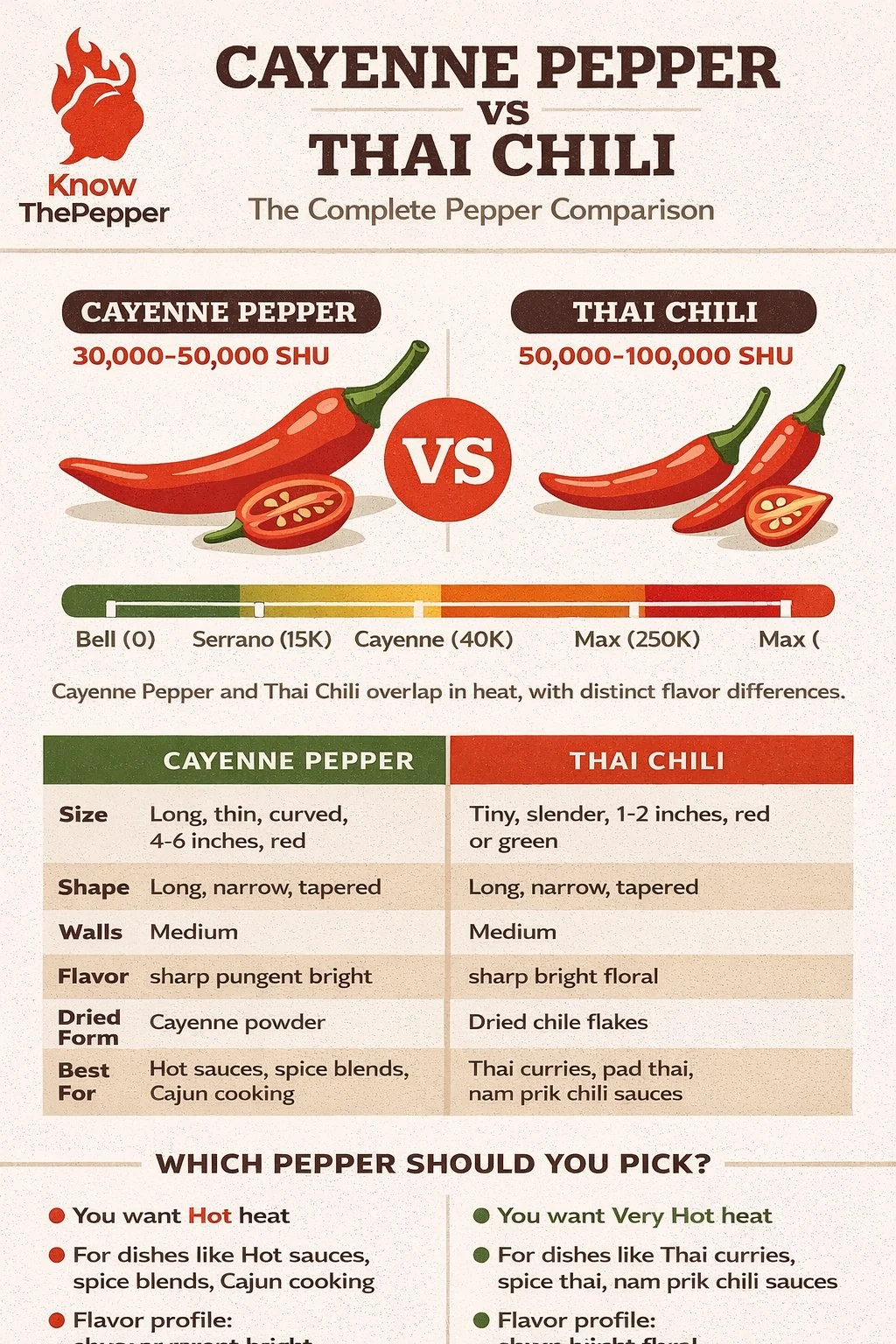
Cayenne and Thai chili are both go-to hot peppers, but they land in very different places on the heat scale and in the kitchen. Thai chili clocks in at 50,000-100,000 SHU, while cayenne data remains disputed — though traditionally cited around 30,000-50,000 SHU in culinary contexts. If you need a sharp, penetrating heat with Southeast Asian character, Thai chili is the answer; cayenne brings a drier, more linear burn suited to spice blends and sauces.

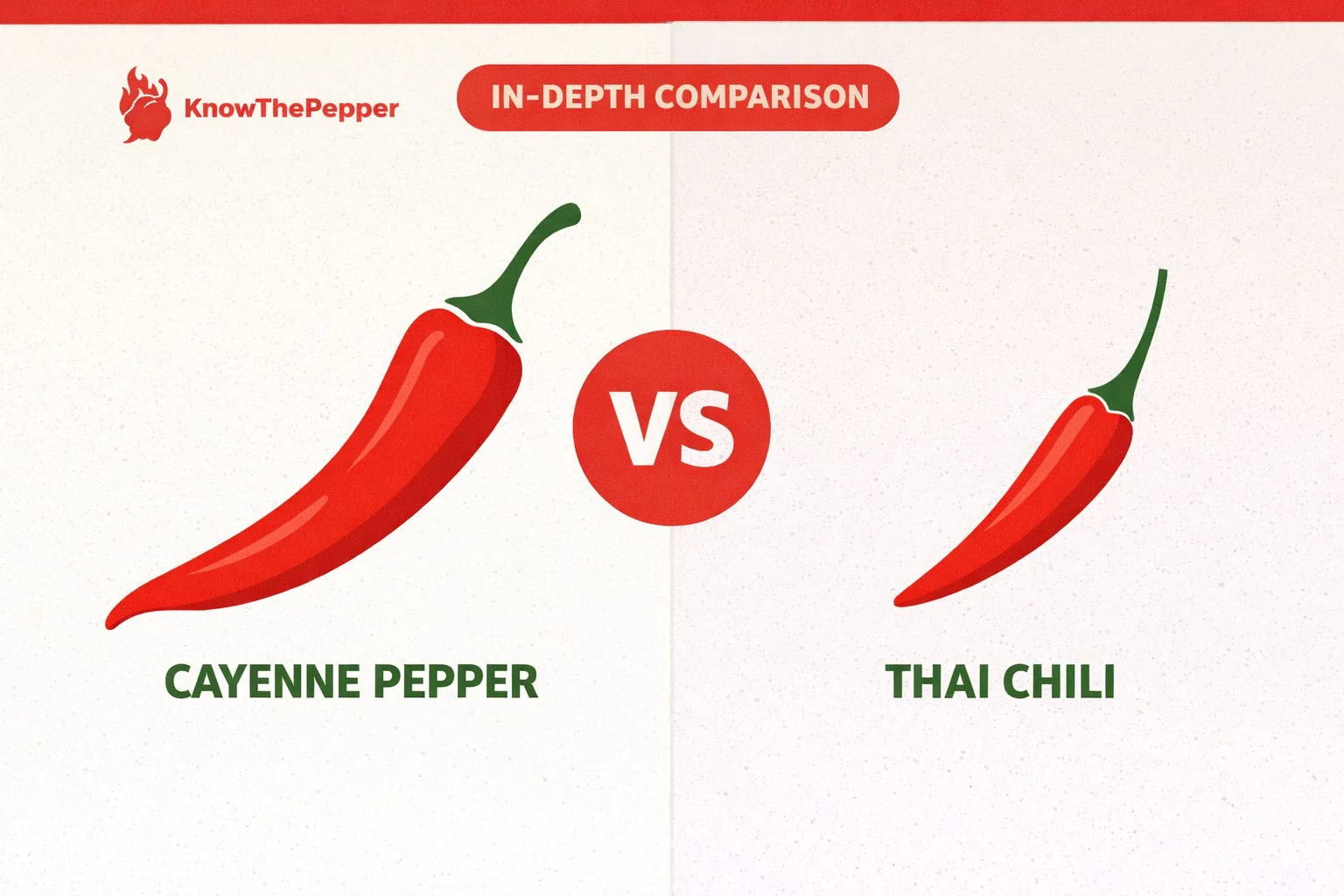
Cayenne Pepper measures 30K–50K SHU while Thai Chili registers 50K–100K SHU — making Thai Chili 2× hotter. Cayenne Pepper is known for its neutral and peppery flavor (C. annuum), while Thai Chili offers bright and peppery notes (C. annuum).
- Heat difference: Thai Chili is 2× hotter
- Species: Both are C. annuum
- Best for: Cayenne Pepper excels in everyday cooking and salsas, Thai Chili in hot sauces and spicy dishes
Cayenne Pepper
HotThai Chili
Extra-HotCayenne Pepper vs Thai Chili Comparison
Cayenne Pepper vs Thai Chili Heat Levels
The heat gap between these two peppers is real and worth understanding before you start cooking.
Thai chili sits firmly in the hot pepper intensity range, measuring 50,000-100,000 SHU. That puts it roughly 3 to 6 times hotter than a guajillo (which tops out around 5,000 SHU), and comfortably above most peppers home cooks reach for daily.
Cayenne is traditionally placed around 30,000-50,000 SHU in culinary references, though commercial cayenne powder can vary significantly depending on the source and processing. In practice, cayenne delivers a fast, surface-level burn that builds quickly and fades at a moderate pace.
Thai chili burns differently. The heat hits sharper and penetrates deeper — it tends to linger longer and spread across the palate rather than concentrating at the tip of the tongue. This is partly because the capsaicin concentration is higher, but also because the smaller fruit size means more seeds and placental tissue relative to flesh. For a deeper look at why peppers trigger that burning sensation at the receptor level, the chemistry is genuinely fascinating.
For everyday cooking, cayenne is forgiving — you can add it incrementally and taste as you go. Thai chili demands more respect. A single small pod can tip a dish from pleasantly hot to aggressively spicy, especially in dishes with shorter cook times where the heat doesn't mellow.
Flavor Profile Comparison
Few peppers have traveled as far or worked as hard as cayenne.
Small enough to overlook, fierce enough to remember — the Thai chili punches well above its size.
Start with the nose: Thai chili has a bright, almost grassy aroma when fresh — there's a sharpness to it that signals the heat before you even taste anything. Dried Thai chilies shift toward a more concentrated, slightly smoky scent, though they never develop the deep earthiness of dried anchos or guajillos.
Cayenne's aroma is subtler. Fresh cayenne smells mildly fruity and vegetal; dried and ground, it takes on that familiar warm, slightly dusty character most people recognize from spice racks. It doesn't announce itself the way Thai chili does.
On the palate, Thai chili is bright and peppery — there's a clean sharpness that cuts through fatty dishes without muddying them. It doesn't carry much sweetness or fruitiness, which makes it a precise flavor tool. The heat is the feature, not a background note.
Cayenne tastes warmer and slightly more neutral. It integrates into dishes rather than standing apart from them, which is exactly why it became a staple in spice blends, hot sauces, and dry rubs. It adds heat without competing with other flavors.
For dishes where you want the pepper's character to be front and center — Thai curries, larb, nam prik — Thai chili's peppery brightness is essential. For applications where heat is seasoning rather than identity, cayenne's blending quality is an asset. The heat difference versus a serrano gives useful context for where Thai chili sits relative to other common fresh peppers.
Culinary Uses for Cayenne Pepper and Thai Chili
These two peppers rarely substitute cleanly for each other, and understanding why helps you cook better with both.
Thai chili is central to Southeast Asian pepper traditions — it appears in curries, stir-fries, dipping sauces, and fresh salsas across Thailand, Vietnam, and beyond. Its small size means it's often used whole or sliced thin, and the seeds are typically left in. The heat is part of the dish's architecture, not just background warmth.
Cayenne functions more as a seasoning agent. Ground cayenne goes into everything from Cajun spice blends to Indian curry powders to dry-rubbed meats. Fresh cayenne peppers (when you can find them) work well in hot sauces and pickles, but the dried ground form is far more common in most kitchens.
Substitution ratios matter here. If a recipe calls for Thai chili and you only have cayenne, use roughly 1.5 to 2 times the amount to approximate the heat level — but expect the flavor profile to shift. Going the other direction, replace cayenne with Thai chili at about a 1:2 ratio (half as much Thai chili by weight or count).
For dishes where texture matters — Thai papaya salad, Vietnamese pho garnishes, fresh salsas — dried cayenne powder won't work as a substitute at all. You'd need a fresh small hot pepper, and how habanero compares to Thai chili in those applications is worth knowing if habanero is what you have on hand.
Cayenne shines in: dry spice rubs, hot sauce bases, soups that need background heat, and any application where even distribution matters more than punch. Thai chili owns: Southeast Asian cooking, dishes where visible pepper pieces are part of the presentation, and anywhere you want a clean, sharp heat note.
For anyone building a germination and growing guide for annuum varieties, both peppers are relatively easy to start from seed, though Thai chili tends to produce prolifically even in containers.
Which Should You Choose?
Pick Thai chili when the recipe is Southeast Asian in origin, when you need heat that registers immediately and clearly, or when the pepper itself is part of the dish's visual identity. It's not a background player — it's a lead ingredient.
Reach for cayenne when you're seasoning rather than featuring, when even heat distribution matters, or when you're working with spice blends, dry rubs, or long-cooked sauces where subtlety serves better than sharpness.
The jalapeño-vs-Thai-chili heat gap is a useful reference point: Thai chili runs roughly 10 to 20 times hotter than a jalapeño, which gives you a sense of how much punch it carries compared to familiar benchmarks.
If you're stocking a pantry for general use, cayenne (ground) earns its place for versatility. If you cook Southeast Asian food regularly, dried Thai chilies are non-negotiable. Serious cooks keep both.
Can You Substitute One for the Other?
Proceed with caution. Thai Chili is 2× hotter than Cayenne Pepper.
Need a different option altogether? Search for peppers that match your target heat and flavor with precise swap ratios.
Growing Cayenne Pepper vs Thai Chili
If you’re deciding which pepper to grow at home, consider your climate and patience level. Cayenne Pepper and Thai Chili have different maturation times and temperature preferences. Hotter varieties generally need a longer, warmer growing season to develop their full capsaicin content. Our zone-based planting date tool can pinpoint the best sowing window for your area.
Cayenne is one of the more forgiving hot peppers to grow, which explains its global reach. Start seeds indoors 8-10 weeks before last frost.
For practical guidance on growing cayenne from transplant to harvest, the key variables are consistent heat and full sun. Cayenne wants at least 6-8 hours of direct light daily and struggles in cool, wet summers.
Transplant outdoors once nighttime temps stay above 55°F. Space plants 18-24 inches apart.
The hardest part of growing Thai chilies is not germination — it is managing heat stress during fruiting. These plants originate from a tropical climate and expect warmth, but sustained temperatures above 95°F (35°C) cause flower drop before pods can set.
Germination itself is straightforward at 80–85°F soil temperature, typically within 10–14 days. Start seeds indoors 8–10 weeks before last frost.
They prefer well-draining soil with consistent moisture but will tolerate brief dry spells better than waterlogging. Feed with a low-nitrogen fertilizer once flowering begins; too much nitrogen pushes leaf growth at the expense of pods.
History & Origin of Cayenne Pepper and Thai Chili
Both peppers carry centuries of culinary heritage. Cayenne Pepper traces its roots to French Guiana, while Thai Chili originates from Thailand. Understanding their backstory helps explain why each pepper developed its distinctive traits.
Buying & Storage
Whether you’re shopping for Cayenne Pepper or Thai Chili, the same quality indicators apply. Fresh peppers should feel firm and heavy for their size, with taut, glossy skin and no soft or wet spots. Minor stem cracks known as “corking” are perfectly normal and often indicate a mature, flavorful pod.
- Firm pods with taut skin and consistent color
- Should feel heavy relative to size
- Minor stem cracks (“corking”) are normal
- Avoid anything soft, shriveled, or with dark wet spots
- Fresh: Paper bag, crisper drawer — 1–2 weeks
- Frozen: Wash, dry, freeze on sheet pan — 6+ months
- Dried: Airtight, away from light — up to 1 year
The Verdict: Cayenne Pepper vs Thai Chili
Cayenne Pepper and Thai Chili occupy very different positions on the heat spectrum. Thai Chili delivers 2× more heat with its distinctive bright and peppery character. Cayenne Pepper, with its neutral and peppery profile, excels in everyday cooking.
Frequently Asked Questions
Related Comparisons
Sources pending verification.