
Anaheim Pepper vs Jalapeño: Taste, Heat & When to Use Each
The Anaheim pepper tops out around 1,000 SHU on most plants, while the jalapeño ranges from 2,500 to 8,000 SHU - making jalapeños anywhere from 2.5 to 8 times hotter depending on the individual fruit. Beyond heat, these two peppers diverge sharply in flavor, texture, and kitchen application, though both belong to the C. annuum botanical family that dominates North American cooking.

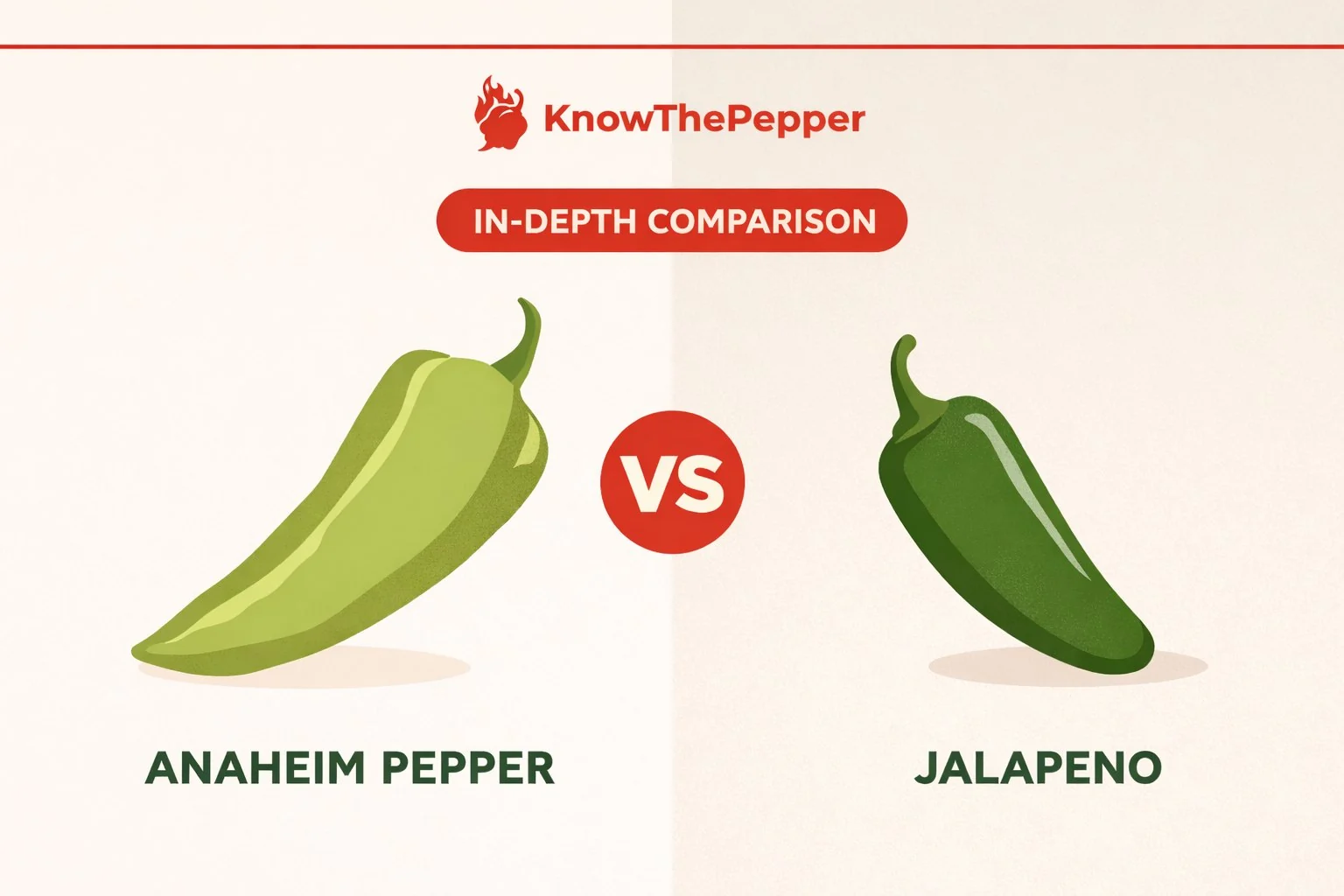
Anaheim Pepper measures 500–3K SHU while Jalapeño registers 3K–8K SHU — making Jalapeño 3× hotter. Anaheim Pepper is known for its mild and sweet flavor (C. annuum), while Jalapeño offers bright and grassy notes (C. annuum).
- Heat difference: Jalapeño is 3× hotter
- Species: Both are C. annuum
- Best for: Anaheim Pepper excels in everyday cooking and salsas, Jalapeño in fresh salsas and mild recipes
Anaheim Pepper vs Jalapeño Comparison
Anaheim Pepper vs Jalapeño Heat Levels
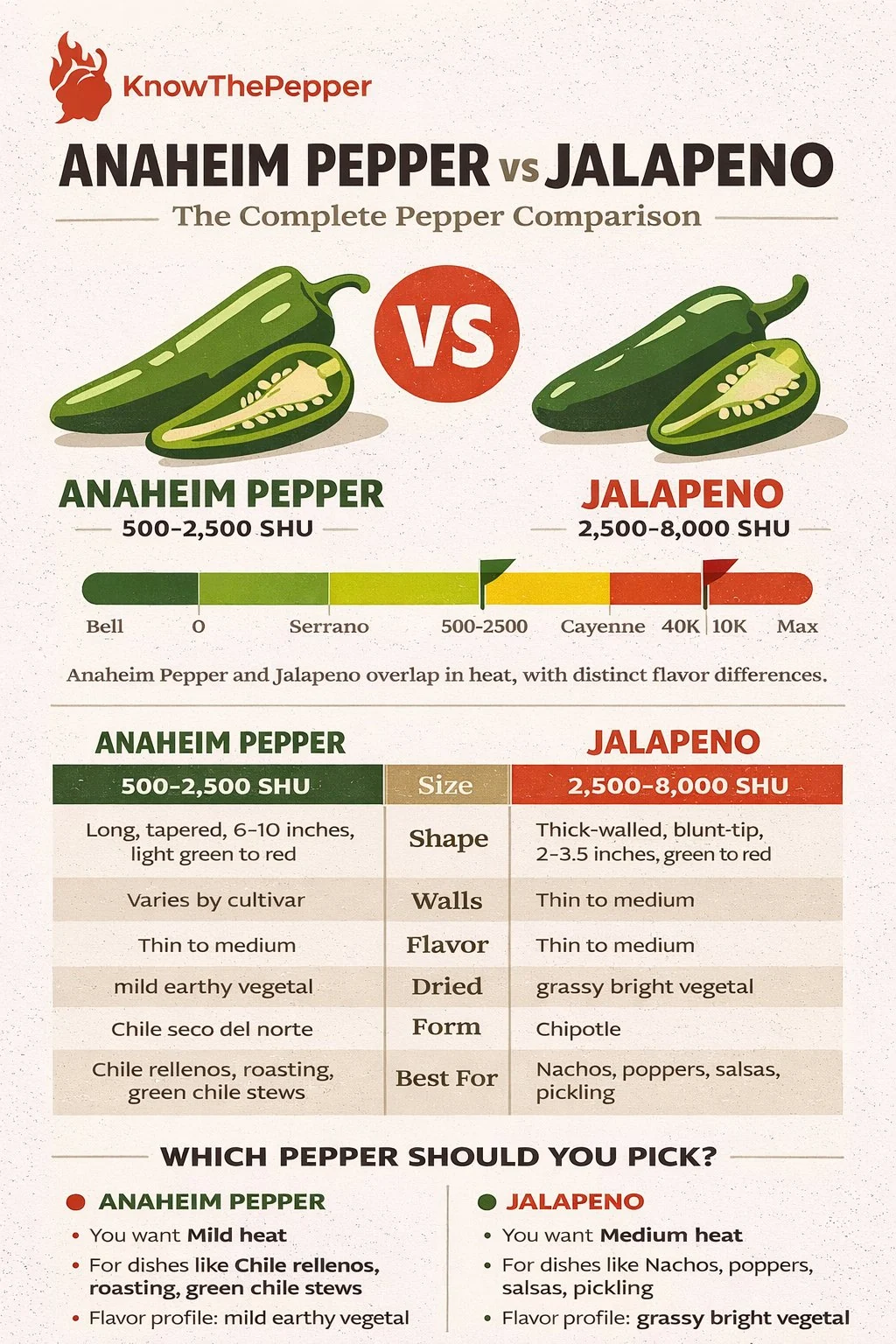
The Anaheim pepper sits in a comfortable 500-2,500 SHU range in most commercial growing conditions, though some sources cite a ceiling near 1,000 SHU for the mildest specimens. That places it squarely in the mild-to-low-medium heat category - noticeable warmth without any real bite.
The jalapeño starts where many Anaheims leave off. At 2,500 SHU on the low end, a mild jalapeño already doubles the heat of a typical Anaheim. Peak jalapeños at 8,000 SHU hit roughly 8 times harder. The variance within jalapeños alone is significant - stress factors like drought and heat during cultivation push capsaicin production upward, so two jalapeños from the same plant can differ meaningfully.
For a practical frame: a jalapeño at 5,000 SHU (roughly mid-range) delivers about 5 times the heat of an average Anaheim. That gap is large enough to matter at the table. Someone with low heat tolerance who handles Anaheims fine may find even a mild jalapeño uncomfortable.
The burn character differs too. Anaheim heat, when present, tends to sit at the front of the mouth and dissipate quickly. Jalapeño heat builds slightly and lingers longer, partly because its capsaicin concentration triggers a more sustained TRPV1 receptor response in the mouth. Neither pepper reaches the punishing mid-range territory you'd see in a habanero or Scotch bonnet - but they're not interchangeable on the heat scale.
Flavor Profile Comparison
At 500–2,500 SHU, the Anaheim sits at the gentler end of the medium heat peppers category — closer to a bell pepper in burn than anything that'll make you reach for milk.
Few peppers have earned their reputation as thoroughly as the jalapeño.
Anaheim peppers have a clean, vegetable-forward flavor - mildly sweet, slightly earthy, with a crisp flesh that holds up well to long cooking. When roasted, the skin blisters easily and the flesh softens into something almost buttery, with a gentle smokiness that doesn't compete with other ingredients. Raw, they taste like a more complex bell pepper with a faint peppery edge.
The jalapeño brings a distinctly bright, grassy flavor with a sharper edge - more assertive even before the heat registers. There's a fresh, almost vegetal sharpness that you don't find in Anaheims. Ripe red jalapeños develop a slightly fruity sweetness, but the green form (which dominates commercial sales) stays crisp and herbaceous.
Aroma is another point of difference. Slicing a fresh jalapeño releases a recognizable sharp scent; Anaheims smell more neutral, closer to a green bell pepper. This matters in raw applications - jalapeños announce themselves in a pico de gallo or fresh salsa, while Anaheims blend into the background.
For cooking, Anaheims are workhorses in dishes where you want mild pepper flavor without heat dominating. Their thick walls make them ideal for stuffing. Jalapeños bring both flavor and heat as a unit - you can't get one without the other, which is precisely why they're used differently. Comparing these two to the sweet-heat contrast in banana pepper vs jalapeño highlights how much flavor profile shapes pepper selection beyond just Scoville numbers.
Culinary Uses for Anaheim Pepper and Jalapeño
Anaheim peppers are built for applications where volume matters. Their large size (6-10 inches) and mild heat make them the default choice for chiles rellenos - stuffed with cheese or meat, battered, and fried. They're also the traditional base for green chile sauce in New Mexico cuisine, roasted and peeled in bulk to create the backbone of dishes served throughout the region.
Roasting is where Anaheims truly shine. Char them directly over a gas flame or under a broiler, seal in a bag to steam, then peel away the skin. The resulting flesh has a smoky depth that raw Anaheims lack entirely. Use them in enchilada sauce, layered into casseroles, or blended into a simple roasted pepper soup.
For stuffing, Anaheims have a practical advantage over jalapeños: the cavity is large enough to fill without surgical precision. A standard Anaheim holds 2-3 tablespoons of filling comfortably.
Jalapeños operate differently in the kitchen - they're flavor-plus-heat delivery systems. Dice them raw into salsas, slice them onto nachos, or pickle them in a quick brine of vinegar, salt, and sugar for a condiment that keeps for weeks. Smoked and dried jalapeños become chipotles, one of the most versatile dried chiles in Mexican cooking - a connection to the broader tradition of Mexican pepper cultivation.
Substitution between these two requires adjustment. Replacing jalapeños with Anaheims in a recipe drops the heat substantially - compensate with a pinch of cayenne or a few drops of hot sauce. Going the other direction (Anaheim to jalapeño), use roughly half the quantity and expect a different texture since jalapeños are smaller and thinner-walled.
For a wider perspective on jalapeño-adjacent heat levels, the cayenne vs jalapeño breakdown shows how much hotter the cayenne runs compared to this already-familiar baseline.
Which Should You Choose?
Choose Anaheim peppers when you need mild pepper flavor in large quantities - stuffed preparations, roasted green chile sauce, or any dish where the pepper is a primary ingredient rather than a seasoning. Their size and mild heat let them carry a recipe without overwhelming it.
Reach for jalapeños when you want both flavor and heat working together. They're the right call for salsas, pickled condiments, poppers, or any situation where a sharp, grassy pepper note with real heat is the goal. Their smaller size also means more precise control in recipes.
If heat tolerance is the deciding factor: Anaheims are genuinely mild enough for nearly everyone, while jalapeños - even at the low end of their range - deliver noticeable heat. The bird's eye chili vs jalapeño contrast puts jalapeño heat in perspective against truly hot peppers, reinforcing that jalapeños occupy a middle ground that Anaheims simply don't reach.
For cooks exploring Anaheim substitutes, the Anaheim substitute guide covers ratio-based swaps in detail.
Can You Substitute One for the Other?
Yes — direct substitution works. Anaheim Pepper and Jalapeño are close enough in heat to swap at roughly 1:1. The main difference will be flavor. For more swap options, explore ranked alternatives with conversion ratios.
Growing Anaheim Pepper vs Jalapeño
If you’re deciding which pepper to grow at home, consider your climate and patience level. Anaheim Pepper and Jalapeño have different maturation times and temperature preferences. Hotter varieties generally need a longer, warmer growing season to develop their full capsaicin content. Our zone-based planting date tool can pinpoint the best sowing window for your area.
Anaheims are among the more forgiving chiles to grow, though they still need warm conditions to produce well. Start seeds indoors 8–10 weeks before last frost.
Transplant outdoors after all frost risk has passed, spacing plants 18–24 inches apart. They prefer full sun and well-drained soil with consistent moisture.
Plants reach 24–36 inches tall and begin producing pods around 75–80 days after transplant. Green pods are ready to harvest when they reach full size; leave them longer for red-ripe fruit.
Jalapeños are among the most forgiving hot peppers to grow, but they do have preferences worth knowing.
Start seeds indoors 8–10 weeks before your last frost date. Soil temperature for germination should stay between 75–85°F — a heat mat under the seed tray makes a real difference in germination speed and uniformity.
Transplant outdoors once nighttime temps stay consistently above 55°F. Jalapeños want full sun — at least 6 hours daily — and well-drained soil with a pH around **6.
History & Origin of Anaheim Pepper and Jalapeño
Both peppers carry centuries of culinary heritage. Anaheim Pepper traces its roots to USA, while Jalapeño originates from Mexico. Understanding their backstory helps explain why each pepper developed its distinctive traits.
Buying & Storage
Whether you’re shopping for Anaheim Pepper or Jalapeño, the same quality indicators apply. Fresh peppers should feel firm and heavy for their size, with taut, glossy skin and no soft or wet spots. Minor stem cracks known as “corking” are perfectly normal and often indicate a mature, flavorful pod.
- Firm pods with taut skin and consistent color
- Should feel heavy relative to size
- Minor stem cracks (“corking”) are normal
- Avoid anything soft, shriveled, or with dark wet spots
- Fresh: Paper bag, crisper drawer — 1–2 weeks
- Frozen: Wash, dry, freeze on sheet pan — 6+ months
- Dried: Airtight, away from light — up to 1 year
The Verdict: Anaheim Pepper vs Jalapeño
Anaheim Pepper and Jalapeño sit in the same heat tier but serve different roles. Jalapeño delivers 3× more heat with its distinctive bright and grassy character. Anaheim Pepper, with its mild and sweet profile, excels in everyday cooking.
Frequently Asked Questions
Related Comparisons
Sources pending verification.
