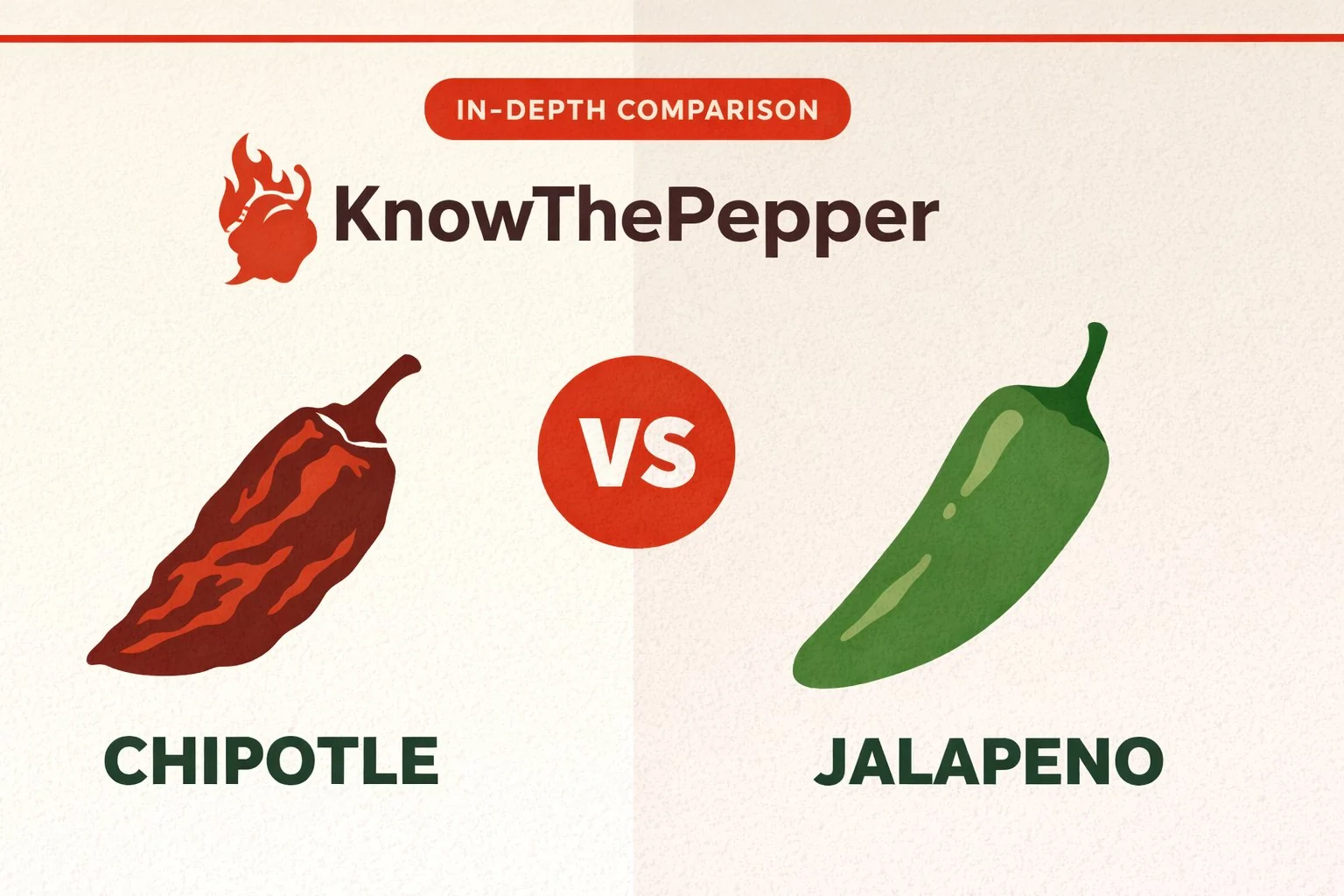
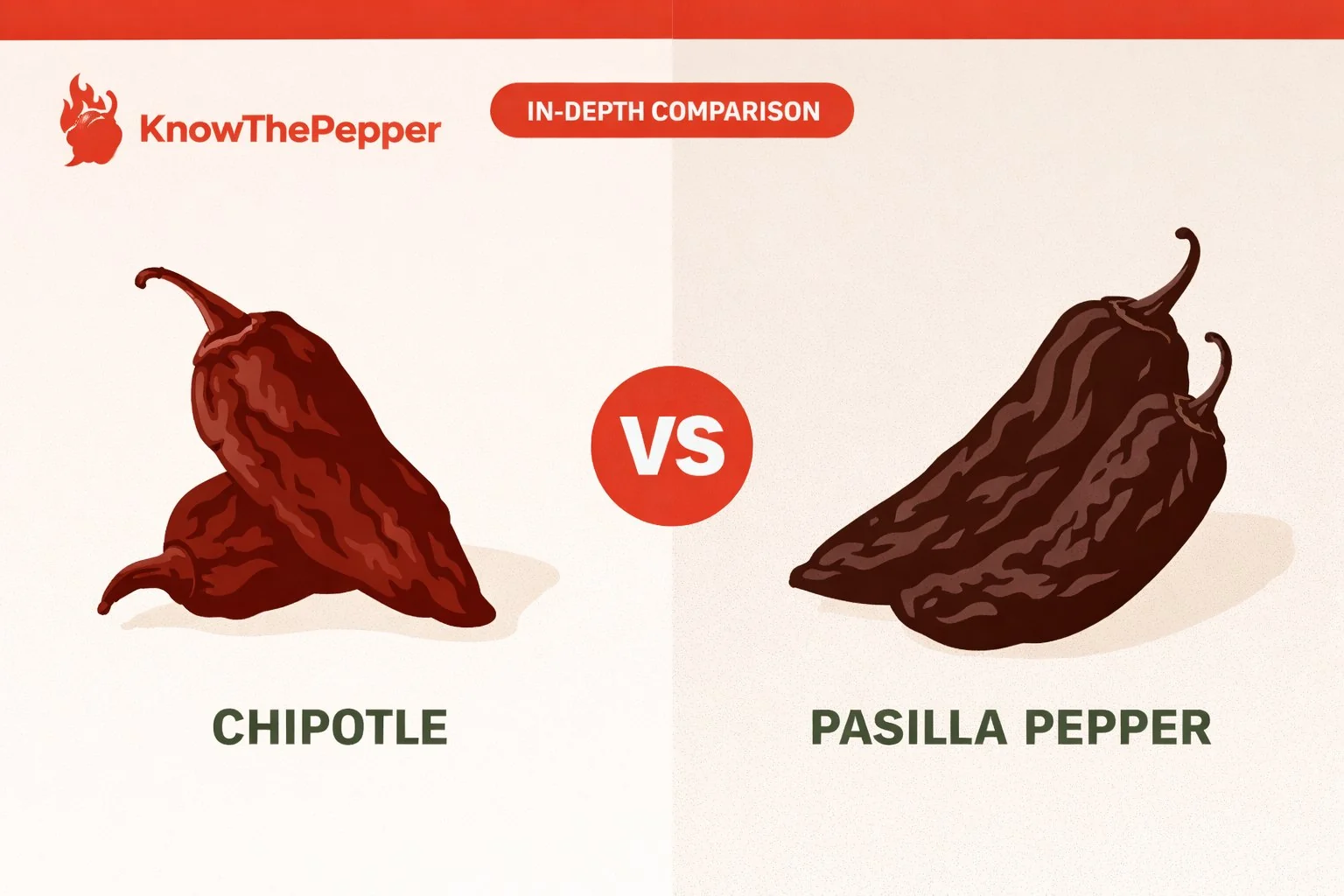
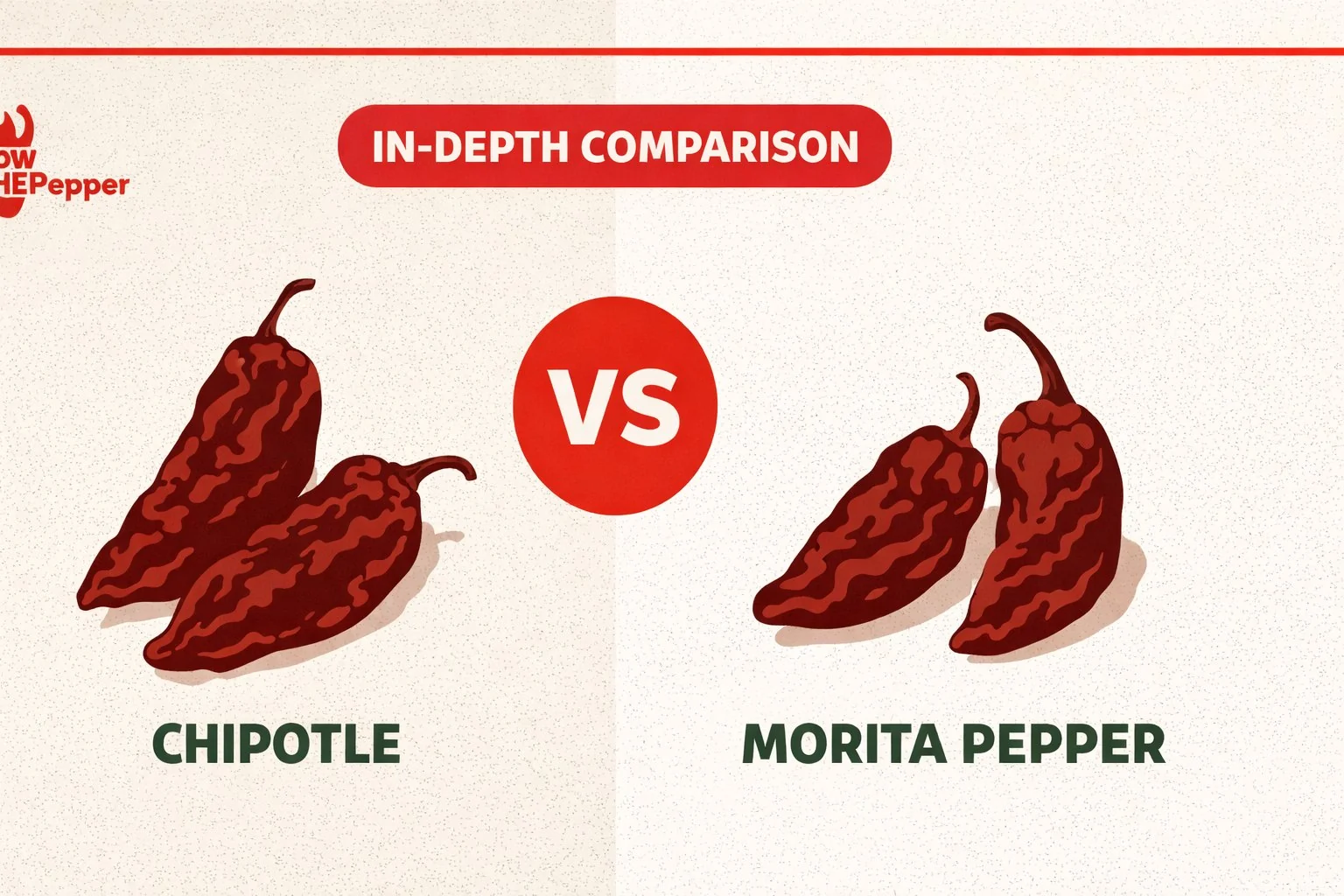
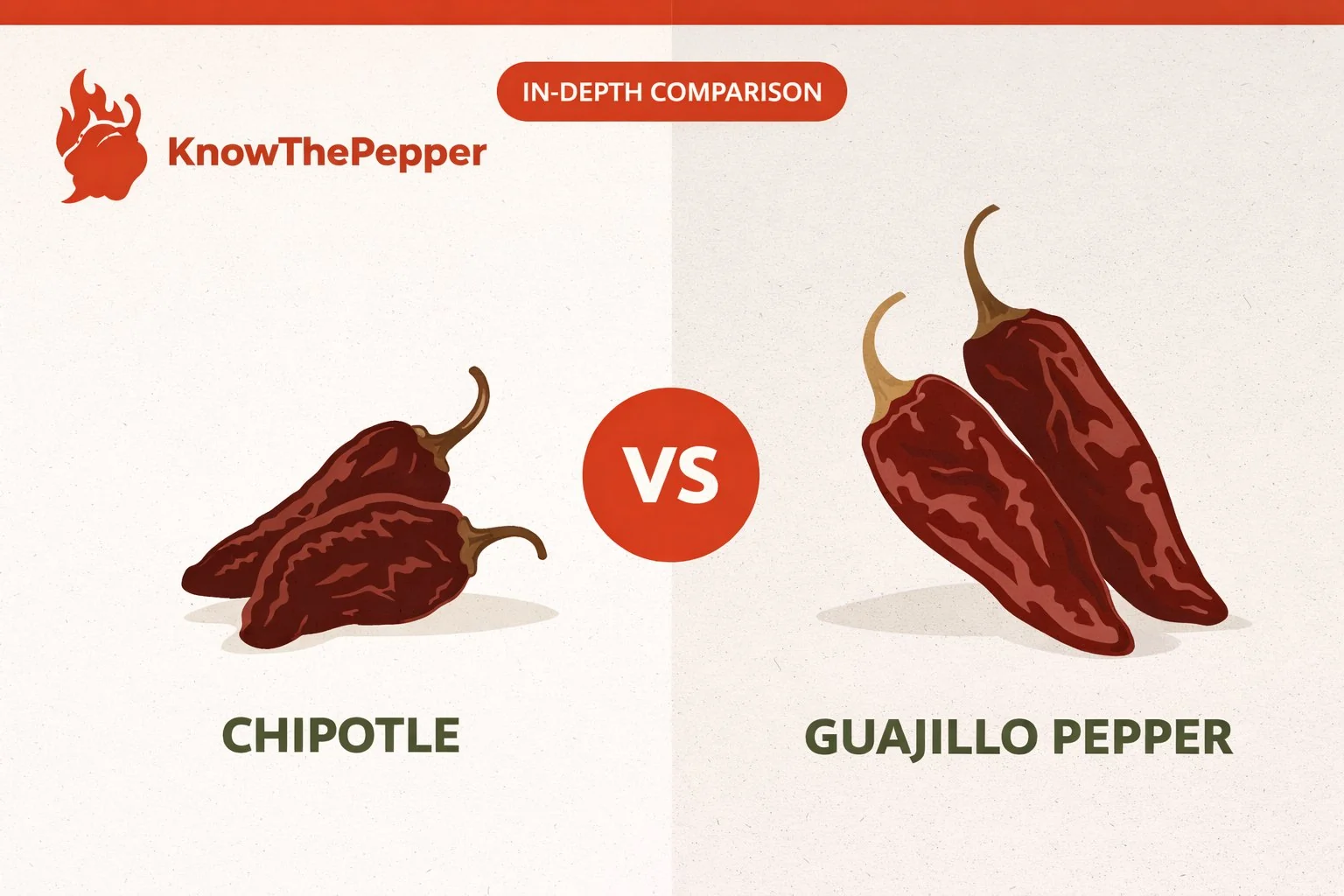
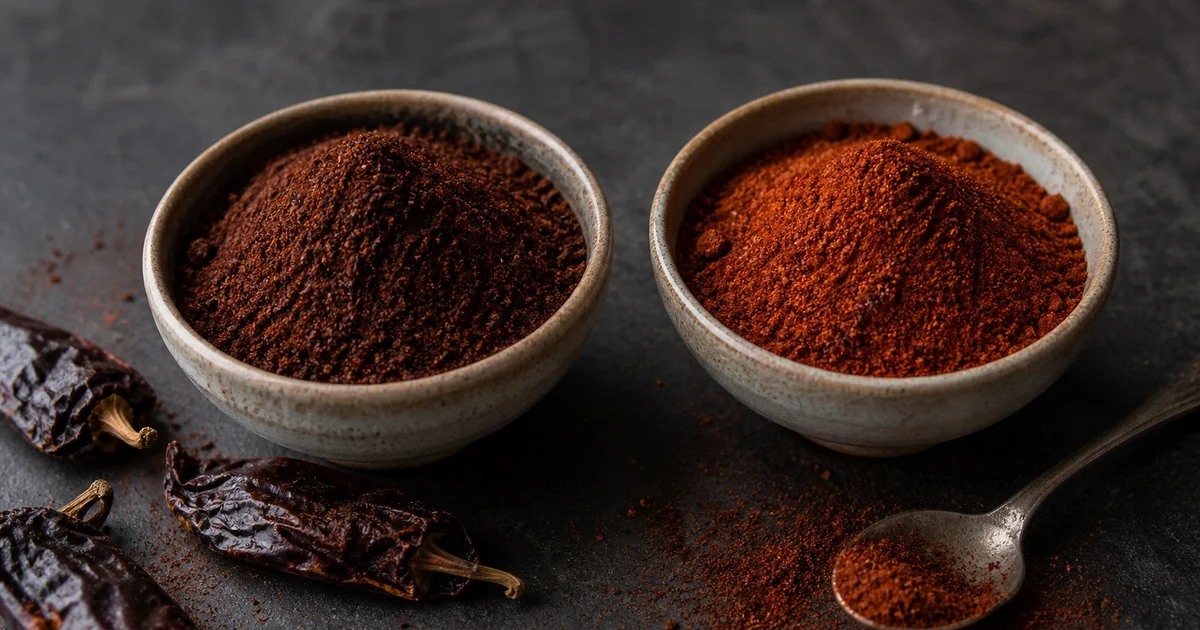
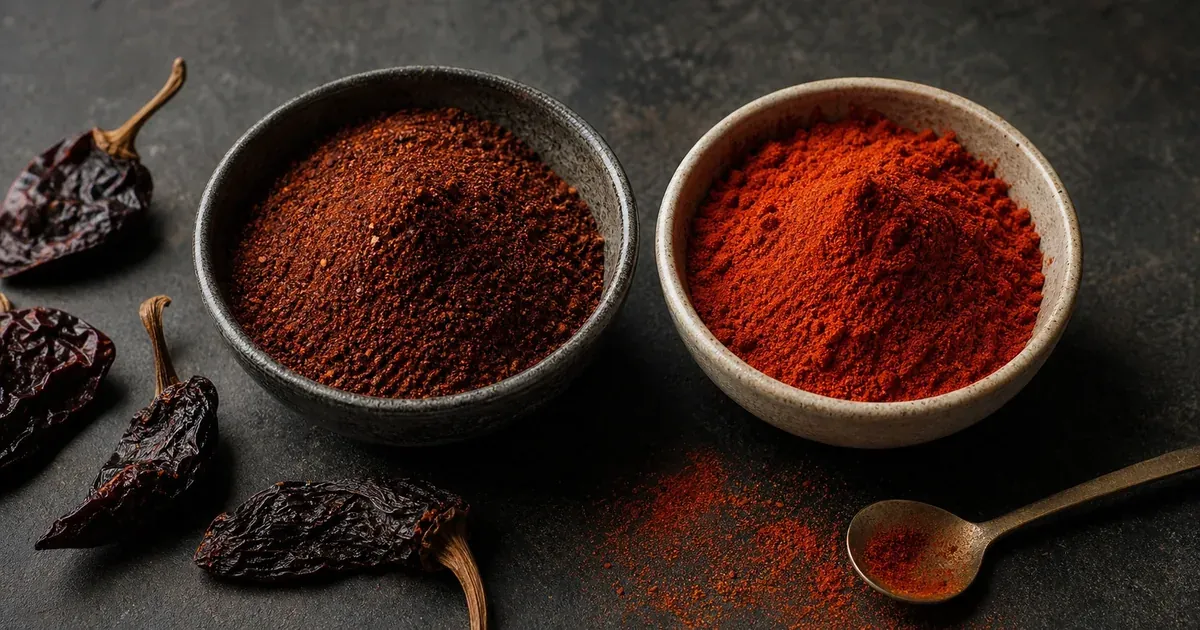
Chipotle is a smoked ripe jalapeno, so it brings smoke, medium heat, and often adobo sauce. Ancho is a dried ripe poblano, so it brings raisin-like sweetness, dark color, and mild sauce body. Pick chipotle when smoke should lead; pick ancho when the sauce needs depth without much heat.
Comparison Contributor·Updated Jun 29, 2026·
Reviewed by
Karen Liu
Quick Comparison
Chipotle measures 3K–8K SHU while Ancho Pepper registers 1K–2K SHU. That makes Chipotle about 4x hotter by upper SHU range. Chipotle is known for its smoky and sweet flavor (C. annuum), while Ancho Pepper offers sweet, raisin-like, earthy, lightly cocoa-like notes (C. annuum).
Chipotle
3K–8K SHU
Medium · smoky and sweet
Ancho Pepper
1K–2K SHU
Medium · sweet, raisin-like, earthy, lightly cocoa-like
Heat difference: Chipotle is about 4× hotter by upper SHU range
Species: Both are C. annuum
Best for: Chipotle excels in everyday cooking and salsas, Ancho Pepper in fresh salsas and mild recipes
Chipotle keeps the jalapeno heat range, about 2,500-8,000 SHU. Ancho is milder at 1,000-2,000 SHU. The number matters less than the form, because canned chipotle in adobo also brings sauce, vinegar, garlic, and salt.
The chipotle isn't a distinct pepper variety - it's a process applied to a pepper.
Ancho Pepper
1K–2K SHU
sweetraisin-likeearthylightly cocoa-like
C. annuum
Ancho pepper is the dried form of a ripe poblano chile.
Chipotle tastes smoky first. Morita styles can taste a little sweet, but the smoke still leads the dish.
Ancho tastes like dried fruit, cocoa, and mild chile skin. It can darken a sauce without making the whole pot taste like smoke.
That flavor split makes the pages easy to separate from chipotle vs guajillo and ancho vs guajillo. This page is about smoke against dark sweet body.
Culinary Uses for Chipotle and Ancho Pepper
Chipotle
Medium
Canned chipotle en adobo is one of the most versatile pantry items for adding smoke and heat simultaneously. The adobo sauce - made from tomato, vinegar, garlic, and spices - picks up the chipotle's flavor and is itself a seasoning ingredient.
Most ancho cooking starts with a simple sequence: stem, seed, toast, soak, then blend. Toast the chile in a dry skillet only until aromatic, usually a few seconds per side.
Chipotle fits beans, barbecue sauce, mayo, marinades, taco meat, and any dish that can carry smoke. If the recipe says chipotle in adobo, the sauce is part of the ingredient.
Ancho fits mole-style sauces, enchilada sauce, tamale filling, pozole broth, braised beef, and dry rubs that need dark chile flavor without a hard burn.
Do not swap canned chipotle into an ancho sauce without changing the liquid. Adobo adds acid, tomato, garlic, and salt. That can help beans, but it can push a mole-style sauce off balance.
Do not swap ancho powder into a chipotle recipe and expect smoke. If ancho is all you have, add a smoked ingredient such as pimenton or a small amount of smoked salt.
Chipotle wins when smoke is the point. Ancho wins when sauce body is the point.
If you are building a Mexican dried chile sauce from scratch, start with ancho. If you are fixing a quick weeknight sauce or spread, chipotle in adobo gets you there faster.
Can You Substitute One for the Other?
Start near 1:1 by amount. The heat ranges are close enough that flavor, form, and recipe role matter more than a strict Scoville conversion.
Growing Chipotle vs Ancho Pepper
Growing notes
Chipotle
You don't grow chipotles - you make them from jalapeños you've grown. The process is fully achievable at home with a backyard smoker or kettle grill.
Start with home-grown jalapeños left to ripen to fully red on the plant - red jalapeños have the necessary sugar content for the smoking process to develop complex flavor. Green jalapeños can be smoked but produce a less complex result.
Home smoking process:
1. Wash and dry red jalapeños thoroughly
2.
Growing notes
Ancho Pepper
Growing ancho means growing poblano and drying ripe pods after harvest. The plant phase produces the pepper; the drying phase creates the ancho flavor.
Use the pepper seed-starting workflow for trays, warmth, light, hardening off, and transplant timing. University of Minnesota Extension recommends starting pepper seed about eight weeks before outdoor planting and transplanting after cold nights have passed.
Give poblano plants full sun, warm soil, steady moisture, and enough space for broad pods. Harvest green pods if you want fresh poblanos.
Where They Come From
Origin & background
Chipotle
Mexico · C. annuum
The chipotle's origins trace to the Aztec Empire, where smoking and drying chiles was a preservation technique for a pepper that doesn't dry as efficiently as thinner-walled chiles. The word 'chipotle' derives from the Nahuatlchilpoctli - 'smoked chile'.
Spanish chroniclers documented the smoked jalapeño as early as the 16th century, noting it as a distinct preservation technique in the Veracruz region - where most jalapeños were grown. The traditional smoking technique used mesquite wood in stone or adobe smokehouses, with peppers arranged on metal grates above smoldering coals for 48-72 hours.
Origin & background
Ancho Pepper
Mexico · C. annuum
Ancho belongs to Mexico's dried-chile pantry because it starts as poblano, a Mexican pepper tied closely to Puebla and central Mexican cooking. Drying ripe chiles preserved the harvest and changed the flavor into something deeper than the fresh pod.
Food & Wine's Diana Kennedy chile guide gives the clearest reader-facing naming point: the fresh poblano becomes ancho when dried. That matters because grocery labels often confuse ancho, pasilla, and poblano.
Buying & Storage
Whether you’re shopping for Chipotle or Ancho Pepper, the same quality indicators apply. Fresh peppers should feel firm and heavy for their size, with taut, glossy skin and no soft or wet spots. Minor stem cracks known as “corking” are perfectly normal and often indicate a mature, flavorful pod.
Selection
What to look for
Firm pods with taut skin and consistent color
Should feel heavy relative to size
Minor stem cracks (“corking”) are normal
Avoid anything soft, shriveled, or with dark wet spots
Storage
How to store them
Fresh: Paper bag, crisper drawer, 1 to 2 weeks
Frozen: Wash, dry, freeze on sheet pan, 6+ months
Dried: Airtight and away from light, up to 1 year
Mistakes to avoid
Common misses
Chipotle
Equating green with unripe. Different products.
Overcooking. Cell walls break down fast.
Sealed plastic storage. Causes rot. Use paper bags.
Common misses
Ancho Pepper
Equating green with unripe. Different products.
Overcooking. Cell walls break down fast.
Sealed plastic storage. Causes rot. Use paper bags.
Final call
Chipotle vs Ancho Pepper
Chipotle and Ancho Pepper
sit in the same heat tier but serve different roles. Chipotle delivers about 4× more upper-range heat with its distinctive smoky and sweet character.
Ancho Pepper, with its sweet, raisin-like, earthy, lightly cocoa-like profile, excels in everyday cooking.
Heat gap about 4× by upper rangeChipotle smoky and sweetAncho Pepper sweet, raisin-like, earthy, lightly cocoa-like
Whole dried chipotle and canned chipotle do not behave the same way. Whole pods need soaking or grinding. Canned pods already carry a wet sauce, so they change texture and seasoning at once.
Whole ancho pods need the classic stem, seed, toast, soak, blend sequence. Pure ancho powder works in a rub, but it will not give the same smooth paste unless you bloom it with liquid.
Buy chipotle by format: canned adobo for quick sauce, morita or meco pods for dried chile work, powder for rubs. Buy ancho as flexible whole pods when you can; brittle pods make weaker paste.
Fact-Checked & Expert Reviewed
Editorial Standards: Head-to-head comparisons include blind tasting when applicable. Heat levels cross-referenced with multiple sources. All substitution ratios tested side-by-side.
Review Process:
Written by
James Thompson
(Lead Comparison Reviewer)
, reviewed by
Karen Liu
(Lead Fact-Checker & Science Editor)
. Last updated June 29, 2026.
Chipotle vs Ancho Pepper FAQ
Yes. Chipotle usually runs 2,500-8,000 SHU, while ancho runs 1,000-2,000 SHU.
Yes when you want mild chile body, but add smoke separately if the recipe needs it.
Yes in some sauces, but use less and account for smoke, salt, acid, and adobo sauce if it is canned.