Anaheim Pepper vs Hatch Chile – Heat & Flavor Compared
The Anaheim pepper and Hatch chile are two of the American Southwest's most celebrated peppers, often confused for one another at the grocery store. While they share a common ancestry, their heat and flavor diverge in meaningful ways — Hatch chiles range from 1,000 to 8,000 SHU, while Anaheims typically sit near the mild end of that spectrum. Understanding the difference changes how you cook with each.

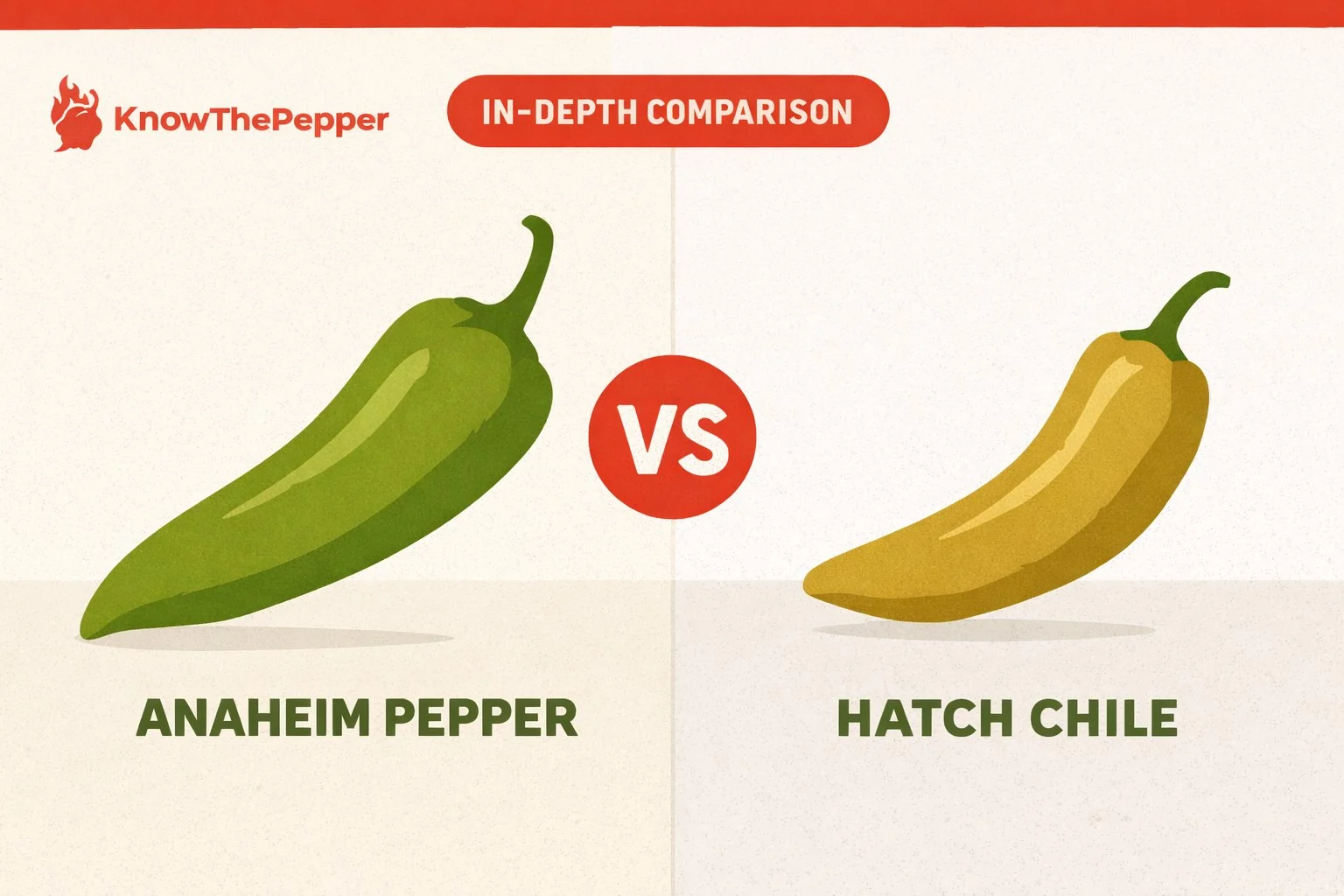
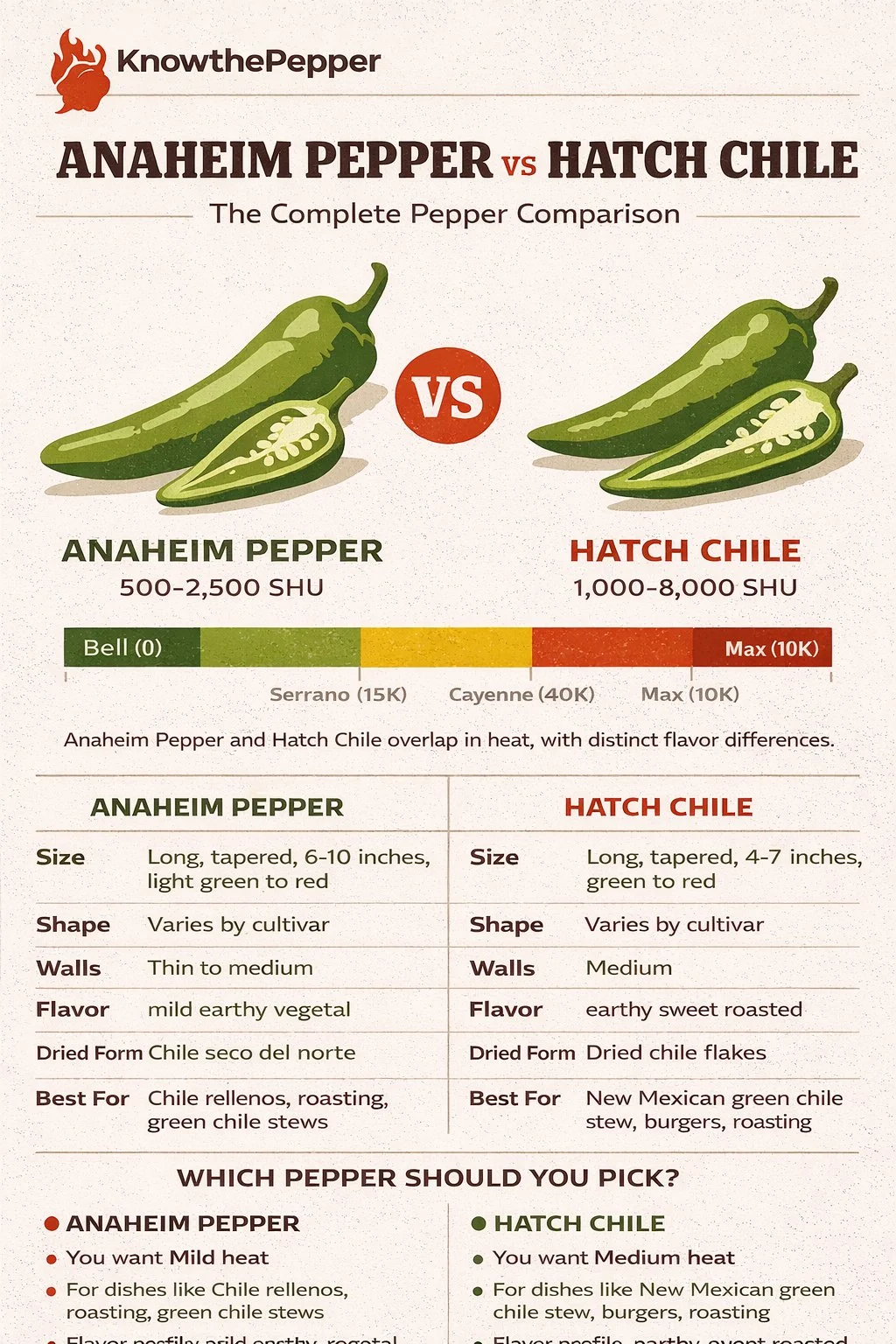
Anaheim Pepper measures 500–3K SHU while Hatch Chile registers 1K–8K SHU — making Hatch Chile 3× hotter. Anaheim Pepper is known for its mild and sweet flavor (C. annuum), while Hatch Chile offers earthy and sweet notes (C. annuum).
- Heat difference: Hatch Chile is 3× hotter
- Species: Both are C. annuum
- Best for: Anaheim Pepper excels in everyday cooking and salsas, Hatch Chile in fresh salsas and mild recipes
Anaheim Pepper vs Hatch Chile Comparison
Anaheim Pepper vs Hatch Chile Heat Levels
The Anaheim pepper occupies the gentler end of the mild chile spectrum, generally registering between 500 and 2,500 SHU in most growing conditions — though the provided data reflects a baseline of essentially zero heat at its most mild. The Hatch chile, by contrast, spans 1,000 to 8,000 SHU depending on the specific variety (mild, medium, hot, or extra-hot) and the growing season in New Mexico's Hatch Valley.
To put that in perspective using chipotle as a benchmark — a smoked jalapeño that typically lands around 5,000 to 8,000 SHU — a hot Hatch chile can match a chipotle's burn, while a mild Hatch or a standard Anaheim barely registers by comparison. The Anaheim is roughly 2 to 4 times milder than even the gentler Hatch varieties.
Both peppers fall within the mild-to-medium heat classification on the Scoville scale, but the Hatch's upper range pushes it toward genuine warmth — enough to make sensitive palates notice. The heat in Hatch chiles tends to build gradually and settle in the back of the throat, while Anaheim heat (when present) is fleeting and front-of-mouth. If you want to understand why that sensation differs at the receptor level, the TRPV1 response to capsaicin binding explains the mechanism behind why one chile lingers and another fades quickly.
Flavor Profile Comparison
At 500–2,500 SHU, the Anaheim sits at the gentler end of the medium heat peppers category — closer to a bell pepper in burn than anything that'll make you reach for milk.
Few peppers carry the geographic identity that the Hatch Chile does.
Flavor is where these two peppers genuinely diverge, and it matters more than the modest heat difference. Anaheim peppers deliver a clean, vegetal sweetness — crisp when raw, mellow and slightly grassy when roasted. They're crowd-pleasers precisely because they don't challenge the palate; the flavor is bright without being complex.
Hatch chiles bring something earthier and more layered. Grown in the high desert of southern New Mexico's Hatch Valley, they develop a distinct minerality from the alkaline soil and intense sun. When roasted — which is the traditional and preferred preparation — the flavor deepens into something smoky, sweet, and faintly sulfurous in the best possible way. There's a reason New Mexicans line up for fresh-roasted Hatch chiles every August.
The aroma alone separates them. A roasting Hatch chile fills a kitchen with a rich, complex scent that a roasting Anaheim simply can't match. Raw, both peppers smell similar — fresh and grassy — but heat transforms the Hatch into something more distinctive.
For cooking, this means the two aren't always interchangeable. Anaheim is the workhorse: reliable, mild, and available year-round in most American supermarkets. Hatch is the seasonal specialty that brings character to a dish. If you're comparing the earthier Hatch profile to another thick-walled New Mexico-style pepper, the flavor contrast between Hatch and poblano is worth exploring — poblanos share some of that dark, earthy depth.
Culinary Uses for Anaheim Pepper and Hatch Chile
Both peppers excel at roasting and peeling, and both are thick-walled enough to hold up to stuffing. But their best applications differ based on that flavor gap.
Anaheim peppers shine in dishes where you want mild green chile flavor without heat dominating. Classic California-style chile rellenos rely on Anaheims for their size and mild taste. They're excellent in breakfast burritos, green chile enchilada sauce, and anywhere you're feeding a crowd with varying spice tolerance. Dice them raw into salsas for crunch and color, or roast and freeze them for year-round use. Substitution ratio when replacing a mild Hatch: use Anaheims 1:1, but expect less complexity in the final dish.
Hatch chiles demand to be roasted. The transformation is dramatic — raw Hatch tastes good, but roasted Hatch tastes exceptional. New Mexico green chile stew (a state staple) requires Hatch for authenticity. They're also essential in Hatch chile cheeseburgers, green chile mac and cheese, and smothered breakfast dishes. The hot variety works in sauces where you want genuine warmth; the mild variety suits the same applications as Anaheim but with more depth.
For substitutions, an Anaheim can replace a mild Hatch in most recipes. Going the other direction — replacing an Anaheim with a hot Hatch — requires reducing the quantity by roughly 30% to manage heat. If neither is available, poblano peppers offer a similar earthy roasted character and are widely stocked in produce sections nationwide.
When comparing Anaheim to other thin-walled mild peppers, the heat difference between Anaheim and jalapeño illustrates how much the mild chile category varies — jalapeños clock in at 2,500 to 8,000 SHU, overlapping significantly with hot Hatch varieties.
Both peppers freeze beautifully after roasting and peeling. Roast a large batch, freeze flat in portions, and you'll have green chile flavor available through winter when fresh Hatch isn't in season.
Which Should You Choose?
Choose an Anaheim when you need mild, crowd-friendly green chile flavor that won't surprise anyone at the table. It's the more forgiving pepper — consistent heat, easy availability, and a clean flavor that blends into dishes without demanding attention. It's the right call for large-batch cooking, family meals, and recipes where the chile is one element among many.
Choose a Hatch chile when you want the pepper to be the point. The earthy, complex roasted flavor is worth seeking out, and the heat range gives you options from nearly mild to genuinely spicy. If you're making green chile stew, a smothered burrito, or anything rooted in New Mexican cooking, Hatch is the authentic choice.
Both belong to the broader American pepper tradition and share the C. annuum botanical lineage that covers most of the peppers in a typical American kitchen. Neither is superior in the abstract — the right pepper depends entirely on what you're making and who's eating it.
Can You Substitute One for the Other?
Yes — direct substitution works. Anaheim Pepper and Hatch Chile are close enough in heat to swap at roughly 1:1. The main difference will be flavor. For more swap options, explore ranked alternatives with conversion ratios.
Growing Anaheim Pepper vs Hatch Chile
If you’re deciding which pepper to grow at home, consider your climate and patience level. Anaheim Pepper and Hatch Chile have different maturation times and temperature preferences. Hotter varieties generally need a longer, warmer growing season to develop their full capsaicin content. Our zone-based planting date tool can pinpoint the best sowing window for your area.
Anaheims are among the more forgiving chiles to grow, though they still need warm conditions to produce well. Start seeds indoors 8–10 weeks before last frost.
Transplant outdoors after all frost risk has passed, spacing plants 18–24 inches apart. They prefer full sun and well-drained soil with consistent moisture.
Plants reach 24–36 inches tall and begin producing pods around 75–80 days after transplant. Green pods are ready to harvest when they reach full size; leave them longer for red-ripe fruit.
Growing Hatch chiles outside New Mexico is possible, but manage expectations - the valley's specific terroir is genuinely difficult to replicate. That said, the cultivars themselves grow well across USDA zones 5-10 with proper care.
Start seeds indoors 8-10 weeks before last frost. Hatch varieties need soil temperatures above 65°F to germinate reliably - bottom heat helps significantly.
These plants prefer well-drained, slightly alkaline soil with pH around **6.5-7.
History & Origin of Anaheim Pepper and Hatch Chile
Both peppers carry centuries of culinary heritage. Anaheim Pepper traces its roots to USA, while Hatch Chile originates from USA. Understanding their backstory helps explain why each pepper developed its distinctive traits.
Buying & Storage
Whether you’re shopping for Anaheim Pepper or Hatch Chile, the same quality indicators apply. Fresh peppers should feel firm and heavy for their size, with taut, glossy skin and no soft or wet spots. Minor stem cracks known as “corking” are perfectly normal and often indicate a mature, flavorful pod.
- Firm pods with taut skin and consistent color
- Should feel heavy relative to size
- Minor stem cracks (“corking”) are normal
- Avoid anything soft, shriveled, or with dark wet spots
- Fresh: Paper bag, crisper drawer — 1–2 weeks
- Frozen: Wash, dry, freeze on sheet pan — 6+ months
- Dried: Airtight, away from light — up to 1 year
The Verdict: Anaheim Pepper vs Hatch Chile
Anaheim Pepper and Hatch Chile sit in the same heat tier but serve different roles. Hatch Chile delivers 3× more heat with its distinctive earthy and sweet character. Anaheim Pepper, with its mild and sweet profile, excels in everyday cooking.
Frequently Asked Questions
Related Comparisons
Sources pending verification.