Aji Amarillo vs Habanero: Heat, Flavor & Key Differences
The aji amarillo (30,000-50,000 SHU) and habanero (100,000-350,000 SHU) are both fruity peppers with devoted followings, but they land in completely different heat territory. The aji amarillo brings a raisin-forward warmth rooted in Peruvian cuisine, while the habanero delivers citrus-bright fire that dominates Caribbean and Mexican cooking. Choosing between them is less about preference and more about knowing what each one actually does to a dish.

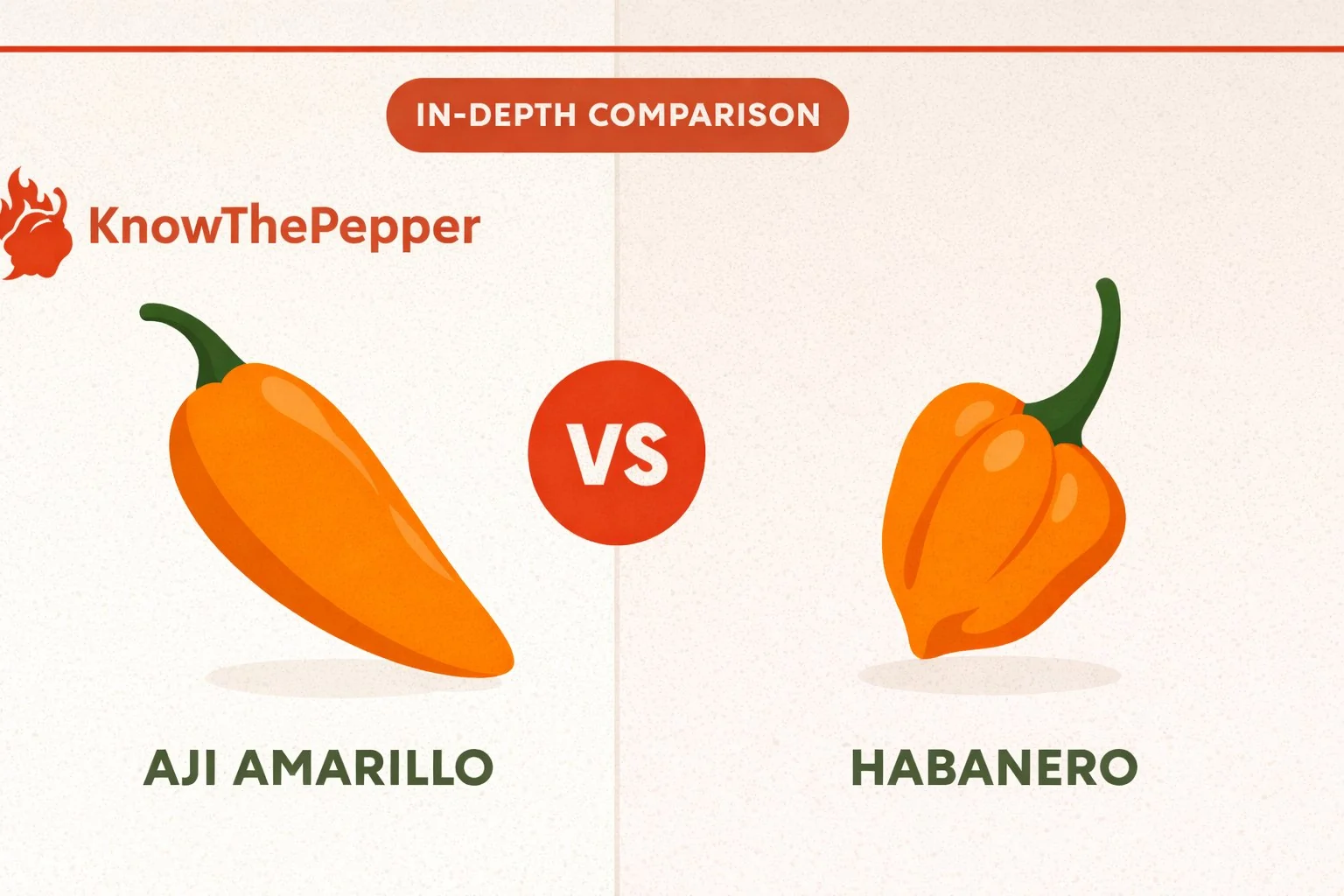
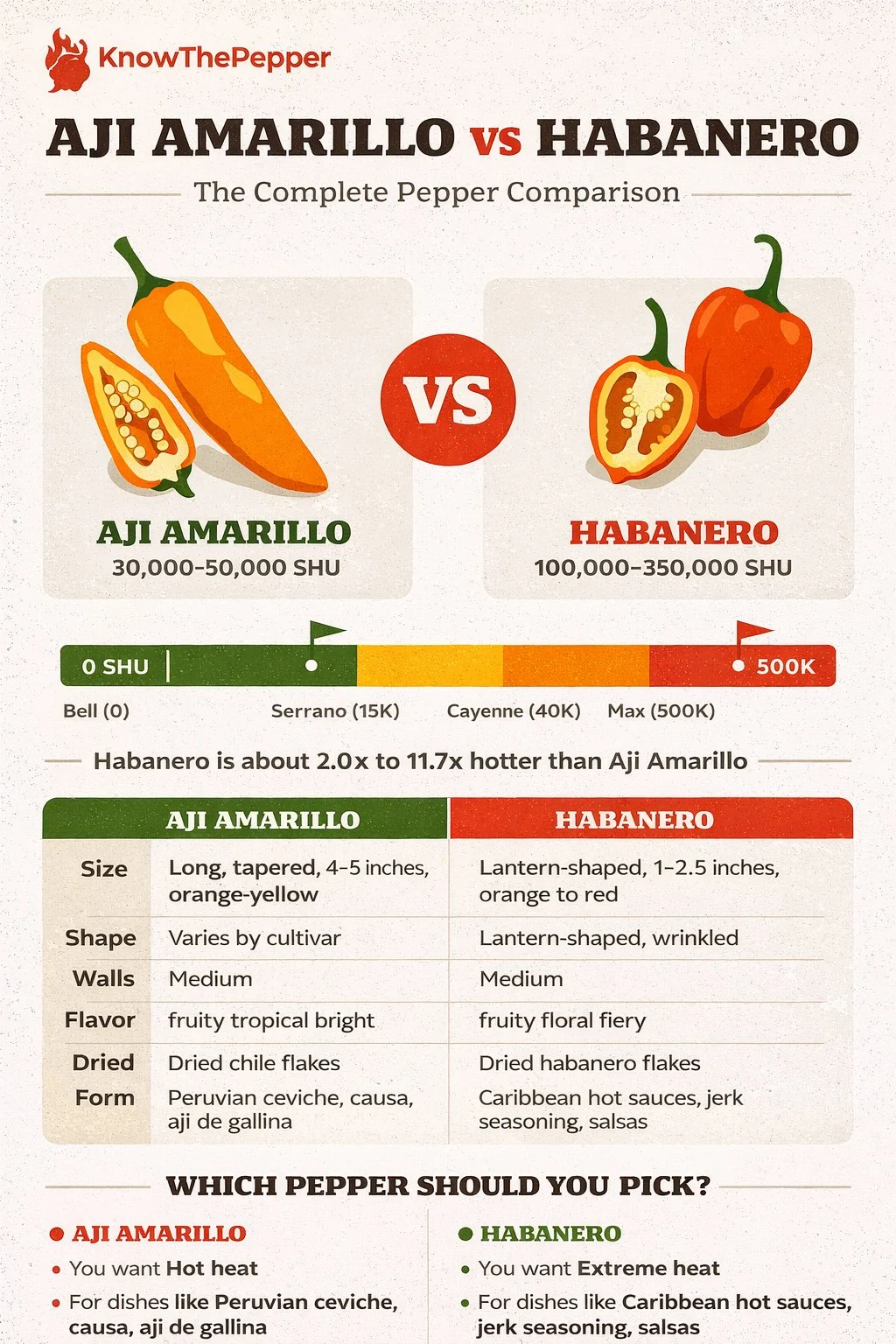
Aji Amarillo measures 30K–50K SHU while Habanero registers 100K–350K SHU — making Habanero 7× hotter. Aji Amarillo is known for its fruity and raisin-like flavor (C. baccatum), while Habanero offers fruity and citrusy notes (C. chinense).
- Heat difference: Habanero is 7× hotter
- Species: C. baccatum vs C. chinense
- Best for: Aji Amarillo excels in everyday cooking and salsas, Habanero in hot sauces and spicy dishes
Aji Amarillo
HotHabanero
Extra-HotAji Amarillo vs Habanero Comparison
Aji Amarillo vs Habanero Heat Levels
The first time I put aji amarillo paste directly on my tongue — expecting something manageable — I was surprised by how quickly it built. Then a friend handed me a fresh habanero slice, and I understood the difference immediately. These two peppers are not in the same conversation heat-wise.
Aji amarillo sits at 30,000-50,000 SHU, placing it firmly in the hot pepper range — roughly 6 to 10 times hotter than a guajillo (2,500-5,000 SHU). The burn comes on gradually and settles into a warm, persistent glow rather than a sharp spike. It is intense enough to demand respect but forgiving enough that cooks can use it generously.
The habanero operates in an entirely different bracket: 100,000-350,000 SHU, which qualifies it as extra-hot, a category reserved for serious heat. At its upper range, a habanero runs roughly 70 times hotter than a guajillo. Even at the low end, it is 2 to 7 times more intense than an aji amarillo. The burn hits fast, spreads wide across the palate, and lingers.
Both peppers get their fire from capsaicin binding to TRPV1 receptors — understanding why that heat trigger fires the way it does explains a lot about why the habanero feels so much more aggressive despite sharing a fruity profile with the aji amarillo. The aji amarillo's C. baccatum botanical lineage tends toward slower capsaicin delivery, while the habanero's C. chinense species genetics are associated with faster, more intense heat onset.
Flavor Profile Comparison
Long before Spanish conquistadors arrived in South America, the aji amarillo was already woven into the fabric of Andean civilization.
Few peppers balance heat and flavor as well as the habanero.
Heat aside, both peppers lead with fruit — but they take that fruit in opposite directions, which is what makes the aji amarillo vs habanero question genuinely interesting for cooks.
Aji amarillo has a flavor profile that is hard to pin down on first encounter. The dominant note is fruity, but it leans toward dried fruit — raisin, fig, a faint tropical undercurrent. There is also a subtle floral quality and a mild earthy backbone. The flavor comes through clearly even in cooked applications, which is why it anchors so many Peruvian culinary traditions. Aji amarillo paste, made from the fresh or frozen pepper, retains that character remarkably well.
The habanero is brighter and sharper in flavor. The citrus note is immediate — orange peel, a hint of apricot, sometimes a faint floral element. Where aji amarillo is warm and rounded, habanero is vibrant and cutting. Mexican pepper traditions use it precisely for that brightness, particularly in fresh salsas where its aroma hits before the heat does.
Aroma is another meaningful difference. Aji amarillo has a mellow, almost sweet fragrance. Habanero has a more assertive, almost perfumed scent that signals heat before you even taste it.
For the lemon drop pepper vs aji amarillo flavor matchup, the lemon drop skews even more citrus-forward than habanero — which shows how much variation exists within fruity peppers. The aji amarillo remains the most distinctly savory of the group, making it the more versatile option in complex, layered dishes.
Culinary Uses for Aji Amarillo and Habanero
These two peppers rarely compete for the same role in a recipe, and that is actually useful information.
Aji amarillo is a foundational ingredient in Peruvian cooking. Aji de gallina, causa, and huancaina sauce all depend on its specific flavor. It is typically used as a paste — blended fresh or reconstituted from frozen — and added to braises, sauces, and marinades. The raisin-like depth means it integrates into slow-cooked dishes without becoming one-dimensional. For a from-scratch aji amarillo hot sauce, the paste base is the standard approach.
At 30,000-50,000 SHU, it works well in dishes where heat should be present but not overwhelming. Stir it into mayo, blend it into vinaigrettes, or use it as a finishing element in soups. The flavor holds up to dairy, which is why it appears so often in cream-based Peruvian sauces.
Habanero at 100,000-350,000 SHU demands more restraint. It is the go-to for Caribbean jerk marinades, mango-habanero glazes, and hot sauces where citrus heat is the point. Used raw in fresh salsa, it delivers both aroma and fire. Cooked into sauces, it mellows slightly but retains its citrus edge.
For substitution purposes: replacing aji amarillo with habanero requires using roughly one-quarter to one-third of the called-for amount, and you will lose the raisin depth — consider adding a small amount of raisin or dried apricot to compensate. Going the other direction, substituting aji amarillo for habanero means using 3 to 4 times the quantity and accepting a milder, earthier result. If neither is available, the aji amarillo substitute options and habanero swap guide both cover the closest practical alternatives.
For the Bulgarian carrot pepper vs habanero heat and flavor breakdown, both share a fruity profile but the Bulgarian carrot runs significantly cooler — a useful data point if you are building a heat ladder for a dish.
Which Should You Choose?
If your cooking is rooted in Peruvian flavors — or you want a fruity, moderately hot pepper that integrates into sauces without overwhelming them — aji amarillo is the right choice. Its 30,000-50,000 SHU range and raisin-forward depth make it genuinely difficult to replicate with other peppers.
If you want maximum fruit-forward heat, the habanero at 100,000-350,000 SHU delivers. Its citrus brightness works especially well in hot sauces, glazes, and fresh preparations where the aroma is part of the experience.
For the Carolina Reaper vs habanero heat comparison, the habanero looks almost mild — context that helps calibrate how you think about the aji amarillo, which sits well below both.
The practical rule: use aji amarillo when flavor complexity matters more than heat intensity, and habanero when you want the pepper itself to be the statement. They are not interchangeable, but both are worth keeping on hand.
Can You Substitute One for the Other?
Proceed with caution. Habanero is 7× hotter than Aji Amarillo.
Need a different option altogether? Search for peppers that match your target heat and flavor with precise swap ratios.
Growing Aji Amarillo vs Habanero
If you’re deciding which pepper to grow at home, consider your climate and patience level. Aji Amarillo and Habanero have different maturation times and temperature preferences. Hotter varieties generally need a longer, warmer growing season to develop their full capsaicin content. Our zone-based planting date tool can pinpoint the best sowing window for your area.
Aji amarillo is a warm-season perennial grown as an annual in most climates. Seeds need 80–90 days from transplant to first harvest, so starting indoors 10–12 weeks before last frost is standard practice.
The plants grow tall, often reaching 3–4 feet, and benefit from staking once pods set. They prefer well-draining soil with a pH between 6.
For cultivation characteristics, compare this to peppers grown in upward-facing clusters — aji amarillo pods hang downward, which helps with water drainage off the fruit. Pods start green and ripen through yellow to orange; the sweetest flavor develops at full orange ripeness.
Starting habaneros from seed requires patience. Germination takes 10–21 days at soil temperatures of 80–85°F — a heat mat is not optional, it's essential.
Transplant seedlings outdoors only after nighttime temperatures stay consistently above 55°F. Habaneros are frost-intolerant and will stall in cold soil.
Full sun — at least 6–8 hours daily — is non-negotiable. In containers, use a 5-gallon minimum; habaneros develop substantial root systems.
History & Origin of Aji Amarillo and Habanero
Both peppers carry centuries of culinary heritage. Aji Amarillo traces its roots to Peru, while Habanero originates from Mexico. Understanding their backstory helps explain why each pepper developed its distinctive traits.
Buying & Storage
Whether you’re shopping for Aji Amarillo or Habanero, the same quality indicators apply. Fresh peppers should feel firm and heavy for their size, with taut, glossy skin and no soft or wet spots. Minor stem cracks known as “corking” are perfectly normal and often indicate a mature, flavorful pod.
- Firm pods with taut skin and consistent color
- Should feel heavy relative to size
- Minor stem cracks (“corking”) are normal
- Avoid anything soft, shriveled, or with dark wet spots
- Fresh: Paper bag, crisper drawer — 1–2 weeks
- Frozen: Wash, dry, freeze on sheet pan — 6+ months
- Dried: Airtight, away from light — up to 1 year
The Verdict: Aji Amarillo vs Habanero
Aji Amarillo and Habanero occupy very different positions on the heat spectrum. Habanero delivers 7× more heat with its distinctive fruity and citrusy character. Aji Amarillo, with its fruity and raisin-like profile, excels in everyday cooking.
Frequently Asked Questions
Related Comparisons
Sources pending verification.