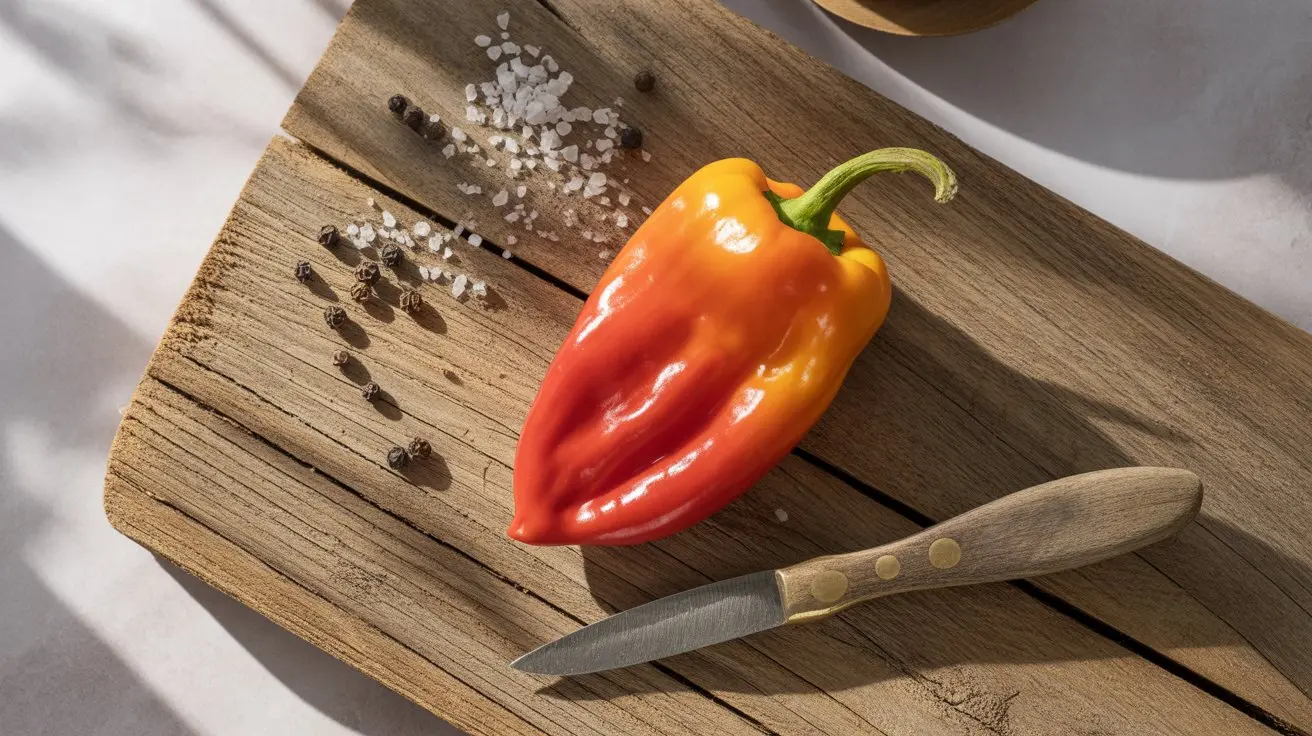
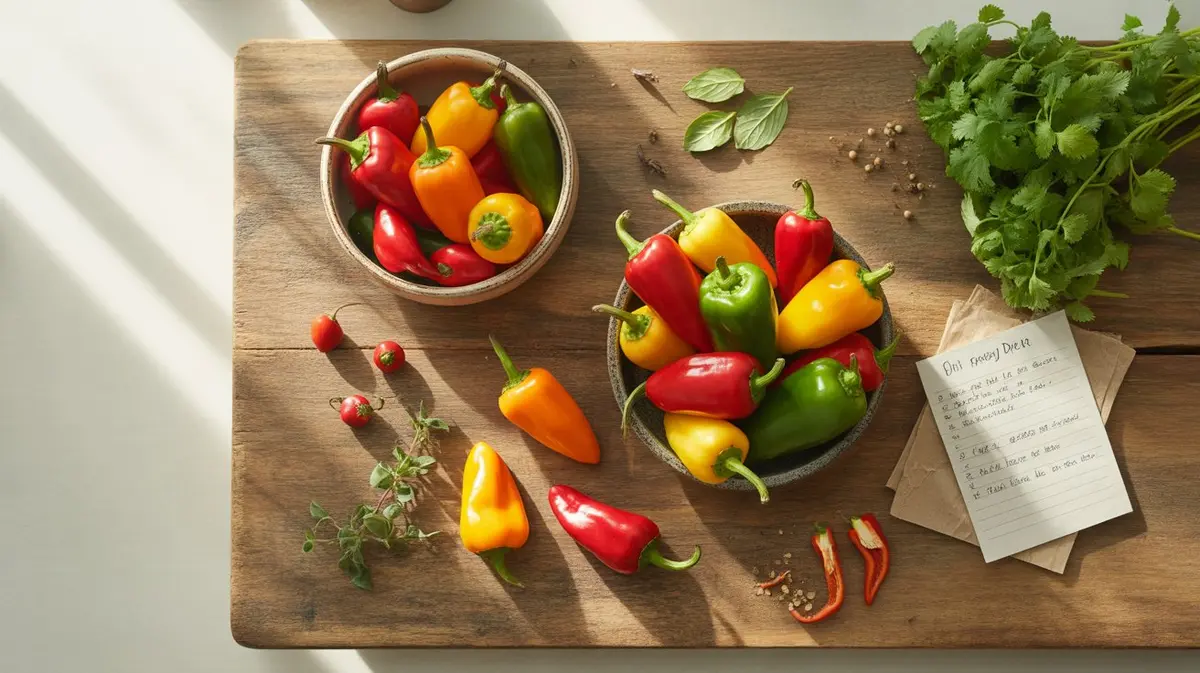
Aji dulce is the backbone of Caribbean and Venezuelan cooking — its signature sweet, aromatic profile (with virtually no heat at 0-500 SHU) comes from the same C. chinense species as habaneros, yet delivers none of the fire. Finding a substitute means hunting for that same floral sweetness without accidentally torching your sofrito or hallaca.
These alternatives are ranked by how closely they match Aji Dulce’s heat level and flavor profile. Use the conversion ratios to adjust quantities in your recipe.
#1
Trinidad Perfume Closest Match
At 0-500 SHU, the floral, fruity character of Trinidad Perfume is the closest botanical match available — it is also a C. chinense pepper that traded heat for fragrance. The aroma is noticeably perfume-like, which mirrors aji dulce's role in seasoning bases better than any other option on this list. Use a 1:1 ratio by weight or count.
#2
Pimento Pepper Runner-Up
The deep red sweetness of the pimento sits at 100-500 SHU and brings a thick, juicy flesh that works especially well in cooked applications — sofrito, stews, rice dishes. The flavor is rounder and less floral than aji dulce, but the sweetness carries through reliably. Substitute at 1:1, though you may want to add a pinch of smoked paprika to approximate the aromatic depth.
#3
Cherry Pepper Also Great
Sweet, compact cherry peppers share the 100-500 SHU range and a genuine sweetness that holds up during cooking. Their thicker walls mean they take longer to break down, so chop them finer when using in sofrito. The flavor leans a touch more vegetal than aji dulce's aromatic brightness. Ratio: 1:1 by count for whole substitutions, or match by volume when diced.
#4
Jimmy Nardello
This Italian heirloom sits at 0-500 SHU and carries a distinctly fruity, candy-sweet flavor that surprises people who expect a pepper to taste more savory. Thin-walled and prone to caramelizing quickly in a hot pan, Jimmy Nardellos are excellent for any application where aji dulce would be sautéed or roasted. Use at 1:1 by weight, but watch the heat — they color fast.
#5
Lipstick Pepper
The bright red, intensely sweet lipstick pepper is a pimento-type with a cleaner, more concentrated sweetness than a standard bell pepper. At 0-500 SHU, it sits squarely in the heat category aji dulce belongs to, making it a safe swap when you need zero heat. Substitute 1:1 by weight. Works particularly well raw or lightly cooked, where its crisp texture adds something a softer aji dulce might not.
#6
Banana Pepper
At 0-500 SHU, banana peppers bring a mild tanginess that differs from aji dulce's sweeter, more aromatic profile — but that tang can actually enhance pickled preparations or vinegar-forward dishes. For cooked Caribbean recipes, the flavor gap is noticeable; consider adding a small amount of sweet paprika to compensate. Ratio: 1:1 by volume. Best used when aji dulce is not the primary flavor driver in a dish.
#7
Corno di Toro
The long, curved corno di toro — Italian for "bull's horn" — delivers 0-500 SHU with a mild, sweet flavor that is dependable if not particularly aromatic. Its size (often 6-8 inches) means one pepper replaces several aji dulces; adjust by weight rather than count. Use equal weight, roughly 3-4 aji dulces per one corno di toro. This is the most practical supermarket fallback when nothing else is available, and it performs well in the regional pepper tradition of slow-cooked preparations where the pepper's aromatics have time to develop.
All seven options fall within the same zero-to-mild heat band. The botanical family these peppers belong to — specifically Trinidad Perfume — explains why that variety mimics aji dulce most faithfully; the shared C. chinense genetics produce similar aromatic compounds even without the capsaicin.
Bell peppers seem like the obvious swap given their sweetness and zero heat, but their flavor is flat and watery compared to aji dulce's concentrated aromatic quality. A sofrito built on bell peppers lacks the fragrant depth that makes Venezuelan and Puerto Rican cooking distinctive — you get sweetness without character.
Scotch Bonnet is tempting because it shares the same C. chinense species and a genuinely fruity aroma, and the head-to-head contrast between aji dulce and scotch bonnet makes this clear: scotch bonnets clock in at 100,000-350,000 SHU, roughly 700 times hotter than a chipotle. That heat overwhelms every dish aji dulce is meant for.
Pepperoncini rounds out the avoid list despite its mild 100-500 SHU range. The acidity is the problem — pepperoncini carries a sharp, briny tang (especially the jarred variety) that clashes with the sweet, aromatic base notes aji dulce contributes. In pickled applications it can work, but as a cooking substitute it pulls the flavor profile in the wrong direction.
Substitution Tip
When substituting Aji Dulce (0–500 SHU), always start with less of a hotter substitute and add more to taste. For milder substitutes, you can increase the quantity. Our swap ratio calculator gives precise conversion amounts, and the heat unit converter translates between Scoville and other scales.
Fact-Checked & Expert Reviewed
Editorial Standards: All facts verified against authoritative sources. Content reviewed by subject matter experts before publication.
Review Process:
Written by
Sofia Torres
(Lead Culinary Reviewer)
, reviewed by
Karen Liu
(Lead Fact-Checker & Science Editor)
. Last updated February 19, 2026.
Paprika can approximate the color and a fraction of the sweetness, but it cannot replace the fresh pepper body that sofrito requires — you lose the moisture, texture, and most of the aromatic complexity. A better approach is to combine a fresh mild pepper like pimento with a small pinch of smoked paprika to recover some of the depth.
Trinidad Perfume leans slightly more floral and perfumed, while aji dulce has a rounder, more savory-sweet quality — the side-by-side comparison of aji dulce and Trinidad Perfume breaks down those nuances in detail. In cooked dishes the gap nearly disappears, but raw preparations will reveal the difference.
Commercial distribution is limited because aji dulce has a short shelf life and thin skin that does not survive long shipping chains well. Specialty Latin grocery stores and Caribbean markets are the most reliable retail sources; otherwise, growing your own from seed is genuinely the most practical solution for consistent access.
Trinidad Perfume and pimento are the two best options for slow-cooked applications like pernil — both hold their flavor through long braising times without turning bitter. Cherry peppers also work well here because their thicker walls break down gradually and release sweetness over the course of a long cook.
Aji dulces typically weigh 10-15 grams each, while a full pimento averages 50-70 grams, so roughly 4-5 aji dulces equal one pimento pepper by weight. When a recipe calls for 6 aji dulces, one large pimento or two small ones is a practical equivalent for most cooked dishes.