
7 Pot Brain Strain Substitutes for Fruity Superhot Sauces and Extracts
- Heat
- 1,000,000–1,350,000 SHU
- Flavor
- fruity C. chinense start with extreme delayed heat
- Swaps listed
- 7 ranked options
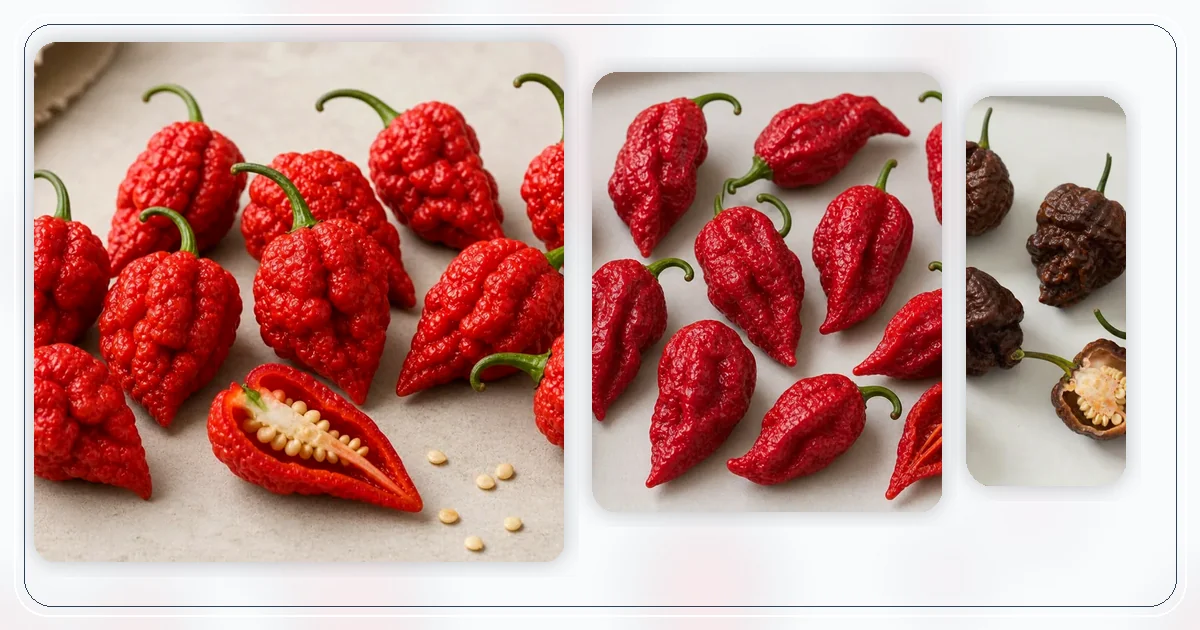
The 7 Pot Brain Strain is listed at 1,000,000 to 1,350,000 SHU by Pepper Joe's, a seed seller, with a fruity, tropical flavor that makes it hard to replace precisely. Whether your source dried up, the season ended, or you need a slightly different heat curve, the right swap keeps your sauce or extract at the same scorching level without losing that fruity backbone.
Heat at a glance
What Can You Use Instead of 7 Pot Brain Strain?
Trinidad Scorpion Butch T
Closest MatchAt 800,000 to 1,463,700 SHU, the fiercely fruity Trinidad Scorpion Butch T has a slightly higher ceiling than the Brain Strain, so use 0.85:1 (slightly less than called for). The flavor profile overlaps well: bright fruit up front, then a scorpion-style sting that lingers.
It belongs to the same extreme super-hot category and shares the C. chinense genetics that produce that characteristic fruity heat.
This is a strong sauce substitute when you want scorpion-style sting and similar intensity. Use about 85% by weight in mash or puree, then correct after fermentation or cooking because acid can make the heat feel sharper.
For dry rubs, use less at first because powdered super-hots spread more evenly than chopped fresh pod.
Naga Morich
Runner-UpThe intensely hot Naga Morich spans 1,000,000 to 1,500,000 SHU, making it one of the closest heat matches on this list. Use a 1:1 ratio with confidence.
Originating from the Bangladesh-India border region, it carries a fierce fruity punch with slightly more earthy depth than the Brain Strain.
Naga Morich gives a cleaner, fruitier burn, so it is best in fresh hot sauce, chutney, and fruit-based glazes. Use 1:1 by trimmed weight when heat is the priority, but expect a less wrinkled, less scorpion-like aroma.
Bedfordshire Super Naga
Also GreatListed at 900,000 to 1,120,000 SHU, the intensely fruity Bedfordshire Super Naga is a UK-developed cultivar whose range starts just below the Brain Strain's heat floor. Stick with a 1:1 swap.
The flavor skews toward concentrated fruit with a clean, fast-building heat, less floral than some 7 Pot variants, which actually makes it easier to use in sauces where you want heat without muddying the flavor profile.
7 Pot Primo
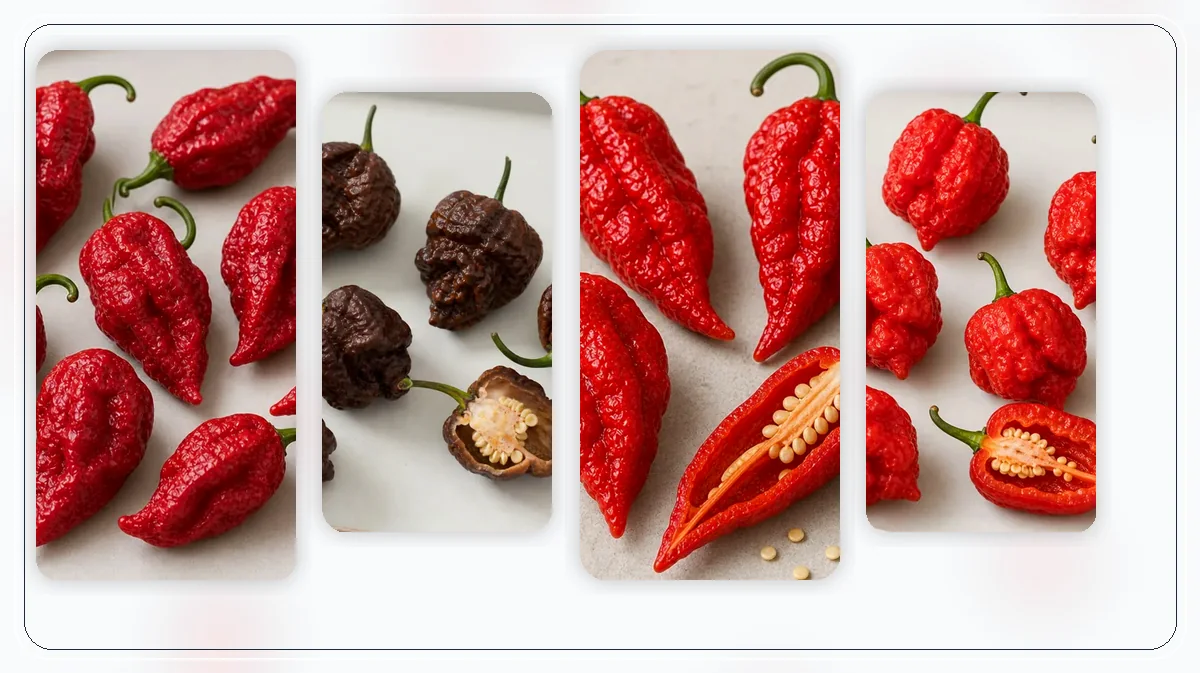
The floral, fruity 7 Pot Primo is listed on its KnowThePepper profile at 800,000 to 1,790,150 SHU - a wider range than the Brain Strain's that reaches higher at the top. Use 1:1, or dial back to 0.9:1 if your batch of Primos is running hot.
Bred by Troy Primeaux in Louisiana, it shares the same botanical family as the Brain Strain and delivers a comparable fruity intensity with a slightly more floral note.
Both peppers are hundreds of times hotter than a guajillo at 2,500 to 5,000 SHU, so handle accordingly.
Naga Viper
At 900,000 to 1,382,118 SHU, the fierce fruity heat of the Naga Viper covers most of the Brain Strain's range and tops its 1,350,000 ceiling by about 32,000 SHU.
Use 0.9:1 to keep heat in check. This English-bred hybrid combines genetics from three super-hot parents, giving it a complex, layered burn that builds slowly and stays.
The fruit notes are present but more muted than the Brain Strain, good for extracts and mash where pure heat matters more than bright flavor.
7 Pot Barrackpore
The fruity 7 Pot Barrackpore is commonly listed at 1,000,000 to 1,300,000 SHU - the same floor as the Brain Strain with a slightly lower ceiling. Use 1:1, then add a little more if the batch comes out mild.
PepperScale describes this Trinidadian variety as sweet and fruity, with slightly more bitterness and less sweetness than other 7 Pots.
Like the Brain Strain, it comes from Trinidad's 7 Pot peppers, and PepperScale calls their heat comparable.
Dorset Naga
The intensely fruity Dorset Naga is listed by its breeder, Sea Spring Seeds, at 800,000 to 1,600,000 SHU - a wide range that means individual pods vary significantly.
Start at 1:1 and adjust by batch. Developed in Dorset, England from Naga Morich stock, it has a sharper, more immediate fruit note than the Brain Strain.
The heat trigger is fast and aggressive, which suits raw applications like fresh salsas better than slow-cooked sauces.
Best Pick by Application
For fresh superhot salsa, Trinidad Scorpion Butch T is the closest Brain Strain substitute because it brings sharp fruit and immediate sting. Use 0.85:1 by weight to avoid overshooting heat.
For fermented sauces, Naga Morich is easier to balance. It keeps the million-plus SHU level but adds a slightly earthy fruit note that rounds out after fermentation.
For powder or flakes, Bedfordshire Super Naga is useful because it dries cleanly and keeps a bright superhot aroma. Use 1:1, then add a small amount of fruit powder or sugar if the finished blend tastes too hard-edged.
For pepper mash, weigh the substitute after removing stems. Whole-pod counts are unreliable with Brain Strain types because pod size and internal placenta thickness vary a lot, so the ratios here are editorial starting points taken from the listed ranges, and the finished batch needs a taste before any more goes in.
Which Peppers Make Poor 7 Pot Brain Strain Substitutes?
Ghost Pepper (Bhut Jolokia) looks like an obvious candidate because it is C. chinense, fruity, and hot at 855,000 to 1,041,427 SHU. The problem is the ceiling, which sits about 300,000 SHU below the Brain Strain's 1,350,000.
The midpoints are about 948,000 SHU for the ghost pepper and 1,175,000 SHU for the Brain Strain, so a ghost pepper batch comes out roughly a fifth milder, which is why it ranks below the seven picks above.
Making up that gap with more pepper changes the texture of sauces and extracts.
Chocolate Habanero clocks in at 425,000 to 575,000 SHU - even its top figure is only about 58 percent of the Brain Strain's 1,000,000 SHU floor. The fruity, earthy flavor is appealing, and the substitution math is simple, but the gap is too large.
You cannot realistically compensate with volume without fundamentally changing the dish.
Red Savina Habanero at 350,000 to 577,000 SHU has a similar problem. It was once the world record holder, which makes people overestimate its heat relative to modern super-hots.
Against something like the Brain Strain, it is a completely different tier, a credible hot pepper, but not a substitute for anything above 1,000,000 SHU.
7 Pot Douglah is not a clean swap when flavor matters. It is hot enough, but the dark, nutty profile moves away from Brain Strain's brighter fruit.
Mild habanero relatives can add C. chinense aroma, but they cannot carry the heat load alone. Use them only as flavor support.
Do not use milder super-hots in larger amounts to chase Brain Strain heat. More pepper flesh can change sauce texture and bitterness before it truly replaces the original intensity.
7 Pot Brain Strain Substitute FAQ
The Naga Morich at 1,000,000 to 1,500,000 SHU is the closest match for hot sauce, same heat floor, similar fruity intensity, and a 1:1 swap ratio that requires no adjustment. The Bedfordshire Super Naga is a strong second if Naga Morich is unavailable, with a slightly lower heat range of 900,000 to 1,120,000 SHU and a clean fruit-forward flavor.
Yes, the floral and fruity 7 Pot Primo belongs to the same botanical family, and its 800,000 to 1,790,150 SHU range overlaps the Brain Strain's, making it a natural 1:1 swap in most applications. If your Primo pods are on the hotter end of their range, reduce the quantity slightly to 0.9:1.
The Trinidad Scorpion Butch T reaches a slightly higher ceiling at 800,000 to 1,463,700 SHU versus the Brain Strain's 1,000,000 to 1,350,000 SHU range. Both sit firmly in the extreme super-hot category, but the Scorpion Butch T has a more pronounced sting-style finish, so use 0.85:1 when substituting.
The Dorset Naga is effective but its wide 800,000 to 1,600,000 SHU range means pod-to-pod variation is higher than most alternatives on this list. For consistent results, taste-test a small amount of your batch first and adjust from the 1:1 starting ratio rather than committing the full quantity upfront.
PepperScale describes the Brain Strain as sweet and fruity with a tropical quality, like other 7 Pots, and says its lumpy pods hold more interior membrane, where much of the heat sits, than most 7 Pots. Its C. chinense genetics, the same botanical family as habaneros and Scotch bonnets, are the usual source of that tropical fruit note.
- 7 Pot Brain Strain — Pepper Profile
- Varieties & Plant Breeding - Chile Pepper Institute, NMSU
- Guinness World Records — Trinidad Scorpion Butch T
- Dorset Naga — Warwick HRI Study
- Refining Fire Chiles / Super Hot Chiles - 7 Pot Brain Strain Pepper
- Sea Spring Seeds - Dorset Naga
- Pepper Joe's - Brain Strain Hot Pepper Seeds
More Pepper Substitutes
 Substitute Poblano Substitute by Roasting, Stuffing, or Sauce
 Substitute Serrano Substitute for Fresh Salsa and Heat
 Substitute Pepper X Substitute: The Next-Hottest Superhots
 Substitute Best Dragon's Breath Substitute: 7 Extreme-Heat Options
 Substitute Carolina Reaper Substitute: Moruga Scorpion Is the Closest
 Substitute Trinidad Moruga Scorpion Substitute: 7 Superhot Picks