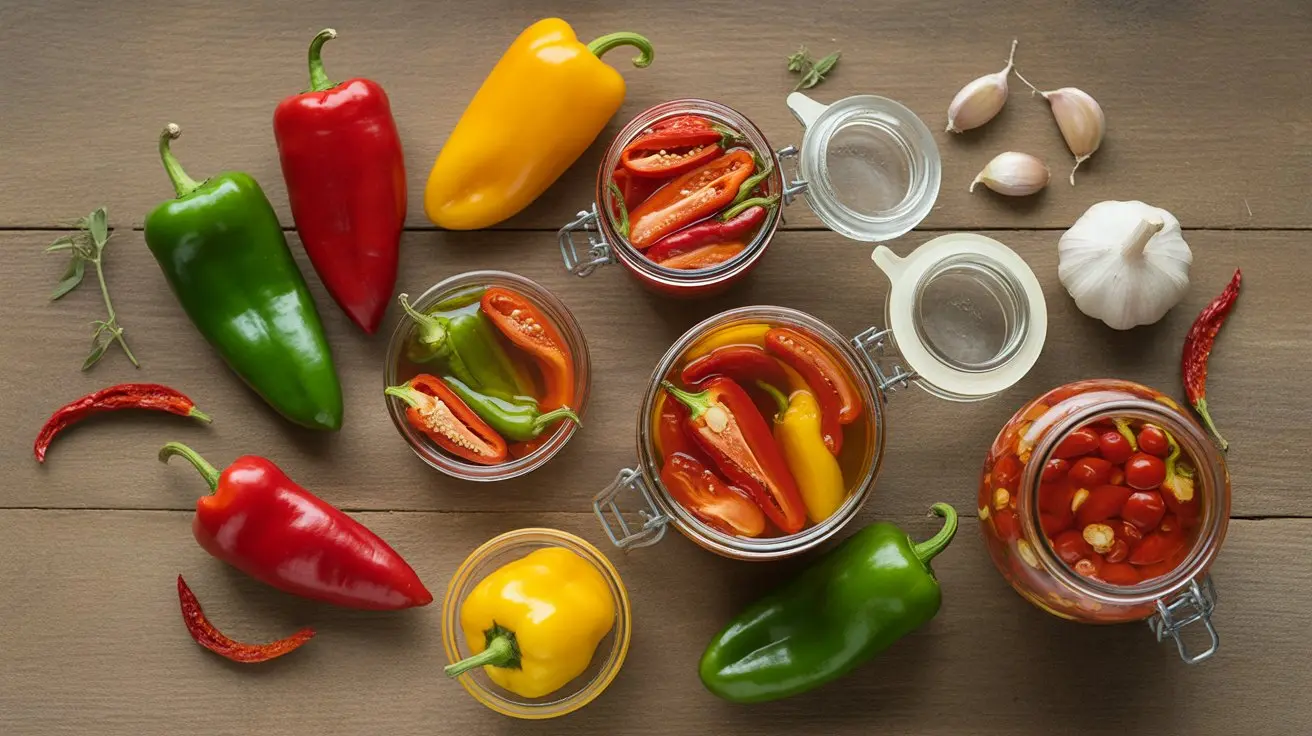
How to Pickle Peppers
Quick pickling and canning peppers step by step. Best vinegars, spices, and pepper picks. Find your perfect heat level.

Why Pickling Peppers Has Lasted Centuries
Long before refrigeration, pickling was how entire regions preserved their harvests — and peppers were among the most prized candidates for the brine jar.
From Turkish markets stacked with pickled Turkish pepper varieties to Korean banchan featuring fiery fermented chiles, this preservation method is woven into food culture across nearly every continent.
Today, pickling peppers is both practical and genuinely fun — a way to extend a bumper crop, dial in heat levels, and build complex flavor that fresh peppers simply can't deliver.
Quick Pickling vs. Fermentation: Know the Difference
These two methods are often lumped together, but they produce very different results.
Quick pickling (also called refrigerator pickling) uses vinegar to drop pH rapidly, preserving the pepper through acidity. The whole process takes under an hour, and the pickles are ready to eat within 24-48 hours.
Lacto-fermentation relies on naturally occurring bacteria — primarily Lactobacillus — to convert sugars into lactic acid over days or weeks. The result is a tangier, more complex flavor with probiotic benefits, but it demands patience and attention to salt ratios.
For beginners, quick pickling is the obvious starting point. For anyone who wants to get into hot sauce territory or preserve large quantities without refrigeration, fermentation is worth the learning curve.
Choosing the Right Peppers
Almost any pepper pickles well, but firmness matters — soft, overripe peppers turn mushy in brine before you even open the jar.
For mild pickles, banana peppers, cubanelles, and sweet Italian varieties hold up beautifully. Check the mild heat classification for a full list of low-SHU options worth considering.
For something with more character, the smoky, raisin-like depth of Isot pepper makes an unusual but rewarding pickle — especially with red wine vinegar.
Moving up the heat ladder, the intensely fruity, medium-hot Dundicut from Pakistan produces pickles that are genuinely complex, with berry-like notes that survive the brine process surprisingly well.
If you want heat that bites back, the sharp, clean burn of Tien Tsin chiles is a classic choice for Asian-style pickled pepper preparations — they stay crisp and deliver consistent heat throughout the jar.
For serious heat, the small, cherry-shaped Wiri Wiri with its fruity Caribbean heat makes a spectacular fermented pickle. Its thick walls hold texture well, and the flavor actually deepens during fermentation.
Vinegar Selection: It Changes Everything
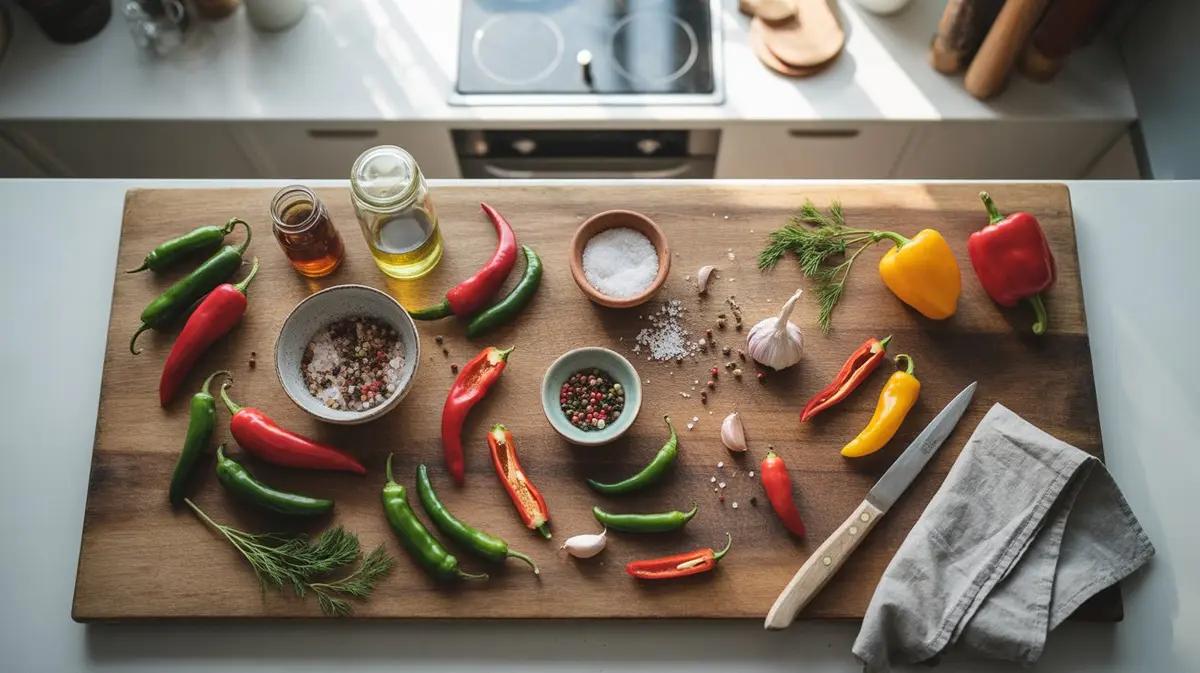
The vinegar you choose shapes the final flavor more than any spice in the jar.
Apple cider vinegar adds a mild sweetness and slight fruitiness that pairs particularly well with medium-heat peppers and anything from American pepper growing regions.
Rice vinegar (unseasoned) is milder and slightly sweet — ideal for Thai-style pickles featuring Thai pepper varieties where you want heat without aggressive acidity.
Red wine vinegar works beautifully with dried or smoked peppers, amplifying earthy and fruity notes.
One rule applies regardless of which vinegar you choose: never dilute below 4% acidity when canning for shelf stability. Most commercial vinegars sit at 5%, which provides a safe margin.
The Quick Pickle Method (Step-by-Step)
- Prep your peppers. Wash thoroughly and decide on your cut — rings, halves, or whole (poke whole peppers several times with a skewer). Remove seeds for milder results; leave them for full heat.
- Sterilize your jars. Run glass jars and lids through a dishwasher cycle or boil for 10 minutes. This step is non-negotiable for any pickle you plan to store longer than a week.
- Make your brine. Combine 1 cup white vinegar, 1 cup water, 1 tablespoon kosher salt, and 1 teaspoon sugar in a saucepan. Bring to a boil, stirring until salt and sugar dissolve completely.
- Add aromatics to the jar. Garlic cloves, black peppercorns, coriander seeds, bay leaves, and fresh dill are all fair game. Two to three garlic cloves per pint jar is a solid baseline.
- Pack peppers tightly. Leave 1/2 inch headspace at the top of each jar — this matters for both seal integrity and safe canning.
- Pour hot brine over peppers. Fill to within 1/4 inch of the top, ensuring all pepper pieces are submerged. Tap jars gently to release air bubbles.
- Seal and cool. Let jars cool to room temperature before refrigerating. Quick pickles are ready in 24 hours and peak around day three.
The Fermentation Method
Lacto-fermentation requires only three things: peppers, salt, and time. The salt concentration is the critical variable.
A 2-3% brine by weight is the standard range — enough to suppress harmful bacteria while allowing Lactobacillus to thrive. For a quart jar, that's roughly 1 tablespoon of non-iodized salt dissolved in 2 cups of water. Iodized salt can inhibit fermentation, so use kosher or sea salt exclusively.
Pack peppers into a clean jar, pour brine over them, and weigh the peppers down so nothing floats above the brine line. A small zip-lock bag filled with brine works well as a weight.
Cover loosely — fermentation produces CO2, which needs to escape. A cloth secured with a rubber band, or a loosely placed lid, both work. Check daily and press peppers back below the brine line if they rise.
At room temperature (68-75°F), you'll see active bubbling within 2-3 days. Basic fermented peppers are ready in 5-7 days; more complex flavors develop over 2-4 weeks. Taste daily after day five and refrigerate when the flavor suits you — refrigeration slows fermentation dramatically without stopping it entirely.
Spice Blends Worth Building
The aromatics you add define the pickle's character as much as the pepper itself.
Classic American deli style: Garlic, dill, black peppercorns, mustard seed. Works with nearly any pepper in the medium heat classification.
Turkish-inspired: Dried oregano, allspice berries, bay leaf, a pinch of sugar. Pairs naturally with peppers from Turkish pepper traditions — sivri biber, dolmalik, and similar varieties.
South Asian profile: Mustard seed, cumin, turmeric, fenugreek. Excellent with Indian pepper varieties or any pickle where you want warmth alongside heat.
Caribbean style: Allspice, thyme, scotch bonnet or Wiri Wiri's fruity, habanero-adjacent heat, onion, and a touch of brown sugar. The resulting pickle is intensely aromatic.
East Asian: Rice vinegar, ginger, garlic, sesame oil added after cooling. Pairs with Chinese pepper varieties or Korean pepper traditions.
Handling High-Heat Peppers Safely
Pickling doesn't neutralize capsaicin — it redistributes it into the brine. A jar of pickled super-hot peppers produces brine that can cause skin irritation on contact.
Always wear nitrile gloves when handling anything above 50,000 SHU. This includes the Red Savina habanero's intense, sustained heat, which registers around 350,000-577,000 SHU and remains potent through the pickling process.
For truly extreme heat — say, pickling the yellow ghost pepper variant with its searing super-hot intensity — eye protection is not overcautious. The capsaicin-laden steam from hot brine being poured over these peppers is genuinely irritating.
Keep a bowl of whole milk or yogurt nearby when tasting. Water won't help; the TRPV1 receptor response to capsaicin is only interrupted by fat-soluble compounds like casein.
Peppers in the super-hot heat classification also require extra care during jar opening — the pressurized brine inside can splash.
Water Bath Canning for Shelf-Stable Jars
Refrigerator pickles last 2-3 months. If you want shelf-stable jars that don't require refrigeration, water bath canning is the answer — but the process demands precision.
The USDA's National Center for Home Food Preservation recommends processing pickled peppers in a boiling water bath for 10 minutes (pints) at altitudes below 1,000 feet. Add 5 minutes for every additional 3,000 feet of elevation.
Brine must maintain a minimum 1:1 ratio of vinegar to water by volume, using vinegar with at least 5% acidity. Reducing the vinegar below this threshold lowers the acid level enough to risk botulism growth — a risk that's not worth taking.
After processing, let jars cool undisturbed for 12-24 hours. Check seals by pressing the center of each lid — it should not flex. Any jar that doesn't seal properly goes in the refrigerator and gets used first.
Matching Pickle Style to Heat Level
Not every pepper needs the same treatment, and matching method to heat level produces better results than applying one approach universally.
Mild peppers (under 5,000 SHU) benefit from fermentation, which builds complexity that these low-heat varieties lack on their own. The slow acid development complements their sweetness.
Medium-heat peppers shine in quick pickles with assertive spice blends — the vinegar acidity plays against their moderate heat in a way that's genuinely satisfying. Peppers in the hot heat classification follow similar logic.
Extra-hot varieties — check the extra-hot heat classification for reference — benefit from sweet brine additions (honey or sugar) that provide contrast without masking heat.
Super-hots are best used in small quantities within a larger pickle mix, or fermented solo and used as a condiment rather than a side dish. A single yellow ghost pepper added to a quart jar of milder peppers will heat the entire batch within 48 hours.
Common Problems and Fixes
Mushy peppers: Usually caused by over-processing during canning, or using overripe fruit to begin with. Adding a grape leaf or oak leaf to each jar introduces tannins that help maintain crispness — a traditional trick that actually works.
Cloudy brine in quick pickles: Typically harmless starch release from the peppers, though it can also indicate the early stages of fermentation if your jar wasn't completely clean. Taste it — if it smells right, it's fine.
Ferment smells off: A sulfurous or putrid smell (distinct from the normal sour, tangy fermentation smell) means something went wrong. Discard without tasting. This is almost always caused by peppers floating above the brine line and being exposed to air.
Too hot after pickling: Brine actually distributes heat more evenly throughout the jar over time. If the pickles are overwhelming on day two, try them again on day seven — the heat often mellows as it equilibrates across the jar.
Not enough heat: Leave seeds and membranes in. You can also add dried chile flakes to the brine — Tien Tsin's sharp, clean heat profile translates well into flake form for this purpose.
Frequently Asked Questions
-
Heat doesn't disappear, but it does redistribute into the brine, which can make individual pepper pieces taste milder after several weeks. The jar as a whole retains essentially the same capsaicin content it started with.
-
Use kosher salt or non-iodized sea salt exclusively. Iodized table salt contains additives that inhibit the Lactobacillus bacteria responsible for fermentation, which can prevent the process from starting properly.
-
Properly made quick pickles stored in the refrigerator stay good for 2-3 months. Quality degrades after that point, with texture softening noticeably, though they remain safe to eat longer.
-
You can reuse brine once for a fresh batch of quick pickles, but the acidity drops with each use. Never reuse b