Peppers in Caribbean Cooking
Caribbean cuisine centers on Scotch Bonnet, Wiri Wiri, and Datil. Jerk seasoning, pepper sauce, and island chile traditions. Find your perfect heat level.

How Caribbean Peppers Changed the Way I Cook
The first time I cracked open a jar of homemade Scotch Bonnet pepper sauce at a roadside stall in Trinidad, the smell alone rewired something in my brain. It was floral, fruity, almost citrusy — and then the heat arrived like a slow tide coming in. That experience sent me down a years-long path of understanding how peppers shape Caribbean food from the ground up.
Caribbean cooking is inseparable from its chiles. The region's culinary identity runs through the deep-rooted pepper traditions across these islands, where heat is never just heat — it carries flavor, history, and technique.
The Star of the Show: Scotch Bonnet
If one pepper defines Caribbean cooking, it is the Scotch Bonnet. Measuring between 100,000 and 350,000 SHU, it sits firmly in the upper reaches of the extra-hot range — roughly 50 times hotter than a guajillo on the standard unit scale for measuring pepper heat.
What makes Scotch Bonnet indispensable is not just the heat but the flavor underneath it: a bright, tropical sweetness with hints of cherry and apricot. Jamaican cooks use it whole in rice and peas, slitting the skin so the flavor bleeds into the pot without releasing too much capsaicin. Trinidadian cooks blend it raw into pepper sauce with chadon beni and garlic.
Understanding why that burn hits the way it does — and why it lingers longer than other chiles — helps explain why Scotch Bonnet is used so deliberately. A little goes a long way, but skilled cooks know exactly how much "a little" means.
Wiri Wiri: Guyana's Underrated Gem
Far fewer people outside of Guyana know the small, round Wiri Wiri with its intense fruity punch. These pea-sized red spheres — a Capsicum chinense variety — clock in around 100,000 to 350,000 SHU, comparable to Scotch Bonnet but with a distinctly different flavor profile: earthier, slightly smokier, with a berry-like finish.
Guyanese cooks use Wiri Wiri in pepper pot, the national dish, where the chile slowly infuses into a cassareep-based broth over hours. The small size means whole peppers can be dropped in without bursting, controlling heat release the same way Jamaican cooks handle Scotch Bonnet. It is a technique built on understanding the pepper, not just adding it.
The Capsicum chinense species dominates Caribbean cooking in a way it does nowhere else on earth. The tropical climate of the islands is where this species evolved, and the cuisine reflects that deeply.
Datil: Florida's Caribbean Connection
St. Augustine, Florida carries a Caribbean culinary thread through the Datil pepper, believed to have arrived with Minorcan settlers in the 18th century via the Caribbean. At 100,000 to 300,000 SHU, the Datil shares heat territory with Scotch Bonnet but has a sweeter, fruitier character that makes it perfect for hot sauces and marinades.
St. Augustine locals guard Datil recipes fiercely. The pepper shows up in everything from seafood sauces to mustard-based condiments — a regional identity built around one chile. Its presence in American pepper culture is a direct line back to Caribbean influence, making it a fascinating bridge between island and mainland traditions.
Jerk Seasoning: Heat as Architecture
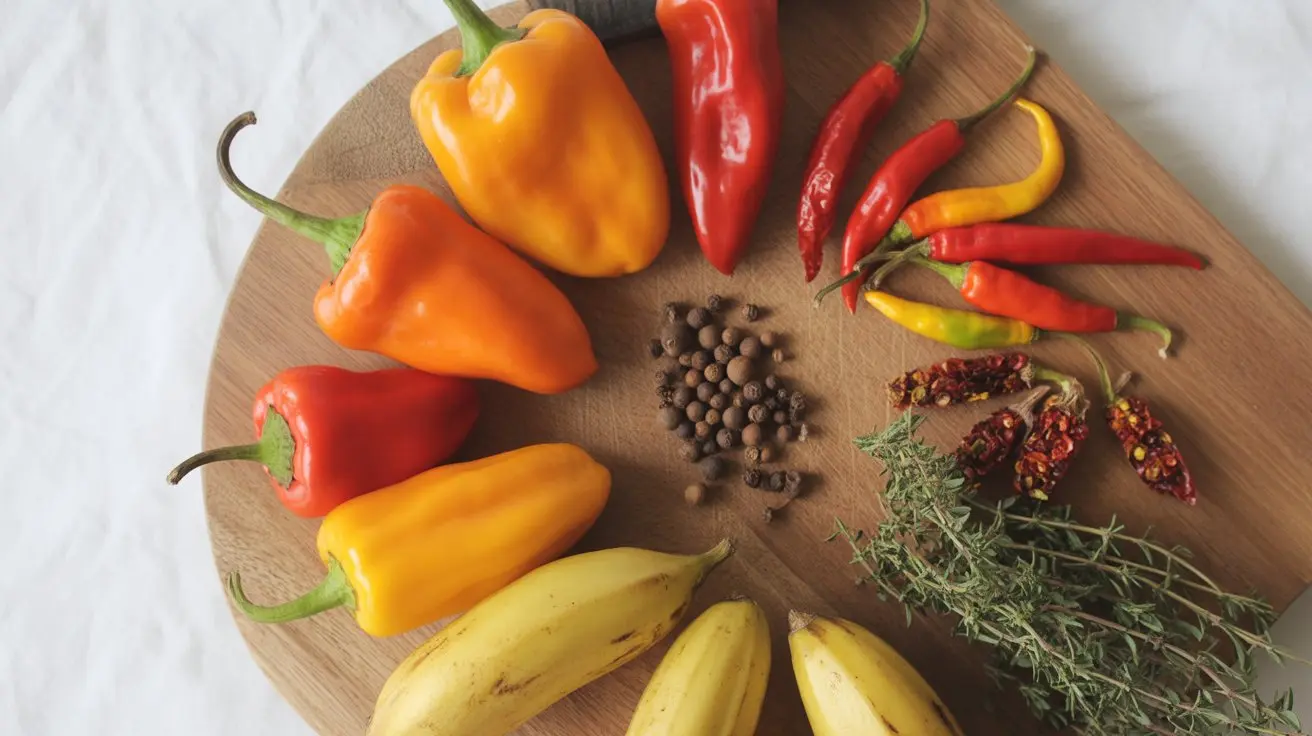
Jerk is not a sauce. It is a cooking method, a flavor system, and a cultural institution — and Scotch Bonnet is its structural foundation. Authentic jerk seasoning balances the chile's heat against allspice, thyme, scallion, and ginger in ratios that have been passed down through generations of Jamaican cooks.
The technique matters as much as the ingredients. Meat is marinated overnight, then slow-cooked over pimento wood — the smoke from allspice branches adding a layer of complexity that no liquid smoke can replicate. Scotch Bonnet in the marinade penetrates the protein; Scotch Bonnet added fresh at the end provides a brighter, sharper hit.
Some modern jerk preparations dial back the chile and compensate with sweetness, which misses the point entirely. Traditional jerk should challenge you slightly. That tension between heat and aromatic spice is what makes it jerk and not just a barbecue rub.
Pepper Sauce Culture Across the Islands
Every island in the Caribbean has its own pepper sauce tradition, and the variations are worth understanding rather than flattening into one category. Trinidadian pepper sauce is typically made with Scotch Bonnet or Congo pepper (a local Capsicum chinense variety), mustard, and chadon beni — bright yellow, acidic, intensely aromatic. Barbadian hot sauce leans toward vinegar-forward preparations. Guyanese versions often incorporate Wiri Wiri with mango or tamarind.
The common thread is freshness. Caribbean pepper sauces are rarely cooked down to the point of losing their raw vegetable character. The goal is to preserve the fruity top notes of the chile, which is why high-acid environments — vinegar or citrus — are used to preserve rather than transform the flavor.
For anyone wanting to make these at home, the process is straightforward but the pepper selection is everything. Substituting a habanero for a Scotch Bonnet gets you close on heat, but the flavor shift is noticeable to anyone who grew up eating the real thing.
Beyond the Scotch Bonnet: Other Peppers in Caribbean Kitchens
While Scotch Bonnet dominates the conversation, Caribbean cooking uses a broader palette. Mild sweet peppers — called "seasoning peppers" in Trinidad and Tobago — are used in sofrito-style bases for stews and rice dishes. These look like Scotch Bonnets but carry almost no heat, sitting in the mild range at under 1,000 SHU. They provide the Scotch Bonnet flavor without the fire, which is why so many Caribbean dishes taste of that distinctive fruity note even when they are not particularly spicy.
Bird peppers — small, thin-walled chiles in the standard hot pepper range — appear throughout the region as well, particularly in older, more rural cooking traditions. These are often dried and ground or preserved in rum or vinegar for long-term use.
For context on how these heat levels compare across world cuisines, it helps to look at what other traditions prioritize. The fiery Guntur chile from Andhra Pradesh and the deep-red Byadgi chile prized for its color from South India occupy different positions on the heat spectrum but serve similar structural roles in their respective cuisines — providing both color and heat to foundational dishes, the way Scotch Bonnet does in the Caribbean.
Comparing Caribbean Heat to Other Traditions
Caribbean cooking sits in an interesting global position: it uses some of the world's hottest chiles, but the cuisine itself is not always perceived as extremely spicy. That is because the techniques moderate the heat even when the peppers are intense. Whole peppers infuse flavor without maximum capsaicin extraction. Acidic sauces are used in small amounts as condiments rather than cooked into every component.
Compare this to cuisines that use chiles differently. The thin-walled Tien Tsin chile used in Chinese cooking is typically fried in oil to extract capsaicin directly into the cooking fat, distributing heat throughout the entire dish. The bright, fruity Aji Amarillo central to Peruvian cuisine is blended into sauces and pastes that coat proteins evenly. These are fundamentally different relationships between chile and cooking method.
The Caribbean approach — using chiles whole, as condiments, or in long-cooked marinades — reflects a philosophy of heat as accent rather than base. The South American pepper traditions share some of this nuance, particularly in countries like Venezuela and Colombia that border the Caribbean culturally and geographically.
Growing Caribbean Peppers at Home
Scotch Bonnets and Wiri Wiri are both worth growing if you have any interest in authentic Caribbean cooking. Both are Capsicum chinense varieties, which means they need a long, warm growing season — typically 90 to 120 days from transplant to harvest. Starting seeds indoors 10 to 12 weeks before your last frost date is essential in most of North America.
The plants themselves are compact and productive. Scotch Bonnets do particularly well in containers, which makes them manageable even on a balcony. Wiri Wiri plants tend to be slightly smaller and can be grown as perennials in USDA zones 10-11 or overwintered indoors. For a full step-by-step walkthrough on starting hot peppers from seed, the process applies directly to these varieties.
One practical note: Capsicum chinense varieties are notoriously slow to germinate. Soil temperature of 80-85°F is the sweet spot. A seedling heat mat is not optional if you want reliable germination rates. Patience is also required — some seeds take 3 to 4 weeks to show their first leaves.
For something a bit different in the garden, the slender, mild Fushimi pepper from Japanese cuisine offers a productive, low-heat alternative that grows well alongside Caribbean varieties and provides a useful contrast in the kitchen — mild enough to use in volume, with a clean vegetable flavor that complements spicier dishes.
Substitutions When You Cannot Find the Real Thing
Authentic Caribbean cooking calls for specific peppers, and the differences matter. That said, substitutions are sometimes necessary. For Scotch Bonnet, habanero is the closest widely available substitute — similar heat range, similar fruity character, though slightly less floral. The ratio is essentially 1:1.
For Wiri Wiri, the substitution is harder because the flavor is more distinctive. A combination of habanero for heat and a small amount of sweet red pepper for body gets reasonably close. Some cooks add a drop of fruit vinegar to approximate the berry-forward quality of the original.
For seasoning peppers — the mild, aromatic Capsicum chinense used as a base — there is no perfect substitute in most American supermarkets. A small amount of Scotch Bonnet with the seeds and membranes removed, combined with a sweet bell pepper, approximates the flavor without the heat. The medium heat zone offers some options, including certain Caribbean-style peppers now appearing in specialty markets, that can bridge this gap.
If you are working with Indian cooking traditions alongside Caribbean ones, the Indian pepper landscape offers its own substitution logic — particularly for dishes where color and mild heat are the primary goals rather than the intense fruity fire of Scotch Bonnet.
Techniques That Make Caribbean Heat Work
The technical side of cooking with Caribbean chiles is worth understanding in detail. Heat extraction is a function of time, temperature, and surface area. A whole Scotch Bonnet simmered in a pot of rice and peas for 20 minutes releases flavor compounds without rupturing and flooding the dish with capsaicin. Cut that same pepper into small pieces and cook it the same way, and you get a dramatically hotter result.
Acid plays a crucial role in Caribbean pepper preparations. Vinegar, lime juice, and tamarind all lower pH, which affects how capsaicin binds to receptors. This is part of the heat trigger mechanism that explains why acidic hot sauces can feel sharper and more immediate than oil-based preparations using the same pepper.
Fat is the other major variable. Coconut milk, common in many Caribbean dishes, dissolves capsaicin more effectively than water. A Scotch Bonnet-laced curry cooked in coconut milk distributes heat more evenly and with a slightly softer onset than the same dish made with water or stock.
These are not abstract principles — they are the practical knowledge that generations of Caribbean cooks built into their recipes. The techniques encode an understanding of how these specific peppers behave, even if that understanding was never expressed in scientific terms.
Frequently Asked Questions
-
Scotch Bonnet has a more floral, tropical flavor than habanero, with hints of cherry and apricot that are central to authentic Caribbean dishes. Both reach similar heat levels around 100,000-350,000 SHU, but experienced cooks notice the flavor difference immediately.
-
Most Caribbean hot sauces use Capsicum chinense varieties like Scotch Bonnet, which carry distinctive fruity flavor compounds alongside their capsaicin. The high-acid preparation method — vinegar or citrus — preserves these aromatic top notes rather than cooking them away.
-
Seasoning peppers are mild Capsicum chinense varieties that look like Scotch Bonnets but contain almost no capsaicin, measuring under 1,000 SHU. They provide the distinctive fruity, floral flavor of Scotch Bonnet without heat, making them essential for building flavor in stews and rice dishes.
-
Scotch Bonnets require 90 to 120 days from transplant to harvest, plus 10 to 12 weeks of indoor seed starting before your last frost date. Germination is slow and requires soil temperatures of 80-85°F, so a heat mat is strongly recommended.
-
Traditional jerk seasoning is genuinely hot, with Scotch Bonnet as a non-negotiable ingredient, but the heat is balanced by allspice, thyme, and other aromatics. Many commercial versions reduce the chile significantly, which produces a milder but less authentic result.