Best Peppers for Curry
The best peppers for curry depend on cuisine: Kashmiri for Indian, Thai chili for Thai, shishito for Japanese. Full guide. Find your perfect heat level.

Choosing the Right Pepper Makes or Breaks a Curry
Curry isn't one dish - it's a family of cooking traditions spanning India, Thailand, Japan, the Caribbean, and beyond, each with its own heat logic and flavor expectations.
The pepper you reach for determines whether your curry tastes authentic or just generically spicy. A Kashmiri chili gives Indian dishes that deep red color without scorching heat; swap in a Thai bird's eye and you've changed the whole character of the dish.
This guide breaks down which peppers work best for which curry styles, with specific SHU ranges, flavor notes, and practical substitution advice for each cuisine.
Understanding Heat in Curry Contexts
Not all curry heat is the same. Indian curries often build heat slowly through dried chili powders and pastes, while Thai curries hit fast and bright from fresh chilies ground into paste.
The Scoville rating system for testing pepper heat gives you a baseline, but it doesn't capture how heat behaves in a dish. Fat-soluble capsaicin disperses differently in coconut milk versus a tomato-based gravy - which is why the same pepper can feel hotter in a Thai green curry than in a butter chicken.
For a deeper look at capsaicin's chemistry and how it triggers heat receptors, that science explains why cooling agents like dairy and coconut fat actually work.
Indian Curry Peppers: Color, Depth, and Controlled Heat
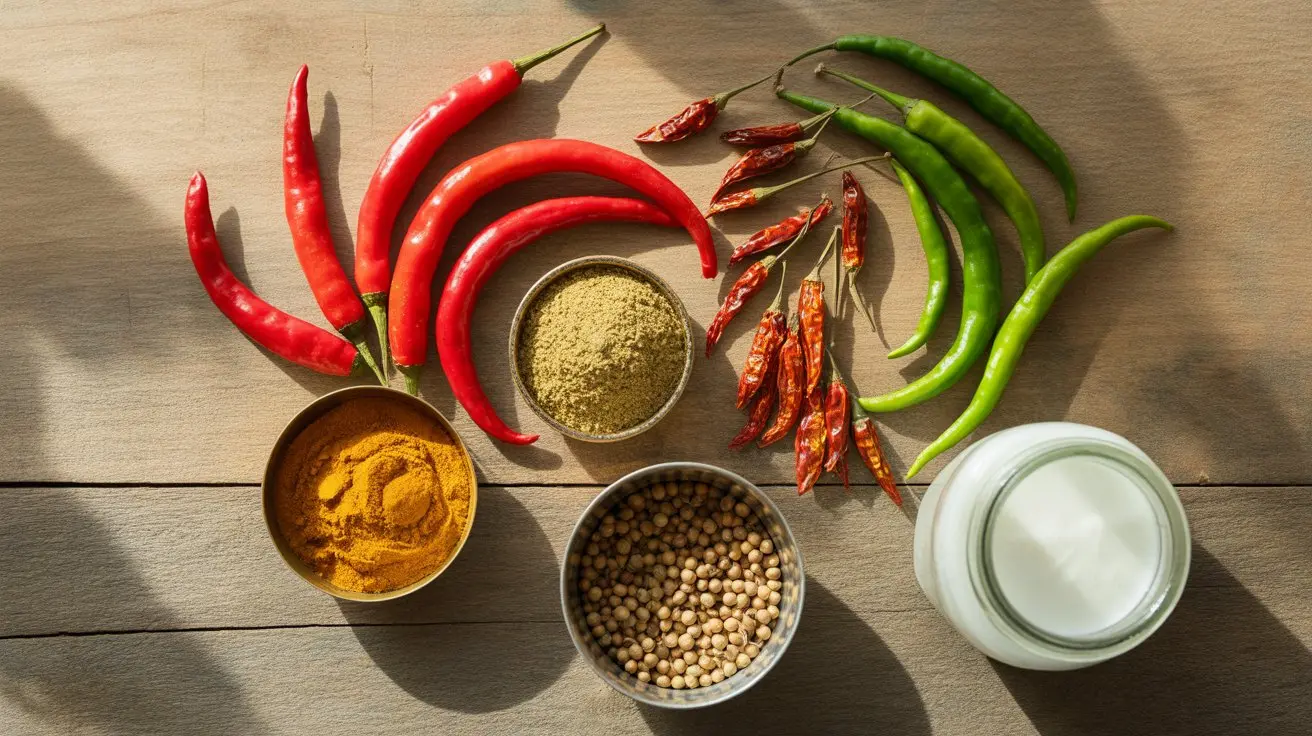
Indian cooking treats chili as both a spice and a colorant. The best peppers for Indian curry deliver deep red pigment alongside manageable heat that doesn't overwhelm spice blends built on cumin, coriander, and cardamom.
Kashmiri chili is the workhorse here - rated around 1,000-2,000 SHU, it produces that iconic brick-red color in tikka masalas and rogan josh without the burn that would mask other flavors. It sits firmly in the mild SHU bracket and is often used in large quantities precisely because of that restraint.
For dishes that need more heat, dried cayenne is widely used in South Indian cooking. The cayenne's sharp, clean heat at 30,000-50,000 SHU cuts through rich coconut-based curries without adding competing flavors. It's the backbone of many sambar and rasam recipes.
The earthy, low-heat character of the Holy Mole pepper makes it an interesting option for mild Indian-style curries where you want pepper flavor without any significant burn - think korma or mild vegetable curries.
Paprika (Hungarian or Spanish sweet) fills the color role in milder preparations. It's technically a pepper product worth understanding in the broader context of Indian pepper traditions.
Thai Curry Peppers: Fresh, Fiery, and Aromatic
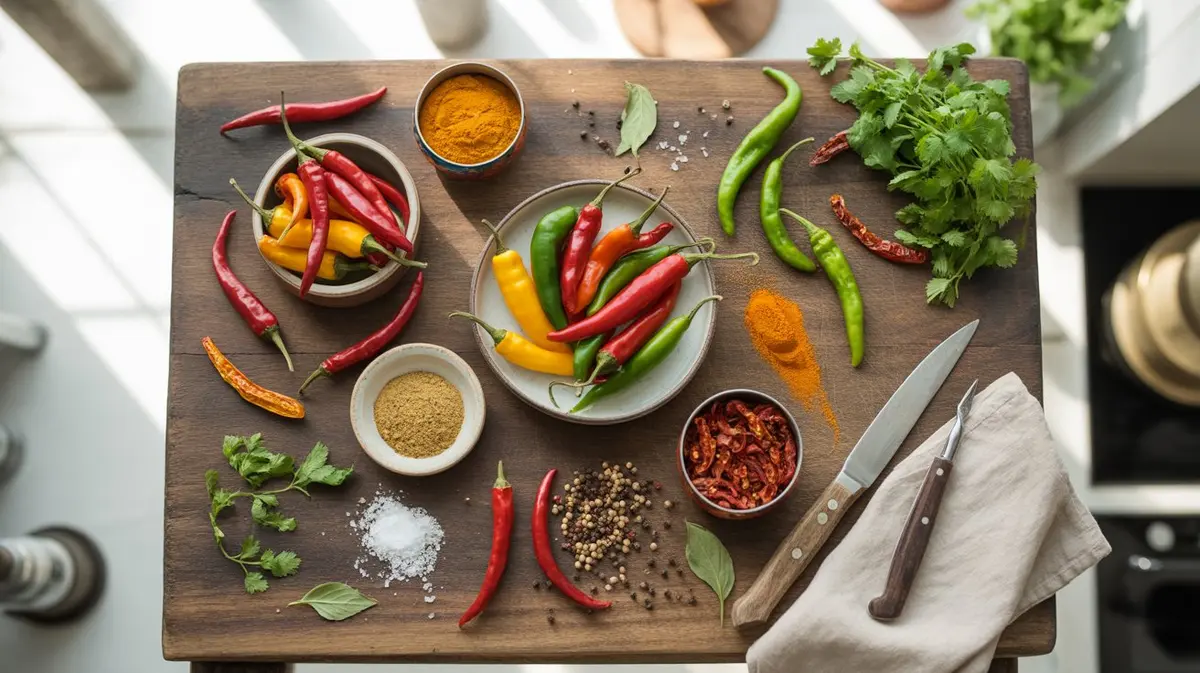
Thai curry pastes are built around fresh chilies pounded with aromatics - lemongrass, galangal, kaffir lime. The pepper's fresh flavor matters as much as its heat.
Green Thai curries use unripe (green) bird's eyes for a brighter, more vegetal heat. Red curries use ripe red chilies for a slightly sweeter, deeper flavor profile. This ripeness distinction matters - same pepper, different culinary result.
For a milder Thai-style curry, the lemon-bright heat of the Lemon Drop pepper at around 15,000-30,000 SHU adds citrus complexity that pairs naturally with Thai aromatics. It's not traditional, but it works.
These peppers occupy the hot pepper intensity range - enough heat to feel authentic without crossing into extract territory.
Japanese Curry Peppers: Mild, Sweet, and Layered
Japanese curry (kare) is one of the mildest curry styles globally - thick, slightly sweet, built on a roux base. The pepper's job here is subtle background warmth, not heat.
The mild sweetness of the Mexibell pepper fits Japanese curry well. It's essentially a mildly hot bell pepper hybrid that adds gentle warmth without disrupting the characteristic sweetness of Japanese curry roux.
Shishito peppers work beautifully here too - most run very mild, and their thin walls break down into the sauce without adding any sharpness. They're part of the broader Japanese pepper tradition that favors delicate heat.
The Bishop's Crown's fruity, mild heat is another option worth considering for Japanese-style preparations - its unusual shape and gentle warmth add visual interest alongside subtle pepper flavor.
Caribbean Curry Peppers: Scotch Bonnet and Fruity Fire
Caribbean curry - particularly Trinidadian and Jamaican styles - is built around the Scotch Bonnet, one of the most distinctive peppers in any global cuisine. At 100,000-350,000 SHU, it's genuinely hot, but what defines it is the fruity, almost apricot-like flavor underneath the burn.
That combination of tropical fruit and intense heat is what makes Caribbean curry taste like nothing else. The pepper is in the extra-hot SHU intensity range, so quantities matter - a whole Scotch Bonnet in a pot of curry is for serious heat lovers.
The broader Caribbean pepper tradition favors Capsicum chinense varieties for their fruity complexity. The Capsicum chinense species produces the fruitiest, most aromatic peppers in the world, which is why they dominate Caribbean cooking.
Habanero makes a reasonable substitute when Scotch Bonnets aren't available - similar heat range, similar fruity character, though slightly less complex.
African and South Asian Curry Peppers
Ethiopian and East African curries (berbere-spiced stews, for instance) rely on dried red chilies with moderate heat and earthy, slightly smoky flavor profiles.
South African peri-peri curries use Capsicum frutescens varieties - small, intensely hot peppers in the Capsicum frutescens species family that includes African bird's eye and Tabasco peppers. These run 50,000-175,000 SHU and deliver a clean, penetrating heat without much fruitiness.
The African pepper tradition tends toward direct, unadorned heat - these aren't peppers you use for color or aroma, they're heat delivery systems.
Sri Lankan curries sit somewhere between Indian and Southeast Asian styles, using a mix of dried red chilies for heat and fresh green chilies for brightness. Serrano peppers - running about 10,000-23,000 SHU - work well as fresh green chili substitutes in Sri Lankan preparations.
Building a Curry Pepper Pantry
Most serious curry cooks keep at least three types of peppers on hand: a dried mild chili for color and depth, a dried hot chili for heat, and a fresh option for brightness.
For a practical starting pantry that covers Indian, Thai, and Caribbean styles:
- Kashmiri chili powder - color and mild heat for Indian dishes
- Dried cayenne - clean heat that works across multiple cuisines
- Thai bird's eye chilies (fresh or frozen) - essential for Southeast Asian pastes
- Scotch Bonnet or habanero - fruity heat for Caribbean preparations
- Ancho or guajillo - smoky depth for fusion or Mexican-adjacent curries
Frozen fresh chilies retain most of their flavor and heat - keeping bird's eyes and Scotch Bonnets in the freezer means you always have the right pepper available.
Substitution Logic: When You Don't Have the Right Pepper
Substitutions work best when you match both heat level and flavor profile, not just SHU.
If you need Kashmiri chili and don't have it, the closest substitute is a mix of sweet paprika (for color) and a small amount of cayenne (for heat) - roughly a 4:1 ratio. This isn't identical, but it gets you to the right color and approximate heat.
For Thai bird's eye substitutions, serrano peppers work reasonably well in pastes - they're about half the heat of bird's eyes but have a similar fresh, bright character. You'd use roughly twice as many serranos to match the heat.
When a recipe calls for Scotch Bonnet, habanero is the standard swap. The fruity quality is similar enough that most people won't notice in a complex curry sauce. A serrano is about 10-15 times milder than a Scotch Bonnet, so it's not a heat equivalent - but for flavor without the fire, it's usable.
The South American pepper tradition offers the Capsicum baccatum species, which includes aji amarillo - a critical curry pepper in Peruvian cooking that doesn't fit neatly into Indian or Thai categories but deserves mention for its distinctive fruity, floral heat around 30,000-50,000 SHU.
Fresh vs. Dried vs. Paste: How Form Changes the Pepper
The same pepper behaves differently depending on how it's prepared. This matters enormously in curry cooking.
Dried chilies concentrate flavor and lose some volatile aromatics, gaining earthiness and depth. They're ideal for slow-cooked Indian curries where you want a foundation of heat that builds gradually.
Fresh chilies retain bright, green, vegetal notes alongside their heat. They're essential for Thai pastes where those fresh aromatics are part of the dish's identity.
Chili paste (store-bought or homemade) is pre-cooked, which mellows some of the raw sharpness. Gochujang, for instance, is fermented Korean chili paste that adds heat, umami, and sweetness simultaneously - a completely different tool than raw chili powder.
Roasting dried chilies before grinding them is standard practice in many Indian regional cuisines. It adds a toasted, nutty dimension that raw dried chili powder lacks.
Heat Level Quick Reference by Cuisine
Different curry traditions operate in different SHU ranges. Knowing where each cuisine sits helps you calibrate:
- Japanese curry: 0-5,000 SHU - mild background warmth
- British curry house style: 1,000-30,000 SHU depending on dish
- North Indian (korma to vindaloo): 500-50,000 SHU across the spectrum
- South Indian: 10,000-75,000 SHU - generally hotter than North Indian
- Thai green/red curry: 50,000-100,000 SHU
- Caribbean curry: 100,000-350,000 SHU
- Peri-peri: 50,000-175,000 SHU
These ranges reflect typical restaurant and home preparations, not the extreme ends of what's possible. A vindaloo made with ghost pepper would technically qualify as Indian curry - but that's not what the tradition calls for.
Growing Your Own Curry Peppers
The hardest part of growing curry-specific peppers isn't germination - it's getting enough heat accumulation during the growing season to develop full flavor and heat. Kashmiri chilies grown in a cool climate often come out milder and less complex than their Indian-grown counterparts because they don't get enough hot days.
Thai bird's eyes need long, warm seasons - they're perennials in tropical climates but grown as annuals in temperate zones. Starting them indoors 10-12 weeks before the last frost gives them enough head start to produce well.
Scotch Bonnets and habaneros are similarly demanding of heat and sun. They'll produce in USDA zones 9-11 outdoors year-round; in cooler zones, container growing lets you move them inside before frost.
For anyone starting out, the complete germination and cultivation guide covers soil temperature, lighting, and transplanting timing that applies across all these varieties.
Cayenne is the easiest curry pepper to grow in most climates - it's productive, relatively fast-maturing, and tolerant of a wider temperature range than tropical varieties. If you're building a curry garden from scratch, start there.
Frequently Asked Questions
-
Kashmiri chili is the standard choice - it delivers deep red color at just 1,000-2,000 SHU without overpowering spice blends. For hotter dishes like vindaloo, dried cayenne or dried red chilies from South India are traditional.
-
Jalapeños work in a pinch, but their grassy, vegetal flavor doesn't suit most curry styles. Serrano is a better fresh chili substitute - similar heat, cleaner flavor that blends more naturally into curry pastes and sauces.
-
Coconut milk disperses capsaicin differently than ghee or tomato-based gravies, making heat more immediately noticeable. The fresh chilies used in Thai pastes also release volatile compounds that hit faster than the slow-building heat from dried Indian chili powders.
-
Kashmiri chili powder is specifically prized for its intense red pigment and mild heat. Sweet paprika achieves a similar color effect and is easier to find in Western grocery stores, though it lacks Kashmiri's subtle earthiness.
-
It depends entirely on the curry style. Dried chilies build depth and earthiness suited to slow-cooked Indian gravies; fresh chilies preserve bright, aromatic qualities essential to Thai paste-based curries. Many complex curries actually use both forms simultaneously.