Thai Chili vs Bird's Eye: Key Differences Compared
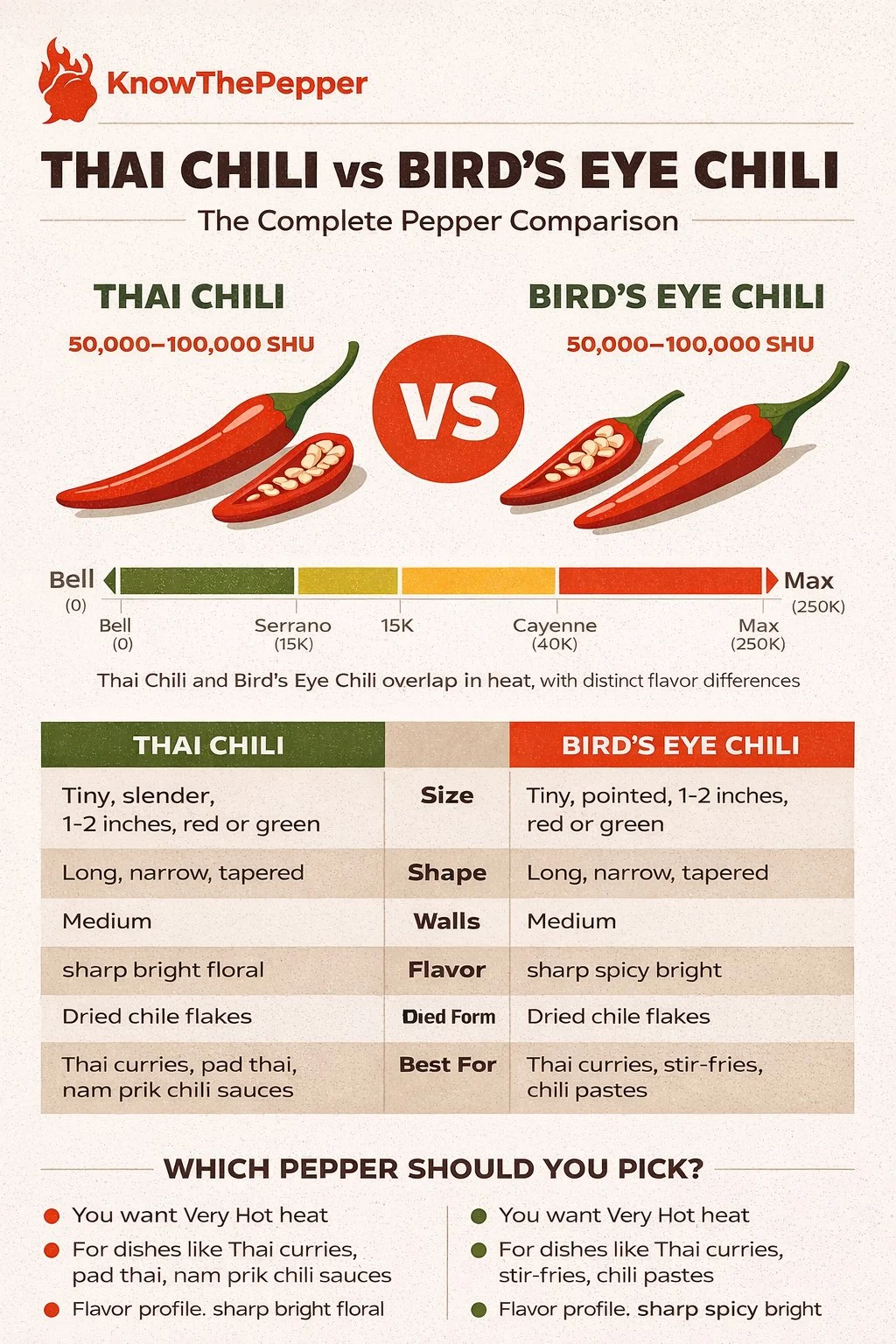
Thai Chili and Bird's Eye Chili share identical SHU ranges (50,000-100,000), the same species (C. annuum), and even the same geographic origin in Thailand. The distinction between them is more taxonomic and regional than heat-based — both deliver the same sharp, peppery fire that defines Southeast Asian cooking.

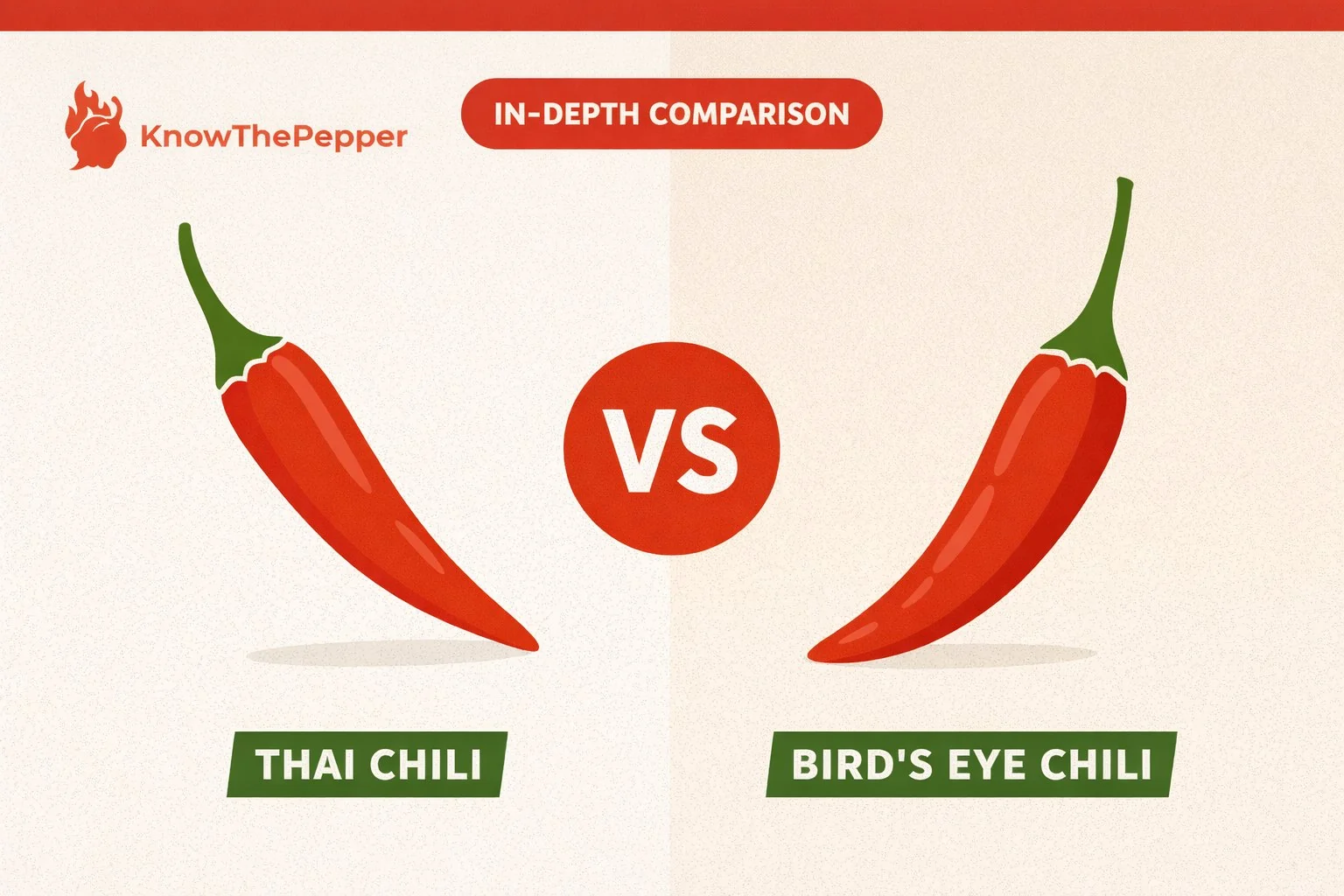
Thai Chili measures 50K–100K SHU while Bird's Eye Chili registers 50K–100K SHU — roughly equal in heat. Thai Chili is known for its bright and peppery flavor (C. annuum), while Bird's Eye Chili offers peppery and bright notes (C. annuum).
- Species: Both are C. annuum
- Best for: Thai Chili excels in hot sauces and extreme dishes, Bird's Eye Chili in hot sauces and spicy dishes
Thai Chili
Extra-HotBird's Eye Chili
Extra-HotThai Chili vs Bird's Eye Chili Comparison
Thai Chili vs Bird's Eye Chili Heat Levels
Both peppers land in the same 50,000-100,000 SHU window, placing them firmly in the hot pepper classification band that sits well above everyday cooking chiles. To put that in perspective, a standard guajillo tops out around 5,000 SHU — meaning either of these peppers can hit 20 times hotter than that dried Mexican staple.
The jalapeño comparison is worth noting too: at 2,500-8,000 SHU, a jalapeño peaks where Thai Chili and Bird's Eye are just getting started. At their upper range, both reach roughly 12-40 times a jalapeño's heat.
What makes the heat interesting isn't the number — it's the delivery. Both peppers produce a fast, sharp burn that hits the front of the mouth and spreads quickly. There's no slow creep here. The capsaicin binds hard and fast, which is why a single small pod can transform an entire dish. Understanding why capsaicin triggers that intense burn helps explain why these thin-walled, small-fruited peppers punch so far above their physical size.
Within the 50,000-100,000 SHU range, individual pods vary based on growing conditions, soil stress, and water availability. A Bird's Eye grown in dry, hot conditions can reach the top of that range just as readily as a Thai Chili grown identically. The Scoville rating system for testing pepper heat captures an average, not a fixed number — so expect variation pod to pod.
Flavor Profile Comparison
Small enough to overlook, fierce enough to remember — the Thai chili punches well above its size.
Size is genuinely deceptive here.
Start with the nose: both peppers carry a sharp, grassy aroma with a faintly floral edge when fresh. Dried, that brightness concentrates into something more pungent and earthy. Neither pepper has the fruity or smoky aromatic complexity you'd find in a habanero or ancho — the scent is clean and direct.
On the palate, Thai Chili delivers a bright, peppery bite with a clean finish. The flavor is assertive without being distracting — it functions as heat-forward seasoning more than a flavor centerpiece. Bird's Eye Chili tastes nearly identical: peppery, bright, with the same clean heat character.
The practical flavor difference between the two is minimal. Both belong to the C. annuum botanical family, which tends toward cleaner, crisper heat profiles compared to the fruitier C. chinense species. Neither pepper lingers with sweetness or smoke — they're workhorses designed to add fire and a sharp vegetal note.
Where small distinctions do appear, they're usually environmental rather than varietal. A Thai Chili grown in rich, well-watered soil may taste slightly greener and fresher than one stressed for heat. The same applies to Bird's Eye. Regional growing practices across Thailand's pepper-growing regions influence the flavor more than the name on the seed packet.
For cooking purposes, treat them as interchangeable flavor contributors. Both brighten sauces, add bite to stir-fries, and hold up to high heat without turning bitter.
Culinary Uses for Thai Chili and Bird's Eye Chili
These two peppers are the backbone of Southeast Asian heat — specifically Thai, Vietnamese, and Indonesian cooking. Their small size, thin walls, and sharp flavor make them ideal for applications where you want heat distributed evenly through a dish rather than concentrated in one bite.
Fresh applications are where both shine. Sliced thin into nam prik dipping sauces, scattered over pad thai, or muddled into som tum (green papaya salad), they add heat without bulk. Because the walls are thin, they release capsaicin quickly into oil or liquid.
Cooked into curries and stir-fries, both peppers hold their heat well. Add them early for background fire, or late for sharper punch. Thai green curry paste traditionally uses fresh Thai Chilis blended with lemongrass, galangal, and kaffir lime — the pepper's clean flavor doesn't compete with those aromatics.
For anyone comparing the cayenne's thinner heat vs. Thai Chili's sharper bite, the key difference in cooking is texture: cayenne is almost always used dried or powdered, while Thai Chili works equally well fresh or dried.
Substitution ratios: Use Bird's Eye and Thai Chili interchangeably at a 1:1 ratio in any recipe. If substituting with serrano, use 1.5 serranos per Thai Chili to approximate heat. For cayenne powder, 1/4 teaspoon per fresh pod is a rough baseline.
Dried and ground, both make excellent chile flakes for finishing dishes. The habanero-vs-Thai-Chili heat gap is worth understanding if you're scaling heat in a recipe — habaneros bring fruity complexity alongside more heat, so they're not a direct swap.
For those who want to explore the jalapeño-to-Thai-Chili heat jump, the difference is significant enough that you'd use far fewer Thai Chilis than jalapeños in any given dish — start with half the quantity and adjust.
Which Should You Choose?
Choosing between Thai Chili and Bird's Eye Chili is largely a matter of geography and labeling rather than meaningful culinary difference. Both deliver 50,000-100,000 SHU of sharp, clean heat with nearly identical flavor profiles.
If your recipe specifies one, the other works perfectly as a direct replacement. Markets in Thailand, Vietnam, and across Southeast Asia use both names interchangeably — sometimes for the exact same pepper.
Where the distinction matters is sourcing: Bird's Eye is the more common name in international markets and Western grocery stores, while Thai Chili appears more frequently in specialty Asian markets and seed catalogs. If you're growing your own, check out the full germination and growing guide for hot peppers — both varieties have similar growing requirements and thrive in heat.
For cooks: buy whichever you can find. For growers: both reward the same treatment. The Thai Chili substitutes and ratio guide is worth bookmarking if you're frequently working with these peppers and need to swap in something more available.
Can You Substitute One for the Other?
Yes — direct substitution works. Thai Chili and Bird's Eye Chili are close enough in heat to swap at roughly 1:1. The main difference will be flavor. For more swap options, explore ranked alternatives with conversion ratios.
Growing Thai Chili vs Bird's Eye Chili
If you’re deciding which pepper to grow at home, consider your climate and patience level. Thai Chili and Bird's Eye Chili have different maturation times and temperature preferences. Hotter varieties generally need a longer, warmer growing season to develop their full capsaicin content. Our zone-based planting date tool can pinpoint the best sowing window for your area.
The hardest part of growing Thai chilies is not germination — it is managing heat stress during fruiting. These plants originate from a tropical climate and expect warmth, but sustained temperatures above 95°F (35°C) cause flower drop before pods can set.
Germination itself is straightforward at 80–85°F soil temperature, typically within 10–14 days. Start seeds indoors 8–10 weeks before last frost.
They prefer well-draining soil with consistent moisture but will tolerate brief dry spells better than waterlogging. Feed with a low-nitrogen fertilizer once flowering begins; too much nitrogen pushes leaf growth at the expense of pods.
Bird's eye chili is among the more forgiving hot peppers to grow, provided you give it heat and full sun. Start seeds indoors 8-10 weeks before last frost - these need soil temperatures above 75°F to germinate reliably.
The plant stays compact, typically 18-24 inches tall, which makes it suitable for containers. A 3-gallon pot works fine for a single plant.
For pest and disease management, see the practical guidance on common pepper pests and diseases - aphids and spider mites are the main threats, particularly in dry conditions. Good airflow around plants prevents fungal issues.
History & Origin of Thai Chili and Bird's Eye Chili
Both peppers carry centuries of culinary heritage. Thai Chili traces its roots to Thailand, while Bird's Eye Chili originates from Thailand. Understanding their backstory helps explain why each pepper developed its distinctive traits.
Buying & Storage
Whether you’re shopping for Thai Chili or Bird's Eye Chili, the same quality indicators apply. Fresh peppers should feel firm and heavy for their size, with taut, glossy skin and no soft or wet spots. Minor stem cracks known as “corking” are perfectly normal and often indicate a mature, flavorful pod.
- Firm pods with taut skin and consistent color
- Should feel heavy relative to size
- Minor stem cracks (“corking”) are normal
- Avoid anything soft, shriveled, or with dark wet spots
- Fresh: Paper bag, crisper drawer — 1–2 weeks
- Frozen: Wash, dry, freeze on sheet pan — 6+ months
- Dried: Airtight, away from light — up to 1 year
The Verdict: Thai Chili vs Bird's Eye Chili
Thai Chili and Bird's Eye Chili sit in the same heat tier but serve different roles. Thai Chili delivers its distinctive bright and peppery character. Bird's Eye Chili, with its peppery and bright profile, excels in everyday cooking.
Frequently Asked Questions
Related Comparisons
Sources pending verification.