
Tabasco Pepper vs Thai Chili: Heat, Flavor & Key Differences
Tabasco pepper and Thai chili occupy very different positions on the heat spectrum, yet both punch well above their size. Thai chilies clock in at 50,000-100,000 SHU, making them a serious contender in the hot pepper tier, while Tabasco peppers sit in a milder range that makes them more approachable for everyday cooking. Understanding where each fits helps you pick the right one — or know when to swap.

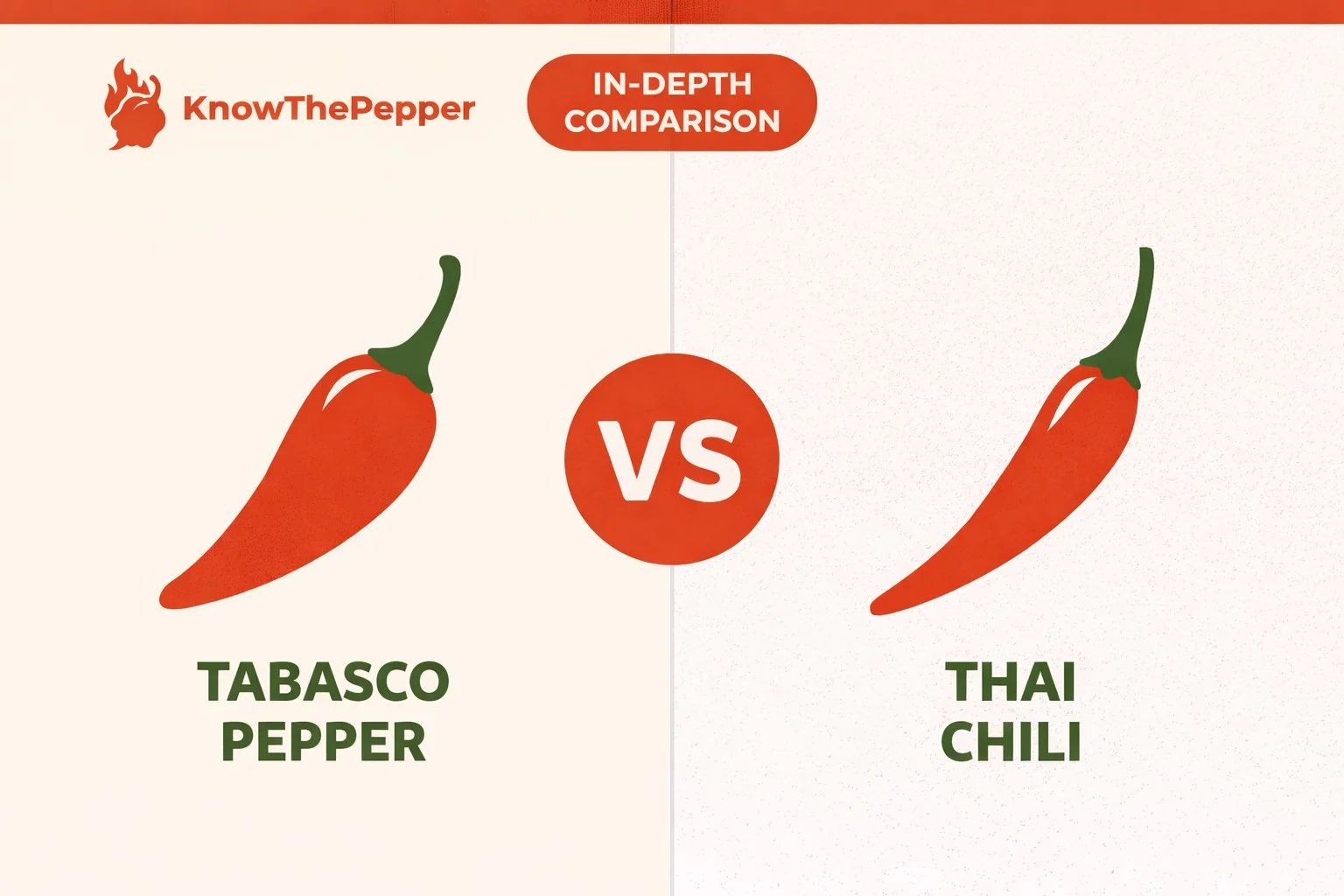
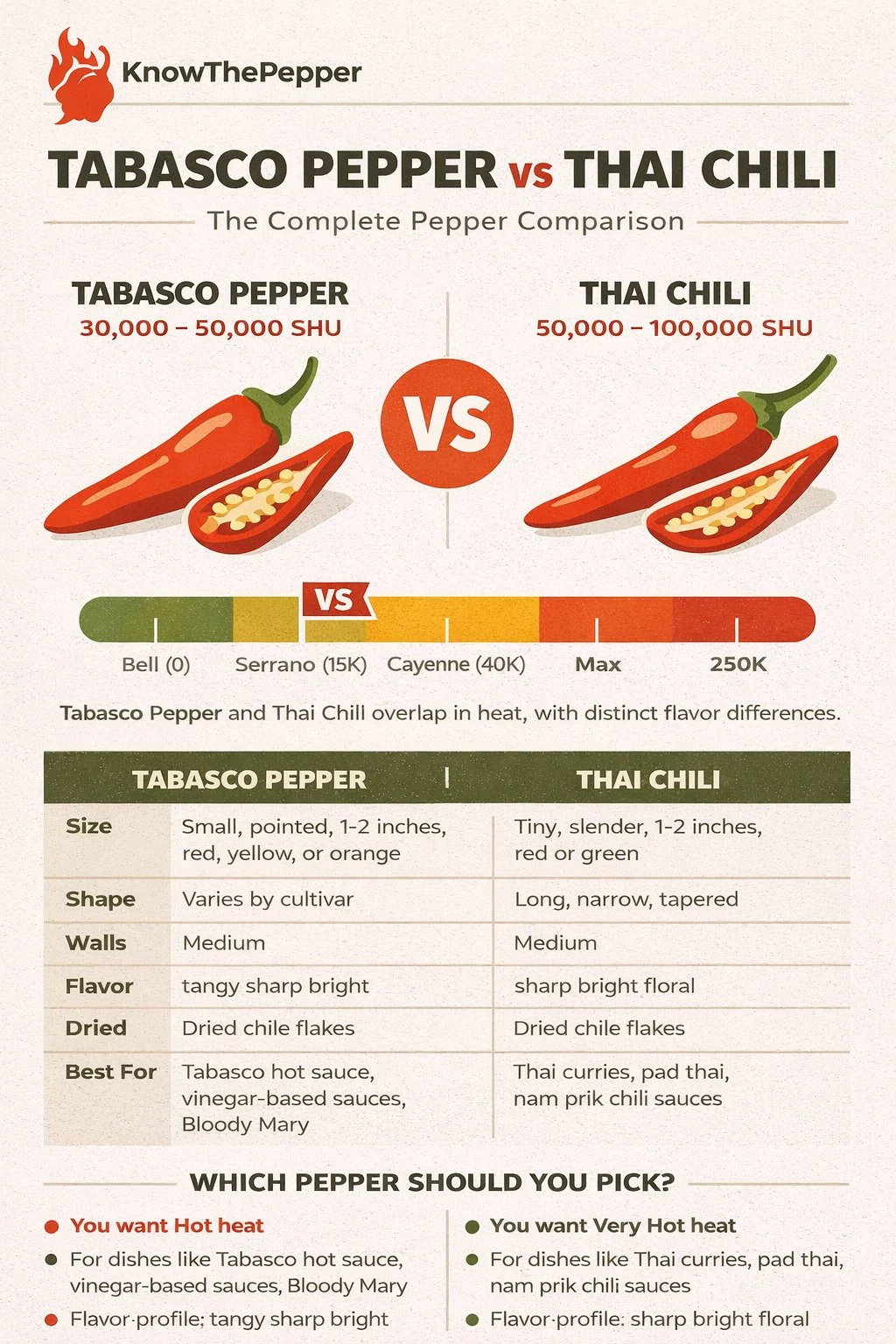
Tabasco Pepper measures 30K–50K SHU while Thai Chili registers 50K–100K SHU — making Thai Chili 2× hotter. Tabasco Pepper is known for its sharp and vinegary flavor (C. frutescens), while Thai Chili offers bright and peppery notes (C. annuum).
- Heat difference: Thai Chili is 2× hotter
- Species: C. frutescens vs C. annuum
- Best for: Tabasco Pepper excels in everyday cooking and salsas, Thai Chili in hot sauces and spicy dishes
Tabasco Pepper
HotThai Chili
Extra-HotTabasco Pepper vs Thai Chili Comparison
Tabasco Pepper vs Thai Chili Heat Levels
Start with flavor and the heat story tells itself: Thai chilies arrive sharp and bright before the burn even registers, while Tabasco peppers build more slowly with a thinner, more liquid-forward heat.
Thai chili lands at 50,000-100,000 SHU — that puts it roughly 6 to 40 times hotter than a standard jalapeño (which tops out around 8,000 SHU). That's a wide internal range, and it matters: a milder Thai chili from a home garden can feel almost manageable, while a fully ripened red specimen from a commercial crop can genuinely surprise you.
Tabasco peppers are harder to pin down with current data, but the peppers used in Tabasco brand sauce historically range from 2,500-5,000 SHU — sitting comfortably in the medium-mild zone. That's a significant gap. At the upper end, a Thai chili can be 20 times hotter than a Tabasco pepper.
The burn character differs too. Thai chilies deliver a fast, piercing heat that hits the front of the mouth and spreads quickly — capsaicin binding to TRPV1 receptors almost immediately. If you want to understand the chemistry behind that rapid burn sensation, it comes down to capsaicin concentration and cell density. Tabasco peppers, by contrast, produce a thinner, more diffuse heat — noticeable but not aggressive.
For anyone calibrating recipes, the Scoville scale's measurement methodology matters here: Thai chili SHU can vary considerably by growing conditions, ripeness, and variety. Always taste before committing.
Flavor Profile Comparison
Most peppers get famous for their heat.
Small enough to overlook, fierce enough to remember — the Thai chili punches well above its size.
Thai chilies bring a bright, peppery sharpness that's almost citrus-adjacent at first — there's a clean, grassy quality before the heat takes over. Fully ripe red Thai chilies develop a slightly fruity undertone, but the dominant note stays sharp and direct. They don't have the smokiness of a dried pepper or the sweetness of a bell pepper relative — this is pure, clean heat with minimal distraction.
Tabasco peppers are notably different in texture and juice content. They're unusually high in moisture for a hot pepper, which is exactly why they're processed into sauce rather than dried. The flavor is tangy, almost vinegary on the palate even before any sauce processing — there's an acidic brightness that's distinct from the sharper peppery heat of a Thai chili.
In terms of aroma, Thai chilies have a more assertive fresh-pepper smell — the kind that hits you when you slice into them. Tabasco peppers are subtler raw, with their character emerging more through cooking or fermentation.
Culinary context shapes perception too. Thai chilies appear in dishes where their heat needs to integrate with fish sauce, lime, lemongrass, and coconut — their sharpness cuts through fat and acid beautifully. The regional pepper traditions of Thailand have shaped these chilies toward that specific flavor role over centuries.
Tabasco peppers, grown primarily for sauce production, have been selected for juice content and consistent mild heat rather than standalone flavor complexity. Raw, they're pleasant but unremarkable compared to the more assertive Thai chili.
Culinary Uses for Tabasco Pepper and Thai Chili
Thai chilies are workhorses across Southeast Asian cooking. They go into nam prik dipping sauces, stir-fries, curry pastes, and fresh salsas where raw heat is wanted. The standard approach in Thai cooking is to slice them thin, leave the seeds in for maximum heat, and add them early or late depending on how much burn you want integrated into the dish.
For fresh applications — sliced over noodles, muddled into dressings, or scattered over larb — Thai chilies have no real substitute that delivers the same bright sharpness. The birds-eye vs Thai chili heat profile comparison is worth reading if you're trying to distinguish between these closely related varieties at the market.
Tabasco peppers shine in fermented and liquid applications. Their high moisture content makes them ideal for hot sauce production — mash them, ferment with salt, blend with vinegar, and you get a sauce with genuine depth. They're less useful as a fresh cooking pepper because their heat doesn't carry far in a dish.
Substitution ratios matter here. If a recipe calls for Thai chilies and you're reaching for something milder, use roughly 3-4 Tabasco peppers per Thai chili to approximate the heat — though the flavor won't fully replicate. Going the other direction, one Thai chili can replace two or three Tabasco peppers in a sauce recipe, but expect the flavor to shift sharper and less tangy.
For cooking with either, the cayenne vs Tabasco pepper side-by-side comparison gives useful context on how Tabasco-range peppers behave against a more familiar benchmark. Similarly, the cayenne vs Thai chili heat and flavor breakdown helps calibrate Thai chili's position against a widely available dried pepper.
Dried Thai chilies — sold as bird's eye in many Asian grocery stores — work in oil infusions, soups, and spice blends. A single dried Thai chili dropped into a pot of broth adds significant background heat. Tabasco peppers don't dry well due to their moisture content, which is why you almost never see them in dried form commercially.
Both peppers belong to C. annuum's broad botanical family, which explains some shared flavor DNA despite the heat gap.
Which Should You Choose?
Pick Thai chili when you need assertive, clean heat that integrates into fresh and cooked dishes — stir-fries, curry pastes, dipping sauces, and anything where the pepper's sharpness needs to cut through fat or acid. At 50,000-100,000 SHU, it delivers genuine firepower with a bright flavor that holds up under heat.
Reach for Tabasco peppers when the goal is sauce-making or fermentation — their unusual moisture content and mild tangy heat make them purpose-built for liquid applications. They won't carry a dish the way a Thai chili can, but in a fermented hot sauce they develop real complexity.
For heat tolerance: if you can eat jalapeños comfortably but haven't worked with Thai chilies before, start with half the quantity a recipe calls for. The jump from jalapeño-level heat to Thai chili territory is real.
If you need a Thai chili replacement in a pinch, substitute options for Thai chili cover your best alternatives. For Tabasco pepper swaps, Tabasco pepper replacement options lay out the closest matches by heat and flavor profile.
Can You Substitute One for the Other?
Proceed with caution. Thai Chili is 2× hotter than Tabasco Pepper.
Need a different option altogether? Search for peppers that match your target heat and flavor with precise swap ratios.
Growing Tabasco Pepper vs Thai Chili
If you’re deciding which pepper to grow at home, consider your climate and patience level. Tabasco Pepper and Thai Chili have different maturation times and temperature preferences. Hotter varieties generally need a longer, warmer growing season to develop their full capsaicin content. Our zone-based planting date tool can pinpoint the best sowing window for your area.
Tabasco peppers are more demanding than most backyard gardeners expect. As a *C.
Start seeds 10-12 weeks before your last frost date. Germination is slower than annuum varieties, often taking 14-21 days at 80-85°F.
Spacing matters more with tabasco than with compact annuum types - these plants can reach 3-4 feet tall and spread nearly as wide in warm climates. Give them 18-24 inches between plants.
The hardest part of growing Thai chilies is not germination — it is managing heat stress during fruiting. These plants originate from a tropical climate and expect warmth, but sustained temperatures above 95°F (35°C) cause flower drop before pods can set.
Germination itself is straightforward at 80–85°F soil temperature, typically within 10–14 days. Start seeds indoors 8–10 weeks before last frost.
They prefer well-draining soil with consistent moisture but will tolerate brief dry spells better than waterlogging. Feed with a low-nitrogen fertilizer once flowering begins; too much nitrogen pushes leaf growth at the expense of pods.
History & Origin of Tabasco Pepper and Thai Chili
Both peppers carry centuries of culinary heritage. Tabasco Pepper traces its roots to Mexico, while Thai Chili originates from Thailand. Understanding their backstory helps explain why each pepper developed its distinctive traits.
Buying & Storage
Whether you’re shopping for Tabasco Pepper or Thai Chili, the same quality indicators apply. Fresh peppers should feel firm and heavy for their size, with taut, glossy skin and no soft or wet spots. Minor stem cracks known as “corking” are perfectly normal and often indicate a mature, flavorful pod.
- Firm pods with taut skin and consistent color
- Should feel heavy relative to size
- Minor stem cracks (“corking”) are normal
- Avoid anything soft, shriveled, or with dark wet spots
- Fresh: Paper bag, crisper drawer — 1–2 weeks
- Frozen: Wash, dry, freeze on sheet pan — 6+ months
- Dried: Airtight, away from light — up to 1 year
The Verdict: Tabasco Pepper vs Thai Chili
Tabasco Pepper and Thai Chili occupy very different positions on the heat spectrum. Thai Chili delivers 2× more heat with its distinctive bright and peppery character. Tabasco Pepper, with its sharp and vinegary profile, excels in everyday cooking.
Frequently Asked Questions
Related Comparisons
Sources pending verification.
