Scotch Bonnet vs Wiri Wiri: What's the Difference?
The Scotch Bonnet and Wiri Wiri are two of the most culturally significant peppers in their respective regions — the Scotch Bonnet ruling Caribbean kitchens from Jamaica to Trinidad, and the Wiri Wiri holding a place of deep importance in Guyanese cooking. Both are small, round, and deceptively potent, but their flavor profiles and heat levels set them apart in meaningful ways for cooks and pepper enthusiasts alike. The Scotch Bonnet lands between 100,000 and 350,000 SHU, placing it firmly in the extra-hot pepper classification, while documented SHU data for the Wiri Wiri remains inconsistent across sources — though growers and cooks consistently describe it as seriously hot, likely in a comparable range.

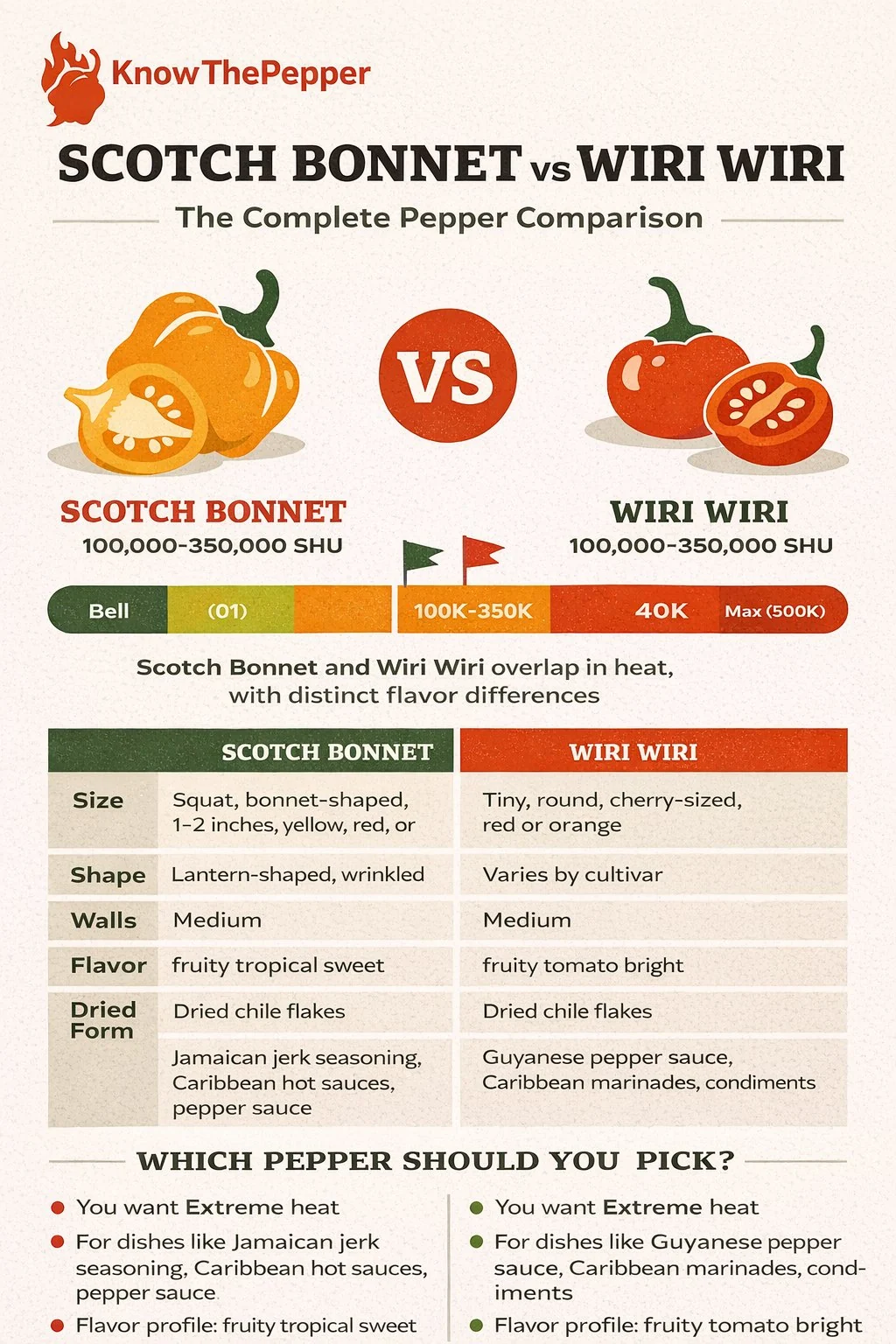
Scotch Bonnet measures 100K–350K SHU while Wiri Wiri registers 100K–350K SHU — roughly equal in heat. Scotch Bonnet is known for its fruity and tropical flavor (C. chinense), while Wiri Wiri offers bright and fruity notes (C. frutescens).
- Species: C. chinense vs C. frutescens
- Best for: Scotch Bonnet excels in hot sauces and extreme dishes, Wiri Wiri in hot sauces and spicy dishes
Scotch Bonnet
Extra-HotWiri Wiri
Extra-HotScotch Bonnet vs Wiri Wiri Comparison
Scotch Bonnet vs Wiri Wiri Heat Levels
The Scotch Bonnet registers between 100,000 and 350,000 SHU, making it one of the more variable peppers in the upper heat tier. A chipotle typically measures around 2,500-8,000 SHU, which means a Scotch Bonnet at its peak can be roughly 40 to 140 times hotter — a gap that puts the Scotch Bonnet in an entirely different league for anyone accustomed to smoked jalapeño heat.
The Wiri Wiri is trickier to pin down with precision. Formal SHU measurements are sparse in published literature, and the numbers that circulate online vary widely. Growers in Guyana and the Guyanese diaspora describe the pepper as genuinely fierce — comparable to a habanero or Scotch Bonnet — but without verified lab data, exact placement on the Scoville ranking system remains uncertain.
What both peppers share is a C. chinense-style burn character: fast-hitting, building heat that spreads across the palate and lingers. This is distinct from the sharper, more localized sting of a C. annuum pepper. The Scotch Bonnet's heat is well-documented and consistent enough that cooks can calibrate recipes reliably. The Wiri Wiri demands more caution simply because its heat can surprise — small batches vary considerably depending on growing conditions and seed lineage.
For practical purposes, treat both as high-heat peppers requiring respect. Neither belongs in a dish where you'd use multiple whole peppers without prior experience with that specific batch.
Flavor Profile Comparison
The first time I tasted a Scotch Bonnet raw — sliced thin, no gloves, rookie mistake — the sweetness hit before anything else.
Round as a cherry tomato and barely half an inch across, the wiri wiri looks almost playful sitting on the plant.
The Scotch Bonnet carries one of the most recognizable flavor signatures in the pepper world — bright, tropical fruit notes that lean toward mango and apricot, with a floral undertone that comes through even when the pepper is cooked down. This is part of what makes it irreplaceable in Jamaican jerk seasoning and Trinidadian pepper sauce; the heat and the fruit arrive together, neither masking the other.
The Wiri Wiri has a flavor profile that's harder to characterize in published sources, but accounts from Guyanese cooks and pepper growers describe it as distinctly fruity and slightly tomato-like when fresh — almost berry-adjacent in its sweetness before the heat takes over. Its small, round shape (resembling a cherry tomato at a fraction of the size) contributes to a concentrated flavor hit.
Both peppers belong to the C. chinense botanical family, which explains the shared fruity, aromatic quality that distinguishes them from the grassier notes of C. annuum varieties. That said, the Scotch Bonnet's tropical brightness is more pronounced and consistent across varieties, while the Wiri Wiri leans slightly earthier and more tart.
In terms of aroma, the Scotch Bonnet is noticeably fragrant when cut — almost perfumed. The Wiri Wiri is more subtle on the nose but punches harder in the finish. For dishes where the pepper's flavor needs to carry through a long braise or sauce, the Scotch Bonnet's fruity backbone tends to hold up better. The Wiri Wiri shines in quick preparations — pickled, used fresh, or added whole to stews where it infuses without fully breaking down.
Culinary Uses for Scotch Bonnet and Wiri Wiri
The Scotch Bonnet is the backbone of Caribbean pepper traditions and regional cooking — from Jamaican jerk marinades to Trinidadian green seasoning, Barbadian pepper sauce, and Haitian epis. It is rarely used raw in large quantities; instead, it's roasted, blended, or simmered to coax out its tropical depth while distributing heat evenly through a dish. A single pepper can season a pot of rice and peas for four people. Two can make a hot sauce that requires dilution.
The Wiri Wiri is central to Guyanese pepper pot, the national dish, where it contributes heat and a subtle fruitiness that complements the bitter cassareep sauce. It's also used in Guyanese pepper sauce — typically vinegar-based — and added whole to curries and stews, removed before serving. Its small size makes it easy to use whole, which gives cooks more control over heat extraction.
For substitution purposes, the Scotch Bonnet and Wiri Wiri can replace each other at roughly a 1:1 ratio in most applications, though you should account for the Wiri Wiri's variable heat by starting with slightly less and adjusting. If you need a substitute for either and neither is available, a habanero's fruity heat and orange-flesh character makes it the closest functional replacement — same species, similar heat range, similar fruity backbone.
For Scotch Bonnet substitute picks when the pepper is unavailable, habaneros are the standard swap at 1:1. For Wiri Wiri, Scotch Bonnet or habanero work well in most recipes.
Neither pepper is ideal for raw fresh applications like pico de gallo unless you want serious heat. Both shine in cooked sauces, marinades, and long-simmered dishes. The Scotch Bonnet's flavor is more versatile across cuisines; the Wiri Wiri is most at home in the specific flavor context of Guyanese and Caribbean cooking where its unique character is appreciated.
Which Should You Choose?
Choose the Scotch Bonnet when you want a well-documented, reliably fruity-hot pepper with a proven track record across Caribbean cuisines. Its heat range is consistent enough to calibrate recipes around, and its flavor — tropical, bright, slightly sweet — adds dimension that goes beyond raw heat. It's the better choice for hot sauces, jerk preparations, and any dish where the pepper's flavor needs to be a feature.
The Wiri Wiri is the right call when you're cooking Guyanese dishes authentically, or when you want a pepper with a more compact, concentrated flavor hit that's slightly earthier than the Scotch Bonnet. Its small size and berry-like character make it excellent for pickling and whole-pepper infusions.
For those comparing similar peppers in the C. chinense family, the Madame Jeanette vs Scotch Bonnet heat and flavor contrast is worth reading, as is the sweeter, milder end of the Scotch Bonnet family in aji dulce for context on how much variation exists within the same species. Both the Scotch Bonnet and Wiri Wiri reward cooks who respect their heat and lean into their flavor.
Can You Substitute One for the Other?
Yes — direct substitution works. Scotch Bonnet and Wiri Wiri are close enough in heat to swap at roughly 1:1. The main difference will be flavor. For more swap options, explore ranked alternatives with conversion ratios.
Growing Scotch Bonnet vs Wiri Wiri
If you’re deciding which pepper to grow at home, consider your climate and patience level. Scotch Bonnet and Wiri Wiri have different maturation times and temperature preferences. Hotter varieties generally need a longer, warmer growing season to develop their full capsaicin content. Our zone-based planting date tool can pinpoint the best sowing window for your area.
Scotch Bonnets need warmth from the start. Germination requires 80–85°F soil temperature; anything cooler and seeds stall for weeks.
These plants run long — expect 90–120 days from transplant to ripe fruit. They're not beginner peppers in terms of patience, but they're forgiving once established.
Soil should drain well. *C.
Wiri wiri plants are genuinely beautiful in the garden — compact, bushy, and covered in upright round fruits that transition from green through yellow to deep red. They work as container plants on a patio or as border plants in a warm-climate garden.
Start seeds indoors 8–10 weeks before your last frost. Germination is typical for *C.
Full sun is non-negotiable. These plants originate in tropical Guyana and want heat.
History & Origin of Scotch Bonnet and Wiri Wiri
Both peppers carry centuries of culinary heritage. Scotch Bonnet traces its roots to Caribbean, while Wiri Wiri originates from Guyana. Understanding their backstory helps explain why each pepper developed its distinctive traits.
Buying & Storage
Whether you’re shopping for Scotch Bonnet or Wiri Wiri, the same quality indicators apply. Fresh peppers should feel firm and heavy for their size, with taut, glossy skin and no soft or wet spots. Minor stem cracks known as “corking” are perfectly normal and often indicate a mature, flavorful pod.
- Firm pods with taut skin and consistent color
- Should feel heavy relative to size
- Minor stem cracks (“corking”) are normal
- Avoid anything soft, shriveled, or with dark wet spots
- Fresh: Paper bag, crisper drawer — 1–2 weeks
- Frozen: Wash, dry, freeze on sheet pan — 6+ months
- Dried: Airtight, away from light — up to 1 year
The Verdict: Scotch Bonnet vs Wiri Wiri
Scotch Bonnet and Wiri Wiri sit in the same heat tier but serve different roles. Scotch Bonnet delivers its distinctive fruity and tropical character. Wiri Wiri, with its bright and fruity profile, excels in everyday cooking.
Frequently Asked Questions
Related Comparisons
Sources pending verification.