
Scotch Bonnet vs Habanero: Caribbean Heat Showdown
Scotch Bonnet and Habanero share identical SHU ranges of 100,000-350,000 and the same C. chinense species, yet they taste noticeably different in the kitchen. One carries the soul of Caribbean cooking, the other the citrus-bright heat of the Yucatan. Choosing between them matters more for flavor than for fire.

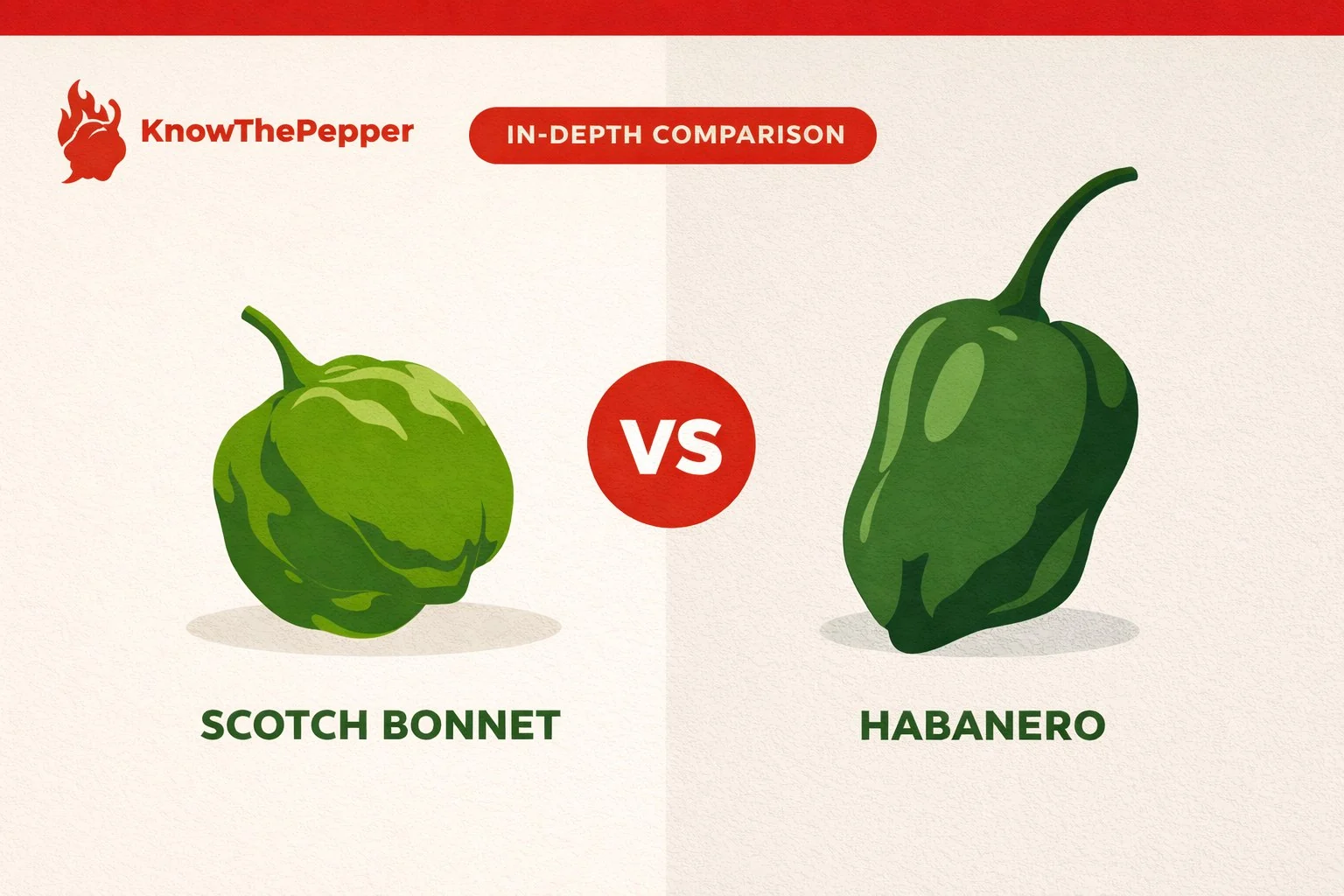
Scotch Bonnet measures 100K–350K SHU while Habanero registers 100K–350K SHU — roughly equal in heat. Scotch Bonnet is known for its fruity and tropical flavor (C. chinense), while Habanero offers fruity and citrusy notes (C. chinense).
- Species: Both are C. chinense
- Best for: Scotch Bonnet excels in hot sauces and extreme dishes, Habanero in hot sauces and spicy dishes
Scotch Bonnet
Extra-HotHabanero
Extra-HotScotch Bonnet vs Habanero Comparison
Scotch Bonnet vs Habanero Heat Levels
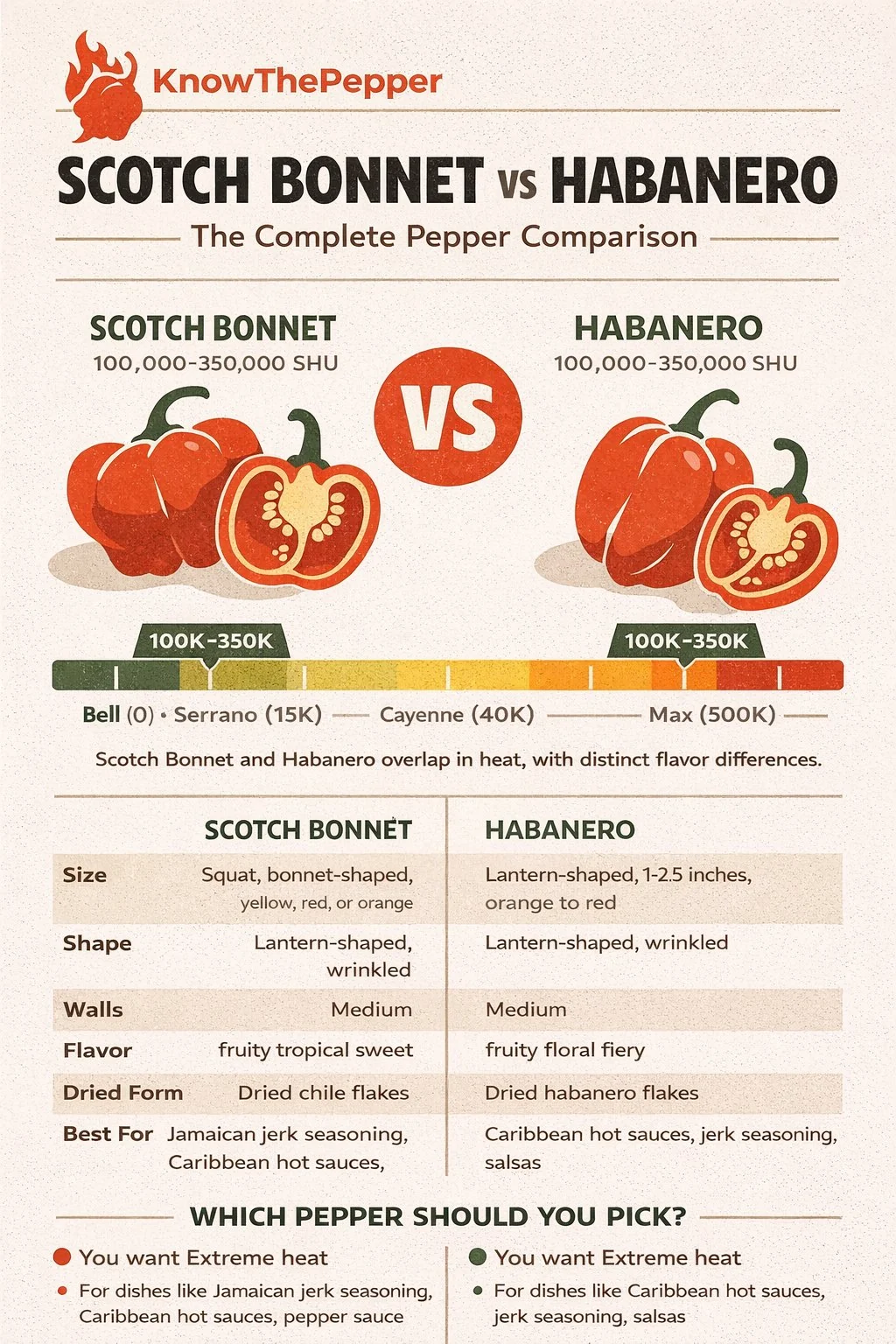
Both peppers occupy the extra-hot heat classification on the Scoville scale, clocking in at 100,000-350,000 SHU. To put that in perspective, a dried chipotle typically measures around 2,500-8,000 SHU, meaning either of these peppers can hit 40 to 140 times hotter than that smoky staple.
On paper, the heat matchup is a dead draw. Both belong to C. chinense, the species that produces some of the world's most intense peppers, and both express capsaicin through the same TRPV1 receptor pathway — the TRPV1 response and molecular structure behind that burn are identical at the biological level.
In practice, though, the heat character differs. Scotch Bonnet heat tends to build slower and linger longer, spreading across the palate and throat with a rounded, almost sweet burn. Habanero heat hits faster and more sharply, with a bright, almost acidic sting that peaks quickly.
Both sit firmly in the upper tier of pepper intensity alongside peppers like the Datil's distinctive sweet-hot profile and the Fatalii's pale yellow citrus intensity. Neither is a casual pepper — treat both with the same respect you would give any high-capsaicin fruit.
Flavor Profile Comparison
The first time I tasted a Scotch Bonnet raw — sliced thin, no gloves, rookie mistake — the sweetness hit before anything else.
Few peppers balance heat and flavor as well as the habanero.
This is where the two diverge in meaningful ways. Scotch Bonnet carries a deeply tropical flavor — think mango, papaya, and a subtle sweetness that precedes the heat. It is the defining ingredient in Jamaican jerk seasoning and Trinidadian pepper sauce for good reason: that fruity depth adds complexity that no other pepper quite replicates.
Habanero is fruitier in a citrus direction — orange peel, apricot, and a slight floral note that sits closer to tangy than sweet. The aroma is sharper and more perfume-like, which is why it pairs so naturally with lime-heavy Mexican salsas and ceviches.
Both peppers share the characteristic C. chinense fruitiness that separates them from the grassier C. annuum species profile, but the specific fruit notes diverge clearly. Scotch Bonnet smells sweeter and more tropical even before you bite it. Habanero has that citrus-forward nose that signals its Yucatan roots.
Aroma matters in cooking. When you add Scotch Bonnet to a slow-cooked stew, that tropical sweetness infuses the base. Habanero in a fresh salsa contributes brightness and tang. Neither is a substitute for the other without some flavor consequence — and experienced cooks from the Caribbean pepper tradition will tell you the difference is immediately detectable in a finished dish.
Culinary Uses for Scotch Bonnet and Habanero
Scotch Bonnet belongs to the cooking traditions of the Caribbean. It is non-negotiable in authentic Jamaican jerk marinades, Guyanese pepper pot, and the fiery condiment sauces of Trinidad and Barbados. The pepper is typically used whole or sliced, often cooked long enough that its heat mellows slightly while the tropical sweetness intensifies. You can also find it in the Datil vs. Scotch Bonnet flavor contrast — the Datil being another C. chinense with a similar sweet heat that sometimes substitutes in Florida-influenced Caribbean cooking.
Habanero dominates the pepper-growing traditions of Mexico's Yucatan, where it appears in salsas habaneras, marinades for cochinita pibil, and the region's fiery table sauces. Its citrus brightness makes it ideal for fresh applications — raw salsas, fruit-based hot sauces, and ceviche. It also works well in fermented hot sauces because the citrus notes survive and even sharpen with lacto-fermentation.
For substitution purposes, the two peppers swap at a 1:1 ratio for heat. Flavor-wise, if a recipe calls for Scotch Bonnet and you only have Habanero, add a small piece of fresh mango or a half-teaspoon of pineapple juice to approximate that tropical sweetness. Going the other direction — replacing Habanero with Scotch Bonnet — works cleanly in most cooked applications but will slightly sweeten fresh salsas.
Both peppers are excellent candidates for homemade hot sauce. Scotch Bonnet sauces tend toward the sweet-fruity style (think Grace brand or Matouk's), while Habanero sauces lean citrusy and sharp. Either can be dried and ground, though the fresh flavor of both peppers is superior — drying mutes the tropical and citrus notes significantly.
Which Should You Choose?
If heat is your only criterion, flip a coin — these peppers are identical on the Scoville scale. The real question is flavor direction.
Choose Scotch Bonnet when the dish needs that unmistakable Caribbean sweetness: jerk anything, island-style stews, or hot sauces modeled on the Trinidad or Jamaican tradition. It is the harder pepper to find outside specialty grocers and Caribbean markets, but the flavor payoff is real.
Choose Habanero when you want citrus brightness and a sharper heat profile: fresh salsas, Mexican-style marinades, or fruit-forward hot sauces. It is widely available, consistent in quality, and versatile across both cooked and raw applications.
For growers, both are rewarding. Habanero plants tend to be prolific and forgiving; Scotch Bonnet plants can be slightly more finicky but reward patience with exceptional fruit. Either makes a strong candidate for indoor seed starting and transplant timing in shorter-season climates.
Can You Substitute One for the Other?
Yes — direct substitution works. Scotch Bonnet and Habanero are close enough in heat to swap at roughly 1:1. The main difference will be flavor. For more swap options, explore ranked alternatives with conversion ratios.
Growing Scotch Bonnet vs Habanero
If you’re deciding which pepper to grow at home, consider your climate and patience level. Scotch Bonnet and Habanero have different maturation times and temperature preferences. Hotter varieties generally need a longer, warmer growing season to develop their full capsaicin content. Our zone-based planting date tool can pinpoint the best sowing window for your area.
Scotch Bonnets need warmth from the start. Germination requires 80–85°F soil temperature; anything cooler and seeds stall for weeks.
These plants run long — expect 90–120 days from transplant to ripe fruit. They're not beginner peppers in terms of patience, but they're forgiving once established.
Soil should drain well. *C.
Starting habaneros from seed requires patience. Germination takes 10–21 days at soil temperatures of 80–85°F — a heat mat is not optional, it's essential.
Transplant seedlings outdoors only after nighttime temperatures stay consistently above 55°F. Habaneros are frost-intolerant and will stall in cold soil.
Full sun — at least 6–8 hours daily — is non-negotiable. In containers, use a 5-gallon minimum; habaneros develop substantial root systems.
History & Origin of Scotch Bonnet and Habanero
Both peppers carry centuries of culinary heritage. Scotch Bonnet traces its roots to Caribbean, while Habanero originates from Mexico. Understanding their backstory helps explain why each pepper developed its distinctive traits.
Buying & Storage
Whether you’re shopping for Scotch Bonnet or Habanero, the same quality indicators apply. Fresh peppers should feel firm and heavy for their size, with taut, glossy skin and no soft or wet spots. Minor stem cracks known as “corking” are perfectly normal and often indicate a mature, flavorful pod.
- Firm pods with taut skin and consistent color
- Should feel heavy relative to size
- Minor stem cracks (“corking”) are normal
- Avoid anything soft, shriveled, or with dark wet spots
- Fresh: Paper bag, crisper drawer — 1–2 weeks
- Frozen: Wash, dry, freeze on sheet pan — 6+ months
- Dried: Airtight, away from light — up to 1 year
The Verdict: Scotch Bonnet vs Habanero
Scotch Bonnet and Habanero sit in the same heat tier but serve different roles. Scotch Bonnet delivers its distinctive fruity and tropical character. Habanero, with its fruity and citrusy profile, excels in everyday cooking.
Frequently Asked Questions
Related Comparisons
Sources pending verification.
