Jalapeño vs Serrano Pepper: Which Pepper Should You Use?
The jalapeño (2,500-8,000 SHU) and serrano are both Mexican-origin members of C. annuum, but serranos run noticeably hotter and carry a sharper, more intensely grassy bite. Choosing between them often comes down to how much heat your dish needs and whether you want a pepper that holds up to cooking or shines raw.

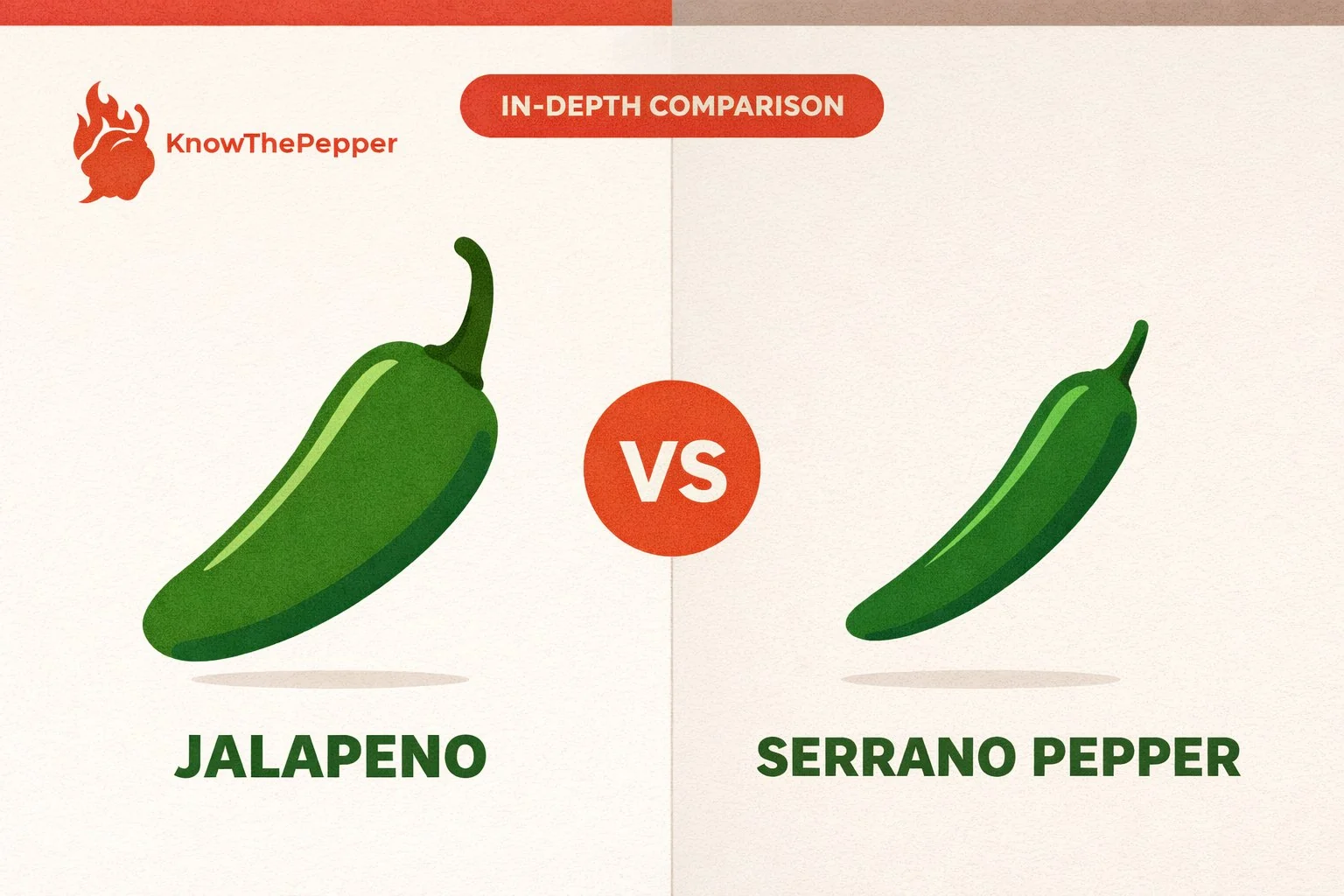
Jalapeño measures 3K–8K SHU while Serrano Pepper registers 10K–23K SHU — making Serrano Pepper 3× hotter. Jalapeño is known for its bright and grassy flavor (C. annuum), while Serrano Pepper offers bright and crisp notes (C. annuum).
- Heat difference: Serrano Pepper is 3× hotter
- Species: Both are C. annuum
- Best for: Jalapeño excels in everyday cooking and salsas, Serrano Pepper in fresh salsas and mild recipes
Jalapeño
MediumSerrano Pepper
HotJalapeño vs Serrano Pepper Comparison
Jalapeño vs Serrano Pepper Heat Levels
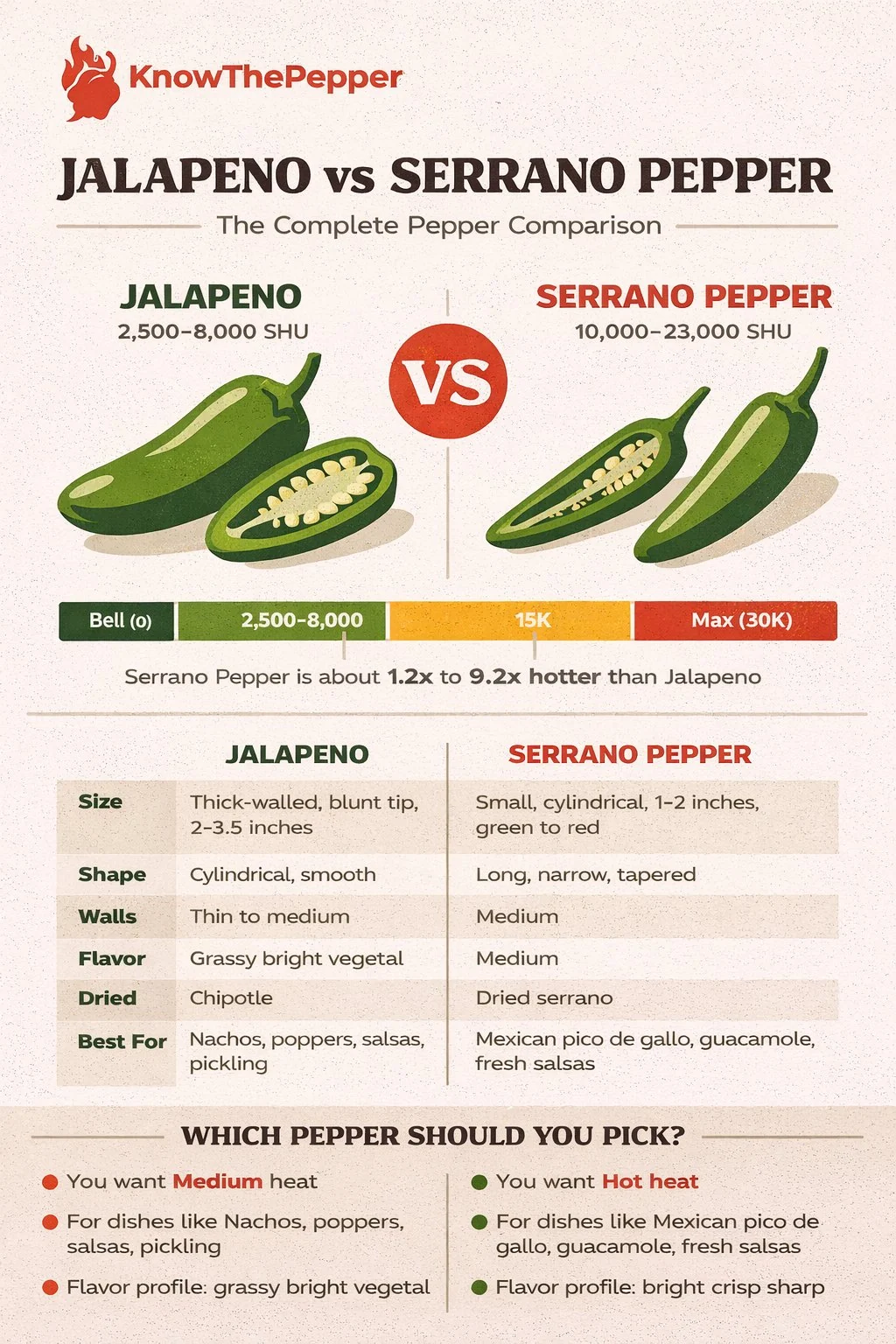
The jalapeño sits at 2,500-8,000 SHU on the Scoville scale position for C. annuum peppers, placing it firmly in the medium-heat category that most home cooks reach for first. Serranos typically clock in between 10,000-23,000 SHU, making them roughly 3-4 times hotter than an average jalapeño.
For context, a Fresno pepper lands around 2,500-10,000 SHU — nearly identical to a jalapeño in heat ceiling. Serranos blow past both, delivering a heat that builds faster and lingers longer on the palate.
The character of that heat differs too. Jalapeños tend to produce a slow, rounded warmth — you feel it in the front of the mouth and it fades relatively quickly. Serranos hit sharper and higher, with a more immediate sting that climbs toward the back of the throat. Both get their burn from capsaicin binding to TRPV1 receptors — the receptor science behind why peppers burn is the same, but serrano pods simply pack more of it per gram.
Ripeness matters significantly with jalapeños. A green jalapeño might sit at 2,500 SHU; let it ripen to red and it can push toward 8,000 SHU. Serranos show less dramatic variance — they're consistently hot regardless of color stage.
Flavor Profile Comparison
Few peppers have earned their reputation as thoroughly as the jalapeño.
Bite into a raw serrano and the first thing you notice is the aroma — green, grassy, almost herbal, like a jalapeño that decided to be serious.
Both peppers share that bright, grassy, vegetal backbone you'd expect from fresh C. annuum varieties grown in Mexico's pepper-growing regions. But the flavor intensity tracks with the heat intensity — serranos are louder in every direction.
A fresh jalapeño has a clean, slightly sweet grassiness with mild bitterness. It's a flavor that plays well with others without asserting itself too aggressively. That's part of why it became the default hot pepper in American kitchens — it adds warmth without taking over.
Serranos taste more concentrated and sharper. There's less sweetness, more of a clean, almost citrus-like brightness that cuts through fatty or rich ingredients. The grassy note is present but amplified. When you bite a raw serrano, the flavor hits before the heat does — briefly — and it's unmistakably more complex than a jalapeño.
Cooking changes both peppers in different ways. Jalapeños mellow considerably when roasted or cooked, developing a slightly smoky sweetness (especially when they become chipotles). Serranos hold their flavor integrity better under heat — they don't soften as dramatically, which makes them the better choice when you want fresh-pepper character to survive a cooking process.
Aroma-wise, serranos smell sharper and more pungent when sliced. Jalapeños have that familiar, almost bell-pepper-adjacent scent that most people recognize immediately.
Culinary Uses for Jalapeño and Serrano Pepper
Pico de gallo is the clearest test case for this comparison. Traditional Mexican recipes often call for serranos, not jalapeños — the sharper heat and brighter flavor cuts through the acidity of tomatoes and lime more effectively. Jalapeños work, but the result is noticeably milder and rounder.
For cooked applications — nachos, stuffed peppers, salsas verde that get simmered — jalapeños are the more forgiving option. Their heat softens predictably, and their size makes them easy to stuff or slice uniformly. Serranos are smaller and thinner-walled, which limits their use as vessels but makes them ideal for finely minced applications.
Raw preparations are where serranos truly earn their place. Toss them into a homemade serrano hot sauce and you get a product with real bite and clean flavor that jalapeño-based sauces can't quite replicate. Ceviche, aguachile, and fresh salsas all benefit from serrano's sharper profile.
Substitution ratio: when swapping serrano for jalapeño, start with half the volume and adjust upward. Going the other direction — replacing serranos with jalapeños — use roughly double the amount and accept that the flavor will be milder and less sharp.
For heat comparisons across the C. annuum family, the cayenne vs. jalapeño heat difference shows how much range exists within this single species. The cayenne vs. serrano matchup is similarly instructive — cayenne runs 30,000-50,000 SHU, putting serrano solidly in the middle of the family's heat spectrum.
Both peppers dry and pickle well. Pickled jalapeños are a pantry staple; pickled serranos are underused and excellent on tacos, grain bowls, and sandwiches where you want acidity plus real heat.
Which Should You Choose?
Pick jalapeños when you need approachability — cooking for mixed heat tolerances, stuffing, or any application where the pepper is a supporting player rather than the main event. Their botanical classification within C. annuum puts them alongside hundreds of familiar varieties, and their predictable heat makes them reliable.
Choose serranos when the pepper needs to assert itself — raw salsas, ceviche, anything where fresh-pepper brightness matters and you want actual heat. They're the better choice for traditional Mexican preparations where jalapeños are often a substitution rather than the original ingredient.
For cooks building confidence with heat, the bird's eye vs. jalapeño heat contrast shows how dramatic the jump gets beyond serrano territory — useful context for calibrating your tolerance before going further up the scale.
Both are worth keeping on hand. They're not interchangeable — they're complementary tools.
Can You Substitute One for the Other?
Yes — direct substitution works. Jalapeño and Serrano Pepper are close enough in heat to swap at roughly 1:1. The main difference will be flavor. For more swap options, explore ranked alternatives with conversion ratios.
Growing Jalapeño vs Serrano Pepper
If you’re deciding which pepper to grow at home, consider your climate and patience level. Jalapeño and Serrano Pepper have different maturation times and temperature preferences. Hotter varieties generally need a longer, warmer growing season to develop their full capsaicin content. Our zone-based planting date tool can pinpoint the best sowing window for your area.
Jalapeños are among the most forgiving hot peppers to grow, but they do have preferences worth knowing.
Start seeds indoors 8–10 weeks before your last frost date. Soil temperature for germination should stay between 75–85°F — a heat mat under the seed tray makes a real difference in germination speed and uniformity.
Transplant outdoors once nighttime temps stay consistently above 55°F. Jalapeños want full sun — at least 6 hours daily — and well-drained soil with a pH around **6.
Serranos are reliable producers that reward patient gardeners. Start seeds indoors 8–10 weeks before last frost — germination takes 10–21 days at soil temperatures around 80–85°F.
Transplant outdoors once nighttime temps stay above 55°F. Space plants 18–24 inches apart in full sun with well-draining soil amended with compost.
Days to maturity runs 70–80 days from transplant to green-ripe. Letting pods fully ripen to red adds another 2–3 weeks but intensifies both flavor and heat.
History & Origin of Jalapeño and Serrano Pepper
Both peppers carry centuries of culinary heritage. Jalapeño traces its roots to Mexico, while Serrano Pepper originates from Mexico. Understanding their backstory helps explain why each pepper developed its distinctive traits.
Buying & Storage
Whether you’re shopping for Jalapeño or Serrano Pepper, the same quality indicators apply. Fresh peppers should feel firm and heavy for their size, with taut, glossy skin and no soft or wet spots. Minor stem cracks known as “corking” are perfectly normal and often indicate a mature, flavorful pod.
- Firm pods with taut skin and consistent color
- Should feel heavy relative to size
- Minor stem cracks (“corking”) are normal
- Avoid anything soft, shriveled, or with dark wet spots
- Fresh: Paper bag, crisper drawer — 1–2 weeks
- Frozen: Wash, dry, freeze on sheet pan — 6+ months
- Dried: Airtight, away from light — up to 1 year
The Verdict: Jalapeño vs Serrano Pepper
Jalapeño and Serrano Pepper occupy very different positions on the heat spectrum. Serrano Pepper delivers 3× more heat with its distinctive bright and crisp character. Jalapeño, with its bright and grassy profile, excels in everyday cooking.
Frequently Asked Questions
Related Comparisons
Sources pending verification.