Jalapeño vs Serrano: Which Pepper Should You Use?
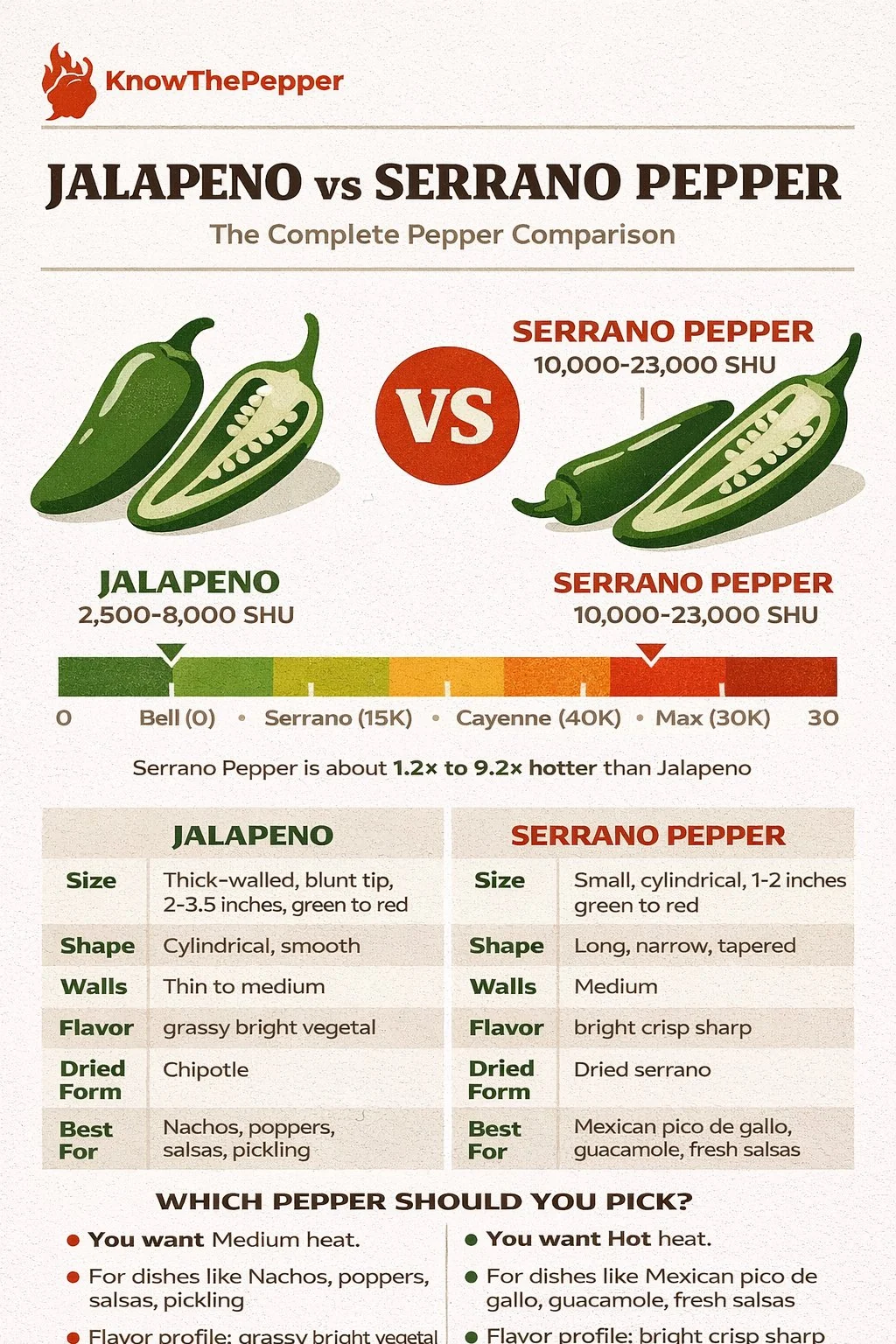
Jalapeños and serranos are both Mexican-born members of the same species, yet they behave very differently at the cutting board. The serrano runs 10,000-23,000 SHU against the jalapeño's 2,500-8,000 SHU — a gap that matters in real cooking. Choosing between them comes down to heat tolerance, texture, and what the dish actually needs.

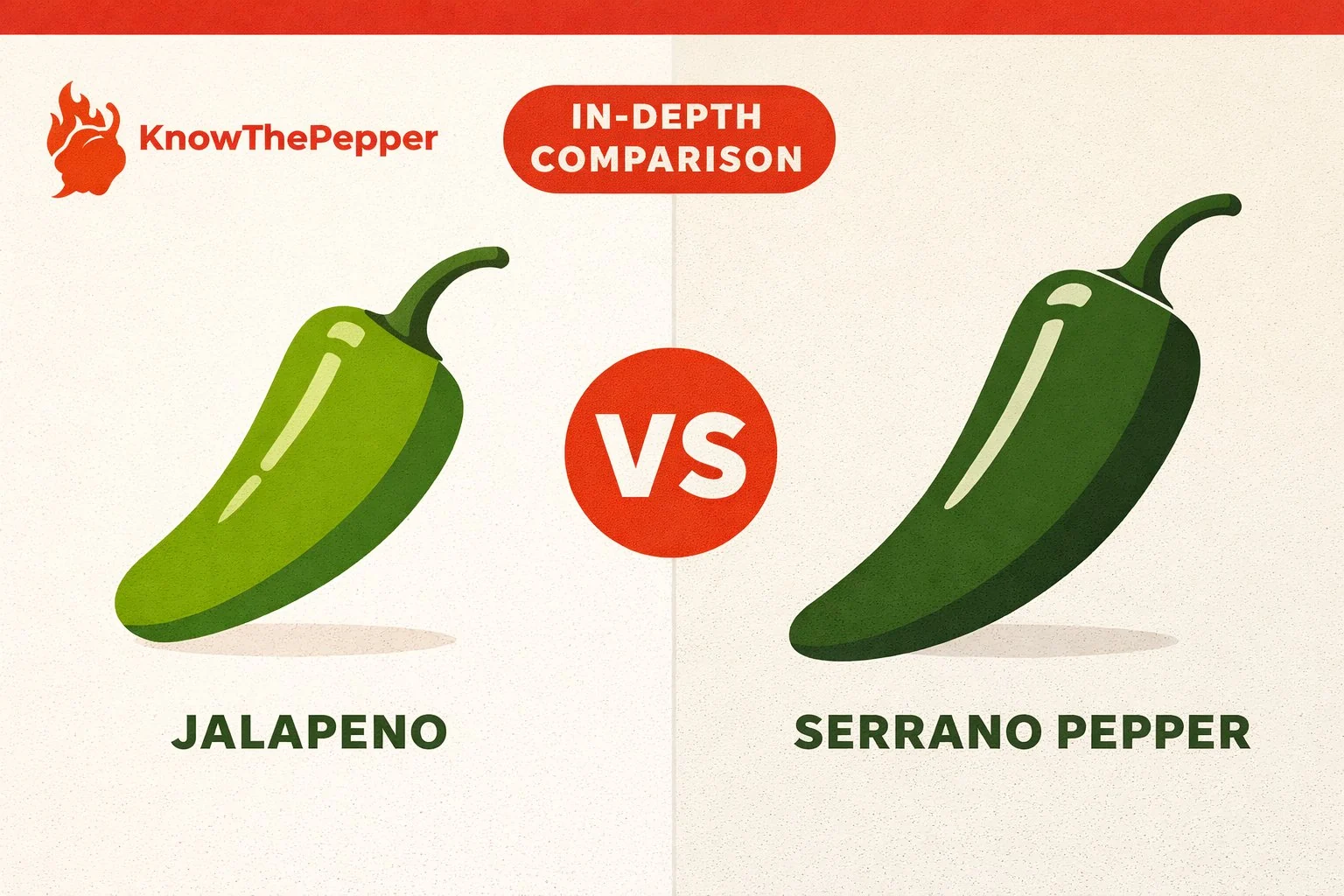
Jalapeño measures 3K–8K SHU while Serrano Pepper registers 10K–23K SHU — making Serrano Pepper 3× hotter. Jalapeño is known for its bright and grassy flavor (C. annuum), while Serrano Pepper offers bright and crisp notes (C. annuum).
- Heat difference: Serrano Pepper is 3× hotter
- Species: Both are C. annuum
- Best for: Jalapeño excels in everyday cooking and salsas, Serrano Pepper in fresh salsas and mild recipes
Jalapeño
MediumSerrano Pepper
HotJalapeño vs Serrano Pepper Comparison
Jalapeño vs Serrano Pepper Heat Levels
The first time I swapped serranos into a recipe that called for jalapeños without adjusting the quantity, the result was a salsa that cleared the room. Both peppers sit in the same general neighborhood on the medium-to-hot pepper spectrum, but the serrano plays a completely different game.
Jalapeños land between 2,500 and 8,000 SHU — placing them firmly in the accessible everyday heat bracket that most people can handle without drama. For context, a dried guajillo averages around 2,500-5,000 SHU, so a jalapeño at its peak can hit nearly twice that intensity.
Serranos clock in at 10,000-23,000 SHU, which puts them squarely in the sharper, more aggressive heat tier on the Scoville scale. At maximum heat, a serrano is roughly 9 times hotter than a guajillo and up to 3 times hotter than a jalapeño. That is not a rounding error — it is a fundamentally different eating experience.
The character of the heat differs too. Jalapeño burn tends to sit on the front of the tongue and fade relatively quickly. Serrano heat hits faster, spreads wider across the palate, and lingers longer. Understanding why peppers produce that burning sensation helps explain why even small serrano amounts can overwhelm a dish designed around jalapeño quantities. Both peppers use capsaicin as their active compound, but the serrano simply loads more of it into a smaller pod.
Flavor Profile Comparison
Few peppers have earned their reputation as thoroughly as the jalapeño.
Bite into a raw serrano and the first thing you notice is the aroma — green, grassy, almost herbal, like a jalapeño that decided to be serious.
Strip the heat away and both peppers share a bright, fresh quality that separates them from dried or smoked chiles. But they are not identical in flavor — the difference is subtle and becomes obvious when you eat them raw side by side.
Jalapeños taste grassy and slightly vegetal, with a clean pepper flavor that has a mild sweetness underneath. That grassiness is why jalapeño works so well raw — in guacamole, pico de gallo, or sliced onto nachos, the flavor adds dimension without competing with other ingredients.
Serranos are crisper and more assertive. The brightness is sharper, almost citrus-adjacent, with less of the vegetal undertone. Some describe it as a cleaner heat — the pepper flavor and the spice arrive together rather than sequentially. This makes serranos excellent in fresh salsas where you want both heat and a punchy pepper note in the same bite.
Size affects texture too. Serranos are narrower and smaller than jalapeños, with thinner flesh and tighter skin. That means they break down differently when cooked — faster caramelization, less water released, a more concentrated flavor in less time. Jalapeños, with their thicker walls, hold up better to stuffing, roasting, or extended cooking without turning mushy.
Both peppers are members of Capsicum annuum, the same botanical family that includes bell peppers and cayennes, which explains their shared brightness. Their shared roots in Mexican pepper-growing tradition shaped both into fresh-use peppers rather than the dried-and-smoked applications more common with anchos or guajillos.
Culinary Uses for Jalapeño and Serrano Pepper
These two peppers overlap significantly in how they are used, but each has territory where it clearly wins.
Jalapeños are the better choice when texture matters. Stuffed jalapeños (jalapeños rellenos, poppers) rely on the thick flesh holding its shape under heat. Pickling also favors jalapeños — the firmer walls absorb brine without going soft. For dishes serving heat-sensitive guests, jalapeños give you more control. You can add more without the dish becoming inaccessible.
Serranos shine in fresh applications where heat intensity is the goal. Authentic salsa verde traditionally calls for serranos, not jalapeños — the sharper brightness and higher heat create the flavor profile that recipe was built around. If your salsa tastes flat with jalapeños, try serranos. The difference is immediate.
Substitution ratios: Replace 1 serrano with 2-3 jalapeños to approximate the heat. Going the other direction, use 1 serrano for every 2-3 jalapeños called for in a recipe. Neither substitution is perfect — the flavor profiles diverge enough that the dish will taste slightly different — but heat level will be in the right range.
For cooked dishes like chili, stir-fries, or braised sauces, either pepper works. Jalapeños contribute more body; serranos more punch. In egg dishes — huevos rancheros, scrambled eggs with chiles — serranos add heat that holds up to the fat in the eggs better than the milder jalapeño.
The cayenne's sharper, drier heat versus jalapeño's fresh bite is a useful comparison if you are scaling heat further up. And if you are considering the cherry bomb pepper's thick-walled sweetness against jalapeño's grassiness, that trade-off runs parallel to the jalapeño-serrano decision: heat versus body.
Both peppers can be frozen whole without blanching. Dry them, bag them, freeze them — they will soften on thawing but retain full flavor and heat for cooked applications.
Which Should You Choose?
For most home cooks, jalapeños are the safer, more flexible choice. They are easier to find, easier to control, and work across a wider range of dishes without requiring heat adjustments. Anyone building a recipe for a mixed crowd should default to jalapeños.
Serranos are the right call when you want more heat without changing the fresh pepper flavor profile — and when you are cooking for people who can handle it. A serrano-based salsa verde tastes more authentic than one made with jalapeños. A serrano in a Thai-influenced stir-fry adds heat that reads as intentional rather than incidental.
The cayenne versus jalapeño heat matchup is worth reading if you need to go even hotter with a dry or powdered option. But for fresh applications where you need to choose between these two specifically: jalapeño for crowd-friendly dishes, serrano when heat is the point. Keep both in the refrigerator — they cost the same, store the same way, and having both available makes you a more adaptable cook.
Can You Substitute One for the Other?
Yes — direct substitution works. Jalapeño and Serrano Pepper are close enough in heat to swap at roughly 1:1. The main difference will be flavor. For more swap options, explore ranked alternatives with conversion ratios.
Growing Jalapeño vs Serrano Pepper
If you’re deciding which pepper to grow at home, consider your climate and patience level. Jalapeño and Serrano Pepper have different maturation times and temperature preferences. Hotter varieties generally need a longer, warmer growing season to develop their full capsaicin content. Our zone-based planting date tool can pinpoint the best sowing window for your area.
Jalapeños are among the most forgiving hot peppers to grow, but they do have preferences worth knowing.
Start seeds indoors 8–10 weeks before your last frost date. Soil temperature for germination should stay between 75–85°F — a heat mat under the seed tray makes a real difference in germination speed and uniformity.
Transplant outdoors once nighttime temps stay consistently above 55°F. Jalapeños want full sun — at least 6 hours daily — and well-drained soil with a pH around **6.
Serranos are reliable producers that reward patient gardeners. Start seeds indoors 8–10 weeks before last frost — germination takes 10–21 days at soil temperatures around 80–85°F.
Transplant outdoors once nighttime temps stay above 55°F. Space plants 18–24 inches apart in full sun with well-draining soil amended with compost.
Days to maturity runs 70–80 days from transplant to green-ripe. Letting pods fully ripen to red adds another 2–3 weeks but intensifies both flavor and heat.
History & Origin of Jalapeño and Serrano Pepper
Both peppers carry centuries of culinary heritage. Jalapeño traces its roots to Mexico, while Serrano Pepper originates from Mexico. Understanding their backstory helps explain why each pepper developed its distinctive traits.
Buying & Storage
Whether you’re shopping for Jalapeño or Serrano Pepper, the same quality indicators apply. Fresh peppers should feel firm and heavy for their size, with taut, glossy skin and no soft or wet spots. Minor stem cracks known as “corking” are perfectly normal and often indicate a mature, flavorful pod.
- Firm pods with taut skin and consistent color
- Should feel heavy relative to size
- Minor stem cracks (“corking”) are normal
- Avoid anything soft, shriveled, or with dark wet spots
- Fresh: Paper bag, crisper drawer — 1–2 weeks
- Frozen: Wash, dry, freeze on sheet pan — 6+ months
- Dried: Airtight, away from light — up to 1 year
The Verdict: Jalapeño vs Serrano Pepper
Jalapeño and Serrano Pepper occupy very different positions on the heat spectrum. Serrano Pepper delivers 3× more heat with its distinctive bright and crisp character. Jalapeño, with its bright and grassy profile, excels in everyday cooking.
Frequently Asked Questions
Related Comparisons
Sources pending verification.